
To Issue 187
Citation: Guerra B, “Intelligent Integration: Why Connected OSD Ecosystems are Reshaping Pharmaceutical Manufacturing”, ONdrugDelivery, Issue 187 (Jun 2026), pp 24–27.
Borja Guerra delves into how the oral solid dosage manufacturing industry is being reshaped by connected machinery, advanced digital systems and integrated supplier ecosystems across the production process.
The oral solid dosage (OSD) manufacturing environment is becoming increasingly complex. Factors such as rising stock-keeping unit variability, shorter production timelines, growing regulatory expectations and pressure to maximise operational efficiency are changing how pharmaceutical manufacturers approach production infrastructure and their supplier strategy.
Historically, many OSD manufacturing operations have evolved through fragmented supplier ecosystems. Tablet compression systems, encapsulation machinery, packaging lines, inspection technologies and track-and-trace solutions have often been sourced independently, integrated retrospectively and managed across multiple vendors. And, while this has long been accepted as standard industry practice, it has increasingly created hidden inefficiencies within many modern manufacturing environments.
As pharmaceutical production becomes more agile, digitised and data-driven, manufacturers are beginning to recognise that one of their greatest operational challenges comes from the gaps that have been created across the different systems in use. Equally, fragmented supplier relationships can create real integration challenges, misaligned accountability and, ultimately, performance losses. As a result, demand is increasing for more integrated end-to-end production ecosystems capable of delivering greater operational consistency, flexibility and long-term scalability across the entire OSD value chain.
THE HIDDEN COST OF FRAGMENTED OSD MANUFACTURING
The growing complexity of modern OSD manufacturing can place real strain on traditional production models. Pharmaceutical manufacturers today are managing a number of areas, including:
- Increasing product portfolios
- Greater batch variability
- Shorter product lifecycles
- More personalised therapies
- Stricter compliance expectations
- Faster time-to-market pressures.
This operational breadth has significant implications across production environments. Each of the above requirements demands manufacturing systems capable of operating with far greater agility than has been seen in previous decades.
Where disconnected machinery ecosystems exist, operational inefficiencies can rapidly accumulate. These may include:
- Prolonged line integration
- Inconsistent communication between machines
- Duplicated validation processes
- Fragmented operational data
- Greater downtime exposure
- Increased or varied maintenance requirements.
In many environments, even relatively minor integration misalignments between systems can create downstream productivity losses across an entire manufacturing line.
This operational burden becomes particularly pronounced when manufacturers rely on multiple suppliers operating independently of each other across machinery, packaging materials, inspection technologies and digital systems. In these scenarios, accountability can become fragmented, troubleshooting harder and overall system optimisation significantly more difficult.
As such, pharmaceutical manufacturers are increasingly shifting away from isolated equipment purchasing decisions towards more connected manufacturing strategies focused on ecosystem-level optimisation. According to ISPE’s Pharma 4.0™ survey, manufacturing, quality and engineering teams now account for approximately 75% of digital transformation activity across the pharmaceutical value chain, reflecting the industry’s accelerating focus on connected and integrated manufacturing environments.
“RATHER THAN TREATING MACHINERY, PACKAGING AND DIGITAL SYSTEMS AS SEPARATE OPERATIONAL FUNCTIONS, MANUFACTURERS ARE BEGINNING TO VIEW THEM AS INTERCONNECTED COMPONENTS WITHIN A UNIFIED PRODUCTION ECOSYSTEM.”
INTEGRATION: A MANUFACTURING STRATEGY
The next phase of OSD manufacturing is likely to be increasingly centred around intelligent integration. Rather than treating machinery, packaging and digital systems as separate operational functions, manufacturers are beginning to view them as interconnected components within a unified production ecosystem.
For example, at Interpack 2026, ACG demonstrated this approach through its fully-integrated OSD manufacturing systems, including capsules, tablet compression, packaging machinery, packaging materials, visual inspection and track-and-trace technologies (Figure 1).
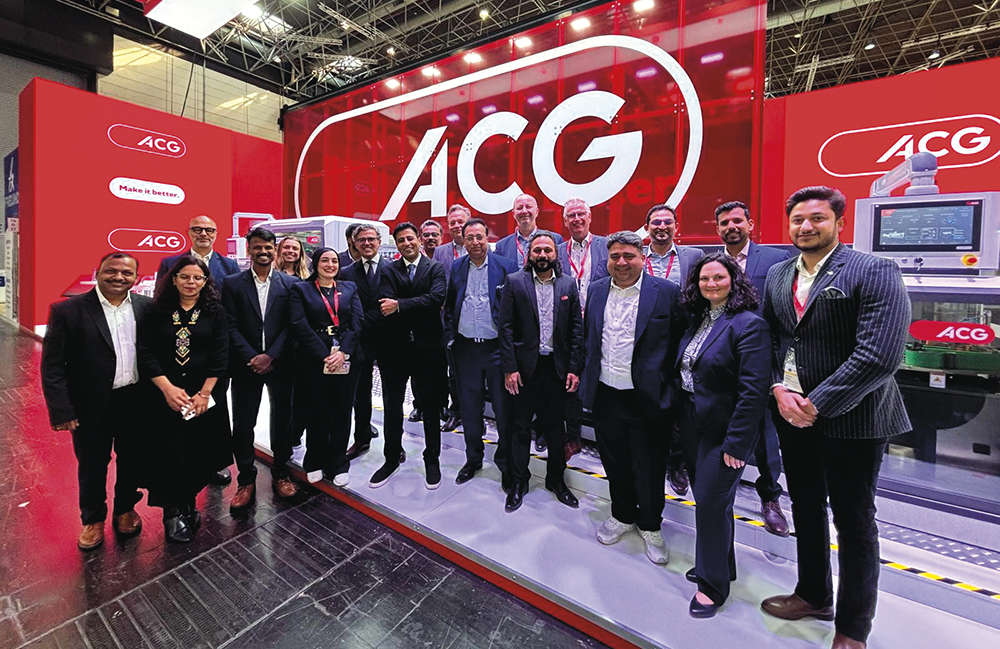
Figure 1: The ACG team presenting the company’s integrated OSD manufacturing systems at Interpack 2026.
The principle behind the company’s approach is relatively straightforward: systems that have been designed to work together from the outset can achieve significantly higher operational efficiency than systems that are integrated retrospectively from multiple independent vendors. This is particularly important within high-speed OSD environments.
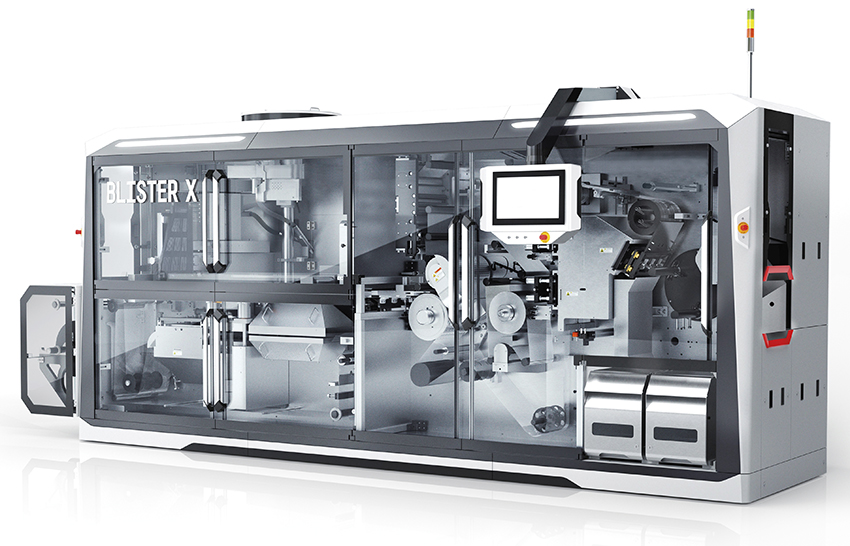
ACG’s Blister X system, for example, has been engineered specifically for seamless integration within broader OSD production lines. It has been designed to support high-speed blister packaging while maintaining precision, consistency and rapid adaptability across increasingly variable product requirements.
As another example, ACG’s ProTab 700 helps manufacturers to address the challenge of production flexibility. As dosage requirements continue to evolve, manufacturers increasingly require tablet compression systems capable of rapidly switching between monolayer and bilayer applications without compromising productivity or product quality. At the end of the day, ACG is focused on delivering flexibility and operational resilience at scale.
PACKAGING MATERIALS AND MACHINERY MUST WORK TOGETHER
Within OSD manufacturing, packaging materials and packaging machinery are intrinsically linked, yet, historically, they have often been developed independently. This has frequently created operational mismatches across production environments, impacting line efficiency, changeover performance and overall product consistency.
However, as pharmaceutical manufacturing environments have become increasingly complex, manufacturers have begun placing far greater emphasis on ensuring reliability, precision and flexibility in production, as variations in substrate behaviour, forming characteristics, sealing properties and machine compatibility can all significantly influence operational performance across the packaging line.
At the same time, the rise of lightweight structures, recyclable materials, enhanced barrier requirements and broader sustainability expectations is introducing further complexity into OSD packaging operations. As a result, a far more collaborative approach between material science and machinery engineering is becoming essential.
Manufacturers are recognising that packaging efficiency depends on both the individual performance of materials or machines and how effectively they are designed to work together as part of a connected production ecosystem.
DIGITALISATION AND INTELLIGENCE-LED MANUFACTURING
The rise of integrated OSD ecosystems is closely connected to the broader acceleration of Industry 4.0 technologies across pharmaceutical manufacturing. Today’s connected manufacturing environments are increasingly enabled by technologies such as the industrial internet of things (IIoT), machine learning, generative artificial intelligence (AI), digital twins and real-time monitoring systems. Independently and together these technologies are fundamentally changing how production lines are managed, optimised and maintained.
Rather than relying solely on static operational data, connected manufacturing ecosystems can now provide:
- Predictive maintenance insights
- Live production monitoring
- Automated process optimisation
- Far greater operational visibility across manufacturing workflows.
Importantly, digitalisation is no longer simply being deployed for productivity improvement alone. Manufacturers are using connected systems to improve in areas from traceability to sustainability and resilience.
ACG has witnessed the real success of this convergence of operational intelligence and manufacturing performance first-hand at its Shirwal facility in India. It was recently recognised by the World Economic Forum’s Global Lighthouse Network (GLN),1 making ACG the world’s first pharmaceutical packaging company to achieve Lighthouse recognition twice.
The Shirwal transformation programme spans end-to-end manufacturing operations and integrates generative AI, machine learning, deep learning, IIoT and digital twin technologies. The objective was the creation of a connected manufacturing environment capable of sensing, analysing and responding more intelligently across operational workflows. The results have been substantial:
- A 40% reduction in lead times
- A 71% reduction in defects
- A 31% reduction in energy consumption
- A 34% improvement in on-time delivery in full.
“OPERATIONAL INTEGRATION INCREASINGLY SUPPORTS MULTIPLE MANUFACTURING OBJECTIVES SIMULTANEOUSLY TO HELP SUPPORT IMPROVEMENTS IN PRODUCTIVITY, QUALITY, SUSTAINABILITY AND – IMPORTANTLY – CUSTOMER PERFORMANCE.”
Operational integration increasingly supports multiple manufacturing objectives simultaneously to help support improvements in productivity, quality, sustainability and – importantly – customer performance.
FLEXIBILITY AS A COMPETITIVE REQUIREMENT
Today’s production environments must accommodate factors such as fluctuating demand, shorter manufacturing windows, increasingly diverse product portfolios and evolving therapeutic requirements. This means that manufacturing flexibility is no longer simply desirable – it has become operationally essential.
Importantly, integrated manufacturing ecosystems support this flexibility in several ways, as pharmaceutical companies seek to reduce operational risk while simultaneously improving manufacturing responsiveness.
Firstly, unified systems enable faster and more efficient changeovers. Where machinery, packaging materials and digital controls are designed to operate cohesively, manufacturers can reduce transition complexity between products and dosage formats.
Secondly, integrated data visibility improves production planning and responsiveness. Connected systems enable manufacturers to monitor performance across the entire production environment rather than as isolated operational silos.
Thirdly, integrated ecosystems simplify scalability. As pharmaceutical manufacturers expand capacity, introduce new products or enter new markets, connected production architectures can support more efficient replication and standardisation across facilities. This is becoming increasingly important as manufacturers seek to scale operational excellence consistently across global operations, as evidenced by ACG’s two World Economic Forum GLN recognitions, where connected manufacturing, operational intelligence and integrated systems have been successfully replicated across multiple facilities.
LOWERING THE TOTAL COST OF OWNERSHIP
While integrated systems may initially appear to require greater strategic co-ordination, they frequently reduce total cost of ownership over time. In fragmented environments, hidden operational costs often emerge through areas such as integration complexity, downtime, duplicated training and reduced overall line efficiency.
By contrast, connected manufacturing ecosystems set out to simplify operational management and create clearer accountability across the production line. They can help manufacturers to achieve lower downtime exposure, simplified maintenance and improved machine usage. And as production pressures intensify, these operational advantages become increasingly commercially significant.
THE FUTURE OF OSD MANUFACTURING
The pharmaceutical manufacturing sector is entering a new phase of operational evolution. Historically, manufacturing excellence was often measured primarily through machine-level performance. Today’s competitive advantage is being shaped by how effectively entire production ecosystems operate together. Ultimately, it is about driving technology-led transformation across the manufacturing value chain, enabling smart manufacturing, connected products and services and creating new business models.
The future belongs to integrated, intelligent manufacturing environments capable of delivering flexibility, consistency, scalability, sustainability and operational resilience. The convergence of connected machinery, advanced digital systems and integrated supplier ecosystems across the entire production lifecycle is now reshaping how pharmaceutical products are manufactured, packaged and delivered globally.
REFERENCE
- Munnangi VE, “ACG Shirwal facility joins World Economic Forum Lighthouse Network”. Packaging Gateway, Feb 9 2026.