
To Issue 186
Citation: Giacon M, “Deora™: Filling the Gap for Multi-Use, Fixed-Dose Injection Solutions”, ONdrugDelivery, Issue 186 (May 2026), pp 85–88.
Manuela Giacon explores the evolution of handheld drug delivery devices, leading up to today’s challenges, and presents Stevanato Group’s latest addition to its drug delivery portfolio.
THE EVOLUTION OF PARENTERAL SELF-INJECTION
As with many technologies that we now take for granted, injection devices were designed in exceptional circumstances to solve a specific problem before evolving into the widely used solution that we recognise today. It was the need to rapidly self-administer antidotes on the battlefield that led to the development of the first injection kits, starting with “syrettes” during World War II1 and evolving into autoinjectors in the late 1950s.2
Designed for reliable use in unpredictable, high-pressure, conditions, these initial devices were primitive and prone to error but offered a blueprint for the development of self-contained and pre‑measured injection instruments. Subsequently, as plastic technologies advanced, sterile and single-use syringes emerged in parallel.
The 1980s heralded the shift from self-injection as a technical task to a practical daily routine, with devices redesigned for real patients rather than trained operators. Device designers now needed to consider “human factors”, such as grip strength, dosing clarity and the management of patient anxiety. Between 2005 and 2015, these considerations shaped innovation and industry standards. Concepts such as “intuitive user interface”, “concealed needle” and “end-of-dose feedback” became the norm.
“THE NEXT GENERATION OF DRUG DELIVERY SYSTEMS MUST THEREFORE PRIORITISE SCALABILITY, USABILITY AND SUSTAINABILITY.”
Even as designers refined usability, new challenges emerged in the form of biologic drugs requiring subcutaneous injection. These transformational drugs accelerated pen and autoinjector adoption, but their higher complexity formulations demanded further design modifications. As device complexity grew in parallel, industry collaboration naturally followed, with pharmaceutical companies partnering with technology vendors to co-develop drug-device combination products.
RISING VOLUMES, RISING PRESSURES
Despite the significant growth in biologics, annual device quantities remained relatively modest, typically in the hundreds of thousands, up until the late 2010s, with only a few exceptions. This was set to change, as custom, drug-specific devices made way for flexible platform injectors. In recent years, rapidly rising global demand, led by glucagon-like peptide-1 (GLP-1) treatments, has accelerated manufacturing output into the hundreds of millions of units. This further highlights the importance of external manufacturing partnerships and risk mitigation strategies, such as dual sourcing, to ensure continuity and reduce dependency on single suppliers.
Today, growing demand continues to intensify pressure on global logistical and supply chain networks, exacerbated by geopolitical events and policy interventions such as tariffs. The level of demand requires manufacturers to hold substantial inventory, tying up working capital and limiting financial flexibility, while also investing in appropriate manufacturing facilities. To remain competitive, manufacturers must make this investment with minimal delay, while also generating proportional returns. Additionally, environmental objectives now underpin these challenges as the industry seeks to minimise the impact associated with device production.
The next generation of drug delivery systems must therefore prioritise scalability, usability and sustainability. Environmental factors – such as material use, waste generation and emissions – are closely tied to supply chain resilience. A sustainable supply chain minimises impact on people and the planet by optimising the use of resources, considering component availability, inventory requirements, sourcing redundancy and production footprint.
THE SUSTAINABILITY-USABILITY CONUNDRUM
A recurring design concern is the inverse relationship between usability – considering both adherence and preference – and sustainability – from both an environmental and supply-chain perspective. Efforts to reduce environmental impact often introduce additional complexity for the user (Figure 1).
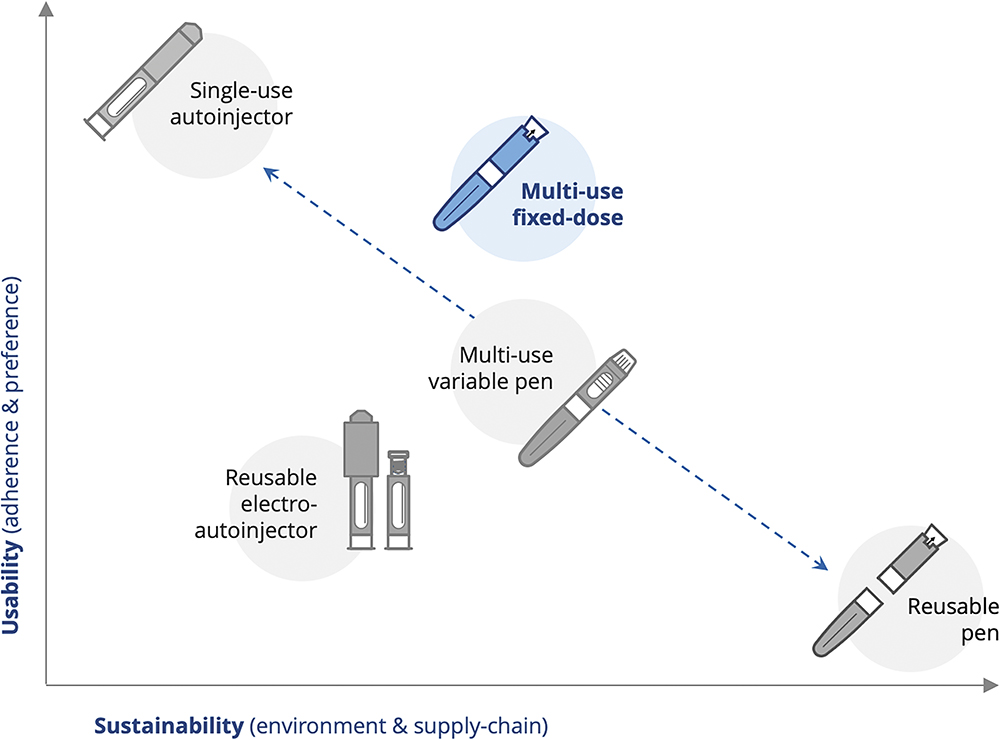
Figure 1: As sustainability increases, usability tends to decrease. Multi-use, fixed-dose pens strike a balance between user needs and sustainability.
Within this context, single-use autoinjectors remain a valuable option as they minimise user steps and support therapy areas with specific injection schedules that may not be compatible with a multi-use device.3 However, the environmental impact of single-use devices becomes significant at very high volumes. For instance, based on an average weight of approximately 25 g per single-use autoinjector, weekly use over one year corresponds to almost 1.5 kg of waste per patient.3 At a population level, this results in a significant cumulative waste burden. From a supply chain perspective, scaling production of single-use products to the required capacity is a major undertaking, increasing the risk of shortages if manufacturing cannot keep pace. The need to continuously source multiple components for each dose adds to this vulnerability.
Reusable devices, however, can offer environmental benefits in certain scenarios. One estimate suggests that between a single-use autoinjector and a reusable alternative, the volume and mass of the packaged devices could both be reduced by 50%.4 By reducing component needs and extending device lifespan, reusable products also lower supply chain stress. However, these gains come with trade-offs, as they may introduce additional engineering hurdles and increase user handling requirements.
Multi-use pen injectors – such as those used for insulin administration – reduce waste while maintaining ease of use. However, while variable‑dose pen injectors offer valuable flexibility for many therapies, fixed‑dose regimens – such as certain GLP‑1 agonists or monoclonal antibody regimens – sometimes call for device designs specifically tailored to consistent dosing. Legacy fixed-dose pen platforms may not be a suitable solution, as they were never designed for the larger dose volumes increasingly required by modern formulations.
In summary, there is a clear market gap – a need for multi-use systems delivering larger-volume, fixed-dose injections that optimally balance sustainability with usability. This was the rationale for Stevanato Group’s Deora™ pen injector.
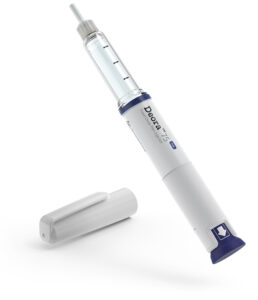
Figure 2: The Deora fixed-dose
pen injector operates with a simple,
two-step, pull-push mechanism for
dose selection and delivery.
INTRODUCING DEORA
Deora is the newest pen injector in Stevanato Group’s portfolio of hand-held drug delivery systems, designed for the delivery of multiple fixed-dose injections of up to 0.75 mL. Unlike variable‑dose devices, the user does not need to manually measure each dose. Instead, Deora operates with a simple, two-step, pull-push mechanism for dose selection and delivery. The user pulls to set the dose then pushes to inject, receiving tactile and audible confirmation after each step (Figure 2).
The device is engineered to deliver a single predefined dose size, preventing partial or split dosing, whether through use error or intentional user adjustments. This enables accurate delivery of up to seven doses using a single device, rather than multiple single‑use injectors. It then automatically locks once the final dose is administered. By combining the multi‑use benefits of a pen injector with simplified usability, Deora strikes a balance between variable‑dose pens and single-use autoinjectors.
Deora functions as a platform product, supporting multiple configurations. Compatible with both 3 and 1.5 mL cartridges, the device’s delivered dose volume can be customised so that it changes during a treatment period. For example, monthly dose modifications can be accommodated without affecting the patient experience. The device is engineered for reliable production in large quantities, with a low component count to simplify both production and assembly.
“TAKING INTO ACCOUNT THE ADVANTAGES OFFERED BY EACH DEVICE CATEGORY, STEVANATO GROUP’S PORTFOLIO IS INTENTIONALLY BUILT TO SPAN MULTI-USE FIXED OR VARIABLE DOSES AND SINGLE‑USE INJECTION REQUIREMENTS FOR PHARMACEUTICAL PARTNERS.”
A COHESIVE DRUG DELIVERY ECOSYSTEM
Taking the advantages offered by each device category into account, Stevanato Group’s portfolio is intentionally built to span multi-use fixed or variable doses and single‑use injection requirements for pharmaceutical partners. The result is a set of optimised and complementary platform products that pharmaceutical partners can more easily and flexibly match to their individual drug programmes. Together, these platforms support a wide spectrum of formulations, patient needs and commercial strategies.
Deora joins a robust handheld device portfolio, alongside Alina®, a variable dose pen injector platform, and Aidaptus®, a two-step single-use autoinjector platform (Figure 3). Alina supports established regimens as well as emerging treatments that involve multidose delivery, including those for chronic conditions such as diabetes or weight management. To support confident self‑injection, Alina features an easy‑to‑dial mechanism and a clear display.
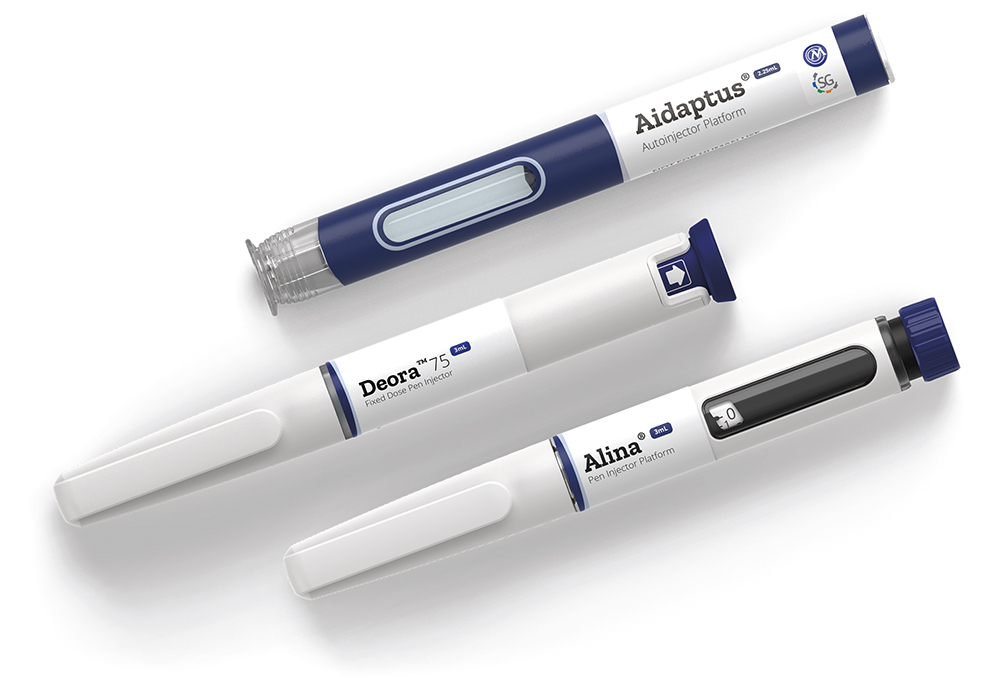
Figure 3: Stevanato Group’s handheld drug delivery platforms offer complementary solutions across multi use variable dose, multi-use fixed-dose and single-use
injection formats.
Aidaptus, developed by Owen Mumford (Oxfordshire, UK) and manufactured in collaboration with Stevanato Group, is a two‑step autoinjector ideal for biologics and higher‑viscosity formulations. It accommodates both 1 and 2.25 mL prefilled glass syringes in the same base device, with a plunger rod that automatically adjusts to the drug fill volume during assembly.
AGILE AND SCALABLE MANUFACTURING
Stevanato Group’s handheld injection platforms – including Alina, Aidaptus and the new Deora pen – are designed and developed with manufacturing efficiency and scalability in mind. This shared design approach ensures compatibility with standard final assembly processes used for handheld drug delivery devices, creating opportunities to use common final assembly assets across the three platforms, despite differences in device architecture and functionality. This can help to minimise equipment footprint on the factory floor and enable continuous operational improvements, ultimately enhancing efficiency and supporting faster production.
A further advantage is that the required final assembly equipment can be sourced directly from Stevanato Group, enabling pharmaceutical partners to streamline technology transfer and simplify operational planning. By combining device platforms, final assembly capabilities, glass primary packaging and analytical services within a single framework, Stevanato Group offers an integrated solution that can help accelerate industrialisation and reduce supply chain complexity.
Today’s pharmaceutical companies are operating under unprecedented pressure, being required to advance sustainability, deliver innovation, address patient needs, manage regulatory complexity and maintain resilient supply chains. In this context, Deora – a fixed-dose multi-use injection device – can help address these challenges. Its ability to support multiple therapies, reduce waste and streamline production workflows position it as an optimal response to current challenges in drug delivery.
REFERENCES
- “Morphine Syrette”. DEA Museum, accessed Apr 2026
- “How the autoinjector changed the world”. Company Web Page, Kindeva, Jul 2024.
- Holden T, “Smarter for Budgets & Kinder to the Planet: Ecosafe® Safety Syringe Platform”. ONdrugDelivery, Issue 178 (Oct 2025), pp 36–40.
- Willoughby A, Tank P-S, “Reusable Versus Single-Use Devices: Trade-offs in Improving Sustainability”. ONdrugDelivery, Issue 159 (Apr/May 2024), pp 24–27.