
To Issue 186
Citation: Welch B, “Early Decisions, Faster Launch: Optimising Combination Product Commercialisation”, ONdrugDelivery, Issue 186 (May 2026), pp 50–53.
Bill Welch explores how early development selections, structured timelines and adoption of a “path of least resistance” can reduce technical, regulatory and commercial risk, thereby optimising product commercialisation.
Bringing a drug-device combination (DDC) product to market is one of the most operationally complex undertakings in pharmaceutical development. Unlike traditional small-molecule programmes, combination products require synchronised formulation science, primary packaging, device engineering, human factors validation, regulatory strategy and commercial-scale manufacturing. Misalignment between any of these factors can delay approval or defer launch, even if the clinical data package is strong.
The differentiator between smooth commercialisation and late-stage disruption is rarely speed alone. Rather, it is the timing of key decisions, the degree of value chain integration and the willingness to reduce optionality early in favour of risk mitigation.
“THE FOUNDATION OF A STREAMLINED COMMERCIALISATION PATHWAY IS ESTABLISHED BEFORE THE FIRST PIVOTAL TRIAL BEGINS.”
DEFINING THE DDC PRODUCT STRATEGY DURING EARLY CLINICAL DEVELOPMENT
The foundation of a streamlined commercialisation pathway is established before the first pivotal trial begins. During preclinical development and Phase I planning, sponsors must define the intended clinical and commercial positioning of the product. This includes the route of administration, intended use environment, patient population characteristics, anticipated dose volume and viscosity, and whether the programme represents a new molecular entity, a lifecycle extension or a biosimilar strategy.
These elements shape the target product profile, which, for DDC products, must explicitly integrate drug container and device attributes alongside drug performance characteristics. A therapy intended for chronic, at-home subcutaneous administration in an elderly population carries fundamentally different device requirements than a hospital-administered injectable. If such factors are not resolved early, development teams will often face reformulation efforts, container incompatibility findings or usability redesign late in Phase III.
The optimal window to align on – and begin actioning – a DDC product strategy is between pre-IND activities and early Phase II. Waiting beyond Phase IIb to define device intent significantly increases the likelihood of stability restarts, extractables and leachables reassessments, and repeated human factors work, adding additional cost and time.
DEVICE PLATFORM SELECTION: THE PHASE II DECISION THAT SHAPES LAUNCH TIMING
One of the most consequential inflection points in a DDC programme occurs during Phase II – the selection of the commercial-intent device platform. Many organisations delay this choice to preserve flexibility while dose-ranging or exploring market positioning. However, maintaining optionality too long often compresses the time available for verification, validation and regulatory documentation into an unsustainable window prior to submission.
Ideally by the end of Phase II, the specific primary container configuration and delivery platform – such as a 1 mL long prefilled syringe or a 2.25 mL autoinjector platform – should be selected, and design verification planning should be initiated. By this stage, stability studies should be underway in the final container-closure system, and extractables and leachables assessments should be progressing against materials that reflect commercial reality.
When device selection is deferred until Phase III, cascading consequences can follow. Stability studies may need to restart in the final configuration. Human factors validation can become constrained by compressed timelines. Assembly, testing and packaging equipment procurement will often overlap with registration batch production.
The discipline required to make a platform decision in early-to-mid Phase II often represents the single most effective measure in DDC development to protect timelines. Table 1 shows key milestones at each stage of product development. Sponsors who select a platform during Phase II often reduce commercialisation timelines by 6–12 months.
| Development Stage | Key Combination Milestone |
| Phase I | Feasibility device studies |
| Early Phase II | Select commercial platform presentation |
| Late Phase II | Initiate design verification |
| Phase III start | Freeze design inputs |
Table 1: Key development milestones in product design.
INTEGRATING DRUG AND DEVICE TIMELINES
Historically, drug substance, drug product and device engineering teams have operated on separate parallel tracks. While technically logical, this separation frequently produces misaligned reviews and incompatible milestone sequencing.
A streamlined programme deliberately integrates drug and device timelines at critical milestones:
- Formulation Lock: Drives primary container compatibility
- Device Design Freeze: Enables validation protocol execution
- Process Performance Qualification (PPQ): Must align with stability data availability
- Human Factors Validation: Requires production-equivalent units.
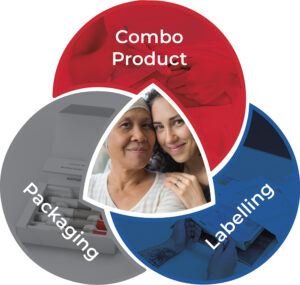
Figure 1: Key product considerations in device design.
Failure to align these streams often leads to either the drug being ready but the device validation package being incomplete at submission, or the device being ready but commercial sterile fill-finish capacity not being validated in time to support launch volumes.
Best practice is to build a unified development plan that overlays clinical milestones with device verification, human factors activities, stability intervals, PPQ and regulatory module preparation. Programmes that treat the device as a co-equal development workstream rather than secondary packaging consistently reduce approval and launch risk (Figure 1).
THE QUANTIFIABLE BENEFITS OF STARTING EARLY
Beginning device and packaging development activities during Phase II generates measurable downstream benefits. First, it reduces the need for bridging studies, whereas any late change in container-closure system or device configuration may trigger comparability assessments or additional analytical justification. In certain circumstances, clinical bridging may even be required. Locking configuration early minimises regulatory uncertainty and limits supplemental data requests.
Second, early investment in human factors engineering substantially improves validation outcomes. Human factors validation failures remain one of the most common late-stage setbacks for DDC products. Conducting iterative formative studies beginning in Phase II enables teams to refine instructions for use, labelling and ergonomic design before summative validation. Attempting to correct usability issues after formal validation often results in timeline resets.
Third, early engagement with component and device suppliers strengthens supply chain resilience. Tooling lead times for springs, plungers or moulded housings can extend beyond 12 months. In high-demand segments, such as prefilled syringes and autoinjector platforms, late procurement can delay launch by quarters rather than weeks. Sponsors who defer procurement until Phase III frequently encounter bottlenecks that delay commercial readiness independent of regulatory review timelines.
Similar principles apply when partnering with a CDMO. Partnering with a CDMO that can provide integrated pharmaceutical development, sterile fill-finish, drug-device assembly, testing and packaging solutions across the product lifecycle, from concept to commercialisation, will streamline supply chains, ensuring seamless continuity and expedited pathways.
“IN MANY CASES, THE FASTEST AND LOWEST-RISK PATH TO COMMERCIALISATION LIES IN USING ESTABLISHED DEVICE PLATFORMS RATHER THAN PURSUING FULLY BESPOKE SOLUTIONS.”
CHOOSING THE PATH OF LEAST RESISTANCE: PLATFORM VERSUS BESPOKE DEVICES
When speed to market is critical, platform selection is often the single most important lever. In many cases, the fastest and lowest-risk path to commercialisation lies in using established device platforms rather than pursuing fully bespoke solutions. Commercially available platforms often come with mature design history files, established manufacturing processes and extensive performance characterisation.
Regulatory agencies, such as the US FDA and the EMA, expect robust evidence that the device part of the DDC product performs safely and effectively in the intended use population. Established platforms frequently benefit from regulatory precedent and well-documented testing, which can simplify dossier preparation and reduce review cycles. Additionally, the common device platforms are also built around standard container-closure systems, allowing for additional use of existing precedents and documentation.
Bespoke devices, however, may offer differentiation and branding advantages that can be particularly beneficial, especially in competitive therapeutic categories. However, they introduce greater technical risk, higher non-recurring engineering costs and longer development timelines. For lifecycle management programmes, such as transitioning from vial-and-syringe to an autoinjector, platform solutions typically represent the most pragmatic route.
The “path of least resistance” does not imply minimal rigour; rather, it reflects the use of proven engineering and manufacturing infrastructure wherever possible to reduce variables under regulatory scrutiny. Table 2 shows the pros and cons of using a device platform versus bespoke solutions.
| Advantages | Disadvantages | |
| Platform | • Lower upfront costs • Use of existing capital infrastructure • Smoother regulatory path • Robustness of device uses currently in market |
• Limited product differentiation • Higher unit costs • Coemption of supply for popular devices |
| Bespoke | • Product differentiation – competitive advantage • Bespoke design for specific applications • Extended IP life of the product • Lower unit costs when scale is achieved |
• Higher upfront costs (e.g. design, IP capital technology) • Complex regulatory path |
Table 2: Bespoke versus platform design.
MITIGATING COMMERCIALISATION RISK
Risk mitigation in DDC products should be structured across five domains:
- Technical risks often stem from incomplete verification, insufficient extractables and leachables data, or failures in container closure integrity. These can be mitigated by initiating protocol development early and aligning analytical methods with anticipated commercial specifications.
- Human factors risks are best addressed through iterative formative testing using representative patient populations under real-world conditions. Early identification of use errors can prevent the need for costly redesigns after validation.
- Regulatory risk frequently arises from unclear primary mode of action determinations or fragmented documentation across drug and device modules. Early scientific advice meetings and proactive agency engagement can clarify expectations before submission.
- Manufacturing risk focuses on equipment lead times, tooling qualification and scale-up reproducibility. Parallel process development during Phase II, combined with early equipment procurement, or early CDMO partnership prevents compression of PPQ activities.
- Supply chain risk has become increasingly visible in recent years. Dual sourcing of critical components, geographic diversification and strategic outsourcing partnerships can reduce vulnerability to disruption during the launch window.
“STREAMLINING THE PATH TO COMMERCIALISATION FOR DDC PRODUCTS IS LESS ABOUT ACCELERATING INDIVIDUAL TASKS AND MORE ABOUT DISCIPLINED EARLY DECISION-MAKING.”
CONCLUSION
Streamlining the path to commercialisation for DDC products is less about accelerating individual tasks and more about disciplined early decision-making. Selecting a commercial-intent device platform during Phase II, integrating drug and device timelines, initiating stability and compatibility studies in final configuration early, and using established platforms, tooling libraries and partnering with CDMOs with flexible, scalable solutions where appropriate, can collectively reduce regulatory and operational friction.
Organisations that approach DDC product development as a unified, risk-based programme rather than a sequential transfer between drug and device teams consistently protect launch timelines and reduce uncertainty. In an increasingly competitive self-administration landscape, early integration, proactive risk mitigation and thoughtful platform selection are not merely best practices; they are strategic imperatives for timely and successful commercialisation.