To Issue 188
Citation: Vogel S, “Efficiency, Data Integrity and Quality Assurance in the Production of Insulin Pens”, ONdrugDelivery, Issue 188 (Jul 2026), pp 64–67.
Based on an article originally published in British Plastics & Rubber Magazine.
Stephan Vogel discusses the role of advanced monitoring technologies in high-volume medical device manufacturing, considering the key role they play in ensuring quality and compliance with regulatory requirements and how analysing data centrally can support consistency across lines and sites.
In recent years, medication formulations and drug delivery systems, such as insulin pens and autoinjectors, have become more effective and patient-friendly, ushering in a new era of self-administered treatments. However, their spread has presented manufacturers with major challenges – they have to meet extensive quality and sustainability requirements while still being able to ramp up production quickly. Advanced measurement technology and process monitoring solutions help manufacturers to efficiently master these challenges and count on advanced process control, robust data integrity and reliable quality assurance (Figure 1).
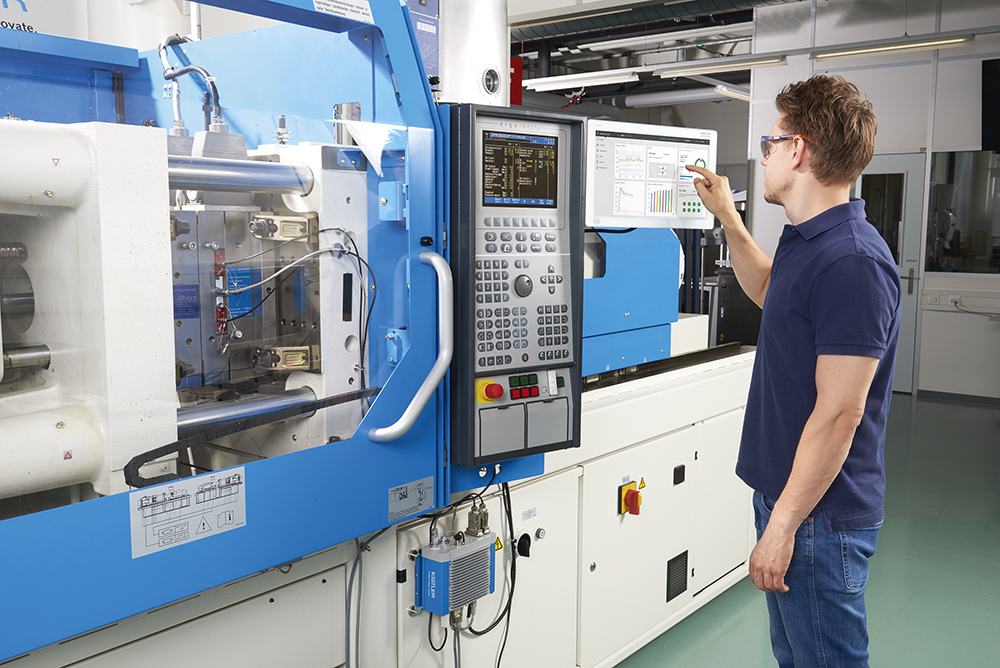
Figure 1: The evolution of medical production, fuelled by innovations such as autoinjectors and insulin pens, requires enhanced process control and data integrity to meet stricter quality assurance and regulatory demands while also increasing efficiency.
The medical technology industry is growing worldwide, particularly in the field of diabetes care, where growth is estimated to exceed 10% by 2029. Beyond the rise in self-administered insulin therapies, the demand for autoinjectors is also driven by improved drug formulations that now enable subcutaneous delivery of medications for a variety of other diseases.
Previously, such drugs were limited to slow intravenous use due to their high viscosity or the volume required. The shift to self-administered therapies via mechanical insulin pens and other autoinjectors offers substantial benefits to healthcare systems, reducing treatment costs and helping to address medical staff shortages – provided that the pens are safe, easy to use and equipped with appropriate safety features, such as covered needles or on-demand dosing.
Though pens are relatively inexpensive to produce, manufacturers of disposable or reusable pens are faced with manifold challenges. These include increasingly detailed global regulations, such as the EU Medical Device Regulation, and rising pressure to reduce waste, accelerate time-to-market and lower costs. High quality standards further increase cost pressures, as manufacturers must sort out possible faulty parts at every stage of the production process without losing good parts.
“MONITORING THE CAVITY PRESSURE IN-LINE DURING PRODUCTION IS AN EFFECTIVE SOLUTION – BY MEASURING CAVITY PRESSURE AND MOULD TEMPERATURE IN REAL TIME, MANUFACTURERS CAN VISUALISE EACH SHOT AS A COMPLETE PROCESS CURVE.”
ADVANCED MEASUREMENT TECHNOLOGY AND PROCESS CONTROL FOR PEN PRODUCTION
Manufacturers can pull several levers to overcome these challenges. In the production of plastic components, for instance, two issues are crucial:
- The rapid ramp-up of production capacities
- Cost-efficient and reliable processes for part release.
Figure 2: Continuous process control through real-time monitoring systems supports efficiency enhancement and precise quality assurance for reliable production of complex medical devices.
Monitoring the cavity pressure in-line during production is an effective solution – by measuring cavity pressure and mould temperature in real time, manufacturers can visualise each shot as a complete process curve (Figure 2). Direct cavity pressure sensors with melt contact can deliver high-resolution data and are ideal for fine-grained process feedback, while indirect sensors can enable quality monitoring without affecting the surface of the part. When combined with intelligent process monitoring systems, this approach can make it possible to trace each part individually and document a variety of quality-relevant parameters.
“APPROPRIATE REAL-TIME MONITORING DRASTICALLY REDUCES RAMP-UP TIME FOR NEW TOOLS AND INCREASES OVERALL EFFICIENCY BY STABILISING THE PROCESS AT AN EARLY STAGE.”
This allows manufacturers to detect deviations early on and accurately predict part quality during the moulding cycle. Appropriate real-time monitoring drastically reduces ramp-up time for new tools and increases overall efficiency by stabilising the process at an early stage. Furthermore, advanced measuring technologies are precise enough that the pressure curves can be used to draw conclusions about the dimensional accuracy of the manufactured parts, eliminating the need for time-consuming remeasurements.
VISION SYSTEMS CLOSE THE GAPS IN QUALITY MONITORING
Despite the advantages and efficiency of cavity-pressure and temperature monitoring, certain product characteristics require additional inspection, such as surface quality, colour fastness, dimensional tolerances and the absence of burrs on metallic parts like needle tips. Vision systems can use 2D, 2.5D and 3D imaging technologies to deliver high-resolution data on a wide range of critical features, including precise measurements of geometric dimensions, verification of assembly integrity and the detection of surface defects on both plastic and metallic components.
Real-time vision systems can operate in-line, ensuring that every single part meets defined quality standards without interrupting the production flow. They are able to assess an abundance of visual characteristics, compress the resulting data efficiently into records and forward it to higher-level systems for seamless documentation and analysis. The result is a consistent quality assurance concept that covers nearly all autoinjector components, even in high-volume, cross-continental production scenarios.
CHALLENGING FORCE MEASUREMENT IN HIGH-SPEED ASSEMBLY
While optical systems are essential to close remaining quality gaps left by process monitoring, particularly for visual and surface-related features, they cannot provide information about the forces acting within the assembly process itself. This is a critical gap in monitoring high-volume production settings, where cameras often assess component height before and after press-fit operations without monitoring the actual joining process or verifying compliance with force tolerances.
Measuring these forces in high-speed environments presents a technical challenge. When sensors are mounted on rapidly moving actuators, the effects of acceleration and deceleration interfere with the force signal, making accurate measurements nearly impossible, especially with the tight force tolerances required to protect the glass syringe within the autoinjector.
One approach to a fully integrated solution is to combine a high-speed magnetic drive with synchronised force and acceleration sensors, controlled by a process monitoring system. This form of setup would need to compensate dynamically for inertial influences, isolating the true joining force in real time and directly comparing it with specified tolerance windows. This could enable users to reduce cycle times and detect faulty parts without needing to conduct extra testing on a smaller and more effective machine design (Figure 3).
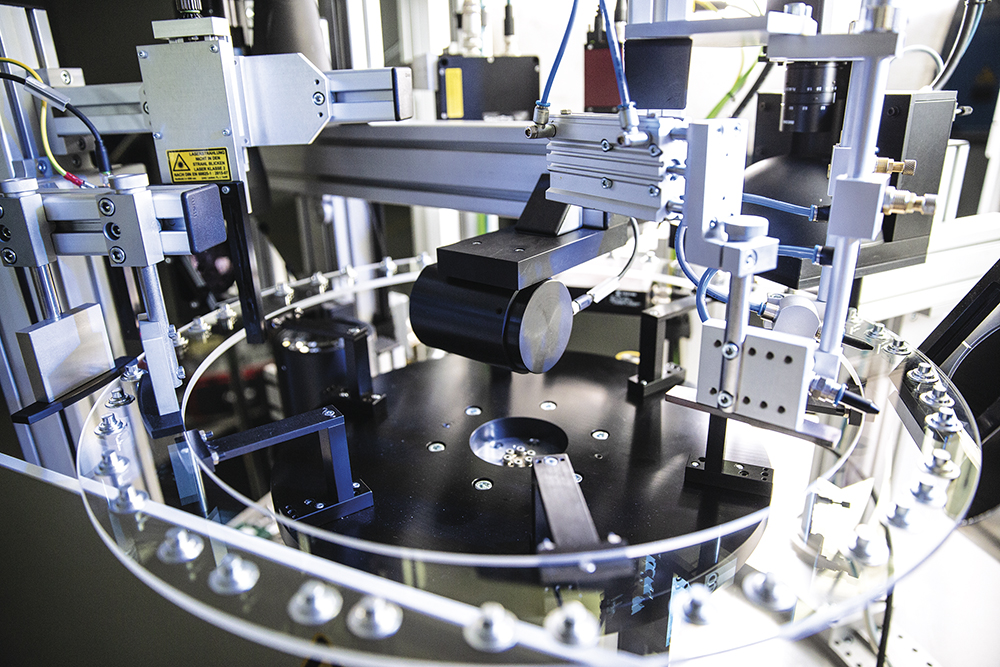
Figure 3: Advanced, camera-based measurement technology enables thorough visual inspection, ensuring data integrity and quality assurance when manufacturing medical devices in high volumes.
“OUTPUTS FROM REAL-TIME MONITORING CAN BE SAVED, ANALYSED AND COMPARED ACROSS SITES AND PRODUCTION LINES, ENABLING CONSISTENT QUALITY DATA MANAGEMENT WORLDWIDE AND RAPID PROCESS VALIDATION.”
DATA INTEGRITY AS A FOUNDATION FOR RELIABLE MANUFACTURING
Outputs from real-time monitoring can be saved, analysed and compared across sites and production lines, enabling consistent quality data management worldwide and rapid process validation. Closed-loop control can enable straightforward integration into existing programmable logic controller environments, which can provide precise, direct feedback at the part level, allowing for immediate sorting of faulty components without disrupting overall throughput.
Complete data integrity is a core requirement in medical device production. Each component must be traceable, verifiable and reproducible across all production lines and sites to meet regulatory requirements. A key approach to this is to transfer data collected during manufacturing and assembly processes to an effective quality management system. Data should be centrally stored and analysed to transform it into usable information according to customers’ needs.
This approach not only ensures full traceability in line with regulations, but it also forms the basis for predictive improvements, faster line validation and resource-efficient production. Instead of manually verifying quality through random sampling, manufacturers can access real-time performance data to evaluate output rates, dimensional accuracy and compliance before a single unit leaves the machine.
Additionally, new production lines can be benchmarked against existing reference curves to ensure consistent product quality worldwide. Thus, data integrity becomes more than a documentation requirement – it becomes a driver of product safety, cost efficiency and technological scalability.
EMPOWERING THE VALUE CHAIN
Sustainable success in medtech manufacturing requires a fully connected value chain that translates process data into actionable knowledge, links decentralised production stages via standardised quality logic, and ensures that every unit produced anywhere in the world complies with internal targets and external regulations. This integration should begin during tool validation and part release, continue through in-line monitoring and force-controlled assembly, and culminate in data-driven documentation and continuous process refinement.
“SCALABLE HARDWARE AND SOFTWARE SOLUTIONS ARE ESSENTIAL, BUT ARE ONLY EFFECTIVE WHEN PAIRED WITH THE CORRESPONDING HUMAN EXPERTISE, MAKING APPLICATION-SPECIFIC CONSULTING AND HANDS-ON TRAINING KEY TO UNLOCKING THE FULL POTENTIAL OF MEASUREMENT SYSTEMS.”
Scalable hardware and software solutions are essential, but are only effective when paired with the corresponding human expertise, making application-specific consulting and hands-on training key to unlocking the full potential of measurement systems. When technology and know-how converge across the value chain, manufacturers gain more than process control – they create resilient, globally consistent production systems that can reliably and rapidly deliver high-quality, patient-safe devices at scale.