To Issue 186
Citation: Kübler N, “Sterile Drug Production: An Ever-Evolving Market”, ONdrugDelivery, Issue 186 (May 2026), pp 82–84.
Dr Norbert Kübler discusses the current state of sterile drug products, considering how advancing technology is changing the field, the role of quality control and the challenges faced during scale-up and manufacturing.
The pharmaceutical industry is always evolving and advancing, with next-generation drugs and a growing range of new modalities to target diseases in the pipeline. Nowadays, patient centricity is a key factor at the heart of drug product design, so the challenge for innovators is to formulate and design dosage forms and delivery methods that are safe, easy to use and improve the overall patient experience and compliance.
“CHANGING TRENDS IN THE FORMAT OF STERILE PRODUCTS HAVE FOCUSED ON INCREASING THEIR EASE OF USE, PARTICULARLY FOR DRUGS TARGETING CHRONIC DISEASES AND THOSE THAT ARE DESIGNED FOR SELF-ADMINISTRATION BY THE PATIENT AWAY FROM A CLINICAL ENVIRONMENT.”
In recent years, changing trends in the format of sterile products have focused on increasing their ease of use, particularly for drugs targeting chronic diseases and those that are designed for self-administration by the patient away from a clinical environment. One of the greatest barriers for patients using such medicines is a psychological one, so it is important that they are delivered by simple systems suitable for self-administration.
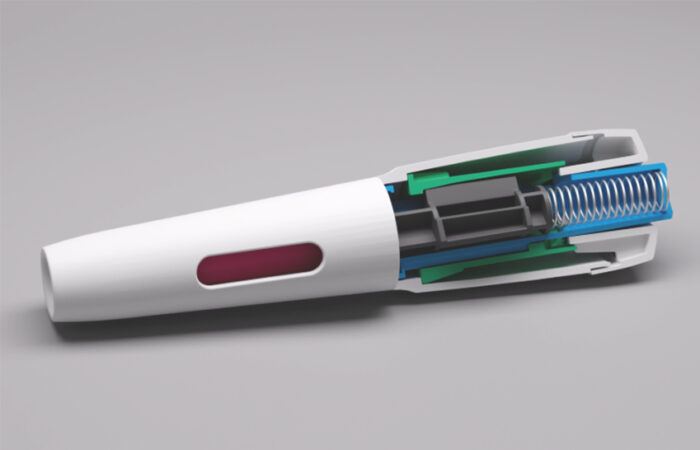
Currently, there are two principal types of self-injection device in common use. Firstly, there is the single-use injection system, usually containing a prefilled syringe. With these, the patient simply presses the device against their skin and pushes a button to deliver the dose. For safety, these devices should include a way to protect the needle and prevent injury to the patient from the needle after injection.
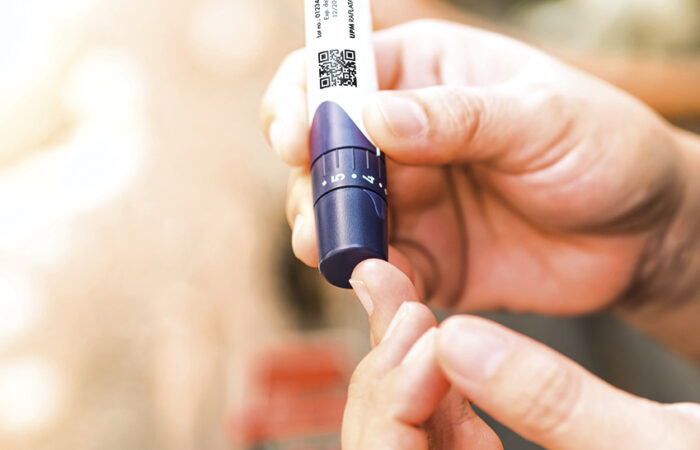
The second type of self-injection device uses a cartridge that contains multiple doses, usually within a glass or plastic barrel within the autoinjector device. These are very common for patients who are taking insulin or glucagon-like peptide-1 (GLP-1) drugs for diabetes or weight loss. This design allows for flexibility in the number and size of doses that can be administered, and connectivity between the autoinjector and a mobile device can be included to facilitate patient reminders when a dose is due, including which dose size is necessary. Not only does this optimise the delivery of the medicine, it can also be combined with glucose monitoring for insulin, for example. This data can then be monitored by physicians to check not only patient compliance with the drug regimen but also whether the drug is controlling their blood sugar effectively.
“THE MORE WIDESPREAD THE USE OF ADVANCED TECHNOLOGIES, THE CHEAPER THEY WILL BECOME, WHICH WILL MAKE THE BENEFITS MORE ACCESSIBLE TO A GREATER NUMBER OF PATIENTS IN THE LONG TERM.”
The natural consequence of increased innovation and connectivity within any device is a greater cost, which will be tolerable in some markets but prohibitive in others. However, the more widespread the use of advanced technologies, the cheaper they will become, which will make the benefits more accessible to a greater number of patients in the long term.
For innovators looking to develop new sterile products, the choice of device is crucial. Incorporating novel technologies into a delivery device, especially for a custom application, increases the cost significantly, but also offers brand differentiation. A standard, off-the-shelf platform device will always come at a reduced cost but, for a novel product, such a device would present less of a barrier to entry for future generic or biosimilar competition.
Historically, the sterile product market has been dominated by glass primary packaging, typically ampoules or bottles. However, traditional glass packaging is now being increasingly complemented by plastic alternatives. There are potential benefits and disadvantages to this – from a safety perspective, the reduction in the use of glass lowers the risk of breakage, whereas plastic can have unwanted interactions with drug formulations, meaning that specific studies into the potential of extractables and leachables are required.
“SINCE COMING INTO EFFECT IN 2022, ANNEX 1 TO EU GMP GUIDELINES HAS TRANSCENDED ITS EUROPEAN ORIGINS TO BECOME A GLOBAL BENCHMARK FOR STERILE MANUFACTURING.”
REGULATORY OVERSIGHT
Since coming into effect in 2022, Annex 1 to EU GMP guidelines has transcended its European origins to become a global benchmark for sterile manufacturing. The regulation introduced stringent new requirements that apply universally across all sterile product forms, from vials and prefilled syringes to cartridges and filled bags. This has elevated the standard of compliance for the entire industry worldwide.
The updated guidelines champion a proactive, risk-based approach to prevent contamination from all sources, including those which are microbial, particulate, pyrogenic and chemical. Central to this is the mandate for a holistic contamination control strategy (CCS). The CCS necessitates the implementation of advanced barrier technologies, such as isolators and restricted access barrier systems, to create a robust physical separation between the product and its environment, thereby minimising human intervention in the manufacturing process.
While the intense focus on CCS significantly expands the role of the quality control department, Annex 1 moves beyond departmental silos by demanding a cross-functional approach to compliance. This requires seamless collaboration between quality control, quality assurance, production and engineering teams. Consequently, operating within a qualified cleanroom is no longer sufficient; a sophisticated, process-centric understanding of technical complexities, such as airflow dynamics and barrier system integrity, is now the fundamental requirement.
“LIKE CHANGING PRIMARY PACKAGING FROM GLASS TO PLASTIC, EMPLOYING SINGLE-USE EQUIPMENT RELIES ON A DEEP UNDERSTANDING OF ANY POTENTIAL INTERACTIONS BETWEEN THE MATERIAL AND DRUG PRODUCT.”
MANUFACTURING TRENDS
The sterile filling sector is seeing an increased use of single-use systems within manufacturing, transitioning away from traditional stainless-steel equipment. This reduces process complexity for cleaning and cross-contamination controls, saving time and reducing the risk to product quality. However, like changing primary packaging from glass to plastic, employing single-use equipment relies on a deep understanding of any potential interactions between the material and drug product. Additionally, using single-use equipment significantly increases the amount of waste generated.
Another change in manufacturing is the general shift from bulk components – such as stoppers and vials – that require sterilisation before use to being supplied pre-sterilised. Although there is an increased cost for pre-sterilised components, the use of such items can be justified for smaller runs through lower set-up times, whereas, for very large quantities, in-house sterilisation of items remains more cost-effective.
Process controls and monitoring are now routinely carried out in-line, with advances in digital technology and connectivity having enabled them to be integrated into manufacturing lines. Capturing data and incorporating it into electronic batch records with full protection and integrity allows for seamless generation of verification reports and supporting documentation. That data can also be monitored over time to provide greater insight into process performance and rapidly highlight any variabilities that may occur.
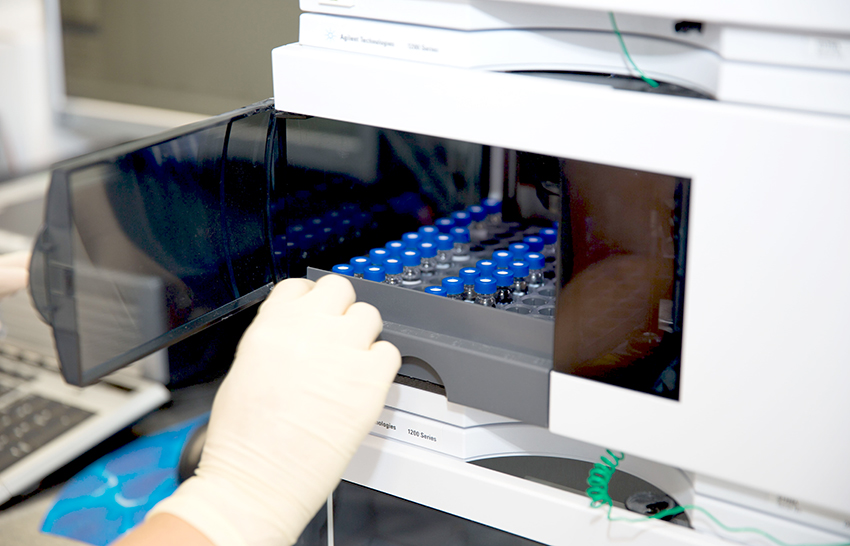
The advancement of new modalities brings about more challenges for the analytical process used to ensure both the efficacy and purity of drugs. The rise in the number of biological drugs being developed and manufactured has highlighted the growing need for advanced analytical techniques. Quality control departments have had to invest in and embrace these advances so that product development is not delayed and patient safety is not compromised.
One of the greatest problems associated with sterile drug manufacturing is the scale-up process, in part due to the impact that it has on so many product parameters. For example, when handling larger batch volumes of temperature-sensitive drugs, the increased processing time can be problematic. Using jacketed vessels can reduce the risk of product degradation in such a situation, allowing products to be held at lower temperatures for prolonged periods of time.
Similarly, increased volumes can impact filling lines. Early stages of development may see a batch being completed in a relatively short time, but commercial batches may see that time multiply manyfold. This introduces further challenges for ensuring that product quality remains consistent throughout.
Looking towards other modalities, there are many specific challenges in manufacturing sterile products. For example, the new generation of autologous cell therapies typically uses much smaller volumes of material, so it is essential to minimise losses in handling and processing, which makes traditional batch approaches inappropriate. Traditional batch sterility testing takes 15 days. However, this is not possible for these products, due to the fact that they must be released for use within 24–48 hours of manufacture. As such, solutions that can test for sterility and allow for real-time product release, in compliance with current guidelines, are required.
For CDMOs manufacturing drug products, it is vital that the evolving trends within the market are understood, allowing investment to be made ahead of time in technologies and systems that can meet the ever-changing needs of customers, regulators and patients. Speed is crucial within manufacturing; however, this can never be to the detriment of product quality or patient safety. Whether dealing with new devices or technologies that can enable faster, more efficient and accurate production, manufacturers must be in a position to implement changes rapidly and effectively to serve their customers and deliver the next generation of potentially life-changing drugs to patients.