
To Issue 186
Citation: Gross C, Tunkel M, “Importance of Being Patient-Centric in Cardiovascular-Kidney-Metabolic Care”, ONdrugDelivery, Issue 186 (May 2026), pp 90–94.
Cécile Gross and Mark Tunkel discuss Nemera’s substantial portfolio of user-friendly, effective injectable devices available to meet the needs of patients with diverse chronic conditions.
Until recently, chronic conditions such as obesity, Type 2 diabetes mellitus, atherosclerotic cardiovascular disease, heart failure, chronic kidney disease and metabolic dysfunction-associated steatotic liver disease have been managed through separate treatments. Recent evidence reveals that these conditions share overlapping pathophysiological mechanisms and, therefore, treatment strategies. Today, they are recognised as interconnected disorders.
In November 2023, the American Heart Association was the first to define cardiovascular-kidney-metabolic (CKM) syndrome as a “health disorder attributable to connections among obesity, diabetes, chronic kidney disease and cardiovascular disease (CVD), including heart failure, atrial fibrillation, coronary heart disease, stroke and peripheral artery disease. CKM syndrome includes those at risk for CVD and those with existing CVD”.1 As a result, the framework has expanded and can be called the Cardiovascular-Renal-Hepatic-Metabolic (CRHM) syndrome.2
In parallel, new medications have demonstrated benefits across multiple similar conditions, improving both quality of life and clinical outcomes. Over the past five years, clinical trials have shown promising results for these therapies, such as glucagon-like peptide-1 receptor agonists (GLP-1 RAs), dual glucose-dependent insulinotropic polypeptide/GLP-1 RAs, sodium-glucose cotransporter 2 inhibitors and finerenone. More clinical trials are underway to further expand the indications of novel agents and to provide additional insight where current evidence is lacking.
These significant advances in therapeutic approaches aim to expand treatment options and improve outcomes across the intertwined conditions that define the aforementioned syndromes. They also have the potential to transform the future of CKM/CRHM treatment moving towards patient-centred interdisciplinary care.
GLP-1 RAs have become frontrunners in treating CKM/CRHM because they improve insulin resistance and glycemia, as well as reducing weight and CVD mortality. As obesity is a major driver of CKM syndrome, prevention and management of this condition is a clinical and public health priority. The WHO recognised the importance of this priority in its guideline on the use of GLP-1 medicines in treating obesity.3
Beyond public health, public spending is also at stake. In the US, the total cost of chronic diseases due to obesity and being overweight has been assessed by the Milken Institute at 9.3% of GDP. Obesity is by far the greatest contributor to chronic disease burden, accounting for 47.1% of the total cost of chronic diseases nationwide.4
Drawing on over two decades of expertise in high-volume manufacturing of injectable devices, and by incorporating well-established pen injector platforms, Nemera now provides a broad portfolio of proprietary products. Developed in-house to meet the needs of diverse patient populations and global markets, these solutions enable users to benefit from:
- Easy and Comfortable Use: Low activation force, smooth injection, ergonomic design and intuitive handling improve patient comfort.
- Accurate and Safe Dosing: Precise dose delivery and easy adjustments reduce dosing errors and incorrect dosage selection.
- Clear Feedback: Visual indicators confirm injection status and full dose delivery, increasing confidence.
- Improved Adherence and Access: Simplicity, reduced training needs and lower cost per injection support better treatment adherence and wider access.
- Versatility and Reliability: Compatible with a wide range of drugs and based on proven, patient-accepted technology.
“THE COMPANY’S SOLUTIONS ADDRESS SOME OF THE MAIN CHALLENGES WITH GLP-1 RA PRODUCTS: DESIGNING DEVICES THAT LIMIT UNDERDOSING RISK AND INCREASING PATIENT ADHERENCE THROUGH A POSITIVE USER EXPERIENCE.”
As a GLP-1 RA device manufacturer and combination product service provider, Nemera has an opportunity to become a key player in CKM/CRHM care. The company’s solutions address some of the main challenges with GLP-1 RA products: designing devices that limit underdosing risk and increasing patient adherence through a positive user experience.
SECURING CLINICAL OUTCOMES
A pharma company must integrate many factors into its delivery device selection to create a patient-centric and clinically effective drug delivery experience. Obese patients are defined by their BMI, but other comorbidities, patient education, engagement with treatment, therapy preferences, lifestyle, previous interactions with medical devices, geographical factors and costs should also be taken into consideration when selecting a drug delivery device.
Some of the most important factors in securing a positive clinical outcome are limiting the risk of underdosing and increasing patient adherence. Nemera has designed several pen injector platforms with unique features to achieve this.
Limiting Underdosing Risks
Underdosing is one of the largest risks to ensuring positive clinical outcomes, which is why it is specifically addressed with the newest platforms in Nemera’s pen injector portfolio: PenDIA and PenSET (Figures 1 & 2).
PenDIA is a spring-assisted, variable multidose pen injector platform, which is the basis for PenDIA Step, a variant that allows pharma companies to pre-select the dose increments that patients must use to administer a dose. This prevents potential underdosing by requiring patients to dial the pharma companies’ pre-selected doses before administering. In order to use PenDIA Step, patients must dial their appropriate dose and cannot inject unless the previously defined dose increment is selected on the pen dial. There is no possibility to dial “in-between” dose increments. The pen can also be fully reset or dialled back if a user makes an error or dials before they are ready to administer.
PenSET is a spring-assisted, fixed-dose pen injector platform, that combines the advantages of a pre-set dose as in autoinjectors alongside multidose capabilities as in conventional pen injectors. Again, patients can only dial the dose the pharma company has pre-set.
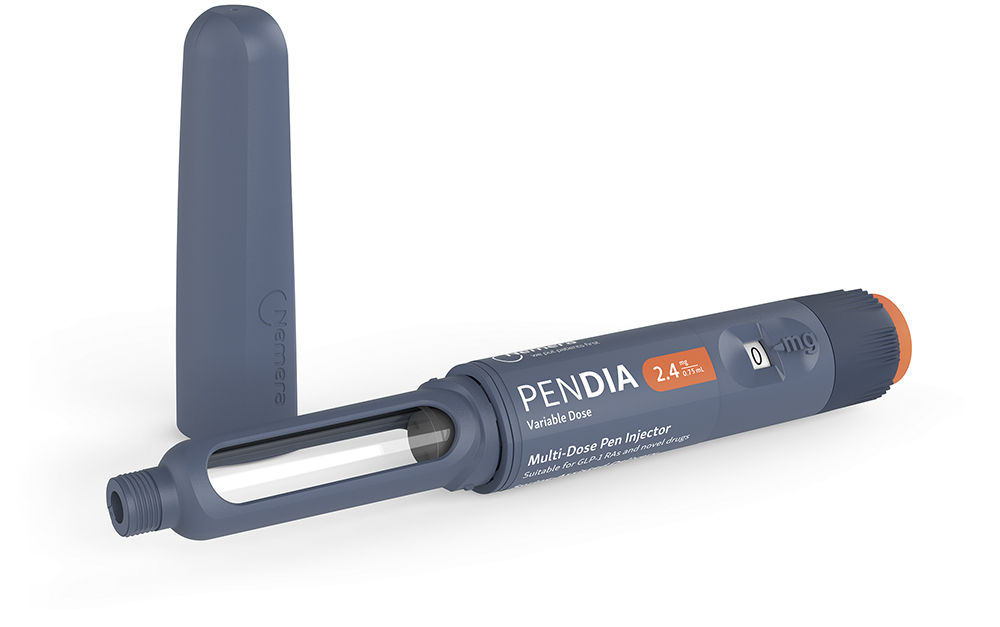
Figure 1: PenDIA pen injector platform with the ability to limit underdosing risk.

Figure 2: PenSET pen injector platform with full fixed-dose possibilities.
Offering a Positive User Experience and Increasing Patient Adherence
Adherence challenges are common among patients with obesity and poor adherence rates must be improved to secure clinical outcomes.5 When selecting a delivery device, pharma companies focus on its ease of use to foster the greatest patient acceptance.
“PENDIA AND PENSET PLATFORMS ARE DESIGNED WITH A SPRING-ASSISTED INJECTION, WHICH PROVIDES PATIENTS WITH A CONSTANT DOSING RATE AND REDUCED INJECTION FORCE, ELEVATING THE USER EXPERIENCE.”
The aforementioned PenDIA and PenSET platforms are designed with a spring-assisted injection, which provides patients with a constant dosing rate and reduced injection force, elevating the user experience. They also clearly indicate the injection status to reassure patients that they have fully administered their treatment.
The PenDURA platform is a reusable, spring-assisted, variable multidose pen injector platform. On top of spring-assisted delivery, it has an ergonomic design that offers more comfortable drug delivery, reinforced by a clear visual feedback system that allows patients to inject confidently (Figure 3). The sliding injection button acts as a safety feature to stabilise the pen onto the skin before, during and after the injection.
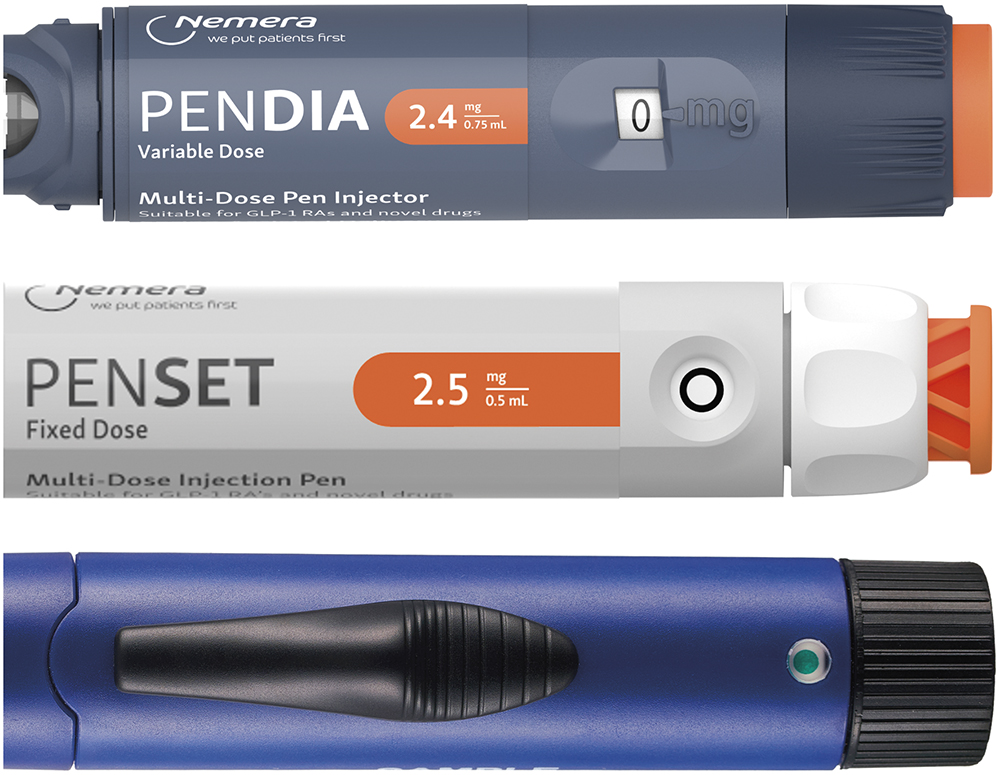
Figure 3: Clear indication of injection status to enhance patient adherence with PenDIA, PenSET and PenDURA pen platforms.
For manual, variable multidose pen injectors, the PenVARIO platform was designed with a large window and optimal contrast to enable patients to read the dose they have selected easily. For each of its GLP-1 RA variants (i.e. liraglutide, semaglutide and tirzepatide), it also integrates an active last dose stop that prevents incomplete administration of the last dose left in the pen.
Connectivity features related to medication management have been helping patients with diabetes and other conditions to monitor their treatment and increase adherence.6,7 This technology can also be applied for obese patients. Nemera has developed an add-on device that does not modify the way the pen injector is used. Patients can receive information related to their injections directly from the add-on device to an app on their smartphone.
INTEGRATED SERVICES AND MANUFACTURING CAPABILITIES TO SUPPORT DRUG-DEVICE COMBINATION PRODUCTS
For specific customer applications, Insight by Nemera – the independent development and consulting team within the company’s services business unit – can support pen-platform-based combination products from registration through to commercialisation. Nemera provides this support through a suite of consulting services designed to address every aspect of combination product development. With a proven track record in helping customers achieve regulatory approvals in over 50 countries with a wide variety of device types and suppliers, they define customised strategies to meet the unique needs of each programme. Nemera’s services include:
- Functional/Analytical Lab Testing and Design Verification: State-of-the-art facilities and customised methodologies ensure that products meet safety, quality and compliance standards. Nemera supports performance and functionality testing, analytical testing (stability, biocompatibility/biological risk assessments, etc.) and design verification for final combination products. Their processes align with ISO and US FDA requirements.
- Human Factors Management and Design Validation: Nemera ensures that devices and combination products are safe and effective for target users while enhancing the patient experience and adherence. The areas supported include human factors strategy development, risk analyses, usability testing (formative and summative) and preparation of regulatory documentation for global regulatory authorities.
- Instructional Materials and Secondary Packaging Development: Nemera creates tailored instructions for use, value-added packaging and integrated digital assets that improve the user experience, increase adherence, boost engagement and support specific combination product applications.
- Quality/Regulatory Strategy and Registration Support: Nemera’s team can help partners navigate the complexities of global regulatory processes and standards from strategy and pre-market activities to registration and post-market support. This includes developing strategies, engaging with regulatory bodies and preparing submission-ready materials to ensure compliance with global requirements including the management of Essential Drug Delivery Outputs.
These services can be augmented by preclinical, clinical and small-series device supply, accelerating development timelines while deferring capital expenses. This ensures a cost-effective and streamlined process. A holistic approach to these activities is crucial for success.
“TO PROVIDE FULLY AUTOMATED INDUSTRIAL CAPABILITY TO ITS PARTNERS, NEMERA HAS INVESTED IN TWO OF ITS EUROPEAN PLANTS IN POLAND AND GERMANY TO EXPAND PEN INJECTOR MANUFACTURING CAPABILITIES.”
To provide fully automated industrial capability to its partners, Nemera has invested in two of its European plants in Poland and Germany (Figures 4 & 5), expanding its pen injector manufacturing capabilities. Able to produce prototypes, small series for clinical batches and large-scale volumes, these plants are equipped with state-of-the-art machines from moulding to assembly activities, including quality control testing.

Figure 4: State-of-the-art facility dedicated to pen injector manufacturing in Szczecin, Poland.

Figure 5: Extended facility for pen injector manufacturing in Neuenburg, Germany.
Nemera provides comprehensive service offerings with global manufacturing facilities and a commitment to sustainability. Its holistic approach ensures that every aspect of combination product development is seamlessly integrated.
BENEFITS OF PARTNERING WITH AN INTEGRATED PRODUCT AND SERVICE PROVIDER
Partnering with Nemera and Insight by Nemera means working with an integrated partner capable of delivering comprehensive solutions for proven pen platforms, development, manufacturing and consulting to support combination products from concept to market. Insight by Nemera’s experience with pen platforms can streamline project onboarding and execution, ensuring efficient progress and on track programmes. At every stage, its development and consulting teams are dedicated to driving improved outcomes for patients and delivering confidence to customers.
By working with Nemera, the need to co-ordinate multiple specialised partners is eliminated. This simplifies the process and reduces complexity and risk, while accelerating regulatory approval and market access. This agile and integrated approach allows customers to focus on their core business while Nemera manages the details of combination product development, ensuring that the result is safe, effective and differentiated.
In conclusion, the expansion of therapeutic indications will broaden the patient population, meaning that the adoption of a patient-centric approach in CKM/CRHM care will no longer be optional – it will be essential for improving both clinical outcomes and patients’ quality of life. CKM/CRHM conditions are deeply interconnected; by placing the patient – not just the disease – at the centre of care, Nemera can foster stronger engagement, leading to improved adherence to therapies. Prioritising patient empowerment, education and common understanding across industry ensures that care is not only clinically sound but also meaningful and responsive to the lives of those it serves.
REFERENCES
- Ndumele CE et al, “Cardiovascular-Kidney-Metabolic Health: A Presidential Advisory From the American Heart Association”. Circulation, 2023, Vol 148, art 20.
- Theodorakis N, Nikolaou M, “From Cardiovascular-Kidney-Metabolic Syndrome to Cardiovascular-Renal-Hepatic-Metabolic Syndrome: Proposing an Expanded Framework”. Biomolecules, 2025, Vol 15(2), art 213.
- “WHO issues global guideline on the use of GLP-1 medicines in treating obesity”. News article, WHO, Dec 2025.
- “America’s obesity crisis the health and economic costs of excess weight”. Report, Milken Institute, Oct 2018.
- Gleason PP et al, “Real-world persistence and adherence to glucagon-like peptide-1 receptor agonists among obese commercially insured adults without diabetes”. J Manag Care Spec Pharm, 2024, Vol 30(8), pp 860–867.
- Frias J et al, “Effectiveness of Digital Medicines to Improve Clinical Outcomes in Patients with Uncontrolled Hypertension and Type 2 Diabetes: Prospective, Open-Label, Cluster-Randomized Pilot Clinical Trial”. J Med Internet Res, 2017, Vol 19(7), art e246.
- Aftab RA et al, “Umbrella review of systematic reviews analysing the effectiveness of digital tools in improving medication adherence among diabetic patients”. J Public Health, 2026.