
To Issue 186
Citation: Sillanpää P, “Closing the Safety Gap: Why Pharma-Dedicated Labels Matter”, ONdrugDelivery, Issue 186 (May 2026), pp 106–110.
Paavo Sillanpää of UPM Adhesive Materials discusses why pharma-dedicated labels matter for more challenging labelling applications as well as how to avoid potential label failure and brand risk.
PACKAGING FORMAT EVOLUTION AND CHALLENGES
Pharmaceutical packaging is undergoing a transformation as continued growth in injectables, biological drugs and self-administered therapies is driving the adoption of prefilled syringes, injection pens, autoinjectors, wearable devices and on-body injectors.
In the pharmaceutical industry, there is growing interest in moving away from traditional glass packaging formats to plastics, such as polypropylene, cyclo-olefin polymer and cyclo-olefin copolymer. At the same time, technologies such as blow-fill-seal, traditionally used for large volume parenterals and ophthalmics, are being used for select applications, such as single-dose vaccines. As packaging formats evolve, regulatory scrutiny intensifies. Authorities are paying closer attention to potential compound migration from packaging into drug products, as well as the biocompatibility of medical devices such as prefilled syringes, injection pens and inhalers.
A Sophisticated Industry with an Avoidable Weak Link
Pharmaceutical development and manufacturing have become increasingly sophisticated. Biologics, highly potent compounds and targeted therapies demand precise control over every aspect of the product lifecycle. At the same time, modern delivery formats, such as prefilled syringes, autoinjectors, infusion systems, inhalers and ophthalmic products, are bringing drug substances into direct contact with complex packaging and device components. In this environment, every material choice matters.
“MANY PHARMACEUTICAL PRODUCTS ARE STILL LABELLED WITH STANDARD-GRADE MATERIALS DESIGNED FOR GENERAL INDUSTRIAL OR CONSUMER USES. THIS MISMATCH IS WHERE THE SAFETY GAP OPENS.”
Regulators, such as the US FDA and EMA, set clear expectations for how container closure systems must be designed, qualified and controlled. However, despite the increasing complexity of delivery systems, many pharmaceutical products are still labelled with standard-grade materials designed for general industrial or consumer uses. This mismatch is where the safety gap opens.
LABELLING CHALLENGES FOR INJECTABLES
Injectable products illustrate this mismatch particularly clearly. Containers with diameters below 23 mm – especially those between 7 and 12 mm – require adhesives engineered for tight mandrel hold and cold chain performance. When general-purpose label materials are used instead, risks such as edge lifting, peeling or loss of legibility become far more likely. In addition, injectable applications demonstrate how this compliance gap manifests operationally. Materials proven adequate for standard conditions may fail when exposed to cold chain, moisture and curved surfaces, resulting in visible label failure on finished drug products.
Standard Label Materials Create Unnecessary Hazards
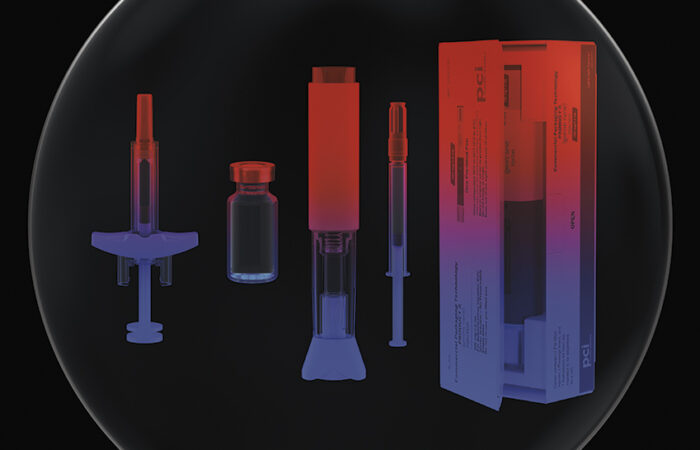
Labels are an integral part of pharmaceutical packaging and medical devices: they carry the critical information that patients and healthcare professionals rely on (Figure 1). However, what is less visible – and also often underestimated – is that labels can also contribute to extractables and leachables (E&L). When the wrong label materials are used, unwanted substances may appear in E&L studies or ISO 10993 biocompatibility testing. This can trigger retesting, raise costs, delay approvals and, in the worst case, interrupt supply.

Figure 1: Labelling across pharmaceutical packaging types.
Standard-grade label materials are fit for purpose in many non-regulated applications. However, when applied to certain pharmaceutical packaging scenarios, they can introduce risks that can become costly. This is because standard materials are typically not tested for sterilisation resistance, extreme temperatures/cold chain conditions or validated on pharmaceutical packaging formats. Furthermore, they are not produced under controlled raw material sourcing and change management processes, supported by documentation aligned with FDA and EMA expectations or prioritised in supply chains during raw material shortages.
Label Failure and Brand Risk
The gaps caused by using standard labels in pharmaceutical applications leave brand owners with an unattractive choice: generate additional data themselves or accept a higher level of risk. In regulated environments, neither option is ideal. So, what are the risks?
If a label fails – whether through migration, loss of adhesion, print degradation or instability during sterilisation or cold storage – the malfunction is visible on the final product to regulators, healthcare professionals and patients. The reputational and financial impact typically lands on the brand owner, whose product appears unsafe or non-compliant, and the converter, who supplied the labels. Even if the root cause is the selection of a standard material for a high-risk application, the damage is shared throughout the value chain.
E&L and Migration: Why Labels Matter
Three concepts are crucial for understanding the relevance of low-migration labels – extractables, leachables and migration. First, extractables are compounds that can be extracted from materials under aggressive laboratory conditions, such as with elevated temperature or strong solvents. These represent a worst-case scenario. Second, leachables are compounds that migrate into drug products under normal or accelerated storage conditions and are directly relevant to patient safety and product quality. Finally, migration is the process by which substances move from packaging or label materials into the product, driven by factors such as contact, temperature, solubility and storage time.
Labels can contribute to E&L risk in several ways. All label components must be considered, including the material, adhesive chemistry, inks and top coats. If plastic vials or syringes are used, there is always a potential risk for migration as the label adhesive is in direct contact with the packaging surface and the label-to-container surface area is large. This is where low-migration adhesives differ from standard adhesives. Low-migration adhesives are designed by selecting polymer structures that have higher molecular weight without residual monomers – minimising potential mobile additives and components with low molecular weight is essential.
“ALTHOUGH LOW-MIGRATION ADHESIVES AND LABEL CONSTRUCTIONS DO NOT ELIMINATE THE NEED FOR E&L STUDIES, THEY PROVIDE A SAFER STARTING POINT AND SUPPORT MORE EFFICIENT, RISK-BASED EVALUATIONS.”
Controlled selection of raw materials and locked formulations, which have strict change management, allow low-migration adhesives and constructions to address E&L risks. Risks are further minimised by using defined standard operating procedures to avoid cross-contamination from other adhesives, alongside detailed risk analyses, ensuring that the product is identical to previous versions if manufacturing is moved to another line or production location. Although low-migration adhesives and label constructions do not eliminate the need for E&L studies, they provide a safer starting point and support more efficient, risk-based evaluations.
Pharma-Dedicated Label Materials
So, what are pharma-dedicated label materials and why is it important to use them for injectable packaging? Pharma-dedicated label materials are designed to withstand sterilisation and cold chain conditions, perform across common pharmaceutical packaging types and comply with relevant regulatory expectations. They are particularly important for use with injectable products, as these are sensitive to uncontrolled material changes. As a result, adjustments intended to address adhesion, printability or supply substitutions can cascade into expanded testing, updated filings or delayed releases due to heightened scrutiny of container closure components.
Hidden Costs Associated with Standard Materials
The choice between standard and pharma-dedicated labels often appears, at first, to be a simple cost comparison. In reality, the true economic picture looks very different. This is because standard materials are not the best choice for high-risk or demanding applications, such as injectables, and can in fact have a raft of hidden costs attached to their use. These can include the need for additional E&L studies and analytical work, extended stability tests to investigate unexpected interactions and delays in marketing authorisation due to packaging questions.
The choice of standard labelling materials can also lead to product holds or batch rework caused by label performance issues, costly revalidation activities when suppliers alter formulations and follow-up actions during audits and potential recalls. Even if such events are relatively rare, the impact when they do occur is high. A single significant delay or recall can outweigh the marginal savings made when using standard materials across many production runs.
“PHARMA-DEDICATED LABEL MATERIALS BRING PERFORMANCE DESIGNED FOR STRESS CONDITIONS SUCH AS STERILISATION, LOW TEMPERATURES AND REAL-WORLD HANDLING, AS WELL AS CONSISTENT ADHESION AND DURABILITY ACROSS PLASTICS, GLASS AND SMALL-DIAMETER CONTAINERS OR MEDICAL DEVICES.”
VALUE GENERATED BY PHARMA-DEDICATED LOW-MIGRATION LABELS
Pharma-dedicated label materials deliver a wide range of benefits to converters and pharmaceutical brand owners. These include the reduction of uncertainty in E&L studies, the ability to have more targeted, risk-based testing and support for smoother interactions with regulatory agencies. Pharma-dedicated materials also provide more stable performance under demanding conditions and support change management across the product lifecycle.
Essential for brand owners, pharma-dedicated label materials bring performance designed for stress conditions such as sterilisation, low temperatures and real-world handling, as well as consistent adhesion and durability across plastics, glass and small-diameter containers or medical devices. The materials are also aligned with regulatory expectations, simplifying internal quality and risk assessments. This minimises the risk of manufacturing disruptions and unexpected issues with stability studies. Overall, pharma-dedicated materials provide built-in risk mitigation that protects both patients and product supply.
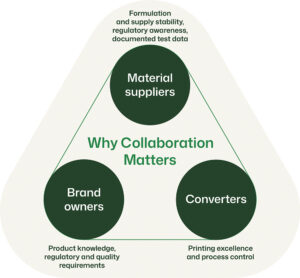
Figure 2: The supplier-converter-brand
owner triangle.
WHY COLLABORATION MATTERS: THE SUPPLIER-CONVERTER-BRAND OWNER TRIANGLE
Pharma packaging risk management works best when all three parties collaborate, and the earlier the collaboration, the better (Figure 2). An experienced pharmaceutical label material supplier will bring formulation stability, regulatory awareness, documented test data and global supply consistency to the triangle. The right converter will bring converting, printing excellence and process control, as well as guidance on the label material selection. The brand owner brings their product knowledge, quality requirements and regulatory compliance needs. When it comes to the label application to pharmaceutical packaging, experienced label material suppliers will also be able to provide their support and expertise.
When the three parties collaborate early, correct material recommendations will be made right from the start. As a result, label validation becomes smoother and change management prevents repetitive validations. Also, product launches face fewer surprises and supply continuity becomes more resilient. However, these collaboration benefits are not met when converters use standard materials from suppliers who cannot deliver regulatory documentation, do not prioritise formulation stability or frequently shift raw materials without controlled notification.
CHANGE MANAGEMENT: THE HEART OF PHARMA-DEDICATED MATERIALS
One of the most important benefits of choosing pharma-dedicated label materials from a reliable supplier is pharma-grade change management. Pharmaceutical products have long lifecycles and unplanned material changes can be highly disruptive. Thus, the stability window required by pharma companies must span several years.
A case in point is UPM, one of the leading suppliers of pharma-dedicated label materials, which commits to stabilising formulations over extended periods, formalised change notification frameworks that align with pharmaceutical requalification needs and detailed documentation of modifications, their potential impacts and rationales.
MATERIAL INTEGRITY SUPPORTED BY EXPERIENCED PARTNERS
Converters play a critical role in how labels are applied, processed and printed, but the foundation of reliable performance begins with the materials themselves. That foundation is only as strong as the materials, quality systems and manufacturing discipline behind the label stock.
When brand owners and converters choose label materials from trusted suppliers with a long history in regulated markets, they benefit from the stability and transparency that underpin dependable pharmaceutical packaging. Although there are many advantages to working with an experienced supplier such as UPM, the most important ones are: controlled formulations that remain unchanged over long product lifecycles, an extensive support package with data for E&L studies and regulatory submissions, and robust systems to provide consistent quality and traceability to the label coil level if needed. An additional benefit is having a resilient global supply that reduces the risk of shortages or disruptions affecting label availability.
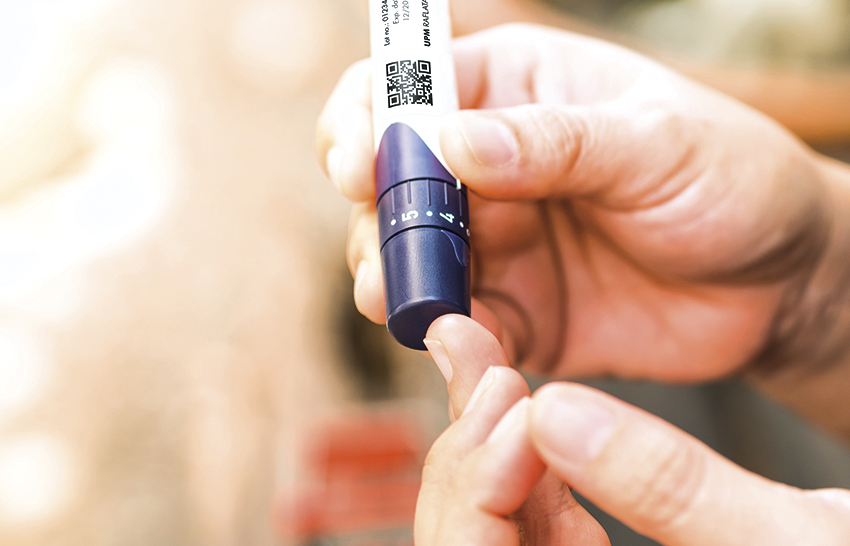
By partnering with an experienced pharma-dedicated label materials supplier, brand owners ultimately gain confidence not only in the label itself but in the expertise, processes and diligence behind it (Figure 3). Think of the importance of supplier choice like this: a label may cover only a few square centimetres, but the trust behind it must span continents, decades and regulatory boundaries.

Figure 3: Pharma-dedicated label materials are backed by testing and documentation required for patient safety.
The pharmaceutical packaging landscape is evolving and further highlighting the case for pharma-dedicated labels as non-negotiable risk-mitigation tools. By choosing pharma-dedicated label materials, converters and brand owners can reduce performance and compliance risks, avoid requalification caused by uncontrolled material changes and build greater confidence throughout the product lifecycle.