To Issue 186
Citation: “Interview with Andy Wertheim: GLP-1 Demand and the New Reality of Device Manufacturing Capacity”, ONdrugDelivery, Issue 186 (May 2026), pp 10–13.
Q There is increasing discussion around glucagon-like peptide-1 (GLP-1) therapies dominating manufacturing capacity – what are you seeing in the market?
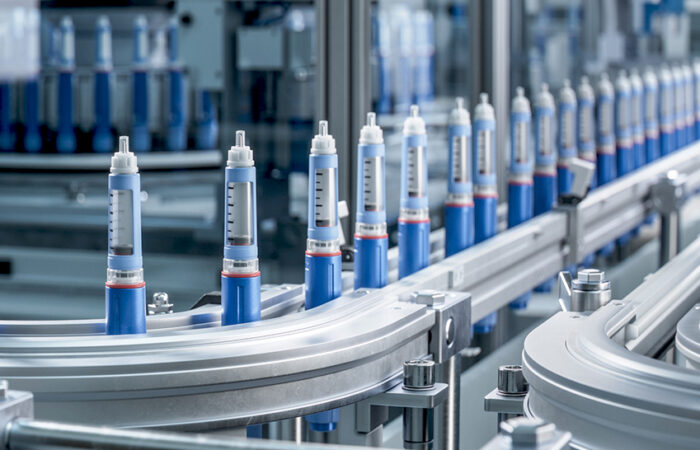
A First and foremost, we’re seeing a structural shift in device manufacturing demand that is primarily being driven by the extraordinary growth in the number of GLP-1 therapies. These products require highly reliable delivery platforms, particularly autoinjectors and pen injectors, manufactured at high volumes – the scale-up requirements are unprecedented in modern drug delivery.
Market forecasts and analyst estimates suggest that global sales of GLP-1 therapies for diabetes and obesity could exceed US$100 billion (£74 billion) annually within the next decade. Behind that number sits an enormous requirement for delivery devices. Analysts estimate that demand for GLP-1 injection devices could reach well over one billion units per year, with production concentrated across a relatively small number of high-volume programmes.
Each of those programmes requires robust supply chains, validated cleanroom manufacturing, precision moulding, automated assembly and long-term capacity commitments. As a result, a significant proportion of the industry’s available device manufacturing infrastructure is being absorbed by a handful of very large programmes.
“TIMELINES ARE SLIPPING NOT BECAUSE OF DEVICE DESIGN CHALLENGES OR REGULATORY HURDLES BUT BECAUSE SUITABLE MANUFACTURING PARTNERS SIMPLY DON’T HAVE THE AVAILABLE CAPACITY. IN MANY CASES, THE CONSTRAINT IS NO LONGER INNOVATION – IT’S INDUSTRIALISATION.”
This concentration of demand is creating a ripple effect across the industry. Programmes outside the GLP-1 space – whether in biologics, specialty pharmaceuticals, emergency medicine or rare diseases – are finding it increasingly difficult to secure manufacturing capacity. We’re consistently hearing that timelines are slipping not because of device design challenges or regulatory hurdles but because suitable manufacturing partners simply don’t have the available capacity. In many cases, the constraint is no longer innovation – it’s industrialisation.
Q Why is the demand for GLP-1 therapies having such a disproportionate impact?
A It comes down to scale, speed and certainty of demand. GLP-1 therapies are being produced at extremely high volumes, often requiring multiple dedicated production lines and multi-year commitments. A single successful programme can require hundreds of millions of devices annually, which may translate into several fully automated assembly lines running continuously.
The manufacturers supporting these programmes must allocate significant cleanroom space, automation infrastructure, engineering resources, quality oversight and supply chain bandwidth to them. These are not easily scalable overnight. The automation equipment alone can have lead times of 12–18 months, and highly automated assembly lines for drug delivery devices require extensive validation before commercial release.
Unlike traditional combination product programmes, where demand ramps gradually, GLP-1 products require immediate, sustained and high-volume output. Those requirements effectively lock down manufacturing capacity for extended periods. Once lines are committed, they are not easily redeployed without significant disruption.
This creates a structural imbalance. A relatively small number of large programmes are consuming a disproportionate share of the available production capacity, leaving smaller but clinically important programmes competing for limited resources.
Q Which types of programmes are most affected by this capacity constraint?
A We’re seeing the greatest impact on the “missing middle” – the mid-volume combination products and emerging biologics that still require robust, regulated device manufacturing. These programmes may require 5–20 million units annually, which, historically, would have represented meaningful demand. In the current environment, however, those volumes can struggle to compete against programmes requiring 50–200 million units per year.
This includes therapies in the autoimmune disease, oncology, emergency medicine and specialty injectables sectors. Many of these programmes have completed device development and are ready to be transferred into manufacturing but are encountering delays purely due to lack of available cleanroom capacity.
There is also a broader innovation risk. Smaller biotech companies, particularly those developing differentiated therapies, often lack the leverage to secure large-scale manufacturing commitments early. As a result, innovation timelines can be indirectly constrained by manufacturing access, rather than scientific progress. This is an important shift – historically, manufacturing followed innovation, whereas now innovation is increasingly being shaped by manufacturing availability.
Q Is this a temporary issue or a longer-term structural change?
A In my view, this is a structural shift rather than a short-term spike. Demand for GLP-1 therapies continues to grow, and additional entrants into the obesity and metabolic disease space are increasing the pressure even further. And, while new manufacturing capacity is planned, the timelines to bring regulated facilities online are significant.
Designing, building, equipping and validating a new cleanroom manufacturing facility can take 24–36 months. That includes equipment procurement, process development, installation qualification, operational qualification and performance qualification, all under regulated quality systems. Capital investment for highly automated device assembly can easily reach the tens of millions of pounds or dollars.
“THE IMPLICATION IS CLEAR: MANUFACTURING CAPACITY IS BECOMING A STRATEGIC ASSET RATHER THAN AN OPERATIONAL AFTERTHOUGHT.”
This means that, even with significant investment, expansion will lag behind growing demand. For the foreseeable future, manufacturing availability will remain constrained. The implication is clear: manufacturing capacity is becoming a strategic asset rather than an operational afterthought.
Q What risks does this create for pharmaceutical and medtech companies?
A The primary risk is timeline delay. If manufacturing capacity is not secured early, programmes can stall even after successfully meeting clinical and device development milestones. This can affect regulatory submissions, launch timings and, ultimately, patient access. Ultimately, this is not just an operational issue – delays in securing manufacturing capacity can directly erode programme value by pushing out launch timelines and impacting revenue realisation.
There is also a risk borne from supply chain concentration. When manufacturing is dominated by a small number of large programmes, reliance on a single supplier increases vulnerability. Companies are increasingly exploring dual-sourcing strategies or secondary manufacturing partnerships to mitigate this risk.
A similar emerging risk is geographic concentration. As companies reassess supply chain resilience, regional manufacturing capability is becoming more important. Programmes that rely on single-region manufacturing may face additional scrutiny. Overall, manufacturing is moving onto the critical path of programme strategy – it is no longer simply an execution step at the end of development.
Q How should companies respond to this environment?
A The first step is awareness. Organisations need to recognise that manufacturing capacity must be secured earlier in the development lifecycle. Increasingly, we are seeing companies engage manufacturing partners 12–24 months earlier than they used to.
Secondly, companies should diversify their manufacturing partnerships. Engaging with partners that have available capacity and the ability to scale reduces risk. This may include working with specialised CMOs that can onboard programmes quickly.
There is also a growing trend towards designing supply strategies with dual manufacturing partners from the outset. This approach provides flexibility, reduces risk and improves resilience. Ultimately, manufacturing strategy needs to be integrated into product strategy much earlier than in the past.
Q Where does Quvara Medical fit into this landscape?
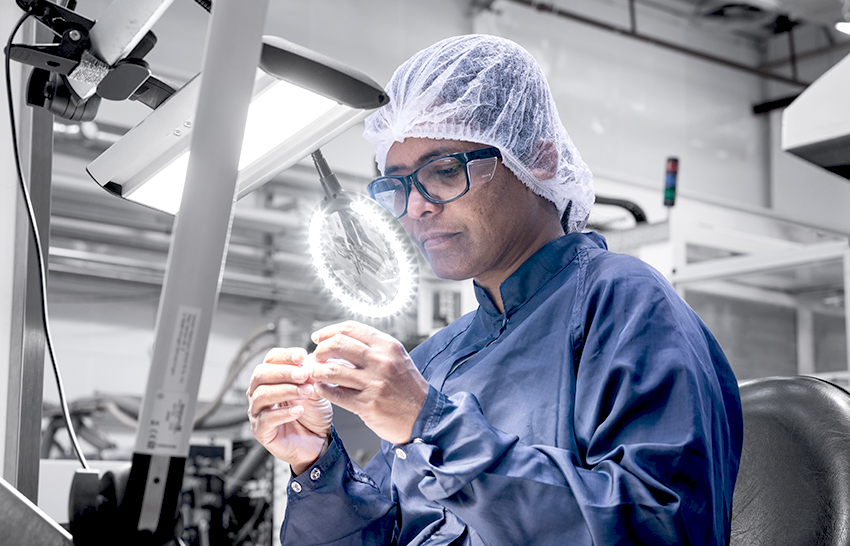
A Quvara Medical was established with precisely this market dynamic in mind. We combine more than three decades of regulated medical device manufacturing heritage with available cleanroom capacity, which is increasingly rare in the current environment. Our facilities include ISO Class 7 and 8 environments, precision injection moulding, automated and semi-automated assembly and quality systems aligned to combination product requirements.
However, capability alone is no longer enough. What differentiates organisations today is the ability to deploy that capability without delay and to onboard programmes quickly. Because we have availability now, we can engage immediately, but equally important is our ability to move efficiently from technical transfer through to validated production within compressed timelines. In a constrained market, availability and speed of execution become as valuable as capability itself.
We also focus on agility. Many large manufacturing networks are optimised for high-volume, long-term programmes. That can make onboarding of mid-volume or emerging programmes more challenging. Quvara’s model is designed to support those programmes efficiently while maintaining regulated manufacturing standards. This allows us to help companies maintain momentum when manufacturing access becomes the bottleneck.
Q Are companies actively looking for alternative manufacturing partners?
A Yes, increasingly so. We are seeing more and more organisations exploring secondary manufacturing partnerships, not necessarily to replace existing suppliers, but to expand capacity and reduce risk. This dual-sourcing approach is becoming more common, particularly for programmes where continuity of supply is critical. In some cases, companies are proactively establishing secondary manufacturing partners even before commercial launch.
There is also growing interest in partners that can support technology transfers. Programmes that were initially developed within large manufacturing networks may need additional capacity elsewhere. The ability to transfer processes efficiently and validate production quickly is becoming more highly valued.
Q What differentiates a CMO partner capable of supporting programmes in this environment?
“SPEED MATTERS – THE ABILITY TO MOVE FROM TECHNICAL TRANSFER TO VALIDATED PRODUCTION WITHIN 12–18 MONTHS IS INCREASINGLY IMPORTANT.”
A Three elements are essential: credibility, capability and capacity. Credibility comes from proven experience in regulated manufacturing. Capability includes technical expertise, automation and quality infrastructure. However, in the current environment, capacity is the true differentiator.
The key factors many companies are seeking in a CMO are available, validated cleanroom space and the ability to onboard programmes quickly. Speed matters – the ability to move from technical transfer to validated production within 12–18 months is increasingly important. Agility is also a key factor. Partners must be able to scale appropriately for mid-volume programmes without requiring the scale of the largest blockbuster therapies.
Q What is your outlook for the next 12–24 months?
A I expect demand for device manufacturing capacity to remain high. GLP-1 therapies will continue to absorb significant resources, and additional combination products will enter development. This will reinforce the importance of flexible manufacturing partnerships.
We may also see further investment in manufacturing infrastructure, but those investments will take time to translate into validated production lines. In the meantime, companies that proactively secure capacity and work with manufacturing partners able to scale will be best positioned to succeed. Ultimately, the goal is ensuring that innovative therapies reach patients without unnecessary delay. That requires a responsive and resilient manufacturing ecosystem.
Q Do you have any closing thoughts?
A The rapid growth of GLP-1 therapies is reshaping the device manufacturing landscape. While this creates challenges, it also highlights the importance of flexible, available manufacturing partners. The companies that succeed over the next few years will not be those with the best science alone, but those that secure manufacturing access early enough to realise it. At Quvara Medical, our focus is on providing the regulated device manufacturing capability, credibility and available capacity needed to support programmes when it matters most.