To Issue 193
Citation: Miller E, Cusack A, Cottenden D, “Tuning In: A New Acoustic Platform for the Age of Inhaled Biologics”, ONdrugDelivery, Issue 193 (Nov 2026), pp 44–48.
Dr Ethan Miller alongside Andrea Cusack and Dr David Cottenden highlight the mismatch between the delivery requirements of emerging drugs and the design of existing inhalation devices, making the case for the Nebu~Flow platform, which can be combined with a wide range of therapies and is capable of tuning droplet formulation.
BIOLOGICS ARE READY: TODAY’S DEVICES ARE NOT
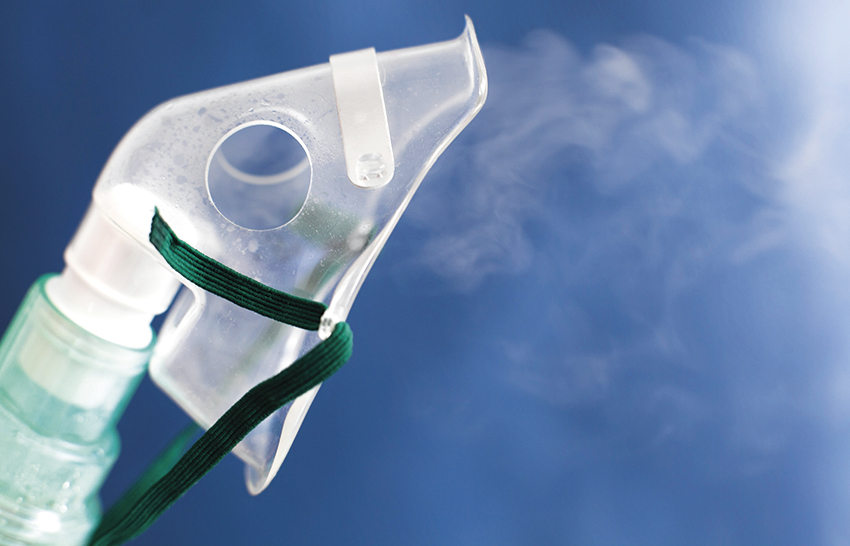
For most of their history, inhaled therapies have been instruments for symptom management. Chronic respiratory diseases represent a substantial and growing global burden – chronic obstructive pulmonary disease (COPD) and asthma alone affect more than half a billion people worldwide and cause almost four million deaths annually; lung cancer causes a further 1.8 million, with idiopathic pulmonary fibrosis adding to a rising toll of morbidity and mortality. Against this backdrop, the pharmacopoeia for inhaled drugs has been dominated by small molecules: bronchodilators that relax constricted airways and corticosteroids that suppress inflammation. These agents relieve the consequences of disease – and they do it well – but they rarely touch its origin. For decades, this has been the ceiling of what an inhaler or nebuliser has been asked to deliver (Figure 1).

Figure 1: A standard nebuliser used for inhaled therapies.
That ceiling is now lifting. A new generation of therapeutics offers the prospect not of simply managing symptoms but of correcting the biology that produces them. For conditions such as cystic fibrosis and alpha-1 antitrypsin deficiency, where the molecular cause is well characterised, inhaled gene-silencing agents, nucleic acid therapeutics and protein replacement strategies hold the potential to intervene at the level of the underlying defect. RNA-based medicines, monoclonal antibodies and gene-silencing oligonucleotides can be directed at pulmonary targets that small molecules cannot reach, delivering the drug precisely where it is needed most and reducing the systemic exposure and off-target effects that accompany oral or intravenous administration.
“WHETHER THE GOAL IS TO TREAT THE AIRWAY ITSELF OR TO USE IT AS A CONDUIT TO THE BLOODSTREAM, THE DIRECT RESPIRATORY ROUTE HAS NEVER LOOKED MORE ATTRACTIVE.”
A second, parallel opportunity treats the lung not as the target but as the gateway. The alveolar region presents an enormous, thin and highly perfused absorptive surface – an ideal port for systemic delivery without needles. Administering a biologic by inhalation can bypass hepatic first-pass metabolism entirely, lower the required dose and open a non-invasive route for molecules that would otherwise demand injection. Whether the goal is to treat the airway itself or to use it as a conduit to the bloodstream, the direct respiratory route has never looked more attractive.
The obstacle is not the pharmacology; it is the device. The three established nebuliser classes (jet, vibrating mesh and ultrasonic) were engineered for small-molecule solutions, with each imposing mechanical and physicochemical constraints that biologic candidates must routinely violate (Figure 2). Jet nebulisers subject formulations to repeated high-velocity Venturi passes, generating turbulent shear and interfacial stress that degrade fragile macromolecules and cause foaming in surfactant-containing formulations.
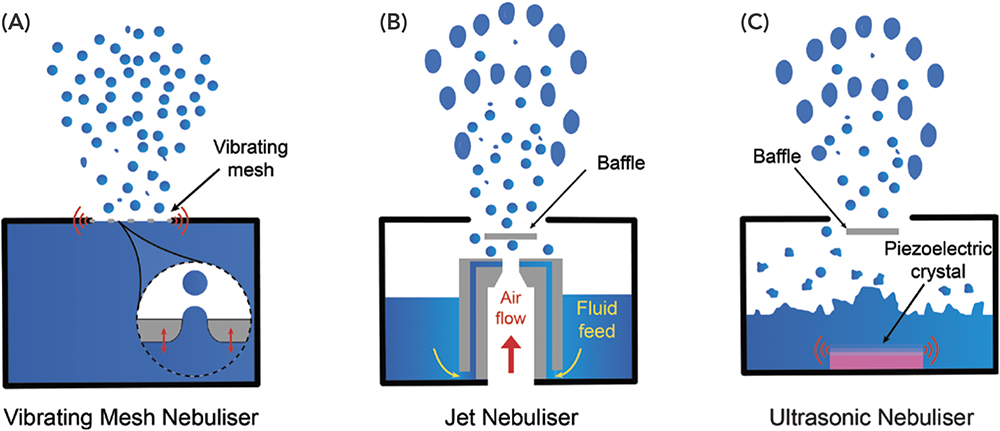
Figure 2: The mechanisms of vibrating mesh, jet and ultrasonic nebulisers.
Vibrating mesh nebulisers force fluid through 2–5 µm apertures under high-frequency mechanical stress, fragmenting delicate payloads and disrupting lipid nanoparticle (LNP) carriers.1 When surface tension falls below approximately 35 mN/m, surfactant-induced flooding becomes more likely,2 and viscous, concentrated or buffered LNP formulations accelerate aperture clogging and fouling in ways that are difficult to mitigate without reformulation.3
Ultrasonic nebulisers generate acoustic cavitation alongside the accompanying temperature rises that denature thermolabile proteins and nucleic acids. These nebulisers struggle with complex formulations, unable to aerosolise suspensions effectively, as the dispersed phase sediments in the reservoir. Elevated viscosity, inherent to many concentrated biologics, compounds these problems across all three nebuliser classes, reducing throughput and shifting aerosol particle size unpredictably.4 The sophisticated medicines now entering development are, quite simply, not supported by current devices intended to deliver them.
This exposes a fundamental design dilemma. The formulation characteristics needed to maximise the potency, stability and manufacturability of a biologic are frequently the very ones that degrade nebuliser performance. Faced with this conflict, the instinct of industry has been to adapt the medicine to survive the physics of the device, sometimes compromising the formulation until it can withstand the shear, heat and apertures it needs to pass through. That instinct is the wrong way round. If the device is the limiting factor, then the device is what should change. Rather than engineering the drug to tolerate the nebuliser, the more logical, and ultimately more powerful, approach is to re-engineer the nebuliser around the drug.
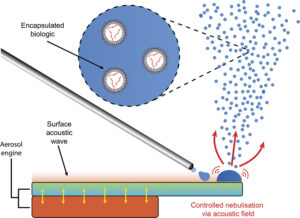
Figure 3: Aerosol generation using Nebu~Flow.
A DIFFERENT KIND OF NEBULISER
Nebu~Flow’s platform takes a mechanistically distinct approach to the physics and aerosol generation: the use of piezoelectric transducers to create a controlled acoustic field in the liquid loaded at the surface (Figure 3). The interaction of the generated acoustic waves and the liquid is tailored to create a soft aerosol plume. By manipulating the acoustic wave characteristics, the surface acoustic wave can be modulated to create an aerosol with minimal shear stresses, low thermal content and a desirable particle distribution. In this surface acoustic nebuliser design, acoustic energy is transferred to the liquid surface in a distributed manner along the propagation path of the wave.
There is no constrained orifice through which the formulation must be forced, meaning that shear stresses during aerosol generation are substantially lower and that there is minimal cavitation, the process responsible for the thermal and mechanical damage associated with conventional ultrasonic devices. Importantly, these characteristics can be precisely modulated through drive electronics. It is the tunability of this acoustic engine, rather than any fixed physical geometry, that governs droplet formation.
This innovation has consequences for the success of therapeutic delivery. Nebu~Flow’s patented technology resulted in approximately 1% loss of large molecular weight species; a comparable vibrating mesh nebuliser caused greater than 3% loss under equivalent conditions, and an increase of over 10% in mid-size fragment populations, indicating substantially greater strand scission.5,6
“THE NEBU~FLOW TRANSDUCER ARCHITECTURE OFFERS A CAPABILITY WITHOUT EQUIVALENT IN CURRENT COMMERCIAL DEVICES: THE CONTROLLED TUNING OF AEROSOL DROPLET SIZE FROM A SINGLE HARDWARE CONFIGURATION.”
Beyond its compatibility with biologics, the Nebu~Flow transducer architecture offers a capability without equivalent in current commercial devices: the controlled tuning of aerosol droplet size from a single hardware configuration. Changing drive parameters, such as the frequency ratio, phase relationship or delivered power to the transducers, changes the mass median aerodynamic diameter (MMAD) of the output aerosol. This tuning is achieved entirely through electronics, without any tooling change or hardware modification. MMADs in the range of 1–3 μm are achievable using the same device, allowing the same device to deliver a range of formulations effectively.
There is no mesh to block, no aperture to foul and no cleaning procedure constrained by fragile micron-scale geometry. Additionally, the absence of a coupling layer between the transducers and the liquid simplifies the architecture.
FREEING THE FORMULATION
Coupling therapeutics and inhalation devices typically leads to severe constraints on both formulation and device characteristics in order to achieve successful delivery. Reformulation to meet differing device constraints can add months to a development timeline, may require the sacrifice of bioavailability-enhancing excipients and introduces uncertainty into stability and manufacturability programmes. Similarly, adapting device parameters can lead to a total re-design, re-tooling and new manufacturing processes, which are far from trivial in cost or time required. An adaptable acoustic platform reverses this conventional drug-device compromise.
The versatility of the Nebu~Flow platform is beneficial for pharmaceutical development at several stages. During early discovery, candidate RNA sequences evaluated across a range of concentrations and chemical modification patterns can be assessed using the same device, reducing the instrument variability that complicates head-to-head comparisons between candidates. As programmes progress into lead optimisation, LNP and lipid-carrier formulations are refined iteratively for stability and potency. As their physicochemical properties change accordingly, an adaptable platform accommodates this evolution without triggering full aerosol re-characterisation campaigns each time the formulation is adjusted.
During dose ranging, changes in dose concentration alter formulation viscosity and surface tension, but a parametrically tuneable nebuliser can compensate electronically to maintain consistent aerosol output across the range studied in Phase I/II trials, removing a source of variability that would otherwise complicate pharmacokinetic and pharmacodynamic modelling. Finally, at the stage of indication selection, the optimal pulmonary deposition target may differ substantially between disease areas: a bronchial target for airway epithelial knockdown in cystic fibrosis or asthma demands a different MMAD to an alveolar target for systemic delivery or distal lung disease. Yet, the same hardware serves both, requiring only appropriately validated drive parameter sets rather than a different device entirely.
Nebu~Flow’s acoustic platform also provides a potential route to formulation phenotyping and drug-device data generation. Measurements including compressibility, attenuation and phase velocity could generate formulation-specific acoustic fingerprints that can be correlated with nebulisation performance. Combined with breath sensing and digital connectivity, these data could ultimately support dose verification and longitudinal monitoring of drug-device and dosing performance to improve patient outcomes.
“EARLY AND DELIBERATE SELECTION OF A DEVICE PLATFORM CAPABLE OF REMAINING COMPATIBLE WITH THE FORMULATION ACROSS THE FULL PRODUCT DEVELOPMENT CYCLE REDUCES ONE OF THE MOST SIGNIFICANT LATE-STAGE RISKS IN INHALED BIOLOGIC DEVELOPMENT.”
FROM BENCH TO BEDSIDE, FASTER
One factor that should not be underestimated when viewing the development of inhalation therapies is the regulatory landscape. Under the US FDA combination product framework (21 CFR Part 3) and the equivalent EMA requirements, a drug-nebuliser combination product receives market authorisation for administration using only the specific device validated in pivotal trials. A device switch post-Phase II requires a full bridging comparability package and, in many cases, additional clinical data. This can add 12–24 months to the development timeline, along with the associated costs and resources. Early and deliberate selection of a device platform capable of remaining compatible with the formulation across the full product development cycle reduces one of the most significant late-stage risks in inhaled biologic development.
The intellectual property dimension reinforces this case. The main patents protecting major vibrating mesh nebuliser platforms are maturing, limiting the commercial exclusivity through drug-device combination product strategies with those devices. A novel platform with active, broad patent protection that covers both the acoustic generation mechanism and specific drive parameter configurations for different formulations offers pharmaceutical partners a combination product with meaningful runway on product lifetime that may extend further than that of the drug substance alone.
Ultimately, the Nebu~Flow platform represents more than a device upgrade and acts as a development enabler. Removing the constraints on the formulation imposed by conventional nebulisers and shortening the iterative cycles that consume time and resource in early development results in a clearer, faster path through the regulatory landscape to the patients who need these therapies most.
THE NEXT WAVE IN INHALED THERAPIES
Nebu~Flow’s partnership with Sanner brings together acoustic technology with established device development, electromechanical systems integration and regulated manufacture under ISO 13485. Sanner’s experience in inhalation systems provides the engineering and quality infrastructure needed to translate Nebu~Flow’s acoustic engine into a prototype and a consistently manufacturable, market-ready product.
That technical rigour has been matched by an equal commitment to user-centric design. Sanner’s human factors and industrial design teams have applied formative research grounded in ISO 62366 to ensure that the platform’s sophistication is expressed through an experience that is intuitive and accessible across the intended patient populations – from elderly patients with COPD to clinical trial participants receiving novel RNA therapeutics. This enables usability requirements, device architecture and manufacturing constraints to be developed together rather than sequentially, supporting a product suitable for its intended users and clinical environments.
This approach is particularly important because Nebu~Flow is intended as a platform to be used for a broad range of inhaled medicines, small molecules and emerging biologics, including nucleic acid formulations. Rather than requiring a new hardware configuration for every formulation, the development programme involves an evaluation of how aerosol performance can be adjusted through the device’s operating parameters. This creates the potential to accommodate different formulation characteristics while preserving a common product architecture. Working within this framework allows engineering, design-for-manufacture, supply-chain and quality requirements to be considered early, reducing the risk of costly re-design as the platform progresses towards verification, regulatory approval and scale-up.
“FOR PHARMACEUTICAL AND DEVELOPMENT PARTNERS, THE VALUE IS THEREFORE NOT SIMPLY IN DEVICE PERFORMANCE, BUT A MORE EFFICIENT DRUG-DEVICE DEVELOPMENT PATHWAY.”
For pharmaceutical and development partners, the value is therefore not simply in device performance, but a more efficient drug-device development pathway. Early formulation testing can inform device settings and product requirements before significant engineering investment is committed, while Sanner’s involvement ensures that manufacturability and industrialisation are considered alongside performance. Together, this is intended to reduce technical and scale-up risk, shorten development iterations and provide a clearer and potentially faster route from formulation feasibility, through beta development, to clinical and commercial manufacture.
REFERENCES
- Li H et al, “Pulmonary delivery of LNP-mRNAs aerosolised by vibrating mesh nebulizer: An emphasis on variations and in-depth analyses of physicochemical properties”. Int J Pharm, 2025, Vol 680, art 125796.
- Elphick M et al, “Factors to consider when selecting a nebulizer for a new inhaled drug product development program”. Expert Opin Drug Deliv, 2015, Vol 12(8), pp 1375–1387.
- “Device and formulation considerations for nebulized biologics: Limiting the impacts of aerosol generation on biotherapeutics and delivery systems”. Inhalation, Apr 2025.
- Wiebe KF et al, “Impact of formulation and process parameters on the stability and bioactivity of RNA-loaded lipid nanoparticles during nebulization”. Eur J Pharm Sci, 2026, Vol 216, art 107383.
- Nazarzadeh E, “Acoustic Wave Platform Nebuliser for Inhaled Delivery of Biologic Therapies”. ONdrugDelivery, Issue 184 (Apr 2026), pp 40–44.
- Tatnell D et al, “Optimisation of the Nebu~Flow Nebuliser to Enable Shear-Free Aerosolisation of Fragile Large Molecules”. DDL Conf Proc, 2025, Vol 36, pp 398–402.