
To Issue 186
Citation: Høier Thomsen M, “Advancing Autoinjector Platforms for Evolving Drug and Patient Needs”, ONdrugDelivery, Issue 186 (May 2026), pp 111–115.
Martin Høier Thomsen introduces MGS’s A.i.r. Platform™ within the broader context of the evolution of autoinjector platforms towards more adaptable, customisable solutions. He considers how next-generation autoinjector platforms can address increasingly complex and changing demands, while helping to mitigate risk and prioritise usability.
Platform-based autoinjectors have enabled efficient and scalable device development, but evolving drug and patient needs are testing the underlying design assumptions. By using established off-the-shelf autoinjector platforms, pharmaceutical companies have been able to reduce technical risk, streamline regulatory pathways and accelerate development timelines. Compared with bespoke device development, such platform approaches can offer advantages in cost and speed, establishing them as a widely adopted solution across the industry.
Within this landscape, the pace and complexity of drug development are reshaping expectations for device innovation. Pipelines are increasingly being defined by advanced biologics, higher-viscosity formulations and more specialised delivery requirements that, in some cases, extend beyond the capabilities of existing autoinjector platforms. At the same time, there is a constant focus on improving the use of autoinjectors and minimising risks of misuse as part of the overall treatment experience. There is also a greater focus on differentiation, with devices viewed not only as delivery mechanisms but as integral components of the overall patient experience and as extensions of the brand that can help to distinguish the product.
However, many existing autoinjector platforms are designed within fixed technical parameters, which limits their flexibility to address the specific needs of niche patient populations and drug specifications outside of typical use scenarios. This can force trade-offs where either the drug must be adapted to fit the device or the device cannot fully support the intended therapeutic profile. Addressing these new requirements will depend on close collaboration between pharmaceutical companies and drug-device development partners.
In response, the next generation of drug delivery platforms is being designed to expand capabilities to accommodate increasingly complex therapies and evolving delivery requirements. These systems need to be built for adaptability, enabling devices to be configured around the specific needs of the therapy and patient. Combining a core technology with flexible, modular design, means that these platforms can enable more comprehensive customisation across a broader set of drug, device and patient variables.
ALIGNING DEVICE PERFORMANCE WITH USER EXPECTATIONS
While autoinjector designs continue to improve, usability challenges remain, especially in how patients interpret – or misinterpret – audible feedback during injection. This continues to be a key focus for regulatory authorities when evaluating new device iterations.
Existing autoinjectors often rely on a two-click feedback system to signal dose progression. However, there can be a delay of up to two seconds between the final audible click and actual dose completion. To mitigate this, the instructions for use direct patients to count several seconds after the final click before removing the device. This introduces variability in interpretation and execution, and regulatory bodies have raised concerns that such instructions can be misunderstood during real-world use. This creates a persistent risk of early lifts, which can result in potential underdosing, with patients perhaps perceiving this as device failure and raising complaints with the pharmaceutical company (Figure 1).
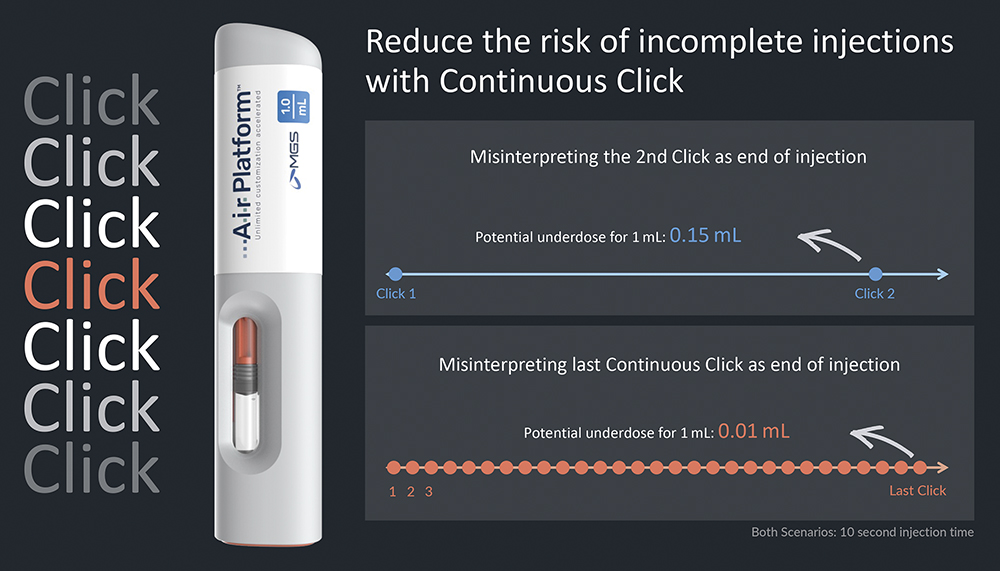
Figure 1: Continuous audible feedback throughout the injection process improves alignment between perceived and actual dose completion.
These challenges highlight the need for closer alignment between device behaviour and user expectations, particularly in how device feedback reflects dose progression and completion. Early lift and incomplete dosing are often driven by this misalignment, as patients may rely on audible clicks rather than visual cues and therefore may not observe the full depression of the plunger rod that indicates dose completion.
One way to address these challenges is to implement a continuous audible feedback system throughout the injection process to completion. By minimising the gap between perceived and actual dose completion, this approach can mitigate the risk of underdosing while improving user confidence, adherence and training simplicity.
“THE REQUIREMENTS FOR A CAREGIVER ADMINISTERING A PAEDIATRIC DOSE DIFFER SIGNIFICANTLY FROM THOSE OF AN ADULT SELF-ADMINISTERING A CHRONIC THERAPY, WHERE LIMITED DEXTERITY MAY IMPACT USE.”
User experience must also account for variability across patient populations. The requirements for a caregiver administering a paediatric dose differ significantly from those of an adult self-administering a chronic therapy, where limited dexterity may impact use. These differences influence how the device is handled, understood and trusted.
Addressing this requires greater flexibility in how key aspects of device performance are defined. A more adaptable platform enables customisation of key performance parameters, including activation force, hold force, needlestick depth and injection time, helping to ensure that all aspects of the device are designed to fit specific patient needs and expectations.
ADAPTING TO THE DRUG PROFILE
As drug formulations evolve, delivery devices must accommodate a broader range of therapeutic requirements. Drug pipelines now span a wider range of viscosities, concentrations and delivery volumes than those which many existing platforms were designed to support.
Historically, autoinjector platforms were optimised for a narrow range, often centred on a 1 mL fill volume and moderate viscosities. Today, requirements are expanding in both directions. Lower-volume injections, typically 0.2–0.5 mL, are common for highly potent therapies as well as paediatric applications. At the other end, for higher-volume delivery – up to 2.25 and even 5 mL – prefilled syringes are increasingly common for biologics.
Viscosity profiles are also shifting, with many emerging biologics exhibiting higher viscosities that increase injection force requirements, extend injection times and place greater demands on device performance. A more adaptable platform can enable devices to be configured around the therapy, supporting a wider range of viscosities and volumes while remaining compatible with virtually any prefilled syringe configuration. This adaptability reduces the need for reformulation driven by device limitations, preserving drug integrity while minimising development complexity, cost and risk (Figure 2).
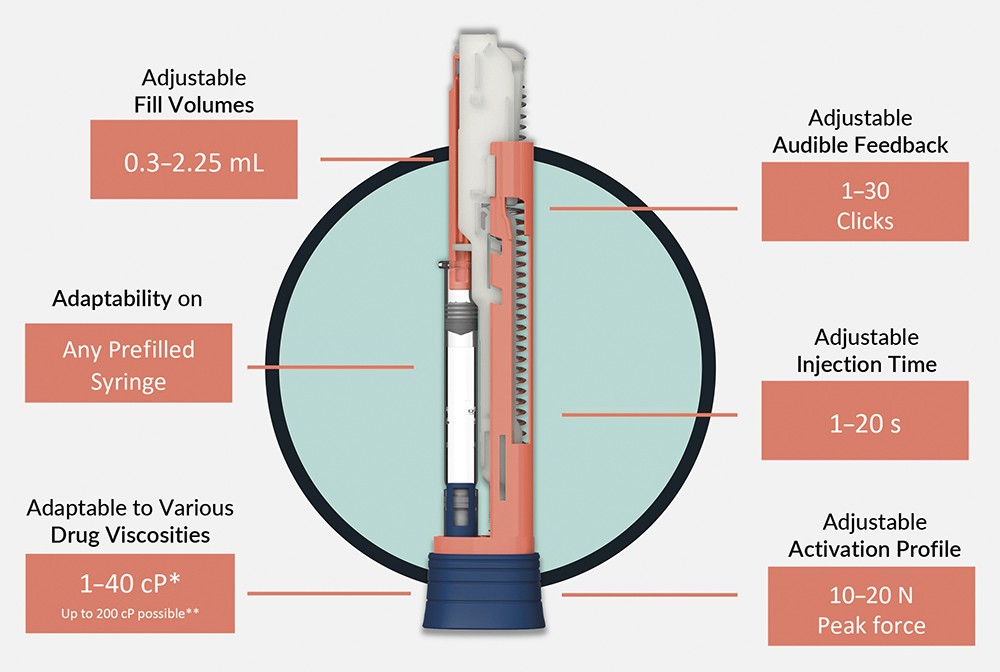
Figure 2: Core technology adaptability across key parameters. *For a 27G with a Special Thin-Wall needle and accepting up to 11 s injection time. **For a 25G needle with an Ultra Thin-Wall needle and accepting up to 16 s injection time.
DESIGNING FOR PATIENT EXPERIENCE AND PRODUCT DIFFERENTIATION
As more therapies enter highly competitive markets, the delivery device is becoming a critical point of distinction, influencing how patients engage with, adhere to and perceive the therapy. As a result, pharmaceutical companies are placing greater emphasis on differentiation at the device level.
For therapies that require frequent or long-term self-administration, the device becomes part of the patient’s daily routine. Factors such as ease of use, perceived reliability and emotional response can directly influence patient confidence and adherence. Differentiation is not only a commercial objective but also a clinical one, supporting correct use and reducing anxiety to improve patient outcomes.
The increasing complexity of drug formulations and delivery requirements is driving greater variability in device design. Differences in injection time, activation force, injection volume, use environment and user capabilities often necessitate changes in device configuration, size and user interface. As these functional elements evolve, they create an opportunity to align device design more closely with the therapy and intended patient population.
A customisable platform enables this alignment by providing control over both visual and structural design elements. This includes colours, surface textures and material finishes that support brand identity, as well as the ability to adapt device geometry, proportions and interface features. Rather than addressing branding as a late-stage design consideration, these elements can be integrated from the outset.
Pharmaceutical companies are increasingly managing pipelines that span multiple therapies and patient populations. Flexible platforms enable consistency in device design and user interaction across a product portfolio, while allowing differentiation where needed. Variations in size, ergonomics, colour and interaction cues can distinguish patient populations and therapies, while supporting usability and maintaining overall brand cohesion.
These design decisions must be grounded in real-world use. For example, devices for paediatric patients may require softer geometries, simplified interfaces and more reassuring visual cues, while those for adult or chronic use may prioritise discreteness, portability and consistency. In both cases, visual and tactile elements shape how the device is understood and trusted by the user.
“INCREASINGLY, SUSTAINABILITY IS BEING INTEGRATED INTO AUTOINJECTOR PLATFORM DESIGN, AS REGULATORY SIGNALS, CORPORATE ENVIRONMENTAL, SOCIAL AND GOVERNANCE COMMITMENTS, AND LIFECYCLE CONSIDERATIONS BEGIN TO SHAPE DEVELOPMENT PRIORITIES.”
ADVANCING SUSTAINABILITY THROUGH DESIGN EFFICIENCY
Increasingly, sustainability is being integrated into autoinjector platform design, as regulatory signals, corporate environmental, social and governance commitments, and lifecycle considerations begin to shape development priorities.
Design efficiency plays a central role in this shift. Reduced part count and the integration of multiple functions into fewer components enable simpler assembly, improved manufacturing efficiency and lower overall material usage. Optimising device size and design further supports these efforts without compromising performance or safety, reinforcing the need for platform designs that can balance efficiency with the flexibility required for therapy-specific customisation.
Material selection is also evolving, with increased use of lower-emission polymers aimed at reducing environmental impact across the product lifecycle. For autoinjector platforms, these materials must balance performance and cost while meeting regulatory and safety requirements for biocompatibility and consistent manufacturing.
End-of-life considerations also remain a key challenge for autoinjector platforms. Due to the complex mix of components, including needles, glass, multiple plastics and biohazardous materials, many devices are currently directed to incineration rather than recycling. In response, pharmaceutical companies are exploring take-back programmes to enable more sustainable disposal. While these initiatives depend on sufficient return volumes, they represent an important step towards more sustainable solutions. In parallel, there is growing interest in design approaches that could reduce the overall CO2 footprint by enabling safe, user-guided separation of select components, while ensuring patient safety.
A CUSTOMISABLE PLATFORM APPROACH TO AUTOINJECTOR DEVELOPMENT
As drug formulations and delivery requirements continue to diversify, closer collaboration between platform owners and pharmaceutical companies is becoming essential to accommodate more complex and specialised use cases, including high-viscosity formulations, larger volumes and lower production scales.
The A.i.r. Platform™ developed by MGS is a prime example of this approach. This modular autoinjector platform accelerates combination product development while enabling comprehensive customisation across drug, device, patient and brand requirements. The platform is built around an adaptable core technology that provides a mechanical foundation, enabling co-development with MGS to tailor devices for different applications without redesigning the underlying system.
By using the A.i.r. Platform™’s core technology as a starting point and focusing development on configurable platform elements, pharmaceutical and biotech companies can reduce device development timelines by up to three years compared with bespoke devices. To support early-stage decision-making, the platform incorporates a structured feasibility model in which moulded, functional prototype devices can be delivered within 12 weeks.
MGS developed the A.i.r. Platform™ using insights from 14 therapeutic areas within subcutaneous drug delivery, informed by feedback from clinicians and patients along with regulatory guidance and US FDA observations. These insights highlighted ongoing challenges in existing systems, including early lift, incomplete injections and uncertainty during administration, all of which can negatively impact patient confidence and adherence. As pharmaceutical companies develop new therapies in these areas, the pre-developed documentation by MGS can be readily adapted, enabling more efficient device development and accelerated timelines.
FLEXIBLE DESIGN TO SUPPORT DIVERSE FORMULATION, USER AND BRAND NEEDS
The A.i.r. Platform™ supports extensive customisation across key performance parameters. Injection time, activation profile and delivery force can be adapted to accommodate a wide range of formulations, including higher-viscosity biologics. Fill volumes ranging from 0.3 to 2.25 mL allow developers to tailor delivery profiles for different dosing requirements, while compatibility with any prefilled syringe configuration needed provides flexibility in primary container formats.
“A KEY FEATURE OF THE A.i.r. PLATFORM™ IS ITS CONTINUOUS AUDIBLE FEEDBACK MECHANISM, WHICH PROVIDES UP TO 27 CLICKS THROUGHOUT THE INJECTION PROCESS.”
A key feature of the A.i.r. Platform™ is its continuous audible feedback mechanism, which provides up to 27 clicks throughout the injection process. Unlike two-click systems where the final signal may precede dose completion, this continuous feedback closely tracks dose progression through to completion. This design improvement reduces the gap between the perceived and actual end of injection, which mitigates underdosing. As not all patients visually monitor the device during injection, continuous audible feedback is critical.
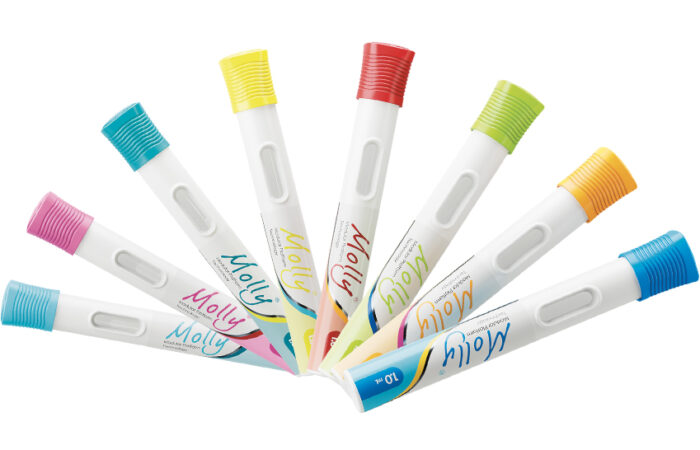
Beyond performance, the platform enables customisation of device size, ergonomics and appearance, including cap and needle shield design, body geometry, surface textures, colour systems, window configuration and brand embossments. This allows devices to align with both patient needs and brand strategy while supporting clear differentiation within the market. These capabilities are particularly important across patient populations (Figure 3).
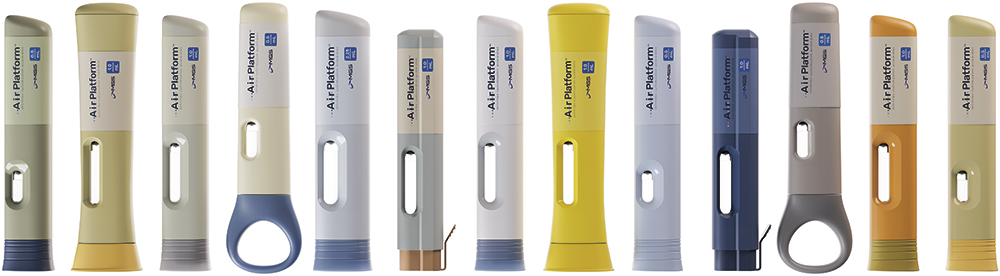
Figure 3: Customisation enabled by the MGS A.i.r. Platform™.
Underlying this flexibility is a streamlined device design that also enables more efficient and sustainable development. The platform uses just seven plastic parts and two springs, reducing material usage and device size, while incorporating optional material separation to enable partial end-of-life recyclability.
REDEFINING PLATFORM-BASED DEVELOPMENT TO ACCELERATE DE-RISKING AND CUSTOMISATION
The evolution of autoinjector platforms towards more adaptable, customisable solutions reflects a focused approach to address and mitigate persistent development risks. Early-stage autoinjector designs inherently carry uncertainty, making it critical to rapidly de-risk concepts and establish confidence in device performance and usability. Platforms such as A.i.r. Platform™ enable this by allowing pharmaceutical and biotech companies to move quickly from concept to a moulded, functional autoinjector with prototypes available in as little as 12 weeks. This enables early user testing, informed stakeholder engagement and a tangible understanding of the device, accelerating decision-making and reducing reliance on purely conceptual development.
Next-generation autoinjector platforms must address increasingly complex and evolving demands. Meeting these challenges requires new approaches to device design that prioritise usability, reliability and risk mitigation with the flexibility to support diverse patient populations, advancing therapies and regulatory expectations. Close collaboration between pharmaceutical companies and platform owners will be essential to establish a new standard for how combination products are developed and delivered in practice.