
To Issue 186
Citation: Yemane-Tekeste G, Leslie S, “Autoinjector Technology for Automatic Microparticle Suspension and Injection”, ONdrugDelivery, Issue 186 (May 2026), pp 76–80.
Girum Yemane-Tekeste and Stephen Leslie share how Kindeva is building on its experience and history of innovation to develop an enabling technology for injectable microparticles and then evaluating it through proof-of-principle testing.
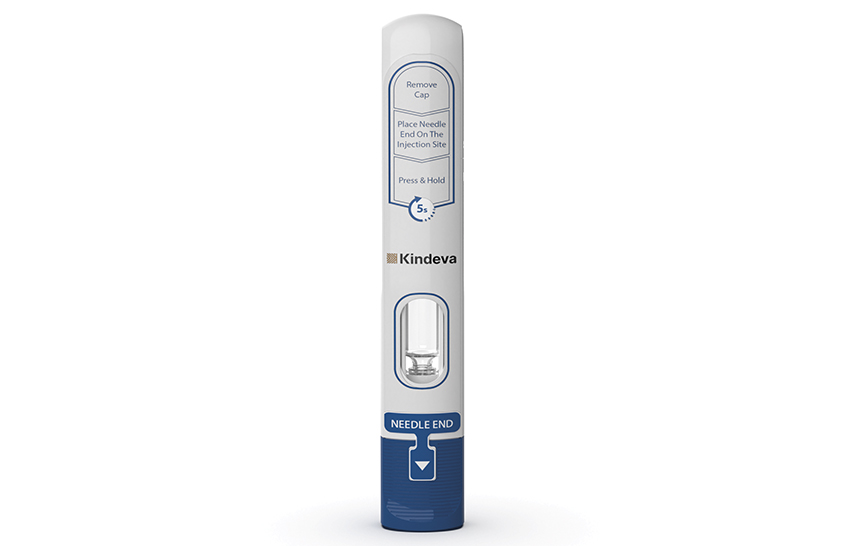
As a global leader and CDMO for combination products, Kindeva® has an over 50-year track record of successfully designing, developing and manufacturing devices that solve complex drug delivery challenges. For autoinjectors, Kindeva has designed, developed and manufactured devices for unique applications including but not limited to dual-chamber (reconstitution and sequential co-injection), intramuscular injection, emergency-use and military devices.
“A NEW FRONTIER IN DRUG DELIVERY IS ON THE HORIZON AS ADVANCEMENTS IN MEDICAL TECHNOLOGY SHIFT TREATMENT TOWARDS MORE SHELF-STABLE, LONG-ACTING AND AT-HOME PATIENT CARE.”
A new frontier in drug delivery is on the horizon as advancements in medical technology shift treatment towards more shelf-stable, long-acting and at-home patient care. Microparticle and autoinjector technologies are at the forefront of these advancements, as the application of each seeks to further the development of patient treatment in areas such as pancreatic cancer, meningitis and diabetes.1
Proteins, peptides and small molecules prepared as microparticles often have a longer shelf-life and reduced cold chain requirements. In addition, preparations involving polymers, such as polylactic acid and polylactic co-glycolic acid in capsule, matrix or sponge forms, can function as long-acting therapies through the slow release of embedded hydrophilic or hydrophobic drugs.2 This slow release is tuneable and has the potential to revolutionise care for chronic diseases by reducing the frequency of treatments.3
For administration by injection, microparticles are commonly suspended in a liquid prior to delivery by lengthy periods of manual shaking or agitation to ensure proper dispersion of the drug and uniform dosage delivery. Autoinjectors are in demand as they allow targeted delivery, efficient dose accuracy and at-home treatment.4 With the appropriate modifications, autoinjectors can be used for automated microparticle suspension and delivery to drastically simplify the use steps, minimise use errors and enable self-administration at home. Kindeva is currently developing a technology that can automatically suspend microparticles in a liquid medium and deliver the microparticles into an injection site.
Kindeva’s new patent-pending technology uses acceleration physics and controlled cavitation. Cavitation is a method used in various applications, including pharmaceutical manufacturing processes, for mixing liquids with other liquids and solids with liquids.5 Kindeva’s technology enables both subcutaneous and intramuscular microparticle injections and works without accelerating the primary container, thereby reducing the risk of glass breakage. It can be deployed in a single- or dual-chamber primary container configuration if isolation of the microparticles and suspension liquid is required for drug stability.
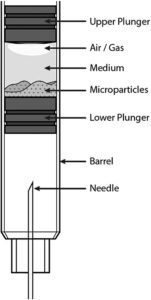
Figure 1: Schematic of the single- cartridge/single-chamber primary container configuration.
CONCEPT OVERVIEW
To illustrate the concept and operating principle for the autoinjector technology, the single-cartridge/single-chamber configuration can be used. The system consists of an upper plunger, air/gas, injection liquid medium, microparticles, lower plunger, barrel and needle in a sterile drug delivery system or autoinjector (Figure 1).
Principles of Operation
The approach and key process steps are as follows (Figure 2):
- Acceleration force is applied at the upper plunger.
- Liquid accelerates in the barrel, causing the liquid static pressure to become lower than the vapour pressure. Cavitation is created, causing the air/gas to expand towards the lower plunger in the liquid, displacing, mixing and suspending the microparticles.
- The lower plunger is stopped, causing the liquid static pressure to exceed the vapour pressure, displacing the air/gas out of the liquid and towards the upper plunger, collapsing the cavitation. This causes additional microparticle displacement, mixing and suspension, and the air/gas is eventually displaced into the upper plunger’s cavity. The lower plunger is punctured by the needle.
- The upper plunger continues to move, displacing the liquid and the suspended microparticles into the needle.
- The upper plunger displaces the liquid until the injection is completed. The upper plunger is stopped, and the air/gas remains in the system within the upper and lower plunger cavities.
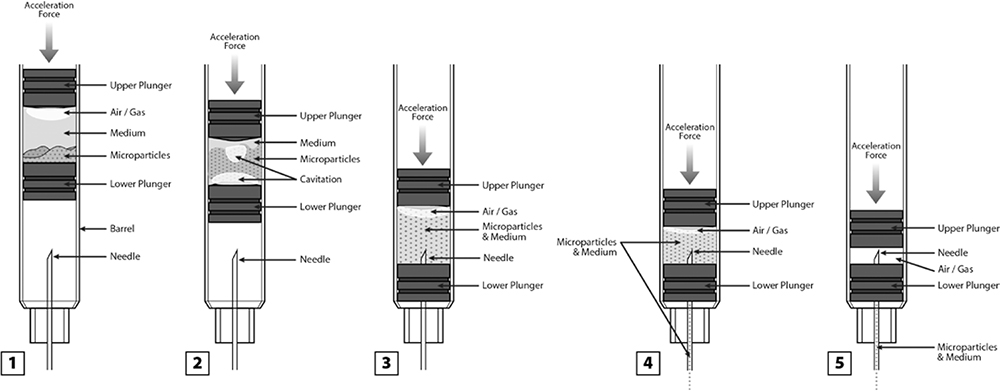
Figure 2: Principles of operation for the acceleration/cavitation-induced microparticles suspension and injection technology (shown for single-cartridge/single-chamber configuration).
PROOF-OF-PRINCIPLE STUDY AND RESULTS
Microparticle Suspension and Injection
Efficient suspension occurs through the optimisation of parameters including acceleration, air/gas volume, liquid volume and viscosity, and microparticle mass and size. A high-speed camera was used to record the microparticle suspension and injection (Figure 3). The injected microparticles were collected, and the mass of the microparticles was measured to determine the delivered dose. By using both aqueous and non-aqueous liquid mediums, up to 95% of the microparticles were delivered, with further optimisation possible.
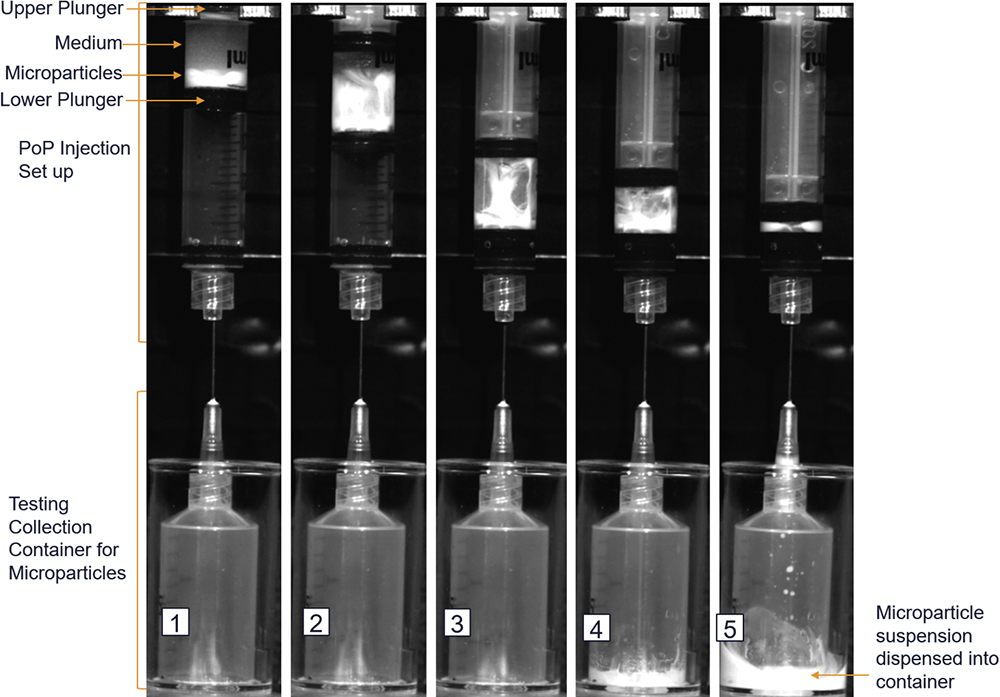
Figure 3: High-speed images during suspension and injection process in proof-of-principle testing. Panels 1–5 correspond to principles of operation steps.
Cavitation Formation
To illustrate the principles of operation shown in Figure 2, a study was conducted to show the creation of controlled cavitation in a liquid medium for optimum suspension and mixing of the microparticles in the system. The high-speed camera images show the formation and the collapsing of cavities (Figure 4).
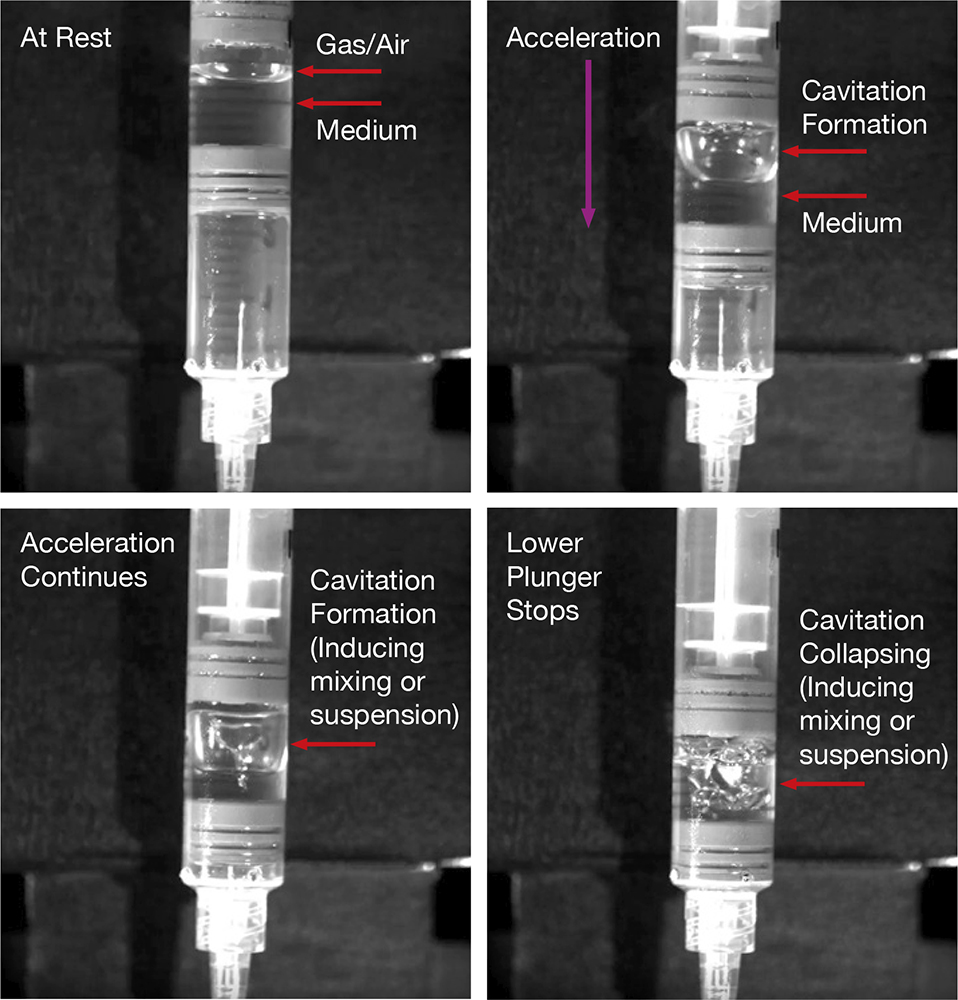
Figure 4: Cavitation formation and collapse in liquid medium using Kindeva’s autoinjector technology.
In addition, the scale and power of cavitation can be controlled by acceleration rate and force, air/gas volume, and liquid volume and viscosity. These control features can be optimised and configured based on the drug’s sensitivity. Importantly, the container is not accelerated, instead remaining stationary, which helps to mitigate mechanical stress on the primary container.
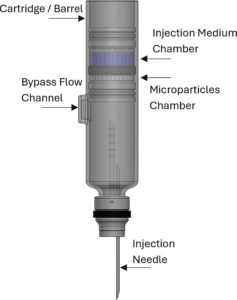
Figure 5: Kindeva’s single-cartridge dual-chamber system.
DUAL-CHAMBER AND DUAL-CARTRIDGE TECHNOLOGY FOR DRUG STABILISATION
In addition to the single-chamber design Kindeva has also developed dual-chamber and dual-cartridge concepts and performed proof-of-principle testing. Dual-chamber/dual-cartridge technology enables a lyophilised drug product to be stored separately from its liquid medium prior to drug administration by suspension or reconstitution. Upon autoinjector activation, the liquid is transferred to the microparticle chamber prior to acceleration for microparticle suspension and injection.
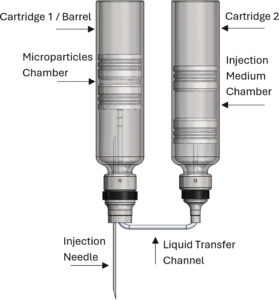
Figure 6: Kindeva’s dual-cartridge dual-chamber system.
Kindeva’s first concept is a single-cartridge system with two separate chambers (i.e. one chamber to store the microparticles and the other to store the liquid medium) (Figure 5). The second concept has two cartridges, where one cartridge stores the microparticles and the other stores the liquid medium (Figures 6 & 7). The principle of operation for driving acceleration and cavitation is the same; however, there are additional design features required to ensure that cavitation is consistently induced for dual-chamber/dual-cartridge configurations.
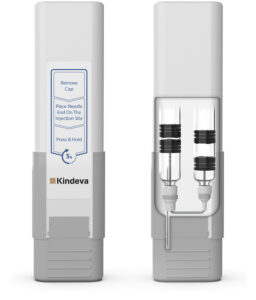
Figure 7: Kindeva’s dual-cartridge autoinjector system for storing microparticles separately from medium before automatic suspension and injection.
CONCLUSION
This proof-of-principle evaluation of Kindeva’s autoinjector technology demonstrates that acceleration and controlled cavitation can be used in autoinjectors to automatically suspend and inject microparticles in seconds. This enables the use of microparticles for drug delivery, improving drug stability and patient compliance. With further parameter tuning, Kindeva’s autoinjector technology can be extended to the delivery of nanoparticles and other drug formats that require suspension prior to administration.
With more than six decades in the industry, Kindeva’s experience in combination product development and manufacturing enables the company to support its partners with an extensive history of innovation and technical know-how that ensures the delivery of high-quality products every time. Backed by a proactive team of industry experts, Kindeva develops solutions that chart new territory while staying firmly grounded in science.
Kindeva has experienced engineers and leaders in its Combination Product Development Center of Excellence, as well as the necessary equipment and infrastructure to complete device development for entire combination product programmes. It also offers à la carte services for smaller projects. Kindeva has a track record for designing and manufacturing autoinjectors performing reconstitution, sequential co-injection, intramuscular injection and emergency-use administration. In addition, Kindeva develops and manufactures other combination products including pulmonary, nasal, dermal and other injectables products, including microneedles.
*The Kindeva cavitation-induced automatic microparticles suspension and injection technology is in development. As such, the technology is subject to various risks and uncertainties.
Kindeva® is a registered trademark of Kindeva Drug Delivery, L.P. in the United States.
ACKNOWLEDGEMENTS
The authors would like to thank Katrina Spencer, Brian Wayman and David DeSalvo for their contributions to this article.
REFERENCES
- Lengyel M et al, “Microparticles, Microspheres, and Microcapsules for Advanced Drug Delivery”. Scientia Pharmaceutica, 2019, Vol 87(3), art 20.
- Vlachopoulos A et al. “Poly(Lactic Acid)-Based Microparticles for Drug Delivery Applications: An Overview of Recent Advances”. Pharmaceutics, 2022, Vol 14(2), art 359.
- Pednekar S, “Global Microparticle Injectable Market Size, Share, Growth Trends & Forecast 2026-2034”. Verified Market Reports, accessed Apr 2026.
- “Autoinjectors Market (2026 – 2033)”. Grand View Research, accessed Apr 2026.
- Sivakumar M, Tang SY, Tan KW, “Cavitation technology – A greener processing technique for the generation of pharmaceutical nanoemulsions”. Ultrason Sonochem, 2014, Vol 21(6), pp 2069–2083.