To Issue 188
Citation: Van Huijksloot E, Melton J, “How Modern Prototyping Accelerates Drug Delivery Device Development”, ONdrugDelivery, Issue 188 (Jul 2026), pp 18–22.
Erwin van Huijksloot and Joe Melton discuss the importance of early prototyping, ensuring a strong understanding of production efficiency and possible variability is grasped before large-scale manufacture begins.
The role of prototyping in drug delivery device development is evolving. Traditionally, the early stages of development focused almost exclusively on demonstrating a concept’s functional viability as quickly as possible, with considerations around manufacturability and production efficiency left for later phases, when the product had proven itself and volumes justified the investment.
“WHEN PRODUCTION CONSIDERATIONS ARE DEFERRED TO THE SCALE-UP PHASE, DEVICE DEVELOPERS OFTEN DISCOVER THAT THEIR PROVEN, TESTED DESIGN IS DIFFICULT OR EXPENSIVE TO MANUFACTURE AT VOLUME.”
However, this sequential approach comes at a cost. When production considerations are deferred to the scale-up phase, device developers often discover that their proven, tested design is difficult or expensive to manufacture at volume. The result: redesigns, new validation cycles and potentially a new submission to the EMA or US FDA. Ironically, the time and costs saved by deferring production thinking in the early stages are often lost many times over in later phases.
Therefore, a different approach can be argued: a forward-thinking strategy where production expertise is integrated into the earliest stages of development, ensuring that the device not only works but can also be manufactured efficiently at scale. This approach draws on lessons learned during the long-term collaboration between FRP, a UK-based specialist in prototyping and low-volume injection moulding for medical devices, and IGS GeboJagema, a high-precision production mould maker focused on industrialisation and high-volume production tooling. As of early 2026, the two companies operate under one roof, offering an integrated path from concept to full-scale production. Together, they demonstrate how a forward-thinking approach to prototyping can shorten time-to-market, reduce costs and minimise risk across the entire development journey (Figure 1).
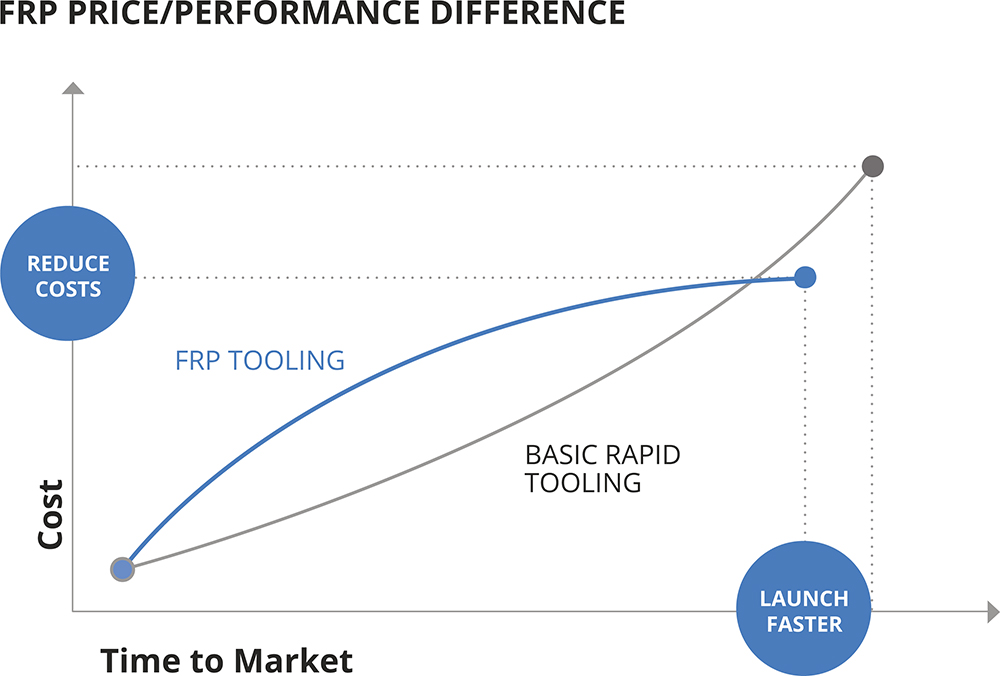
Figure 1: A modern prototyping approach reduces costs and shortens time-to-market.
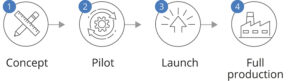
Figure 2: The four main phases of mould development.
THE FOUR PHASES OF MOULD DEVELOPMENT
The development of an injection mould for a drug delivery device typically follows four main phases (Figure 2):
- Concept: Early prototypes and a first injection mould (a proto-tool) aim to prove the device’s functional viability.
- Pilot: Pre-production moulds are used to produce the parts needed for clinical trials and regulatory submission.
- Launch: After approval, original equipment manufacturers (OEMs) invest in multicavity production moulds to meet market demand.
- Full Production: Production capacity is scaled further through repeat moulds or higher cavity counts.
This development pathway is well established. However, the way these phases connect to each other, and the decisions made in the earliest two phases in particular, can have a profound impact on the cost, speed and overall success of the entire project. The following sections explore how a production-aware approach to prototyping can optimise each transition and compress the path from concept to market launch.
“THE FIRST PHASE OF DEVELOPMENT HAS A CLEAR GOAL: PROVE THAT THE DEVICE WORKS. HOWEVER, THE CHOICE OF HOW TO GET THERE IS NOT ALWAYS STRAIGHTFORWARD.”
THE RIGHT PROTOTYPING TECHNOLOGY
The first phase of development has a clear goal: prove that the device works. However, the choice of how to get there is not always straightforward. A range of manufacturing methods are available, each suited to different volumes and objectives. For injection moulding specifically, FRP distinguishes four levels of tooling, from bronze to platinum, each matched to a phase of development (Figure 3).
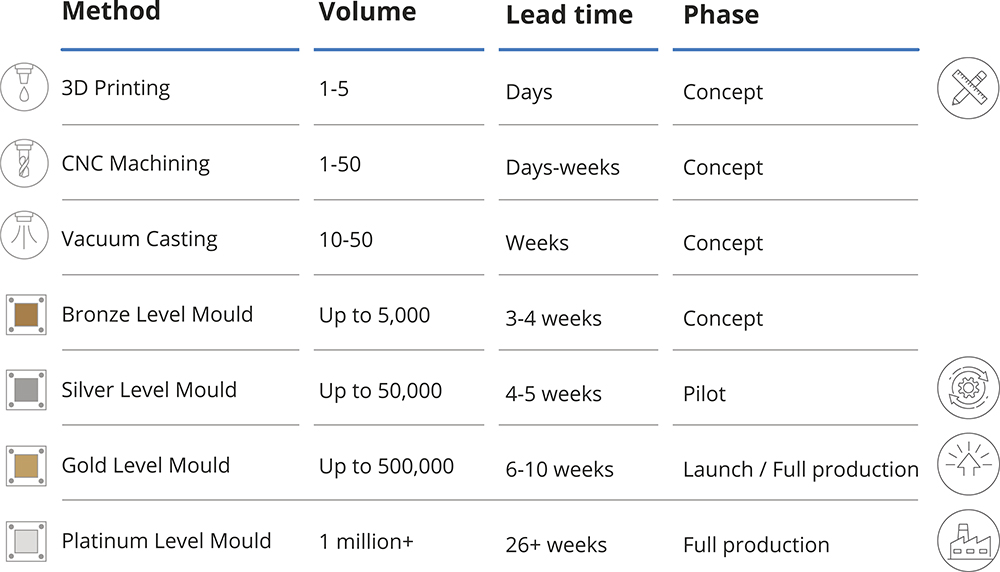
Figure 3: Four levels of tooling for different product development phases.
The choice between these methods depends on the stage of the project, the number of parts needed and the goals they intend to serve. A company that needs five functioning devices to demonstrate the concept to investors faces a very different decision than one preparing to produce 50,000 units for clinical trials. Matching the right method to the right stage avoids both over-investment and unnecessary compromise.
FRP offers a full range of prototyping technologies: 3D printing, CNC machining, vacuum casting and low-volume injection moulds. The company considers this technological independence to be critical for a modern prototyping organisation, as it allows clients to make the best possible choice for their project.
“FRP CONSIDERS TECHNOLOGICAL INDEPENDENCE TO BE A CORNERSTONE OF ITS APPROACH: THE RIGHT RECOMMENDATION STARTS WITH THE PROJECT’S NEEDS, NOT THE SUPPLIER’S CAPABILITIES.”
Without full visibility into the available options, mismatches between the prototyping method and a project’s actual requirements are common. Some device developers get quoted for silver or gold-level tooling when their project’s volume only requires a bronze-level mould, which can lead to unnecessary investment. Conversely, developers who have only been exposed to higher-level tooling quotes may conclude that injection moulding is out of reach altogether, and default to a lower-volume method, such as vacuum casting. In practice, this can prove more expensive: producing 200 parts through vacuum casting may require multiple cast tools, whereas a single bronze-level steel mould would deliver the same quantity at a lower total cost and with a more representative part quality. This is why FRP considers technological independence to be a cornerstone of its approach: the right recommendation starts with the project’s needs, not the supplier’s capabilities.
GETTING the DESIGN RIGHT FROM DAY ONE
Regardless of which manufacturing method is chosen, one principle should guide the process from the very start: the part design should work in a high-cavity production tool.
This is where design for manufacturing (DfM) makes the critical difference. In the concept phase, DfM ensures that the part design is suitable for injection moulding. This may sound obvious, but it is not uncommon for devices to be designed and prototyped through 3D printing or computer numerical control (CNC) machining by parties without injection moulding expertise, resulting in geometries that need to be fundamentally reworked before they can be moulded. Applying DfM principles from the outset can prevent this, ensuring that the part design can transition smoothly into injection moulding without needing changes to its core geometry.
“ENSURING THAT A DESIGN IS MOULDABLE IS NOT THE SAME AS ENSURING THAT IT WILL WORK EFFICIENTLY IN A MULTICAVITY PRODUCTION ENVIRONMENT. THIS REQUIRES A DEEPER LEVEL OF EXPERTISE.”
However, ensuring that a design is mouldable is not the same as ensuring that it will work efficiently in a multicavity production environment. This requires a deeper level of expertise: an understanding of how gating strategies scale, how cooling behaves when cycle times are pushed to their limits and how tolerances accumulate when dozens of cavities must produce identical parts. Without this expertise in industrialisation present during the early stages of development, problems tend to surface later on. It is not uncommon for device developers to arrive at the production tooling phase with a part design that has been successfully prototyped, tested and submitted for regulatory approval, only to discover that it cannot be efficiently manufactured at volume. Re-engineering entails further costs, time, risk and may even trigger a new regulatory submission cycle.
To avoid this exact scenario, FRP involves IGS GeboJagema’s production engineering team from the pilot phase onwards. When a silver or gold tool is ordered, the IGS GeboJagema team designs the heart of the mould: the cavity layout, cooling strategy, gating approach and ejection method. The team ensures that the mould design is not only suitable for the silver and gold phase, but that it will also scale effectively to high-cavity production moulds. From regulatory submission to high-volume production, the design never has to change.
ONE UNBROKEN LEARNING CURVE
It is rare for a single organisation to offer both rapid prototyping capabilities and industrialisation expertise for high-volume production moulds. However, modern prototyping increasingly demands exactly this combination because it unlocks a further advantage: an unbroken learning curve from the earliest prototype through to full-scale production.
In the traditional development model, OEMs work with different partners at different stages. A prototype moulder handles the early tooling, while a larger, industrialisation-focused mould manufacturer takes over for production. Each partner brings their own approach, and the knowledge gained during earlier phases – including process settings, material behaviour and dimensional performance – can be difficult to transfer from one organisation to another. In practice, the learning curve resets every time a new partner picks up the project.
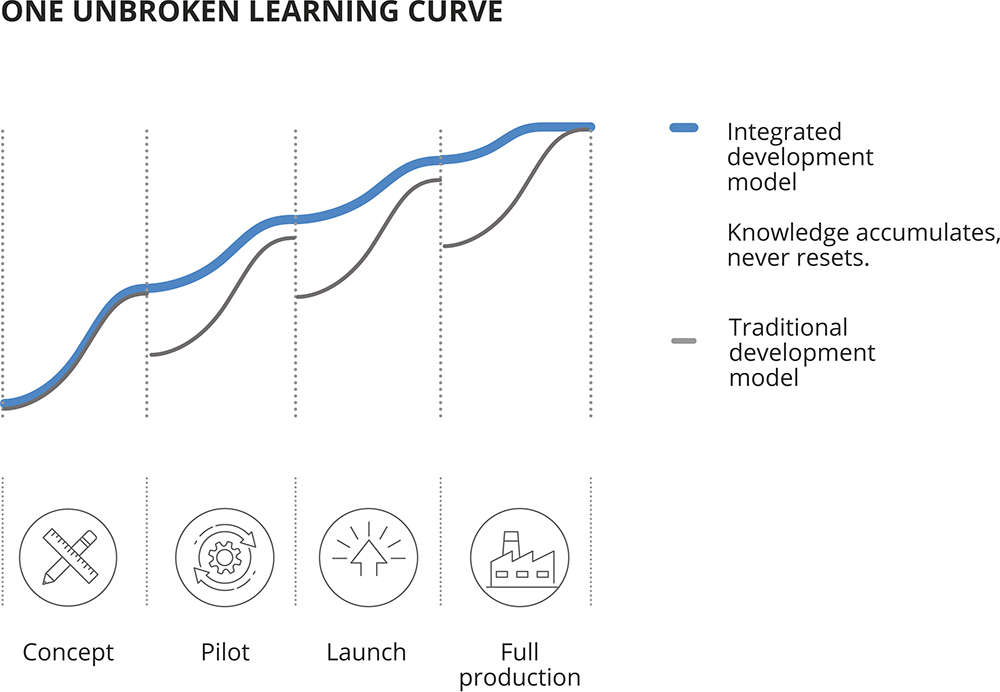
Figure 4: Continuous product development when companies are integrated.
With FRP and IGS GeboJagema now part of the same group, this handover disappears (Figure 4). Because the production engineering team designs the cavity concept from the silver stage onwards, the mould architecture is consistent across every subsequent phase. The mould process optimisation performed on a silver tool carries forwards to gold. The process data from a silver or gold tool can be documented and applied directly to the platinum tool without re-validation. The result is a project where no valuable information is lost between stages.
A FORWARD-THINKING APPROACH
The role of prototyping in drug delivery device development is no longer limited to proving that a concept works. Modern prototyping lays the foundation for everything that follows, from clinical trials and regulatory submissions through to market launch and high-volume production.
When these practices come together, the impact on a development project is significant. When DfM principles are applied from the concept phase, the part design does not need to change as it moves through clinical trials, regulatory submission and into production. When the mould architecture is designed for production from the pilot phase onwards, the transition to high-volume tooling requires no re-engineering. When both are developed under one roof, knowledge can be retained across every phase rather than being lost at each handover. Finally, when neither the part design nor the mould architecture has changed, there is no need for a new regulatory submission to the EMA or FDA.
There is also a practical advantage in terms of time-to-market. Gold-level tooling is production grade, with a shot life of up to 500,000 parts. This means that OEMs can begin selling devices while the high-volume platinum tool is still being manufactured, generating early revenue and further compressing the path from approval to commercial launch.
For OEMs navigating an industry where time-to-market is an increasingly important differentiator and regulatory pathways leave little room for avoidable redesigns, this integrated approach to prototyping is becoming not just an advantage but a necessity.