
To Issue 189
Citation: Moore A, “Consistency in Large-Volume Biologic Drug Delivery: Why Tissue Backpressure Matters”, ONdrugDelivery, Issue 189 (Sep 2026), pp 42–46.
Andrew Moore discusses the importance of backpressure and its variance across the patient population when designing an infusion system for large-volume biologics, including how Gerresheimer’s Gx InPuls and Gx InPuls Flex infusors are able to adapt to this variance dynamically to ensure a consistent patient experience.
Until recently, on-body infusion pumps were primarily used for small-volume subcutaneous (SC) basal infusions, but today they are increasingly being seen as a self-administration solution for rapid large-volume SC infusions of biologic drugs. This has led to many innovative drug delivery solutions being developed to address the new needs associated with this growing category of drugs.
“THESE STUDIES HAVE SHOWN THAT BACKPRESSURE IS AFFECTED BY BOTH INTRINSIC FACTORS WITHIN THE DEVICE DEVELOPER’S CONTROL, SUCH AS FLOW RATE AND VOLUME, AND EXTRINSIC FACTORS RELATING TO THE PATIENT AND INJECTION SITE.”
One challenge that has not been given enough attention is the impact that backpressure from the patient’s SC tissue can have on the drug delivery solution and user experience. Published studies have characterised backpressure in human and animal models, revealing its broad range. These studies have shown that backpressure is affected by both intrinsic factors within the device developer’s control, such as flow rate and volume, and extrinsic factors relating to the patient and injection site. As a result, predicting backpressure precisely prior to each infusion is not possible.
Understanding backpressure provides important insights for companies when developing a device for SC on-body infusion. At Gerresheimer, expected backpressure ranges have been assessed for the SensCore micropump technology employed in the Gx InPuls and Gx InPuls Flex infusion pumps, demonstrating consistent infusion performance despite backpressure variability.
WHAT IS BACKPRESSURE?
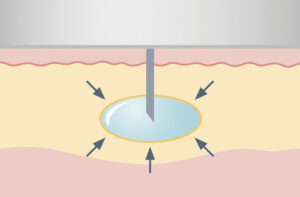
Figure 1: Illustration of backpressure in subcutaneous infusion.
Backpressure is an inherent characteristic of SC infusion. It arises when the tissue resists fluid entering the SC space and is typically assessed by measuring the difference in pressure between comparable infusions into tissue and into air (Figure 1).
Intrinsic drug and device design factors, such as flow rate, volume and viscosity, are each positively correlated with backpressure. Higher backpressures caused by increases in these factors can be either controlled or accommodated for through device design. With increased demand for high-flow-rate infusions for large volume and viscous biologic drugs, backpressure will have a non-negligible impact on infusion performance and device developers should ensure that the device generates a compensating pressure to deliver the drug at an expected flow rate.
An additional and possibly more challenging dynamic for device developers to accommodate is the broad variability of backpressure, ranging from 4 to 100 kPa, across possible injections and infusion rates.1–4 This variability is caused by extrinsic factors outside of the control of the device developer. The exact source of these extrinsic effects is not well understood but may relate to physiological factors such as injection site location, tissue hydration and local vascularity.
Given the combined contribution of intrinsic and extrinsic factors, backpressure should not be treated as a fixed value. Instead, an on-body infusion device should be designed to accommodate the full range likely to be encountered, including substantial interpatient variability. This can be demonstrated through infusion rate accuracy testing with a simulated backpressure testing platform.
HOW IS BACKPRESSURE CHARACTERISED?
By using studies that characterise backpressure in human and animal models, device developers can proactively design for a range of expected backpressures. Large-volume SC infusion was evaluated by Doughty et al in Yorkshire swine, and mean backpressures were reported, ranging from approximately 3.7±1.4 kPa for a 5 mL infusion delivered over 5 minutes, to 24.0±3.4 kPa for a 1 mL injection delivered over 10 seconds.2 In one particular test, a 10 mL infusion delivered over 10 minutes, backpressure was measured at 7.4±7.8 kPa. In this instance the standard deviation exceeded the mean, indicating that physiological variability can exceed 100% of the average pressure recorded, even where infusion conditions are identical across subjects.
In another study, Thomson evaluated backpressure in 11 patients with Type 2 diabetes. Backpressure during SC insulin injection was estimated using changes in injection flow rate as the basis for measurement. Measurable counterpressure was detected in 8 of the 11 patients ranging from approximately 164 to 998 mbar (16.4 to 99.8 kPa).3,4 These findings revealed substantial interpatient variability in backpressure and a more than sixfold difference in tissue resistance between individuals.
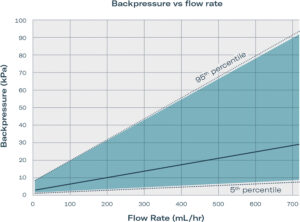
Figure 2: Backpressure measurements versus flow rate.
Overall, a range of 4–100 kPa is possible across the full range of potential infusions. However, the exact range of backpressures expected for a given application is highly affected by controllable factors such as flow rate, volume and viscosity.3 As an example, an infusion with a non-viscous drug with a flow rate below 100 mL/hr might produce a maximum backpressure of only 20 kPa. While device developers may target a broad range up to 100 kPa, the expected backpressure range should be assessed for the anticipated performance range of the device (Figure 2).
IMPLICATIONS FOR DEVICE DEVELOPMENT
Drug delivery devices are already designed to overcome internal resistance, such as friction within the primary container and fluid dynamic resistance in the fluid path. In this context, backpressure can be treated as an additional fluid path pressure, with the expected flow rate as a function of the difference between the pressure produced by the device and the external backpressure. From a design perspective, this can make use of existing methodologies for modelling infusion rate while integrating a new variable of backpressure.
“THE GREATER DESIGN CHALLENGE IS DYNAMICALLY ADAPTING TO BACKPRESSURE VARIABILITY. WITHOUT THIS DYNAMIC ADAPTATION, AN ON-BODY INFUSION DEVICE CANNOT MAINTAIN A CONSISTENT INFUSION RATE AND USER EXPERIENCE.”
The greater design challenge is dynamically adapting to backpressure variability. Without this dynamic adaptation, an on-body infusion device cannot maintain a consistent infusion rate and user experience. Inconsistency in infusion rates may be acceptable from a pharmacokinetic perspective for large-molecule monoclonal antibodies, which typically take several days to reach maximum serum concentration (Tmax ~2–8 days).5 On that timescale, the difference between a 30-minute and a one-hour infusion is expected to be pharmacokinetically minor. However, the successful self-administration of a drug relies heavily on a consistent user experience – an uncontrolled infusion rate may lead to use errors.
When presented with an unexpectedly long infusion, patients may interpret the slower delivery as an occlusion or other device malfunction and remove or replace the infusor before the dose has been fully delivered. Such variability can introduce uncertainty and increase the likelihood of use errors or use-related harm. Designing a device to accommodate the expected range of backpressures, and providing clear indications of dosing status, is important not only for device performance but also to support safe and reliable patient use.
Various on-body infusion device solutions address both backpressure and occlusion detection in different ways. Electromechanical devices typically use electronic dynamic controls which adjust power output to increase or decrease the pressure produced by a device. Dynamic pressure regulation is also feasible for mechanical systems.
INFUSOR DESIGN THAT RESPONDS TO VARIABLE BACKPRESSURE
The Gx InPuls from Gerresheimer is an on-body infusor platform for SC infusion, incorporating a built-in automatic needle insertion and retraction mechanism. Gx InPuls Flex is an off-body infusor platform for SC infusion that uses an infusion set to transport the drug from the device to the patient (Figure 3). Both are electromechanical devices that integrate the unique Gerresheimer SensCore linear-rotary micropump to precisely control flow rate in microlitre increments.
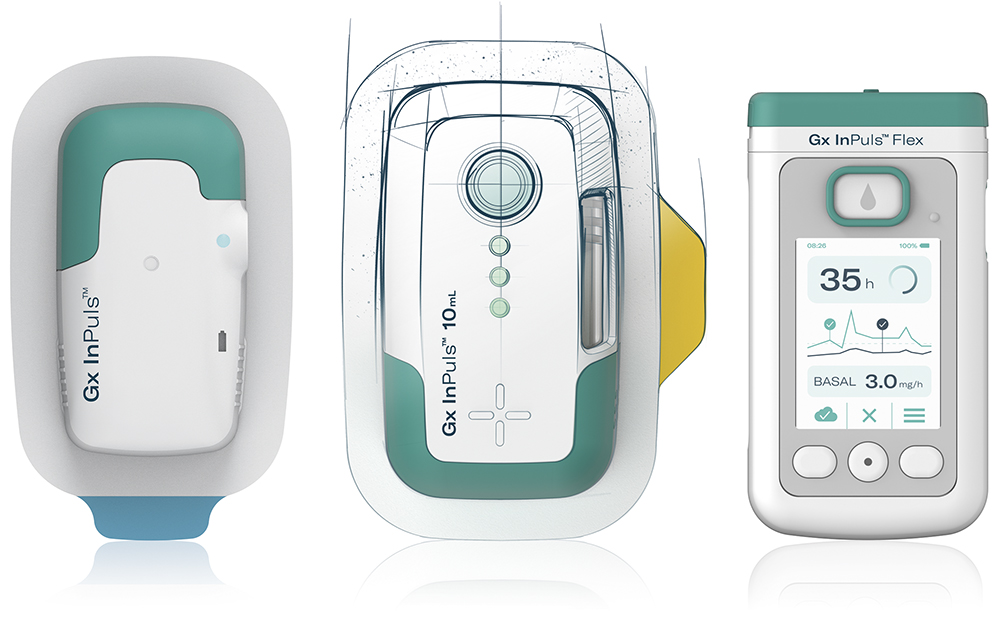
Figure 3: Gx InPuls 3 mL infusor and 10 mL infusor concept and Gx InPuls Flex 20 mL infusor.
The pulsatile wetted pump technology has specific benefits related to backpressure. The piston design of the pump acts as a valve and prevents backflow even when backpressure increases dynamically during an infusion. The wetted pump technology also simplifies infusion rate control. The system must ensure that each pulse or stroke of the pump is completed within a certain timeframe and that the pump seals can withstand the backpressure. Additionally, the control system does not require a complex chain of elastomeric or frictional components downstream of the pump.
“GX INPULS AND GX INPULS FLEX AUTOMATICALLY POWER-COMPENSATE FOR BACKPRESSURE IN ORDER TO ENSURE CONSISTENT INFUSION RATES.”
Gx InPuls and Gx InPuls Flex automatically compensate for backpressure in order to ensure consistent infusion rates. They also incorporate Hall effect sensors to detect an occlusion, indicated by incomplete pump strokes. The sensors are designed to trigger at a pressure greater than 200 kPa to ensure that normal backpressure is not misidentified as an occlusion. Both devices also include alarms as well as visual and audible indications to inform patients of the infusion status and alert them to any occlusion event.
To understand the performance of Gx InPuls and Gx InPuls Flex, laboratory testing was performed on the 10 µL SensCore micropump subsystems to simulate infusion under backpressure. The testing was performed by infusing at a rate of 360 mL/hr into a pressurised vessel and incrementally increasing and then decreasing the pressure. Delivery volume accuracy (DVA) was measured at each backpressure setting and assessed against acceptance criteria of 100±5%. Samples were first preconditioned by simulating the full lifecycle of the pump to assess if performance degrades over its foreseeable use life (Figure 4).
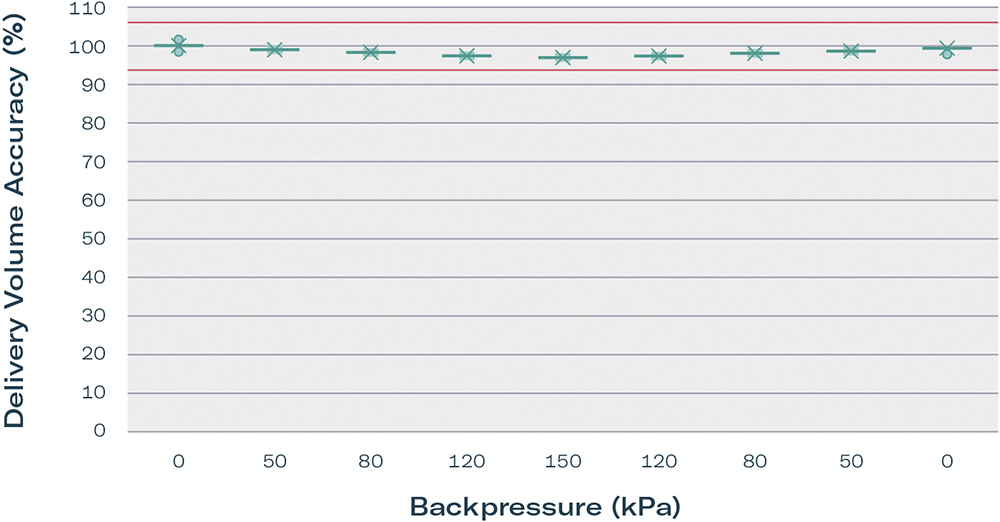
Figure 4: Delivery volume accuracy at 360 mL/hr for backpressure from 0 to 150 kPa.
Testing demonstrated that DVA can be maintained within the acceptance criteria for a wide range of backpressures from 0 to 150 kPa, exceeding the range of expected backpressure by a significant margin. A backpressure greater than 200 kPa is used as a threshold to trigger an occlusion detection alarm because this lies significantly above the expected backpressure range. The test confirmed that the Gx InPuls and Gx InPuls Flex infusors can achieve target infusion rates across the full range of expected backpressure variability.
“IF THE PREDICTABILITY OF THE PATIENT EXPERIENCE CAN BE IMPROVED BY CONSISTENT DELIVERY TIMES, INSTRUCTIONS FOR USE ARE
SIMPLIFIED AS A RESULT AND VARIABILITY IN THE TIME REQUIRED TO COMPLETE THERAPY IS REDUCED ACROSS THE PATIENT POPULATION.”
If the predictability of the patient experience can be improved by consistent delivery times, instructions for use are simplified as a result and variability in the time required to complete therapy is reduced across the patient population. By designing for the full physiological range of backpressures, rather than for a nominal operating condition, reliable performance across a broad range of clinical scenarios can be delivered by the Gx InPuls and Gx InPuls Flex infusors.
CONCLUSION
With the increasing interest in using on-body infusion devices for large-volume, high-flow-rate infusions, backpressure becomes a critical attribute to understand and account for in product design. Adapting to backpressure variability is essential for maintaining a consistent and reliable user experience. Future research may provide more insights into extrinsic effects on backpressure and how they can be controlled through administration workflows. In addition, absorption enhancers such as hyaluronidase may be co-formulated with drugs to affect tissue permeability and reduce backpressure. However, current device developers should ensure that variability can be managed by the device until these factors are fully understood and without relying entirely on absorption enhancers, which are not part of all infusion formulations.
Many drug delivery solutions, including Gx InPuls and Gx InPuls Flex, are designed to accommodate a broad range of backpressures and have demonstrated this capability under testing. By designing to adapt to a range of backpressures, rather than for a nominal operating condition, a predictable and reliable experience can be provided across a diversity of patient physiologies and therapeutic properties. As on-body infusion continues to expand into these higher-volume, higher-viscosity and higher-flow-rate applications, backpressure should be treated not as a peripheral engineering consideration, but as a core design input from the earliest stages of device development, on the same footing as dose accuracy and occlusion detection.
REFERENCES
- Allmendinger A et al, “Measuring tissue back-pressure–in vivo injection forces during subcutaneous injection”. Pharm Res, 2015, Vol 32(7), pp 2229–2240.
- Doughty DV et al, “Understanding Subcutaneous Tissue Pressure for Engineering Injection Devices for Large-Volume Protein Delivery”. J Pharm Sci, 2016, Vol 105(7), pp 2105–2113.
- Thomsen M, “Subcutaneous injections: Visualising and optimising device-tissue interactions”. PhD Thesis, University of Copenhagen, Mar 2018.
- Yildiz A, Lenau TA, “In Vitro Simulation of Tissue Back-Pressure for Pen Injectors and Auto-Injectors”. J Pharm Sci, 2019, Vol 108(8), pp 2685–2689.
- Davis JD et al, “Subcutaneous Administration of Monoclonal Antibodies: Pharmacology, Delivery, Immunogenicity, and Learnings From Applications to Clinical Development”. Clin Pharmacol Ther, 2024, Vol 115(3), pp 422–439.