To Issue 188
Citation: Roberts M, Fiorini A, “Design Verification for the Real World: Complex Drug Delivery in Uncontrolled Environments”, ONdrugDelivery, Issue 189 (Sep 2026), pp 30–34.
Dr Matthew Roberts and Andrew Fiorini explore the key steps involved in building a successful design verification programme for ambulatory electromechanical infusion systems and share the lessons they have learned along the way.
Large-volume drug delivery is a rapidly growing industry, as more biologics, oncology therapies and treatments for chronic conditions move from hospital-administered infusion into home and self-administered settings. Many of these drug products require a subcutaneous infusion pump, changing the way infusion pumps are being used. This has resulted in increased regulatory scrutiny of how these devices perform once they leave controlled testing conditions (Figure 1).
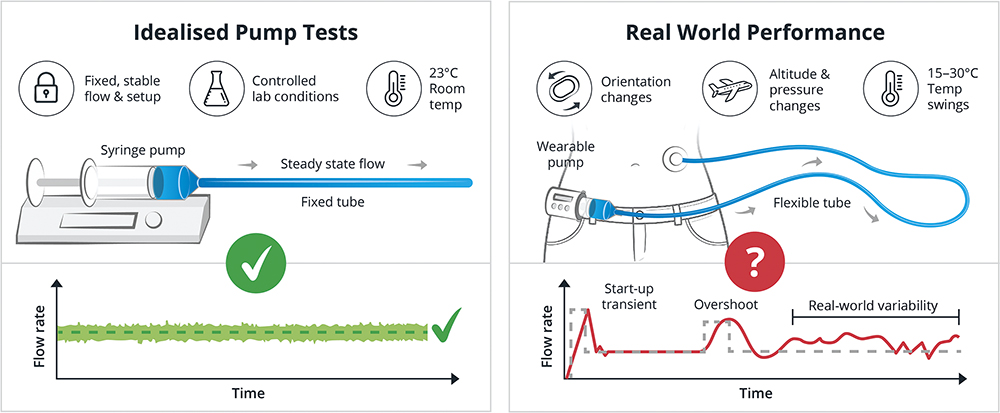
Figure 1: The real-world performance of modern, complex drug delivery systems can differ significantly from that indicated by standard laboratory pump tests.
DESIGN VERIFICATION TESTING OF AMBULATORY INFUSION PUMPS
For electromechanical ambulatory infusion pumps, design verification (DV) typically begins with the International Electrotechnical Commission (IEC) standard IEC 60601-2-24. However, demonstrating safe and effective drug delivery in real-world use extends beyond the standard’s scope. The Association for the Advancement of Medical Instrumentation (AAMI)’s Technical Information Report (TIR) 101:2021 addresses this gap, with particular relevance to ambulatory, self-administered systems, where the gap is widest.
It is noteworthy that, although this report provides extensive guidance as to how to test and report system performance, it leaves manufacturers responsible for defining the conditions under which performance should be verified. Self-administration conditions introduce additional complexities, and success depends on understanding the delivery system before testing begins.
BEYOND IEC 60601-2-24
IEC 60601-2-24 is the internationally recognised standard for electromechanical infusion pumps, syringe pumps and volumetric infusion controllers, providing a well-established framework for accurate and consistent drug delivery in both clinical and ambulatory settings.
The most complex pumps that the standard defines are Type 5 profile pumps that can combine basal and bolus delivery of drug products to manage symptoms that can fluctuate through the day. Insulin pumps for diabetes and apomorphine pumps for the management of Parkinson’s disease are two such products, delivering a basal rate for most of the day and patient-controlled boluses to manage mealtimes (for diabetics) or “off” episodes for patients with Parkinson’s disease. Whereas most pump testing described in IEC 60601-2-24 should be conducted with Class III water, pumps intended for use with a specific drug should be tested with that drug.
Water for injection behaves differently from many modern drug products, which may be highly viscous or exhibit non-Newtonian behaviour. At-home use introduces further variables that can affect performance and the dose received by patients:
- Pronounced temperature swings that, compared with clinical settings, can affect both formulation properties and catheter behaviour
- Delivery profiles often include patient-triggered bolus doses or variable flow rates, making transient performance important
- Pumps may be worn at different heights, orientations and locations on the body throughout the day.
To address the gap between IEC 60601-2-24 and real-world conditions, the AAMI published TIR101 in 2021, introducing test methods and reporting metrics that better reflect ambulatory and self-administered use conditions.
The sponsor is expected to define, justify and execute a statistically robust DV programme that demonstrates that the system performs as intended and the level of risk presented to patients is within acceptable limits. This flexibility is valuable but creates challenges: sponsors must consider which variables matter most for their drug-device combination and ensure that their testing strategy is both scientifically justified and regulatorily defensible.
DV testing of complex drug products using the AAMI TIR101 guidance can appear daunting, but it can be effectively managed by following three key steps:
- Define the test matrix and reporting metrics
- Design and de-risk the testing programme
- Execute the DV testing.
From experience, more than 80% of the work lies in designing and de-risking the test programme itself – this is particularly true under AAMI TIR101. Unlike many traditional standards, with tightly defined test conditions, AAMI TIR101 leaves sponsors responsible for the test matrix, environmental conditions and acceptance criteria. Success depends heavily on the characterisation work performed before formal testing begins. Failure to prepare adequately can jeopardise a programme, resulting in repeated testing and delaying submissions by several months. However, with the right planning and a risk-based approach, even highly complex systems can be verified efficiently and with confidence.
Establish the Test Matrix and Reporting Metrics
Despite provision of details on how to measure, what to report and how to structure the data, TIR101:2021 does not contain acceptance criteria. It is up to the sponsor to justify which tests are applicable, what results are acceptable and how confidently those results can be trusted.
Establishing acceptance criteria starts with understanding patient dosage sensitivity, including minimum effective dose and clinically meaningful dose variation. Unlike IEC 60601-2-24, which focuses on pump performance, TIR101 views this through the lens of patient self-administration, evaluating drug concentration fluctuations using pharmacokinetic coefficient of short-term variation (PK-CV) methods. This should also drive the pump specification. TIR101:2021 requires testing at the lower and upper limits of pump flow rates – allowing the pump to operate outside clinically useful windows can significantly increase the complexity and timescales of DV (Figure 2).
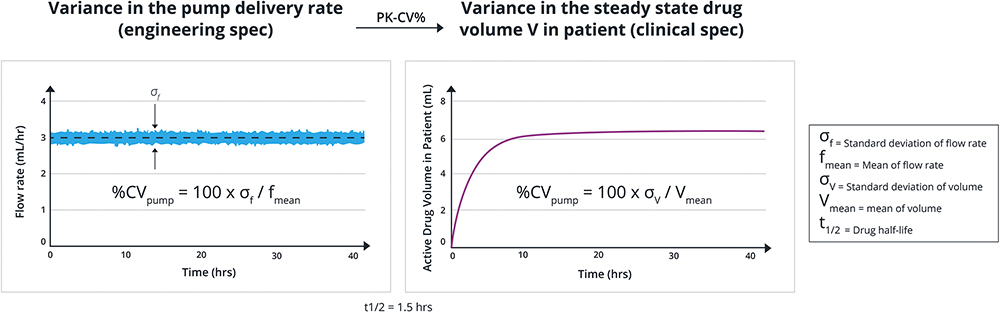
Figure 2: In the PK-CV mode, drugs with a longer half-life will have a higher active volume in the patient and will be less sensitive to variance in pump flow rate.
“A PUMP WITH AN ESTABLISHED PERFORMANCE HISTORY AND EXISTING APPROVALS CAN CARRY A SMALLER, BETTER-UNDERSTOOD TEST MATRIX THAN A NEWLY DEVELOPED PLATFORM, IF ITS SPECIFICATIONS ARE UPDATED TO MEET THE SPECIFIC USE CASE.”
The test matrix should reflect all clinically relevant operating conditions. Every claimed operating environment increases the DV burden; therefore, unnecessarily broad specifications can lead to significant additional testing. A pump with an established performance history and existing approvals can carry a smaller, better-understood test matrix than a newly developed platform, if its specifications are updated to meet the specific use case.
Design and De-Risk the Test Process
As with all DV processes, characterisation (or pre-DV) directly influences the efficiency of formal test execution. For ambulatory infusion devices dealing with complex formulations, unexpected behaviours arising during test execution can derail the entire programme. The following steps detail how to efficiently design and de-risk the DV protocol:
- Risk identification
- Risk elimination and mitigation
- Define data analysis and integrity.
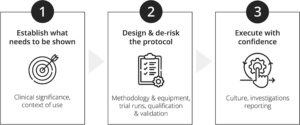
Figure 3: Efficient testing begins before execution, with extensive pre-DV planning and preparation work.
Risk Identification
For complex infusion systems, risks may often not be visible in product requirements or design documentation, so pre-DV activities should focus on uncovering underlying physical properties that may influence measurement performance (Figure 3).
Examples encountered during infusion pump verification programmes can include:
- Trapped air bubbles created during cartridge assembly, including their presence and migration with pump orientation
- Air bubbles becoming dispersed into catheters during fluid transfer
- Non-Newtonian formulation properties (e.g. shear thinning) behaving drastically differently during infusion versus bolus delivery
- Fluid evaporation through catheters and beakers.
These effects risk being misinterpreted as pump performance issues if the root causes are not fully understood. Flow-rate instability and end-of-dose issues could be incorrectly attributed to a pump’s drive mechanism, when the true causes are formulation – rather than pump-limited. For example, different air bubble locations along a catheter can produce distinct, repeatable flow signatures that closely mimic a mechanical fault, and separating the two typically requires careful analysis. Pre-DV activities should focus on identifying and understanding such mechanisms before they appear during formal verification.
Risk Elimination and Mitigation
Once identified, risks should be eliminated, controlled or characterised using targeted experimentation and engineering judgement. Effects such as balance drift, fixture design problems and temperature gradients can introduce significant measurement errors. For ambulatory pumps, this includes ensuring gravimetric balances have settling times long enough to resolve genuine flow transients without mistaking balance noise for a delivery event. Effective mitigation activities are those that eliminate sources of uncertainty.
Ambulatory pumps operate across broad parameter spaces, including temperature, viscosity, backpressure, orientation and start-up conditions, all of which affect performance. Design of experiments is an effective tool for systematically exploring these spaces, identifying interactions and sensitivities, and determining whether behaviour remains within acceptable limits across the intended operating range, thereby ensuring that an appropriate subset of testing conditions, representing potential worst-case scenarios, are chosen for the formal DV testing.
“FORMULATION BEHAVIOUR REQUIRES CLOSE ATTENTION AND VERIFICATION, AS MATERIAL PROPERTIES ON A CERTIFICATE OF ANALYSIS MAY BE INSUFFICIENT FOR PREDICTING HOW A FORMULATION BEHAVES INSIDE AN INFUSION SYSTEM.”
A recurring challenge in infusion pump verification is that the root cause can be misidentified. Formulation behaviour requires close attention and verification, as material properties on a certificate of analysis may be insufficient for predicting how a formulation behaves inside an infusion system. Shear rates and residence time can differ substantially from the conditions under which such data were generated – for example, density versus temperature.
As a result of investigations such as these, the mitigation strategy for a programme shifts towards understanding the physical mechanisms responsible and quantifying their impact. By the time formal DV commences, experimental signatures observed during the pre-DV phase can be accounted for and correctly assessed, reducing the risk of inefficient post-event root cause investigations and repeat testing.
Define Data Analysis and Integrity
During a DV programme, the characteristics of the data generated and how they are analysed are equally as important as the design of the physical test step. For example, a transient flow-rate disturbance may appear dramatic in raw data but have negligible impact on delivered dose, while a seemingly insignificant disturbance may accumulate into a clinically meaningful error over time. Distinguishing between the two requires careful analysis to identify clinically relevant issues from avoidable experimental artefacts.
“DEFINING ANALYSIS, ACCEPTANCE CRITERIA AND ANOMALY CLASSIFICATION RULES DURING CHARACTERISATION ENSURE THAT FORMAL DV ANSWERS MEANINGFUL QUESTIONS ABOUT DEVICE PERFORMANCE AS OPPOSED TO ASKING NEW QUESTIONS OF THE DATA.”
This becomes particularly important with automated analysis workflows. Automation improves repeatability and processes large datasets efficiently, but introduces risks of incorrect data manipulation and interpretation. Validation should focus not only on software calculations but also on checks to ensure that the correct data are selected and analysed. Defining analysis, acceptance criteria and anomaly classification rules during characterisation ensure that formal DV answers meaningful questions about device performance as opposed to asking new questions of the data.
Execute the DV Testing
Before executing the full DV matrix, teams must be trained, confident in procedures and clear on how to respond to unexpected results. Training should be documented, with the lab operating under a vigilance-driven, blame-free culture focused on catching issues early.
Planning how to respond to an out-of-specification (OOS) result beforehand is a key part of this culture, signalling to the reviewer that the process is robust and root cause analysis procedures are followed (Figure 4). OOS investigations all follow a simple logic:
- If the behaviour reflects the real drug delivery performance, the failure must be accepted and included in the statistical analysis
- If the behaviour reflects some aspect of the methodology, careful argument may justify the exclusion and retest of an erroneous result, if it can be proven as such
- If the behaviour is ambiguous, capture evidence (e.g. environmental data, balance data, photographs), learn as much as possible and document it for further investigation. This will ultimately allocate the result to one of the first two categories.
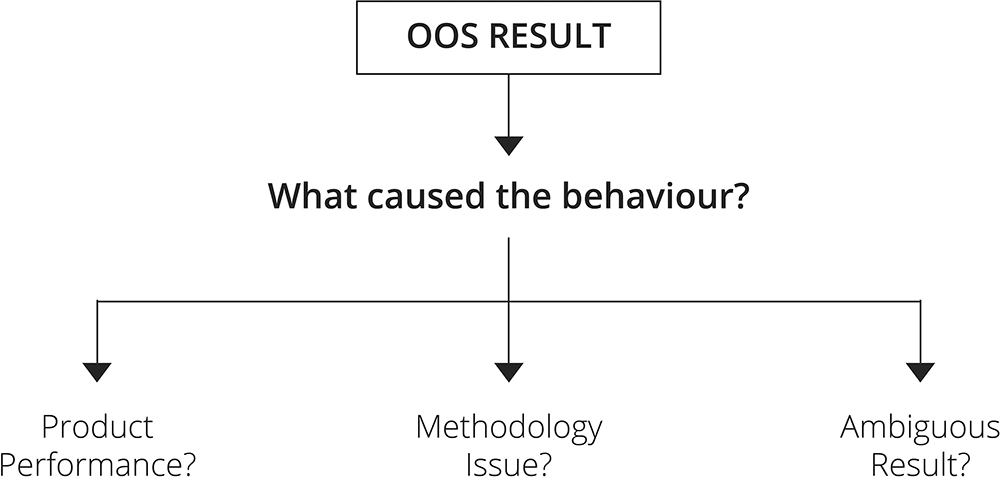
Figure 4: Decision framework illustrating the primary categories of causes considered during investigation of an OOS result.
Following these guidelines significantly reduces the burden of root cause analysis and reporting, and, even where acceptance criteria are not met, the resulting understanding will support strong, evidence-based recommendations for product improvement.
A genuine product failure and a system effect may only be distinguishable after careful investigation, demonstrating why agreeing the OOS logic in advance is so important. The objective of characterisation is to ensure that formal DV contains no unexpected lessons so that execution focuses on demonstrating device performance rather than investigating previously unknown phenomena.
CONCLUSION
For ambulatory infusion systems, successful DV may not be limited by the ability to execute the required tests but by how well the underlying system is understood before testing begins. Modern delivery systems combine electromechanical pumps, consumables, complex formulations and patient-driven use conditions, meaning that performance is frequently governed by interactions between these elements rather than the pump mechanism alone. Trapped air bubbles, formulation rheology, start-up transients and fluid-path compliance can all generate behaviours that resemble pump failures, which, through characterisation work, can be correctly classified.
Successful programmes treat DV as a confirmation exercise by defining clinically meaningful metrics, identifying hidden sources of variability and establishing robust interpretation methods before commencing formal testing. By following these principles, sponsors can reduce programme risk while generating evidence that is both scientifically robust and regulatorily defensible.
Acknowledgement
With special thanks to Manuel Acha for his assistance with the article.