
To Issue 188
Citation: Leisner H, “Designing for Scale: Reliable Manufacturing of Pen Injector Platforms”, ONdrugDelivery, Issue 188 (Jul 2026), pp 48–50.
Henrik Leisner discusses the reliable scaling of pen injector programmes, considering how high-quality, high-volume manufacture depends on experience and collaboration.
Many pen injector programmes begin with established designs. The key question is whether or not those devices can be delivered reliably at scale. This is why manufacturing experience and collaborative ways of working play such an important role in the success of such a programme.
Pen injector programmes frequently build on established device formats that are already widely used for chronic self-administration, including therapies such as insulin and glucagon-like peptide-1. In these programmes, development typically centres on behaviour that aligns with existing platforms and established user expectations. In some cases, a different approach is taken, usually in response to specific therapy requirements or a deliberate choice to differentiate.
One of the most widely deployed formats is the variable multidose pen injector. In this format, dose selection, confirmation and delivery follow interaction patterns that have been deployed at scale for many years. These devices support dose adjustment before injection, provide confirmation of dose delivery and can be adapted to fixed dose configurations through changes to the dosing mechanism. As these formats are well established, expectations around their performance requirements and use characteristics are typically well understood.
“INTERACTION PATTERNS MAY BE WELL ESTABLISHED, BUT THAT DOES NOT REMOVE THE CHALLENGE OF DELIVERING CONSISTENT PERFORMANCE AT SCALE.”
Interaction patterns may be well established, but that does not remove the challenge of delivering consistent performance at scale. Every unit needs to perform as expected, across production volumes, over time and across geographies. Human factors validation remains essential to confirm that real-world use aligns with intended function, but once interaction patterns are well established, attention tends to move towards how those patterns are maintained through repeatable manufacturing processes.
The same expectations apply to regulatory preparation, where consistency in product performance and intended use is fundamental to achieving efficient and predictable registrations. Established device formats provide a valuable reference point; however, regulatory success is primarily driven by the strength of development work – specifically the ability of research and development to generate robust, well-documented verification and validation evidence. Demonstrating that the design performs to state-of-the-art pen injector standards, meets intended use expectations and is supported by rigorous testing reduces uncertainty, builds reviewer confidence and enables smoother, more streamlined regulatory approvals across markets.
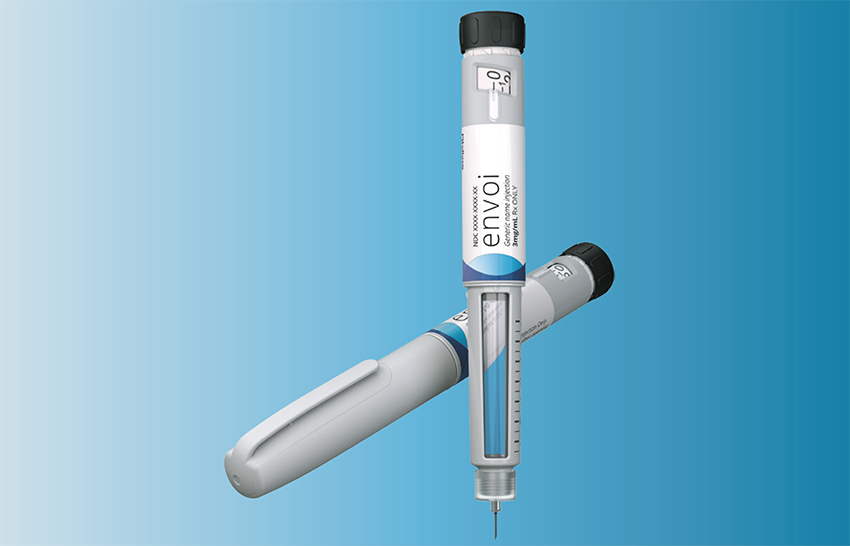
In practical terms, these benefits come down to whether or not the device can be produced reliably, repeatedly and at the volumes needed for long-term supply. This approach underpins pen platform programmes, such as Phillips Medisize’s Envoi™, which is designed to preserve expected user behaviour while supporting consistent quality at commercial scale.
“AS PROGRAMMES MOVE TOWARDS HIGH-VOLUME PRODUCTION, THE QUESTION BECOMES HOW WELL QUALITY AND YIELD HOLD UP AT SCALE.”
WHERE DIFFERENTIATION REALLY SHOWS: DESIGNING FOR HIGH-QUALITY, HIGH-VOLUME MANUFACTURE
As programmes move towards high-volume production, the question becomes how well quality and yield hold up at scale. For experienced teams, this is a familiar consideration, largely shaped by manufacturing capabilities and how operations run day to day. Beyond prototype or pilot builds, issues that were relatively contained earlier on can start to have a much bigger effect at higher volumes if not actively managed.
Small sources of variation play a big part here. Part tolerances, material batches, tool wear and gradual process drift during extended production runs can start to affect assembly yield. As such, early design choices need to factor in how variability behaves under sustained high-volume manufacture.
This is where device development and design-for-manufacture experience become particularly important. Programmes that design with manufacture in mind from the outset tend to be better placed to scale predictably, maintain quality and support reliable commercial supply.
WHAT MANUFACTURING EXPERIENCE CHANGES IN A PLATFORM PROGRAMME
Decisions made early around design for manufacture help shape readiness for scale. How well the programme then performs over time depends just as much on how manufacturing is run day to day.
Programmes that succeed at scale tend to draw on experience in high-quality, high-volume manufacture. That includes long-standing expertise in areas such as tooling, automation, inspection and process control, all of which help keep manufacture stable and repeatable as volumes grow.
This kind of operational experience can make a difference later in the product lifecycle, reducing rework, avoiding delays and limiting cost escalation. It also highlights the importance of a manufacturing footprint that can support global programmes, with consistent processes, aligned quality systems and continuity of supply across regions.
Together, these foundations can help pharma companies to meet the challenge of delivering treatments to patients worldwide, turning a design into a product that can be supplied reliably over the long term.
“WHEN TEAMS SHARE INFORMATION OPENLY, POTENTIAL RISKS OFTEN SURFACE EARLIER IN THE PROGRAMME, WHEN THEY ARE EASIER TO ADDRESS.”
TRUST AND STEERING PROGRAMMES OVER TIME
Manufacturing capability is only one part of the picture. Trust is another, and it tends to build over time through listening and a clear understanding of the programme context. When teams share information openly, potential risks often surface earlier in the programme, when they are easier to address. That kind of visibility can help make it easier to work through trade-offs together as requirements evolve.
This way of working supports pharma teams through the journey to market, particularly as priorities shift. Ongoing adjustment is a normal part of scale-up, as programme needs, constraints and manufacturing realities are refined along the way.
When development, commercialisation and supply planning are closely aligned, teams are generally better placed to make timely decisions as conditions change, without compromising long-term manufacturability. Many of these decisions play out over years, shaping how capability, supply and risk are managed across the product lifecycle.
“ULTIMATELY, IT IS DURING COMMERCIALISATION THAT ESTABLISHED FORMATS ARE TESTED MOST THOROUGHLY. RELIABILITY IS CLOSELY TIED TO WHETHER DESIGNS CAN BE MANUFACTURED WITH CONSISTENT QUALITY, AT SCALE AND OVER TIME.”
Ultimately, it is during commercialisation that established formats are tested most thoroughly. Reliability is closely tied to whether designs can be manufactured with consistent quality, at scale and over time. Familiarity may shape early confidence, but sustained performance depends on thoughtful design choices, manufacturing experience and collaborative ways of working across the commercial lifecycle.
Phillips Medisize works with pharma partners to deliver established pen injector formats at commercial scale, drawing on experience built over multiple programmes. That experience includes transferring new designs into manufacture, scaling volumes as demand grows and maintaining consistent quality across a global manufacturing footprint. The company’s position as part of Molex, a Koch company, supports a long-term view on capability building and supply continuity across the product lifecycle.
Envoi™ is a trademark of Phillips Medisize.