To Issue 190
Citation: Halthore R, “Gas-Powered Autoinjectors: Meeting the Challenges of an Evolving Drug Landscape”, ONdrugDelivery, Issue 190 (Sep/Oct 2026), pp 34–38.
Ram Halthore presents Kaleo‘s Aerio™ autoinjector platform, discussing how gas-powered autoinjectors have the potential to tackle the challenges currently facing injectable drug delivery, including high-viscosity and large-volume formulations, increased demand for patient-centricity and stringent regulatory requirements for reliability in emergency-use applications.
The expanding biologics market is creating new and challenging demands for drug delivery that conventional spring-powered autoinjector systems are finding increasingly difficult to address. Kaléo’s Aerio autoinjector platform can use compressed gas technology to provide a controlled and predictable drug delivery profile across a range of formulation viscosities and injection volumes, without negative impact on the drugs that pharmaceutical companies want for their therapies and the patients who use them.
Kaléo’s journey began more than 25 years ago, when the passion of its founders and their personal experiences inspired them to develop an autoinjector with features like a never-seen needle. That product led to development of the Aerio autoinjector platform of drug delivery device technologies that are designed to support the increasing large-volume therapies, high-viscosity formulations and combination therapy requirements of the evolving pharmaceutical landscape.
WHY GAS POWER: HIGH VISCOSITIES AND HIGH FLOW RATES
As of late 2025, large-molecule biologic therapies accounted for an estimated 35–40% of the global pharmaceutical market by value, and that fraction is projected to exceed 50% by 2030.1 As the biologics market has continued to expand, there has also been a shift in delivery trends away from large volumes of biologic drugs typically administered intravenously at hospitals, clinics and infusion centres over several hours, towards smaller-volume subcutaneous injections administered at home (or elsewhere) over the course of seconds or minutes.2,3 These trends and emerging formulation requirements for at-home administration are placing new challenges on conventional delivery systems, including the need to deliver highly viscous formulations or large volumes quickly.
The viscosity of a formulation is dependent on multiple factors, including the drug’s concentration and the formulation recipe. As the concentration of the formulation increases – for example, because the total volume for injection is reduced – viscosity also increases. In turn, the higher the viscosity of the formulation, the greater the force that is required to push the drug through the narrow needles typically used for injectable drugs.
These viscosity and large-volume challenges are further compounded by the trend towards reasonable injection times for self-administration. This requires an increased flow rate of fluid through the needle and a concomitant increase in the force required to achieve that flow. However, at higher flow rates, some high-molecular weight biologic formulations may be susceptible to shear-related effects,4 potentially resulting in degradation, aggregation, altered solubility and reduced biological activity.
Apart from the technical challenges posed by drug formulations and their injection times, pharmaceutical companies are extending the activity duration of their products through encapsulation and other timed-release technologies.5 This move enables less frequent dosing schedules and longer periods between injections, which may increase patient convenience and support adherence.2
“PHARMACEUTICAL STAKEHOLDERS ARE SEEKING INJECTION SYSTEMS THAT CAN ADDRESS EVOLVING DELIVERY REQUIREMENTS WHILE SIMPLIFYING THE SELF-INJECTION PROCESS TO FACILITATE HOME USE.”
For all these reasons, pharmaceutical stakeholders are seeking injection systems that can address evolving delivery requirements while simplifying the self-injection process to facilitate home use. To address the emerging and evolving needs of the pharmaceutical industry, Kaléo has developed the Aerio autoinjector platform, an autoinjector with compressed-gas capabilities that enables the delivery of a broad range of viscous formulations at a predictable rate, while maintaining the potential for a user-friendly form factor and ease of use.
Using the same proven pressurised gas-powered technology in the company’s US FDA-approved autoinjector products, along with additional enhancements, Kaléo is developing innovative solutions for delivering larger volumes of high-viscosity formulations in a range of formats.
THE BENEFITS OF AERIO
Kaléo’s gas-powered injection technology offers several important benefits in device size, delivery consistency and device robustness. One benefit is the platform’s size, achieved by minimising its length. Larger-volume containers often have larger diameters and plungers with correspondingly larger surface areas that require greater force to provide consistent delivery. To achieve this, a conventional device would need to use larger, higher-force springs. By contrast, the gas-powered Aerio platform is mostly unaffected by the container diameter, because the same gas pressure applied to a larger area still results in a higher force. This attribute allows for the use of a larger diameter container in the device design and thus reduces overall length.
Gas-pressurised Aerio autoinjectors use pressurised gas technology to deliver predictable and consistent force for the drug delivery. In addition, the pressure in the gas cylinder can be modified to accommodate larger volumes and higher viscosities without an increase in gas cylinder size, which also contributes to the ability to minimise the size of the autoinjector and configure it according to specific patient or caregiver needs.
Another benefit of gas power is the highly controlled flow rates it enables. By controlling the uniform force applied to the plunger throughout the injection process, Kaléo’s gas-powered Aerio autoinjector platform is designed to support a controlled and predictable delivery profile across a range of viscosities and injection volumes.
“THESE FEATURES OF THE AERIO PLATFORM ALLOW KALÉO’S DESIGNERS TO TAILOR THE DEVICE TO MEET THE UNIQUE ASPECTS OF A THERAPY’S USE/CARRY ENVIRONMENT, INCLUDING THE ADDITION OF OPTIONAL CUSTOM ELECTRONIC FEATURES.”
Gas power also enables the Aerio platform to help reduce overall device length via a patented non-coaxial layout that places the drive system adjacent to, rather than in line with, the primary container. This configuration means that the Aerio device is often only slightly longer than the combined length of the drug container and the needle, and has a shorter overall length than is achievable with the coaxial layout of conventional spring-powered autoinjectors. These features of the Aerio platform allow Kaléo’s designers to tailor the device to meet the unique aspects of a therapy’s use/carry environment, including the addition of optional custom electronic features.
Finally, the controlled and uniform application of force on the drug container in gas-powered autoinjectors may reduce mechanical stress on critical container components. As a result, this minimises the risk of container breakage, improves overall device robustness and increases the reliability of drug delivery during use.
THE AERIO AUTOINJECTOR PLATFORM
Kaléo’s Aerio autoinjector platform combines proprietary technology and customisable device design to support a broad range of therapies, formulations and patient populations. Aerio platforms can be designed with the following capabilities and flexible features:
- Consistent drug delivery profile through gas-powered technology
- Accurate and precise administration of dose volumes ranging from 0.1–20 mL
- Potential flow velocity ranging from 1 mL/min up to 90 mL/min
- Ability to deliver high-viscosity formulations (up to 2,000 cP) through a range of needle gauges
- Ability to use standard or custom syringes or cartridges
- Rapid automatic needle injection and retraction (the patient never sees the needle)
- Injection steps that can be tailored to the target patient population and use environment
- Form factor flexibility to suit patient needs
- Needle safety features with automatic needle retraction at the end of drug delivery
- Subcutaneous or intramuscular delivery.
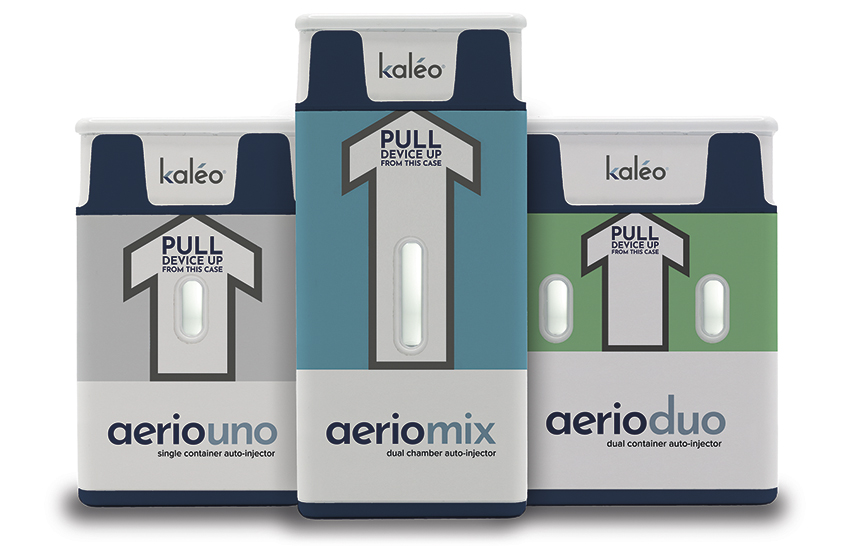
The platform consists of three different types of autoinjector: AerioUno (Figure 1), AerioDuo (Figure 2) and AerioMix (Figure 3).
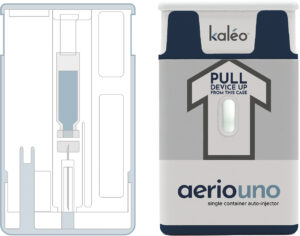
Figure 1: AerioUno single-container autoinjector.
AerioUno
- Single-container autoinjector platform
- Designed for single-drug delivery with patient-centric features, including optional electronic-assisted audio guidance and visual cues
AerioDuo
- Dual-container, dual-injection platform
- Supports two independently filled containers through storage and administration
- Supports two different formulations with different viscosities and different fill volumes in different size containers
- Upon activation, one power source delivers two separate injections simultaneously
- Cartridge or prefilled syringe
- Can be used as a large-volume drug delivery system with the same drug in both containers
- Dual-needle technology enables drug delivery across a larger surface area compared with current technologies on the market.
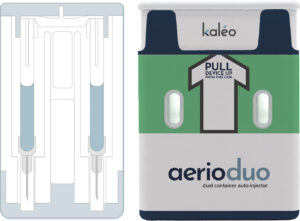
Figure 2: AerioDuo dual-container autoinjector.
AerioMix
- Dual-chamber platform, one chamber for lyophilised or dry-powdered drug and the other chamber for a liquid, or two chambers with two different liquids
- Upon activation, automatic delivery of reconstituted or mixed product
- Supports applications requiring component separation to extend the shelf life prior to administration, including lyophilised formulations, powders and incompatible dual-liquid applications
- Can be either spring- or gas-powered.
Customisable Features
In addition to AerioUno, AerioDuo and AerioMix, Kaléo has developed proprietary connected health technology capable of the following:
- Automatic pairing with a mobile device to facilitate setup
- Motion detection to confirm appropriate carrying and adherence
- Automatic detection of activation
- Automatic temperature trend notification to warn of unsuitable temperatures
- Last known location feature to help locate the device and/or user
- Power management features to facilitate extended battery life.
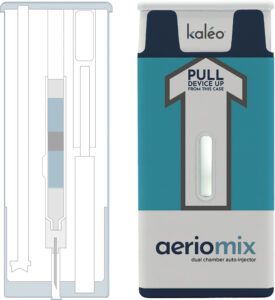
Figure 3: AerioMix dual-chamber autoinjector.
Any of these features can be added to any of the Aerio autoinjectors to create a customised device built on the company’s core delivery mechanism. In fact, Kaléo’s AUVI-Q® is the first epinephrine autoinjector to include electronic voice prompts to guide the user through the injection process. This feature was designed to help first-time users and users in the high-stress environments where emergency-use autoinjectors are needed.6 Kaléo has also developed an electronic trainer to support ongoing practice before first use and reinforcement of correct device use between injections.
DELIVERING RELIABILITY FOR PATIENTS AND PARTNERS
Kaléo evaluated the reliability of two approved autoinjectors after the FDA’s draft guidance for emergency-use injectors was published in 2020. 99.999% reliability was verified for successful injection, meeting the requirement for emergency-use injectors as published in the draft guidance.7
In 2019, Kaléo was selected to develop a 10 mg naloxone autoinjector as a rapid opioid countermeasure system (ROCS) for the US Department of Defense to treat military personnel and first responders exposed to weaponised, ultra-potent synthetic opioids, using the Aerio autoinjector platform. During the development of this device, which the FDA approved in 2022, Kaléo demonstrated that its 10 mg naloxone autoinjector met the rigorous requirements of MIL-STD-810H testing.8 Kaléo applies these same standards of reliability and ruggedness to the entire Aerio platform to facilitate consistent device performance.
Kaléo’s pressurised gas technology, combined with its patented non-coaxial configuration, automatic needle injection and retraction makes the Aerio autoinjector platform well positioned to address the emerging needs for administration of high-volume, high-viscosity and complex formulations at home or in other appropriate settings where they are needed. With more than 13 million Aerio autoinjector products distributed in the market, Kaléo is a leader in gas-powered autoinjectors that helps solve some of the complex drug delivery challenges of today, making the company an experienced, capable and reliable partner for drug developers.
REFERENCES
- “Global Pharmaceutical Market: 2025 Analysis & Key Trends”. Market Report, IntuitionLabs, Oct 2025.
- Bittner B, Richter W, Schmidt J, “Subcutaneous Administration of Biotherapeutics: An Overview of Current Challenges and Opportunities”. BioDrugs, 2018, Vol 32(5), pp 425–440.
- Overton PM et al, “Patient Preferences for Subcutaneous versus Intravenous Administration of Treatment for Chronic Immune System Disorders: A Systematic Review”. Patient Prefer Adherence, 2021, Vol 15, pp 811–834.
- Le Basle Y et al, “Physicochemical Stability of Monoclonal Antibodies: A Review”. J Pharm Sci, 2020, Vol 109(1), pp 169–190.
- Li W et al, “Clinical translation of long-acting drug delivery formulations”. Nat Rev Mater, 2022, Vol 7, pp 406–420.
- Edwards ES et al, “Design validation and labeling comprehension study for a new epinephrine autoinjector”. Ann Allergy Asthma Immunol, 2013, Vol 110(3), pp 189–193.
- “Technical Considerations for Demonstrating Reliability of Emergency-Use Injectors Submitted under a BLA, NDA or ANDA”. Draft Guidance for Industry, US FDA, Apr 2020.
- “Environmental Engineering Considerations and Laboratory Tests”. Test Method Standard, US Department of Defense, Jan 2019.