
To Issue 191
Citation: Goldfarb L, “The Rise of Silicone-Free Prefilled Syringes: New Functional Testing Considerations”, ONdrugDelivery, Issue 191 (Oct 2026), pp 94–98.
Landon Goldfarb considers the impact that new alternative and silicone-free coating technologies, developed in response to the challenges presented by the interaction of silicone with sensitive novel biologics, are having on the syringe landscape and how device developers and pharmaceutical companies can ensure the compatibility of these new syringe formats with modern therapeutics and autoinjector systems.
The pharmaceutical industry is currently experiencing a period of innovation and development that has been unparalleled in the past 50 years. New classes of drug products, such as monoclonal antibodies and messenger RNA therapies, are unlocking new potential for patient outcomes and represent a vast opportunity for pharmaceutical organisations.
The demand for these therapies is spurring significant growth in R&D expenditure, manufacturing capacity and primary container development. Specifically, the interface between the primary container and the drug product is being revolutionised due to the known incompatibility between typical surface treatments – such as silicone oil – and large molecule formulations.
“AS SYRINGE TECHNOLOGIES EVOLVE, MANUFACTURERS MUST ENSURE THAT IMPROVEMENTS IN DRUG COMPATIBILITY DO NOT COME AT THE EXPENSE OF DELIVERY PERFORMANCE, PATIENT EXPERIENCE OR DEVICE RELIABILITY.”
Traditionally, silicone oil has been used to ensure reliable device performance, but concerns about protein aggregation and the presence of silicone particles impacting efficacy have necessitated new solutions. Syringe developers have responded with the development of novel silicone-free platforms, which can introduce new variables to consider for device performance and necessitate a re-evaluation of functional testing strategies. As syringe technologies evolve, manufacturers must ensure that improvements in drug compatibility do not come at the expense of delivery performance, patient experience or device reliability.
WHY SILICONE BECAME THE INDUSTRY STANDARD
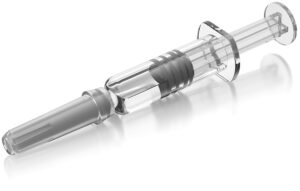
Figure 1: A traditional PFS.
For years, silicone oil was seen as the gold standard for syringe barrel lubrication, addressing many common usability issues. Furthermore, its interaction with more traditional small-molecule drugs was minimal, allowing widespread industry use within prefilled syringes (PFSs) and cartridges.
Figure 1 shows a traditional PFS system. Typically for staked needle syringes, the silicone is sprayed onto the interior of the barrel prior to filling. The use of silicone oil enables more consistent injection forces by ensuring smooth travel of the stopper over the length of the barrel. Previously, syringes were more susceptible to slip-stick performance issues, where the stopper could experience a halting motion partway through the injection, resulting in force spikes and poor usability.
These usability improvements also ushered in the expanded use of autoinjectors, providing more predictable force profiles to design against. Furthermore, spring-based activation mechanisms of autoinjectors could be more easily refined to reach target injection times and reliability requirements for automated devices, as per ISO 11608-5. As a result, the use of combination products such as autoinjectors became more commonplace within the industry, driven by the increasing prevalence of chronic diseases and patient demand for self-administration options.
CHALLENGES OF SILICONE
As syringe technology matured and a wider body of research was performed, functional drawbacks of silicone oil agnostic to the drug contained within were discovered. Subvisible particle generation is a significant issue that can impact product quality, patient safety and regulatory acceptance. The thin layer of silicone applied to the barrel can undergo mechanical agitation, temperature cycling and ageing, resulting in particles detaching and becoming suspended in the drug product.
This detachment can occur during the manufacturing process, fill-finish operations, transportation, storage – or during activation within an autoinjector. This phenomenon in autoinjectors specifically has become an intensive area of research considering the shear forces experienced during the device’s activation.
Another issue is the uniformity of the coating. Over time, the coating can migrate across the inner surface of the barrel, resulting in high and low spots of lubrication. This migration can substantially impact functional performance, resulting in significant variability in glide force.
“ASSETS ARE BEING DEVELOPED AT AN UNPRECEDENTED PACE, ESPECIALLY WITHIN THE AREAS OF ONCOLOGY AND IMMUNOLOGY. THESE NEW ASSETS BRING MANY NEW CHALLENGES, AS THEY RELATE TO INTERACTIONS BETWEEN SILICONE OIL AND THE DRUG PRODUCT.”
The proliferation and commercial readiness of biologics has occurred relatively quickly, with biologics now accounting for nearly half of the total pharmaceutical R&D expenditure. Assets are being developed at an unprecedented pace, especially within the areas of oncology and immunology. These new assets bring many new challenges, as they relate to interactions between silicone oil and the drug product.
Biologics have demonstrated vulnerabilities when used in conjunction with siliconised barrels, with concerns around protein destabilisation and the potential for aggregation of particles impacting both the efficacy of the drug and the uniformity of device performance. These risks become more pronounced with higher viscosity solutions – biologics are routinely in the 10–100 cP range.
INDUSTRY RESPONSE
To combat these issues and better position the primary container market to support biologic drug products, innovative solutions have been developed within the PFS space. Established players and new entrants have developed solutions to address these issues, ranging from new coating technologies to completely different container materials.
Many glass-based solutions represent more incremental improvements to existing technologies, with many early developments focused on the coating technology and process. Newer manufacturing processes enable the use of cross-linked silicone coatings or baked-on silicone to limit the amount of particle detachment within the barrel. Many of these solutions avoid significant impact on functional performance but do not eliminate the issue for extremely sensitive biologics.
Furthermore, manufacturing processes for staked needle syringes, specifically those adhering the needle within the luer cone, cannot withstand the temperatures required for some silicone surface treatments. Beyond the barrel itself, elastomeric components used within the syringe are also being identified as sources of particle generation and are being redesigned without the use of silicone or alternative coating technologies.
Other solutions represent more significant departures from traditional devices, using either silicone-free glass syringes or alternative materials such as cyclo-olefin polymers or co-polymers. These approaches represent a larger shift in container closure technology, one that better addresses the needs of biologics.
These solutions can offer significant improvements regarding drug stability and particle generation, but at the expense of widely understood performance metrics, especially when used in secondary packaging, such as autoinjectors. Each of these newer technologies can fundamentally change how the syringe behaves mechanically, necessitating increased testing and the development of modified design verification programmes.
UNDERSTANDING FUNCTIONAL PERFORMANCE
Pharmaceutical organisations can use traditional equipment, such as universal testing machines, to evaluate and de-risk the use of newer technologies for their drug development programmes. Standards like ISO 11040 and USP <382> remain relevant and drive the methodology for performing these evaluations. Device development teams may modify specific test parameters to serve their particular use case, but will still look to existing standards as a reference point. The following tests are more commonly performed to assess PFS performance:
- Break loose and glide force
- Needle shield and closure removal forces
- Container closure integrity.
The most fundamental assessment of a syringe’s mechanical performance is break-loose and glide force testing. Together, these parameters empirically determine an assessment of many different device parameters, including coating uniformity, geometric tolerances, stopper coating performance, surface roughness and more.
Figure 2 illustrates many different factors that can impact testing. It is important to note that testing with or without drug products in the syringe will serve different purposes. For purely evaluating the coating performance or for comparison between different syringes, testing will be driven by ISO 11040-4 and should be done without fluid in the barrel. To better understand the interaction between the syringe and the final drug product, taking factors like formulation viscosity into account, testing will be driven by ISO 11040-8 and require the complete combination product.
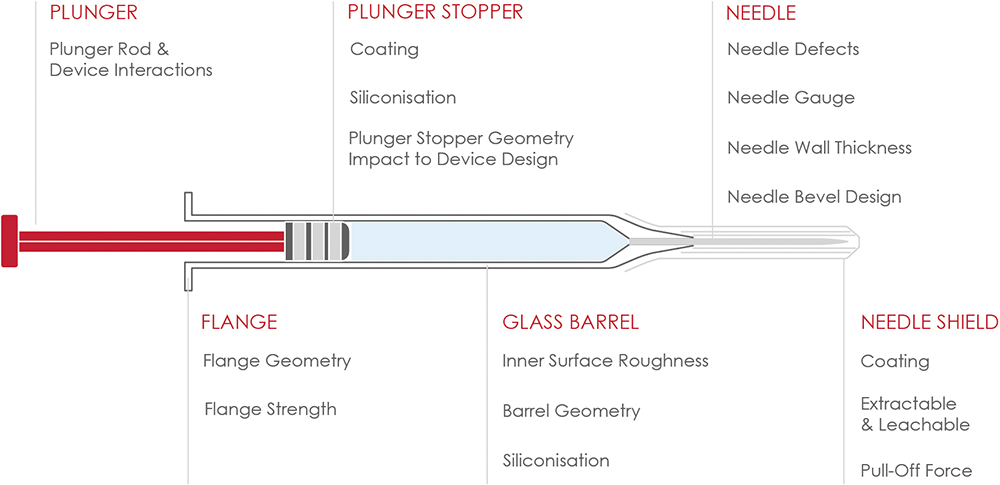
Figure 2: Factors of the syringe that can impact testing.
At their most basic, break-loose and glide force tests represent the forces necessary to initiate plunger movement followed by the force needed to sustain it. These are analogous to the static and dynamic co-efficients of friction between the stopper and the barrel. Figure 3 displays a typical graph for this test, which often shows an initial peak representing the break-loose force, followed by a plateau, representing the glide force. The end of the curve can often show a large spike in force, where the stopper engages with the end of the barrel.
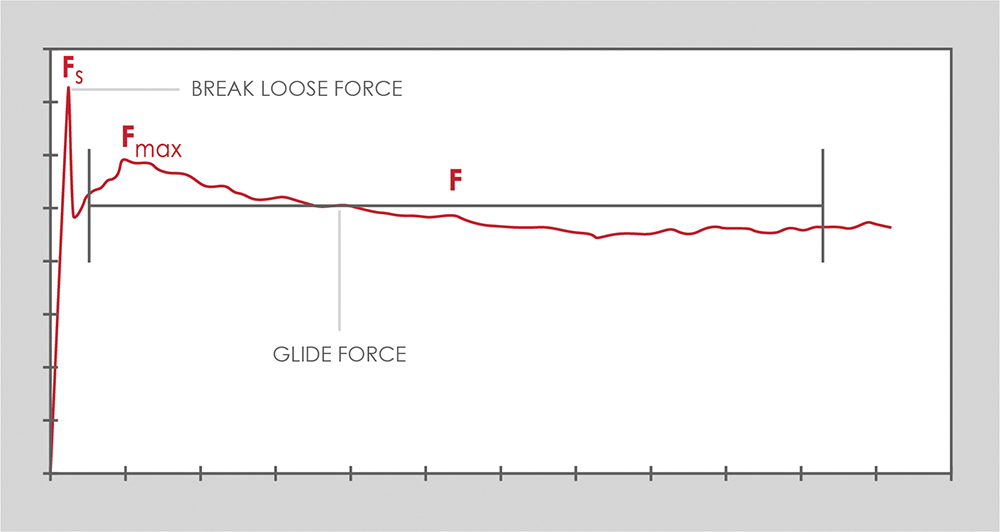
Figure 3: Typical graph of a break-loose and glide force test.
In general, the break-loose force should be larger than the glide force, and any unexpected increases in force throughout the glide region can indicate a coating performance issue or a manufacturing error that should be investigated further. These values should be analysed when evaluating silicone-free or alternative silicone technologies to understand any differences in the force profile.
One of the key parameters that can impact the results is testing speed. Most of the standards suggest a speed of 100 mm/min. However, considering the expected end use of the product or insights from human factors studies, alternative speeds can be suggested. This can become especially relevant when testing with drug formulations that exhibit shear thinning or thickening. In those cases, the plunger velocity will have a significant impact on the measured forces, particularly for the break-loose force.
The use of human factors studies to dictate testing speeds can provide a range of speeds representative of real-world data. In these cases, it might be beneficial to test speeds that represent the outliers of the patient population. Selecting a testing speed should be done based on test objectives and whether the test is intended to evaluate an empty barrel or a filled syringe.
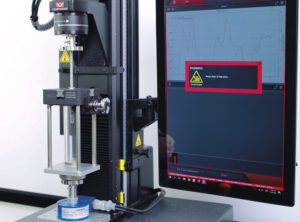
Figure 4: Instron’s universal syringe fixture.
Another factor to consider is the impact of fixturing on the test results. Especially when testing without a plunger, ensuring alignment of the barrel to the probe is crucial. Misalignment, either concentric or angular, can influence the force profile and result in excessive variability in the results. Fixturing should enable the operator to repeatably place the syringe into the test space and minimise the influence of operator action on the results. Figure 4 shows a device held in place with a universal syringe fixture, designed to support a range of syringes from 1 to 50 mL.
IMPACT ON AUTOINJECTOR PERFORMANCE
Many newer syringe technologies are being developed specifically for use within autoinjector devices. Increasingly, device packaging can be seen as a form of differentiation within the market, especially when considering the number of biosimilars and other generics being launched globally.
These newer PFSs may have significant impacts on autoinjector performance and therefore necessitate design changes. Even though a syringe may perform well individually, it may behave differently once integrated within an automated device. The latest update to ISO 11040-8 includes revised verbiage and a new test (Annex D – Administration Time) that is designed to evaluate how a syringe may perform within an autoinjector, indicating an increased emphasis on combination product considerations.
As discussed earlier, changes to the injection force profile can occur, which will necessitate assessment of injection duration, delivered volume, device reliability and, ultimately, spring performance. Most traditional autoinjectors use a spring to depress the plunger and deliver the dose. The interaction between the drive spring and the syringe is a primary determinant of autoinjector delivery performance.
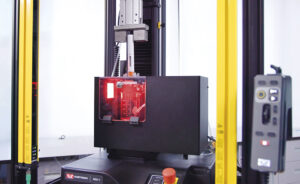
Figure 5: Instron’s autoinjector testing system.
Parameters such as spring force, break-loose force and glide force directly influence key essential drug delivery outputs, including injection time, delivered dose and successful dose completion. These outputs are central to design verification activities and are commonly included in regulatory submissions. Using a semi-automated system as shown in Figure 5 helps to consolidate these tests into a single sequence and reduce the testing burden on early device development teams that are determining the feasibility of these devices with newer syringe technologies.
BUILDING A TESTING PROTOCOL
Developers of any test protocol should holistically evaluate the impact that newer syringe technologies may have on the finished product. The following list is not exhaustive and is primarily focused on mechanical testing requirements rather than non-destructive tests:
- Performance characterisation:
– Break-loose force
– Glide force
- Challenge Testing:
– High/low temperature
– Simulated shipping
– Long-term storage (ageing)
- Device compatibility:
– Combination product performance:
– Activation force
– Injection time
– Delivered volume.
Another consideration is the use of automation to perform this testing. Automation can allow for increased sample sizes with similar resources, improving confidence in the data generated. Additionally, variability in results can be reduced by removing the operator from the equation, especially for mechanical testing where syringe placement in the fixture can have a noticeable impact.
Beyond traditional pick and place, automation can enable sequenced testing to minimise device interactions. For example, performing tests on rigid needle shield removal, injection force and delivered volume in a single sequence can improve throughput and simplify data collection and analysis.
THE CRITICAL LINK: FUNCTIONAL TESTING
Overall, innovation in drug formulations is driving device manufacturers to re-evaluate their products, engineering them for compatibility with novel drug classes. New biologics exhibit high sensitivity to particle generation within traditional siliconised syringe formats. The introduction of alternative coating technologies and non-siliconised syringes can reduce the number of silicone particles and stability concerns but also bring mechanical performance into question.
“FUNCTIONAL TESTING, AND SPECIFICALLY MECHANICAL TESTING, IS BECOMING A CRITICAL LINK BETWEEN CONTAINER INNOVATION AND SUCCESSFUL DRUG DELIVERY.”
Functional testing, and specifically mechanical testing, is becoming a critical link between container innovation and successful drug delivery. Partnering with test equipment manufacturers early in development can help pharmaceutical organisations to confidently adopt next-generation syringe technologies while maintaining device reliability and patient experience.
Previous article
PRIME NEXUS: Advancing the Autoinjector with the Power of SoftwareNext article
ENGINEERING THE NEXT GENERATION OF AUTOINJECTORS