To Issue 188
Citation: Wertheim A, “Industrialising Drug Delivery in an Uncertain World”, ONdrugDelivery, Issue 188 (Jul 2026), pp 36–41.
Andy Wertheim considers how the priorities of drug delivery device industrialisation have shifted in response to the major supply chain shocks of recent years, with companies shifting their focus from purely optimising for low cost and putting much greater emphasis on security and continuity, and what these changing priorities imply for the industry as a whole.
For decades, the pharmaceutical industry has optimised drug delivery manufacturing around three primary variables: cost, scale and efficiency. This model worked; global supply chains expanded, manufacturing networks consolidated and industrialisation strategies increasingly prioritised lean operations, low-cost regions and highly specialised global production hubs.
However, over the past five years, the industry has experienced a succession of shocks that have fundamentally changed the conversation. Covid-19 exposed the fragility of globally extended healthcare supply chains; the war in Ukraine disrupted energy markets, raw materials and industrial stability across Europe (Figure 1); and ongoing instability in the Middle East and disruption surrounding the Strait of Hormuz are once again demonstrating how vulnerable critical healthcare manufacturing networks can become when geopolitical events collide with concentrated global supply chains.

Figure 1: The war in Ukraine has caused significant disruptions to industrial stability across Europe.
The Strait of Hormuz alone carries approximately 20–25% of the global seaborne oil trade. Recent disruption has already contributed to shipping rerouting, freight inflation and operational uncertainty across global logistics networks. The healthcare sector is not insulated from these pressures.
Modern drug delivery devices depend upon highly integrated industrial ecosystems involving polymers and petrochemicals, precision mouldings, automation systems, electronics, sterile manufacturing environments and specialist logistics networks. When geopolitical instability disrupts freight routes, energy markets or critical raw material flows, the consequences rapidly ripple through pharmaceutical manufacturing operations. The industry is now confronting an uncomfortable reality:
- The challenge is no longer simply how to design innovative drug delivery systems
- Increasingly, the challenge is how to industrialise them reliably, rapidly and resiliently in an uncertain world
- Resilience, strategic manufacturing geography and industrial execution are becoming the defining competitive advantages in drug delivery device manufacturing.
INDUSTRIALISATION IS NO LONGER JUST A MANUFACTURING ACTIVITY
Industrialisation has become one of the most strategically important disciplines within the drug delivery sector. Historically, industrialisation has often been treated as a downstream transfer exercise following device development. Today, that approach is becoming increasingly difficult to sustain.
Drug delivery devices have become significantly more sophisticated over the past decade. Autoinjectors, pen injectors and wearable systems are expected to support increasingly complex formulations, including high-viscosity biologics and large-volume therapies, whilst remaining intuitive, reliable and suitable for patient self-administration. At the same time, global demand is rapidly accelerating.
Glucagon-like peptide-1 (GLP-1) therapies alone are placing extraordinary pressure on worldwide injection-device manufacturing infrastructure. Demand for devices, assembly capacity, tooling resources and cleanroom operations has increased substantially in a relatively short period of time, creating mounting pressure across the industrial ecosystem.
A device that performs effectively in low-volume engineering builds may behave very differently when transferred into automated, high-volume regulated manufacture. Small design decisions can create substantial operational consequences once production scales into the millions of units per year. Industrialisation now directly influences scalability, validation complexity, automation strategy, supply continuity, manufacturing resilience, speed-to-market and long-term commercial flexibility.
Organisations that engage manufacturing expertise earlier in their development programmes are often significantly better positioned to reduce transfer risk, accelerate scale-up and improve supply robustness. Industrialisation is no longer simply a manufacturing activity at the end of development – it is becoming a strategic discipline in its own right.
THE ERA OF “JUST-IN-TIME GLOBALISATION” IS BEING REWRITTEN
For many years, pharmaceutical manufacturing networks prioritised efficiency above almost everything else. The logic was understandable:
- Centralise production
- Minimise inventory
- Optimise freight
- Reduce manufacturing cost
- Consolidate suppliers.

Figure 2: The disruption in the Strait of Hormuz has increased operational uncertainty across global logistics networks.
However, the combined effect on global instability of covid-19, Ukraine and the Middle East has exposed the vulnerabilities associated with highly extended and geographically concentrated supply chains. Recent disruption surrounding the Strait of Hormuz has already caused major shipping route changes, increased freight costs and operational uncertainty across global logistics networks (Figure 2).
This matters directly to drug delivery industrialisation. Modern injection devices rely heavily on petrochemical-derived materials, precision manufacturing inputs and globally connected industrial supply chains. Disruption to freight corridors, energy markets or critical component flows can quickly create downstream manufacturing risk.
The industry is now moving beyond purely efficiency-driven industrialisation strategies towards something more balanced and resilient. Increasingly, organisations are seeking to balance efficiency, resilience, regional flexibility, supply continuity and manufacturing responsiveness – all built around the core of security. This shift is fundamentally changing how pharmaceutical companies evaluate industrialisation partners.
STRATEGIC MANUFACTURING – SECURE GEOGRAPHY MATTERS MORE THAN EVER
Manufacturing geography is now a critical strategic decision. Recent global disruption has demonstrated that manufacturing resilience is not determined solely by technical capability or production cost, it is also increasingly shaped by:
- Geopolitical stability
- Logistics accessibility
- Regulatory maturity
- Engineering capability
- Supply-chain security.
Within this evolving landscape, the UK occupies a uniquely strong and secure position. The UK combines:
- A globally respected life-sciences sector
- Mature pharmaceutical manufacturing infrastructure
- Advanced medtech engineering capability
- Strong regulatory credibility
- Highly skilled technical talent
- Strategic accessibility to both the North American and European markets.
Importantly, the UK also offers a comparatively stable and operationally resilient environment at a time when many global supply chains are experiencing increasing geopolitical and logistics volatility. For pharmaceutical companies seeking to balance resilience, speed, flexibility and commercial scalability, this strategic positioning is becoming increasingly valuable.
One of the misconceptions emerging within the market is the assumption that resilient manufacturing strategy automatically means “everything must be manufactured in the US” or within a single domestic geography. The reality is considerably more nuanced. For many pharmaceutical companies, the objective is not complete manufacturing isolation; instead, it is the creation of more balanced, resilient and strategically flexible industrial networks. In practice, this often means:
- Reducing overdependence on single manufacturing geographies
- Shortening critical supply chains
- Creating dual region manufacturing strategies
- Improving contingency capability
- Enabling phased localisation over time.
“UK-BASED INDUSTRIALISATION CAN THEREFORE PROVIDE FASTER ROUTES TO VALIDATED MANUFACTURE, LOWER TRANSFER RISK AND REGIONAL SUPPLY FLEXIBILITY, AS WELL AS BRIDGE MANUFACTURING CAPABILITY AND ACCELERATE COMMERCIAL SCALE-UP, BEFORE BROADER GLOBAL LOCALISATION STRATEGIES ARE IMPLEMENTED WHERE REQUIRED.”
For many organisations, UK-based industrialisation can therefore provide faster routes to validated manufacture, lower transfer risk and regional supply flexibility, as well as bridge manufacturing capability and accelerate commercial scale-up, before broader global localisation strategies are implemented where required. The conversation is increasingly shifting away from, “Where is the absolute cheapest place to manufacture?” towards “Which industrial strategy gives us the best balance of speed, resilience, scalability and operational flexibility?” This distinction matters.
THE MARKET IS REDISCOVERING THE VALUE OF INDUSTRIAL EXECUTION
One of the most important changes taking place across the sector is a renewed appreciation for proven industrial execution capability. For many years, the industry conversation has heavily focused on:
- Innovation
- Device platforms
- New technologies
- Digital capability
- Future manufacturing concepts.
While those areas remain important, recent global disruption has reminded the market that industrial execution itself is a competitive advantage. This is particularly relevant in drug delivery manufacturing, where industrialisation timelines are increasingly shaped not only by technical readiness but also by access to validated infrastructure, cleanroom availability, automation maturity, supply-chain resilience, operational scalability and experienced engineering capability.
Building entirely new manufacturing operations remains possible, but often involves substantial lead-times associated with:
- Facility development
- Equipment procurement
- Validation activity
- Recruitment
- Operational stabilisation.
In many situations, existing industrialised environments may offer significantly faster and lower-risk routes to commercial manufacture. This is where Quvara offers something distinctive within the market.
“QUVARA WAS NOT CREATED AS A THEORETICAL MANUFACTURING PLATFORM OR A GREENFIELD STARTUP OPERATION – IT WAS BUILT FROM MORE THAN 30 YEARS OF PROVEN REGULATED DRUG DELIVERY MANUFACTURING EXPERIENCE WITHIN ONE OF THE WORLD’S LARGEST MEDTECH ENVIRONMENTS.”
WHY QUVARA?
Quvara was not created as a theoretical manufacturing platform or a greenfield startup operation – it was built from more than 30 years of proven regulated drug delivery manufacturing experience within one of the world’s largest medtech environments. Today, that operational heritage is concentrated within a highly experienced and deeply integrated manufacturing hub in Swindon, UK.
This focused industrial model is intentional. Resilience is not created simply by accumulating manufacturing sites across multiple geographies; it is created through operational control, manufacturing maturity, engineering depth and the ability to industrialise reliably at scale. Rather than operating fragmented manufacturing networks spread across multiple disconnected sites, Quvara offers:
- Concentrated technical expertise
- Integrated engineering and manufacturing teams
- Established operational culture
- Mature validated infrastructure
- Streamlined decision making
- Consistent quality-system execution
- Faster industrial alignment.
Quvara’s Swindon hub combines:
- More than 7,500 m² of manufacturing space
- Extensive controlled manufacturing and cleanroom capability
- Established automation infrastructure
- High-volume assembly expertise
- Advanced engineering support
- Validated quality systems
- 24/7 operational capability
- Immediate industrialisation readiness.
This matters in a market where many organisations are facing:
- Cleanroom shortages
- Long automation lead times
- Industrial transfer delays
- Constrained manufacturing capacity
- Growing supply-chain risk.
For many pharmaceutical companies, the priority is therefore not simply the number of manufacturing locations available – increasingly, it is the ability of a manufacturing partner to provide:
- Reliable execution
- Operational continuity
- Scalable infrastructure
- Responsive decision-making
- Industrial depth
- Strategic focus.
This is where Quvara’s model becomes highly differentiated.
“A COMMON ASSUMPTION WITHIN THE MARKET IS THAT ORGANISATIONS MUST CHOOSE BETWEEN SPEED-TO-MARKET VIA INTEGRATED CDMO PLATFORM PROVIDERS OR MANUFACTURING FLEXIBILITY VIA INDEPENDENT INDUSTRIALISATION PARTNERS. THE FUTURE MARKET IS UNLIKELY TO BE THAT BINARY.”
BEYOND THE TRADITIONAL CDMO MODEL
A common assumption within the market is that organisations must choose between speed-to-market via integrated CDMO platform providers or manufacturing flexibility via independent industrialisation partners. The future market is unlikely to be that binary. Integrated platform providers undoubtedly offer advantages in certain scenarios, particularly where development acceleration is prioritised. However, platform ownership alone does not eliminate the industrialisation challenge.
Regardless of device platform selection, drug delivery device development programmes still require:
- Validated industrial transfer
- Scalable manufacturing systems
- Automation strategy
- Operational robustness
- Quality-system integration
- Long-term supply continuity.
These areas are becoming increasingly important as commercial volumes rise and supply-chain resilience becomes more strategically critical. Importantly, many pharmaceutical companies are also seeking to avoid excessive dependency on single proprietary ecosystems over the full commercial lifecycle of a product.
As a platform-agnostic manufacturing partner, Quvara offers organisations greater flexibility in how they structure industrialisation pathways, supply strategies, regional manufacturing models and long-term commercial scalability (Box 1). The market is increasingly favouring collaborative industrial ecosystems combining innovation, device expertise, flexible manufacturing capability and resilient industrial execution rather than purely vertically integrated models alone.
BOX 1: A PRACTICAL INDUSTRIALISATION RESILIENCE CHECKLIST
Organisations should increasingly be asking themselves a broader set of strategic manufacturing questions:
- Do we fully understand the scalability limitations of our current device architecture?
- How dependent are we on single-source suppliers or single manufacturing geographies?
- What would happen if one of our critical supply routes became disrupted for 30–90 days?
- Are our manufacturing timelines dependent upon new facility construction or greenfield validation?
- How resilient is our tooling and automation supply chain?
- Can our industrialisation partner support both rapid scale-up and long-term commercial continuity?
- Do we have sufficient regional manufacturing flexibility to support future localisation requirements?
- Are we over-optimised for lowest cost at the expense of resilience?
- How quickly could we transfer production if market conditions changed?
- Does our manufacturing partner have proven experience operating at sustained commercial scale?
- Are our device and manufacturing strategies aligned from the earliest stages of development?
- Have we considered how geopolitical instability could affect freight, energy costs or material availability?
These are no longer theoretical questions. They are increasingly becoming board-level operational risks capable of affecting programme timelines, market supply and long-term commercial performance.
THE INDUSTRY MAY BE UNDERESTIMATING THE SCALE OF CHANGE AHEAD
The drug delivery sector is still in the early stages of a broader industrial transformation. The combined effects of the following are creating structural changes that may persist for many years:
- Growing demand for GLP-1s
- Biologics expansion
- Geopolitical instability
- Freight disruption
- Energy volatility
- Supply-chain regionalisation
- Increasing healthcare resilience requirements.
The industry may still be underestimating future cleanroom demand, automation capacity constraints, tooling lead-times, supply-chain fragility, industrial transfer complexity and the strategic value of existing validated manufacturing infrastructure. This is precisely why experienced industrialisation partners, such as Quvara Medical, will play an increasingly important role within the next generation of drug delivery manufacturing. The challenge is no longer simply innovation; increasingly, it is resilient industrial execution at commercial scale.

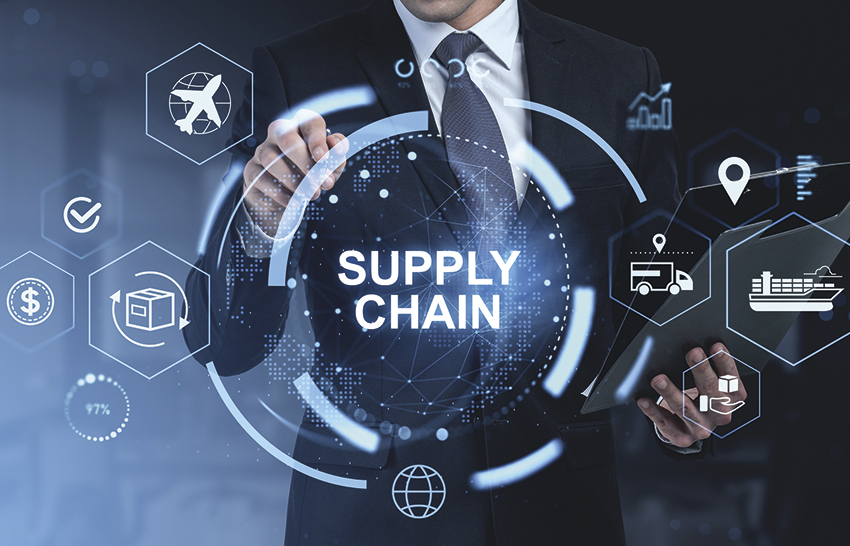
Figure 3: Covid-19 and other major global supply shocks have led pharmaceutical companies to reassess how they think about supply chains and industrialisation.
THE FUTURE OF INDUSTRIALISING DRUG DELIVERY
Technical innovation will remain central to the future of drug delivery. However, the next decade will increasingly be defined by the organisations capable of combining innovation with resilient industrial execution. Covid-19 demonstrated the fragility of global healthcare supply chains, Ukraine exposed the vulnerability of industrial energy and raw-material dependency, and the ongoing instability surrounding the Strait of Hormuz is reinforcing the risks associated with globally concentrated freight and manufacturing networks. Together, these events are fundamentally reshaping how pharmaceutical companies think about industrialisation strategy (Figure 3).
Resilience, regionalisation, manufacturing maturity and supply continuity are becoming increasingly important considerations alongside traditional metrics, such as cost and scale. Ultimately, the organisations best positioned for long-term success are likely to be those capable of combining:
- Technical capability
- Operational maturity
- Scalable infrastructure
- Resilient supply networks
- Regulatory excellence
- Strategic manufacturing flexibility.
For organisations currently reassessing supply-chain resilience, evaluating industrialisation pathways or facing increasing cleanroom and capacity constraints, the conversation is changing rapidly. The question is no longer simply: “Who can manufacture our device?” – it is: “Who can help us industrialise reliably in an uncertain world?” That is the challenge Quvara was built to solve.