To Issue 186
Citation: Junginger M, “Injectable Collagen – Present and Future Potential”, ONdrugDelivery, Issue 186 (May 2026), pp 40–44.
Martin Junginger discusses the advantages and challenges of delivering collagen via injection, considering the role that collagen plays in the current healthcare landscape, including GELITA‘s VACCIPRO® and MEDELLAPRO® collagen grades, and sharing insights on how that role may grow and adapt going forwards.
In modern medicine, next to oral intake, injection remains the administration method of choice for the delivery of a wide range of therapeutics, from glucagon-like peptide-1 (GLP-1) agonists and biologic medications to vaccines. As a result, the sector has seen rapid growth over recent years, and continues to grow in multiple therapy areas, driven by a variety of factors, such as increased interest in subcutaneous and intra-articular delivery and a greater focus being placed on patient-centricity across healthcare.
One such example of growth is the expansion of collagen-based injectables. Collagen has a long history of use in the medical field, first appearing in haemostatic sponges, sutures, membranes and wound dressings. Since its introduction, collagen has become established in multiple key therapeutic roles, including:
- Vaccine stabilisers, particularly for combination vaccines and lyophilised APIs
- Carriers for biologic, peptide and small molecule injectables
- Hydrogel components in regenerative and aesthetic medicine
- Adjunct excipients in diagnostic imaging agents and embolisation systems
- An API in plasma expanders.
Parenteral administration is a key part of collagen’s success in therapeutic applications. If administered orally, collagen-based systems, especially bioactive collagen peptides, while effective, must be taken regularly for long periods, whereas topical administration is only useful for surface-level applications, failing to penetrate to internal sites of action. Therefore, depending on the intended use, for collagen to reach its full potential as a therapeutic ingredient, it is important to consider that injection may be the ideal route of administration, especially if fast action is a priority.
“ALTHOUGH IT HAS MULTIPLE ESTABLISHED USE CASES, AND EVEN MORE POTENTIAL ONES, COLLAGEN IS MOST WIDELY KNOWN IN MEDICINE FOR AESTHETIC AND REGENERATIVE THERAPIES.”
USING COLLAGEN FOR INJECTABLE APPLICATIONS
Advantages of Therapeutic Collagen
Although it has multiple established use cases, and even more potential ones, collagen is most widely known in medicine for aesthetic and regenerative therapies. Collagen is ideally suited to these applications due to its combination of biocompatibility, biodegradability, bioactivity and architectural versatility. As a therapeutic, exogenous collagen is enzymatically degraded, thereby avoiding long‑term accumulation, and its inherent binding motifs support cell adhesion, migration and differentiation – key processes in tissue repair. For formulators, collagen is enormously versatile, able to be formulated into solutions, gels, sponges, membranes, microcapsules or in situ‑forming hydrogels. Additionally, chemical modifications, such as methacrylation or peptide functionalisation, allow formulators to fine-tune its mechanical strength, degradation kinetics and biological performance.
“COLLAGEN IS ENORMOUSLY VERSATILE, ABLE TO BE FORMULATED INTO SOLUTIONS, GELS, SPONGES, MEMBRANES, MICROCAPSULES OR IN SITU‑FORMING HYDROGELS.”
These properties, coupled with current trends in the medical sector, are driving ever-increasing interest in injectable collagen. In particular, collagen aligns with the move towards more patient-centric healthcare, allowing healthcare professionals to opt for less-invasive treatment options for tissue regeneration. Additionally, as the human body’s naturally most common structural protein, collagen readily replicates and interacts with the extracellular matrix (ECM).
Overcoming the Challenges of Collagen Production
So, with all its myriad advantages, what has held collagen back? Until relatively recently, collagen was necessarily derived from animals, most commonly being of porcine, bovine, equine or marine origin, meaning that it carries a risk of immunogenicity or pathogen transmission, as well as the religious and ethical concerns associated with using animal-derived materials. Today, by making the effort to ensure traceability of all animal-derived materials and implement modern extraction and purification technologies, particularly the removal of telopeptides to produce atelocollagen, collagen producers can significantly reduce the antigenicity and improve the clinical tolerability of the final product.1
Additionally, recent advances in biotechnology have seen the emergence of recombinant collagen as a potential alternative or complementary production method. Recombinant collagens, produced in engineered cells, yeast or plants, offer high molecular precision, batch‑to‑batch consistency and freedom from zoonotic contaminants, making it an exciting frontier in collagen production – especially in markets where non-animal products are prioritised.
However, all forms of collagen are notably susceptible to contamination by endotoxins. This represents a considerable risk to patients if not properly controlled for, with endotoxins able to elicit strong inflammatory responses even at very low concentrations – controlling endotoxin levels in healthcare settings is essential to prevent endotoxemia, septic shock and other life-threatening complications. As such, regulators enforce strict standards on parenteral collagens to ensure patient safety across all collagen applications.
Controlling endotoxin levels when manufacturing collagens requires a robust, multilayered approach, integrating material qualification, process design, monitoring and analytical verification. This starts with considered sourcing of the raw materials and exercising careful control over the supply chain, including full traceability for all materials and supplier validation. Continuing the process, manufacturing must also be subject to stringent environmental monitoring, particularly regarding water purity.
As well as validating and controlling input materials and the manufacturing environment, collagen producers can also reduce endotoxin contamination by using established processing techniques, such as high‑temperature depyrogenation, adsorption or filtration‑based removal, minimised hold times and optimised aqueous processing conditions.2,3 Additionally, it is critical to conduct a thorough analysis of outputs to validate endotoxin levels in the finished product. Collectively, these measures establish a comprehensive framework that ensures collagen‑based injectables maintain the stringent safety standards required for injectable applications and emphasise the importance of sourcing collagen from an expert supplier.
Collagen Versus Alternatives
Within the field of soft-tissue and regenerative biomaterials, parenteral collagen offers a unique combination of biocompatibility, biodegradability and bioactivity, setting it apart from both its well-established peers and newer entrants into the sector. Collagen’s most obvious competitor in this field is hyaluronic acid, which is the most widely used injectable biomaterial in aesthetic and orthopaedic practice due to its viscoelasticity, strong hydrating capacity and excellent safety profile. However, unlike collagen, hyaluronic acid does not offer inherent bioactivity and can be rapidly degraded by hyaluronidases, which means it is generally a more short-term solution than collagen.
Other notable alternatives in the sector include chondroitin sulfate, elastin-derived matrices, composite systems (such as a combination of hyaluronic acid and collagen) and synthetic polymers. The advantages and disadvantages of these alternatives are summarised in Table 1. Compared with the competition as a whole, collagen offers distinct advantages in terms of its inherent versatility and bioactivity – especially when it comes to its genuine regenerative potential. Further to that, composite systems that incorporate collagen with another material, such as hyaluronic acid or chondroitin sulfate, have demonstrated significant potential, and are at the forefront of rapid advances in the sector, making collagen a key driver of next-generation injectable systems in this space.
| Material | Key Properties | Advantages | Limitations | Typical Applications |
| Collagen | Bioactive, cell‑adhesive, resorbable, ECM‑mimetic | Supports regeneration, natural tissue integration, tuneable structure | Historically short persistence, source‑related immunogenicity (mitigated in newer systems) | Dermal fillers, soft‑tissue repair, regenerative matrices |
| Hyaluronic Acid | Hydrating, viscoelastic, enzymatically degradable | Immediate volume, reversible, safe | Lacks bioactivity, short‑medium persistence | Aesthetic fillers, viscosupplementation |
| Chondroitin Sulfate | Cartilage glycosaminoglycan, anti‑inflammatory | Symptomatic osteoarthritis relief, synergistic with HA | Weak mechanical strength, rarely used alone | Joint injections, cartilage therapies (in blends) |
| Elastin Matrices | Elastic, flexible | Mimics tissue elasticity | Limited clinical use, requires combination materials | Soft‑tissue engineering (research stage) |
| Synthetic Polymers (PEG, PCL, PLLA) |
Tuneable mechanics, slow degradation |
Long-lasting, controlled architecture | Non‑bioactive, may induce inflammatory responses | Long‑term fillers, scaffolds, drug delivery |
| Composite Systems (HA + Collagen) |
Hybrid of hydration + structure | Enhanced stability, biocompatibility, ECM mimicry |
More complex manufacturing and regulation | Advanced fillers, regenerative hydrogels |
Table 1: Comparison of biomaterials.
“GELITA IS COMMITTED TO DELIVERING SAFE AND SUSTAINABLE COLLAGEN PEPTIDES TO PHARMACEUTICAL PARTNERS, WITH DEDICATED TEAMS AND PROCESSES ENSURING THAT THE COMPANY’S CONCEPTS AND SOLUTIONS ARE ALIGNED WITH THE INDUSTRY’S CURRENT AND FUTURE NEEDS.”
ESTABLISHED COLLAGEN HYDROLYSATES
As an innovation leader for gelatine and collagen, GELITA is ideally positioned to supply the medical sector with these key materials and provide its expert insights into collagen product development. GELITA is committed to delivering safe and sustainable collagen peptides to pharmaceutical partners, with dedicated teams and processes ensuring that the company’s concepts and solutions are aligned with the industry’s current and future needs. Key to this commitment is the GELITA Pharma Institute, which serves as a knowledge and innovation hub for GELITA’s pharmaceutical collagens.
A standout example of GELITA’s pharmaceutical portfolio is its VACCIPRO® collagen hydrolysates. VACCIPRO® collagen grades have been designed to enable precise formulation strategies, with chain-length profiles, endotoxin control and tissue affinity ideal for pharmaceutical and biomedical applications, from vaccine stabilisation to advanced hydrogel systems. As standard for GELITA’s portfolio, VACCIPRO® offers a narrowly defined molecular weight distribution of approximately 2.5 kDa, while VACCIPRO® HMW is designed with much longer chain lengths, averaging molecular weights of approximately 12 kDa. VACCIPRO® and VACCIPRO® HMW demonstrate GELITA’s ability to engineer its collagen grades to support formulators to achieve precise, predictable performance.
VACCIPRO® collagen peptides are well-established within the industry, with a long history of use as vaccine stabilisers, in large part due to their molecular architecture and stronger interactions (e.g. hydrogen bonding), enabling them to protect delicate antigens during lyophilisation and storage. They are recognised for their high purity, low allergenic potential and excellent cell‑tissue affinity. VACCIPRO® HMW in particular has proven especially valuable for lyophilised vaccines, protecting the integrity and potency of the sensitive actives throughout the freeze-drying process, as well as helping to control rehydration behaviour during reconstitution.
However, collagen hydrolysates such as VACCIPRO® have multiple applications beyond vaccine stabilisation. They have demonstrated their value in other injectable drug delivery systems as carriers and stabilisers for various micro- and nanoparticle formulations, with their natural amino-acid composition enabling collagen matrices to encapsulate and support therapeutic APIs while also being biodegradable and physiologically compatible – which is of key importance for sustained-release applications.
Further to this, collagen hydrolysates can be combined with injectable hydrogels and scaffolds to improve hydration, impart biological signalling and improve the dispersion of bioactive compounds. And, as a final example application, collagen can contribute similar benefits as an auxiliary excipient when used in injectable therapeutics intended to support plasma expansion, coagulation management or microvascular interventions. These examples demonstrate the vast breadth of applications where collagen has enhanced injectable therapies, and their potential is even greater.
FUTURE POTENTIAL – RECOMBINANT COLLAGEN
Recombinant collagen technology represents a potentially transformative paradigm shift in the biomaterials sector, offering a path towards safer, more consistent and ethically aligned injectable collagens. Compared with traditional animal-based sources, recombinant collagens enable experts such as GELITA to provide much more precise molecular definition and completely eliminate the risks associated with using animal tissues, while also aligning with increasingly prevalent societal preferences for animal-free products.
“RECOMBINANT COLLAGEN ENABLES MANUFACTURERS TO TIGHTLY CONTROL THE BIOENGINEERING PROCESS, LEADING TO A HIGHLY REPRODUCIBLE END PRODUCT, WHICH IS A MAJOR ADVANTAGE IN THE STRICTLY REGULATED PHARMACEUTICAL SECTOR.”
A key limitation of animal-based collagen that can be eliminated by recombinant collagen is batch-to-batch consistency. Because traditional collagen sources are derived from animals, its production is at the mercy of the inherent variability in the source material – differences in age, species, extraction and purification can create significant deviations in the material properties. Recombinant collagen, on the other hand, enables manufacturers to tightly control the bioengineering process (Figure 1), leading to a highly reproducible end product, which is a major advantage in the strictly regulated pharmaceutical sector.4
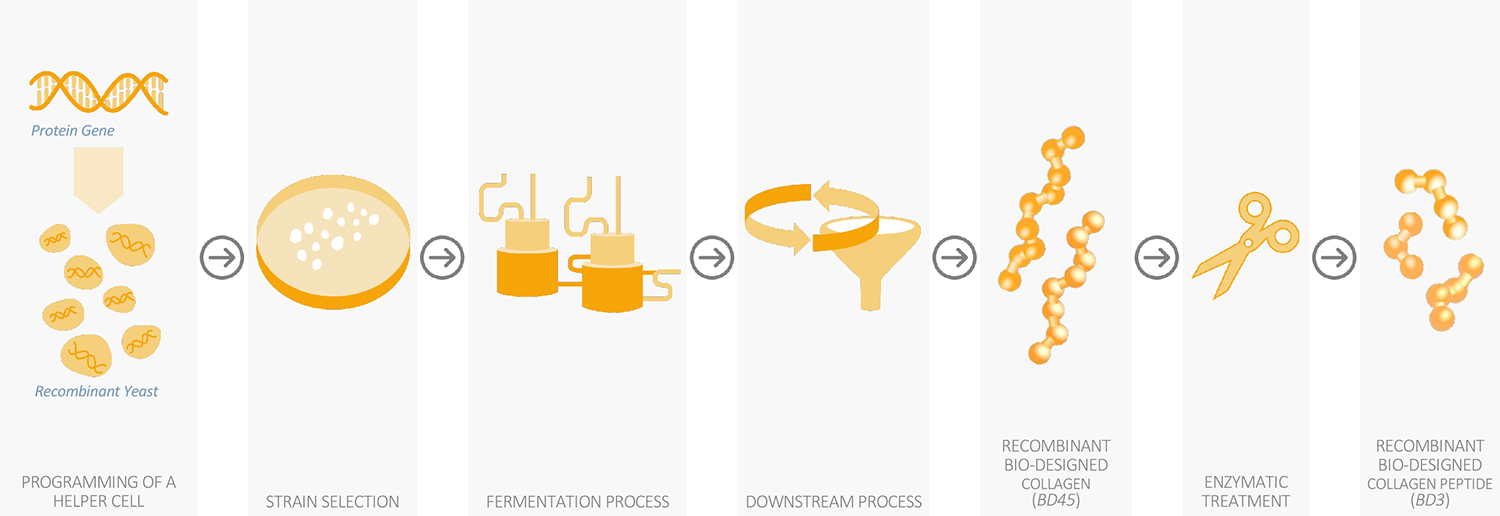
Figure 1: GELITA’s bioengineering process for producing recombinant collagen.
Recombinant collagen does not only resolve challenges faced by traditional methods, however – it opens up new possibilities. By taking advantage of recent advances in genetic engineering, protein expression and post‑translational processing, it can enable unprecedented control over molecular architecture, offering new design opportunities beyond what is feasible with native tissues. Compared with traditionally manufactured collagen, recombinant collagens demonstrate lower immunogenicity,5 superior molecular uniformity and greater adaptability. These characteristics make recombinant collagen not only an alternative to animal‑sourced collagen but a platform for next‑generation biomedical innovation.
Taking an example from GELITA’s counterpart portfolio of endotoxin-controlled excipients, MEDELLAPRO® BD45 is a recombinant collagen fragment with a molecular weight of up to approximately 45 kDa, produced with controlled hydroxylation and low endotoxin levels, making it suitable for biomedical use. Crosslinking MEDELLAPRO® BD45 further increases its effective molecular weight, enhances network connectivity and modulates its viscoelastic regime – this structural adjustability is foundational for tailoring product performance across applications requiring soft, flexible matrices or firmer, more robust scaffolds. From a bioengineering perspective, MEDELLAPRO® BD45 offers a tuneable platform; by adjusting concentration, crosslinking or chemical modifications, formulations can be optimised for:
- Cold‑flow injectability (lower viscosity, faster needle extrusion)
- In situ gelation with rapid structural stabilisation after injection
- Self‑healing behaviour for dynamic tissues
- Load‑bearing performance where elastic recovery is needed.
The rheological and gelation characteristics of MEDELLAPRO® BD45 demonstrate the potential represented by recombinant collagens. Experts in the field will be able to translate this potential into collagens that can serve versatile application pathways spanning injectable hydrogels, controlled‑release systems and regenerative scaffolding, opening up new therapeutic possibilities.
CONCLUSION
With innovation in the injectables space continuing to rapidly advance, it is imperative that the biomaterials available to formulators keep pace. With both a well-established history and as-yet untapped potential, collagen is set to remain a key material for injectable formulations. As an expert and global provider of collagen, with a deep wealth of experience and knowledge, GELITA is perfectly positioned to support the pharmaceutical industry in realising its full potential across a range of applications, and in spearheading innovation in recombinant collagens to provide the biomaterials of the future.
REFERENCES
- Salvatore L et al, “An Update on the Clinical Efficacy and Safety of Collagen Injectables for Aesthetic and Regenerative Medicine Applications”. Polymers, 2023, Vol 15(4), art 1020.
- Igweonu CF, “Risk-based assessment of endotoxin contamination in intravenous drug manufacturing pipelines”. IJSRA, 2023, Vol 10(2), 1349–1368.
- “Endotoxin Control in Parenteral Manufacturing: Sources and Mitigations”. Web Page, Pharma GMP, Accessed Mar 2026.
- Liu W et al, “A regulatory perspective on recombinant collagen-based medical devices”. Bioact Mater, 2022, Vol 12, pp 198–202.
- Jie IWK et al, “Advancements in Clinical Utilization of Recombinant Human Collagen: An Extensive Review”. Life (Basel), 2025, Vol 15(4), art 582.