To Issue 193
Citation: Oakley T, “Electronics in Inhalation Devices Are Transforming Drug Delivery, Dose Accuracy and Patient Advocacy”, ONdrugDelivery, Issue 193 (Nov 2026), pp 64–67.
Tom Oakley provides an overview of how electronics can be successfully incorporated into inhalation devices, contributing to improved dosing accuracy, more consistent aerosolisation and, ultimately, better outcomes for patients, while also highlighting how these technologies can achieve smoother commercialisation when distinct development teams collaborate closely.
“TODAY, ELECTRONICS ARE ROBUST, MATURE AND CHEAP ENOUGH TO OPTIMISE HOW INHALATION DEVICES GENERATE AEROSOLS, DELIVER MEDICATION ACCURATELY, MONITOR PATIENT TECHNIQUE AND SUPPORT ADHERENCE.”
Respiratory drug delivery has evolved far beyond the familiar “puffer” inhaler.1 Today, electronics are robust, mature and cheap enough to optimise how inhalation devices generate aerosols, deliver medication accurately, monitor patient technique and support adherence. From vibrating mesh nebulisers to breath-actuated smart inhalers, the integration of electronics is redefining what inhaled therapies can achieve (Figures 1 & 2).
This shift is not simply about adding technology for technology’s sake – it is about improving therapeutic outcomes, reducing dosing errors, empowering patients and giving clinicians better insight into real-world medication use. Modern inhalation systems sit at the intersection of several highly specialised fields:
- Aerosol science and fluid dynamics
- Mechanical engineering
- Electronics and embedded systems
- Human factors engineering
- Pharmaceutical formulation science
- Regulatory compliance.
A device may contain advanced electronics, but the therapy can still fail if the droplet size distribution, plume geometry or delivered dose is wrong, or if the patient cannot inhale correctly or the mechanics fail under real-world use conditions (Figure 1).
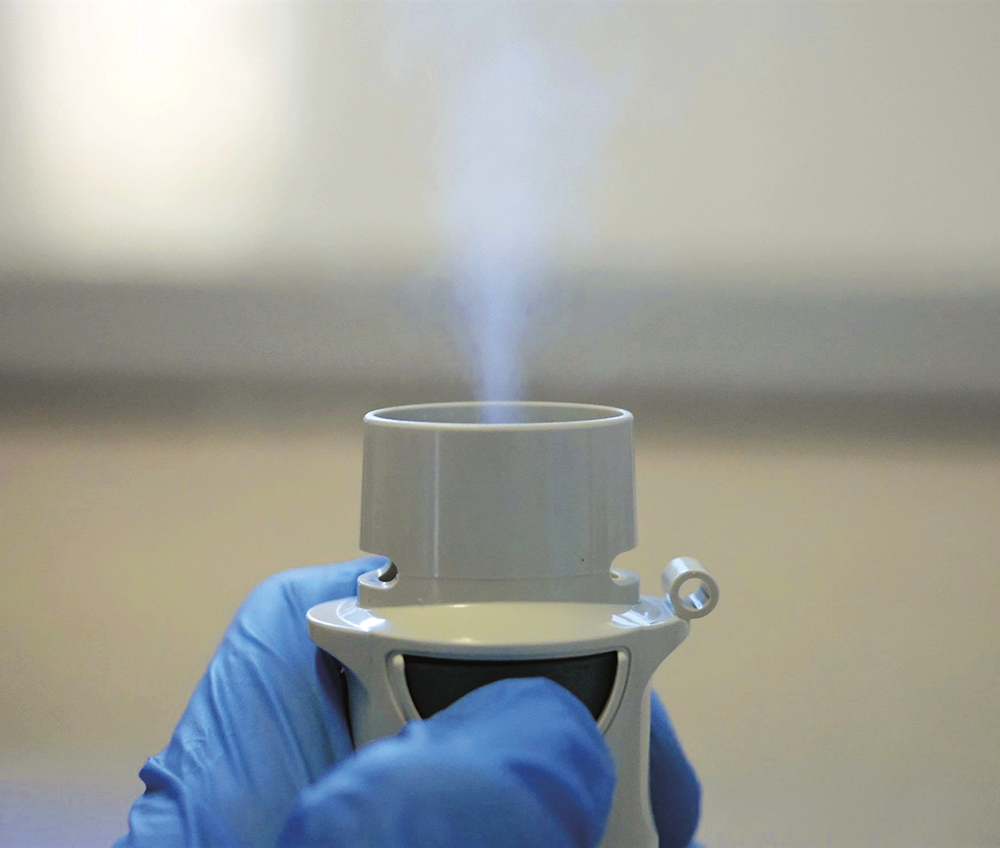
Figure 1: Soft mist plume testing for an inhaler.
ELECTRONICS AS AN ENABLER OF PARTICLE GENERATION AND DELIVERY
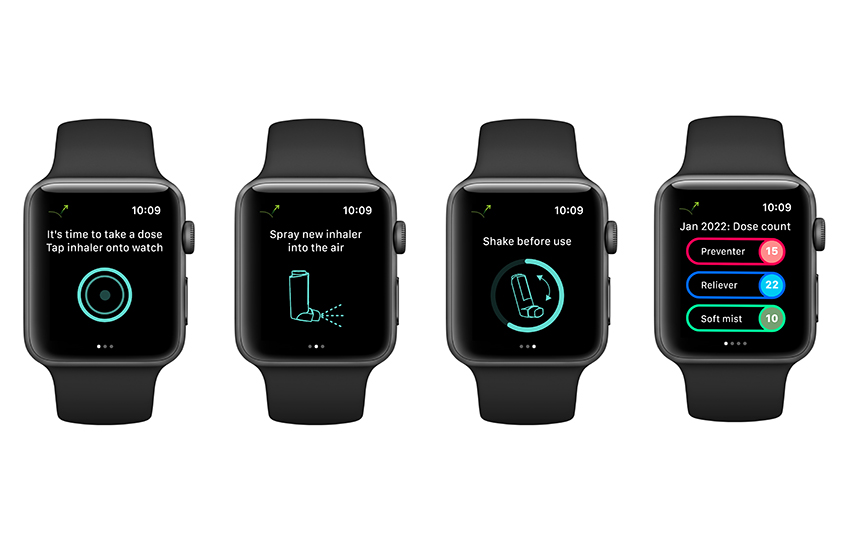
Electronics can provide features such as reminders and real-time feedback to solve the largest problem with inhaler use – adherence to the therapy regime (Figure 2). In addition, electronics can assist the generation of aerosolised drug particles.
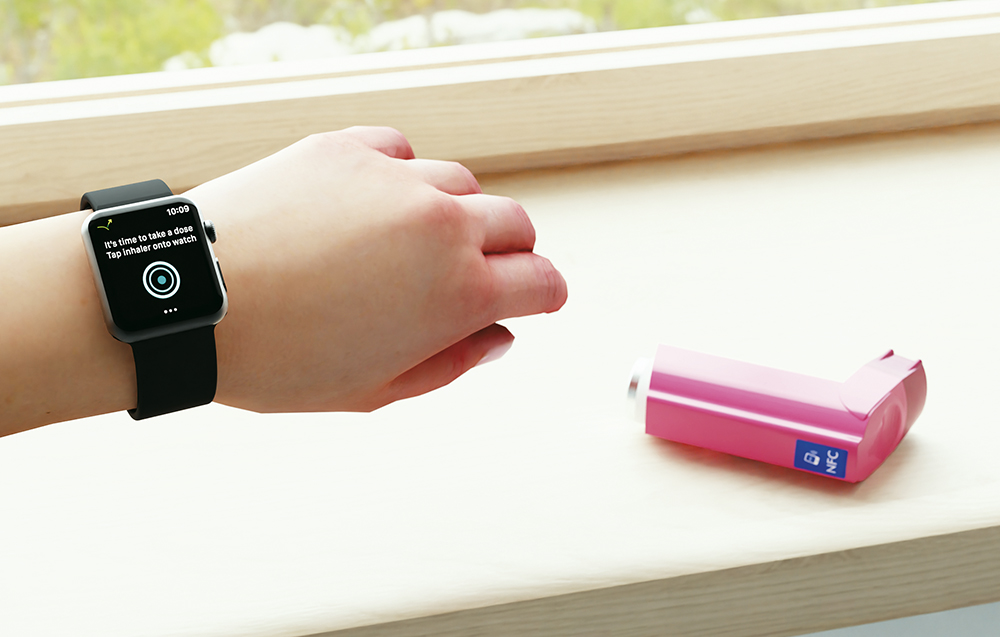
Figure 2: A smart inhaler, accompanied with an app giving reminders and instructions to the user.
Traditional inhalers typically rely on gas propellants or the inspiratory force of the patient. However, modern electronic systems can precisely control how a drug becomes airborne, improving consistency and enabling entirely new delivery mechanisms.
Ultrasonic Nebulisers
Ultrasonic nebulisers were among the first electronically powered inhalation devices to reach widespread clinical use. They generate aerosols using a piezoelectric crystal that vibrates at ultrasonic frequencies, creating standing waves on the surface of a liquid formulation. These waves form droplets that are released as an inhalable aerosol.
Compared with jet nebulisers, which tend not to have electronics, ultrasonic systems can offer:
- Faster aerosol generation rates
- Quieter operation
- Improved portability
- Reduced dependence on compressed air sources.
The aerosol characteristics are influenced by the frequency and power of the ultrasonic transducer, allowing for electronic control over droplet generation. However, ultrasonic nebulisers also have significant limitations. For example, the medication can warm during operation, potentially affecting temperature-sensitive drugs such as peptides, proteins and biologics because energy is transferred directly into the liquid formulation. In addition, some formulations may not aerosolise efficiently, and the droplet size distribution is generally less precisely controlled than in modern vibrating mesh nebulisers.
For these reasons, ultrasonic nebulisers have largely been superseded by vibrating mesh technologies for many pharmaceutical applications. Nevertheless, they remain an important example of how electronics have enabled active aerosol generation and helped to pave the way for more sophisticated electronically controlled inhalation systems today.
Vibrating Mesh Nebulisers
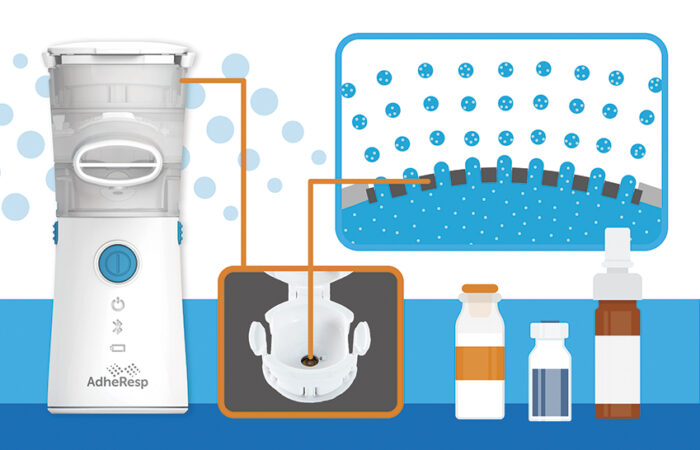
Vibrating mesh nebulisers use electronically driven piezoelectric elements to push liquid formulations through microscopic mesh apertures. This creates highly uniform aerosol droplets with a controlled particle size distribution.
Compared with conventional jet nebulisers, vibrating mesh systems can offer:
- More efficient drug delivery
- Reduced residual drug waste
- Quieter operation
- Portable and battery-powered designs
- Improved patient convenience.
These devices can achieve tighter reproducibility of particle generation and potentially improve lung deposition efficiency. However, they can damage biologic drugs during the aerosolisation process.
Acoustic Wave Aerosolisation
An emerging device category may avoid damage to biologics during aerosolisation. For example, the Nebu~Flow device uses surface acoustic waves and precise liquid wells to aerosolise droplet sizes optimised for inhalation into the deep lung where the surface area is greatest.2 The timing and intensity of aerosol generation can be precisely controlled electronically.
Flash Evaporation Systems
In flash evaporation platforms, such as the Staccato system by Nova Pneuma (Fremont, CA, US),3 a thin layer of drug formulation is deposited onto a heating plate powered by a battery, which heats the substrate and flash-vaporises the drug. The evaporated liquid then cools and condenses into aerosol particles suitable for inhalation.
This approach can create reproducible aerosols without requiring propellants or bulky nebulisation systems. Electronic control of the heating profile is critical because it determines particle formation, drug stability and dose reproducibility.
“ELECTRONICS CAN ENABLE INHALERS TO BECOME INTELLIGENT MONITORING SYSTEMS RATHER THAN PASSIVE DRUG DELIVERY DEVICES. THIS IS PARTICULARLY IMPORTANT BECAUSE LACK OF ADHERENCE AND POOR INHALER TECHNIQUE REMAIN THE LARGEST CONTRIBUTORS TO TREATMENT FAILURE IN RESPIRATORY MEDICINE.”
SMART SENSORS AND CONNECTED INHALERS
Electronics can enable inhalers to become intelligent monitoring systems rather than passive drug delivery devices. This is particularly important because lack of adherence and poor inhaler technique remain the largest contributors to treatment failure in respiratory medicine.4
Monitoring Inhalation Technique
Modern sensors in inhalers can monitor multiple aspects of device usage, including:
- Inspiratory flow rate
- Inhaled volume
- Device orientation
- Triggered actuation timing
- Duration of inhalation
- Time and date of each dose.
These measurements allow the device to detect whether a patient has co-ordinated inhalation properly with drug release. For example, when using pressurised metered dose inhalers, many patients actuate the device either too early or too late relative to inhalation. Electronic sensing systems can detect this mismatch and provide feedback to improve technique.
Platforms such as Hailie by Adherium, previously known as Smartinhaler,5 and Propeller by Propeller Health (withdrawn from the market and company disbanded) incorporate sensors and adherence tracking into inhaler systems. Teva launched three digital inhalers, but discontinued them in 2024.6
Early smart inhaler initiatives have tended to struggle to achieve commercial success, but this could change if they can demonstrate compelling benefits to users, clinicians, pharmaceutical companies, payers and/or regulatory authorities that outweigh the cost, use steps, technical complexity and environmental impact of their use.
Breath Actuation and Intelligent Drug Release
Dry powder inhalers are breath-actuated by default. Breath-actuation mechanisms for propellant-based inhalers have existed for several decades, with examples including AutoHaler by Kindeva and the discontinued k-haler by Napp Pharmaceuticals (Cambridge, UK). Breath-actuation mechanisms have had limited success, presumably due to their manufacturing cost and complexity.
However, if an inhaler already uses electronics, then adding breath actuation could provide the following advantages:
- Improved lung deposition
- Reduced oropharyngeal loss
- Greater dose consistency
- Reduced co-ordination burden for patients
- Better usability for elderly or paediatric populations.
Electronic breath actuation could tailor the rate of drug release to the inspiratory flow rate rather than being limited to a binary “on or off” (full drug aerosolisation or none).
Dose Counters are Becoming Smarter
Mechanical dose counters have existed for years, but have challenges with tolerances, cost and manufacturing complexity. Therefore, dose counters are another area where electronics can add value. Electronic counters can:
- Record dose timestamps
- Track remaining doses accurately
- Detect missed doses
- Monitor overuse
- Synchronise with digital health platforms
- Send reminders to patients.
This information supports both patients and clinicians by improving visibility of medication adherence.
For chronic diseases such as asthma or chronic obstructive pulmonary disease, timestamped dose data can reveal important behavioural patterns, including:
- Frequent rescue inhaler usage
- Poor adherence to maintenance therapy
- Incorrect dosing intervals
- Potential disease deterioration.
The ability to digitally track medication use transforms inhalers into valuable sources of real-world clinical data.
“SMART INHALATION SYSTEMS CAN PROVIDE OBJECTIVE EVIDENCE OF WHEN THE MEDICATION WAS LAST TAKEN, IF A PATIENT’S TECHNIQUE WAS CORRECT AND IF A FULL DOSE WAS DELIVERED.”
SUPPORTING PATIENT ADVOCACY THROUGH MORE RELIABLE DATA
The integration of electronics into inhalation devices also has important implications for patient advocacy. Historically, clinicians have relied heavily on patient self-reporting when assessing adherence and inhaler usage. This could create uncertainty as to whether poor outcomes were caused by ineffective drugs, poor technique or inconsistent usage.
Smart inhalation systems can provide objective evidence of when the medication was last taken, if a patient’s technique was correct and if a full dose was delivered.
INTEGRATING MECHANICS AND ELECTRONICS FOR RELIABLE PERFORMANCE
Sensors must operate reliably under variable conditions, including moisture exposure, temperature fluctuations, repeated mechanical actuation, condensation, vibrations and impact during daily use. A sensor that performs well on a bench may behave differently once integrated into a compact inhaler subjected to thousands of use cycles. This means mechanical engineers, electronics engineers, firmware developers and manufacturing teams must collaborate closely throughout development rather than working independently on isolated design and manufacturing stages. This is where partnering with a CDMO is ideal to enable seamless connections between teams.
“IN INHALATION DEVICES, EVEN SMALL MANUFACTURING VARIATIONS CAN SIGNIFICANTLY AFFECT AEROSOL GENERATION AND DOSE DELIVERY, MAKING COLLABORATION ACROSS DISCIPLINES ESSENTIAL.”
DESIGNING FOR MANUFACTURABILITY AND SCALABILITY
Another key benefit of multidisciplinary teams is ensuring that advanced inhalation technologies can be manufactured consistently at scale. Manufacturing engineers therefore play a major role in translating innovative concepts into reliable medical products.
In inhalation devices, even small manufacturing variations can significantly affect aerosol generation and dose delivery, making collaboration across disciplines essential.
CONCLUSION
Electronics can significantly extend the capabilities of inhalation devices. Inhalers could evolve into intelligent therapeutic platforms capable of generating highly controlled aerosols, monitoring patient technique, improving dose accuracy and supporting adherence.
As inhalation devices become more sophisticated, successful product development increasingly depends on multidisciplinary engineering teams that understand not only the electronics but also the pharmaceutical science, mechanical behaviour and patient interaction involved in the therapy.
REFERENCES
- “How to use a pMDI inhaler”. Web Page, Asthma and Lung UK, accessed Oct 2026.
- Cusack A, Nazarzadeh E, Pritchard J, “Innovative Acoustic Nebuliser Technology”. ONdrugDelivery, Issue 167 (Nov 2024), pp 28–32.
- “Unleash the Speed of Staccato”. Company Web Page, Nova Pneuma, accessed Oct 2026.
- Udgiri R, “Persistent inhaler technique errors in asthma and COPD: a systemic barrier to optimal pulmonary drug delivery”. Next Research, 2026, Vol 3, art 101170.
- “Haile Smartinhaler”. Company Web Page, Adherium, accessed Oct 2026.
- “Teva to Discontinue Digital Inhalers”. News Article, Asthma & Allergy Network, Apr 2024.