To Issue 191
Citation: Carraro C, Barichello E, “Building Confidence in Combination Product Development Through Pre-Verified Syringe–Device Configurations”, ONdrugDelivery, Issue 191 (Oct 2026), pp 66–70.
Chiara Carraro and Enrico Barichello explain how pre-verified autoinjector and prefilled syringe configurations can help pharmaceutical companies make faster, evidence-based decisions when developing combination products for complex injectable therapies.
THE PREFILLED SYRINGE: A PERFORMANCE-CRITICAL COMPONENT
As more injectable therapies move towards self-administration,1 pharmaceutical companies are under increasing pressure to ensure that drug formulations, primary containers and delivery devices work together reliably from development through commercial launch. The challenge is particularly acute for biologics and other complex injectable products, where high concentrations, high viscosities, large-dose volumes and sensitivity to container materials can all influence device performance.2 In this context, the prefilled syringe (PFS) is a performance-critical component of the delivery system.
“A DECISION MADE LATE OR BASED ON LIMITED COMPATIBILITY EVIDENCE CAN LEAD TO AVOIDABLE RISKS.”
These pressures to ensure reliability are changing the way companies think about container and device selection. A decision made late or based on limited compatibility evidence can lead to avoidable risks: unexpected injection times during stability studies, additional verification work, delays to device integration or even the need to revisit the container choice. Conversely, early access to data on proven syringe-device configurations can give development teams a clearer understanding of expected behaviour and help to mitigate technical and functional risks associated with combination product development.
FROM COMPATIBILITY TESTING TO DEVELOPMENT DE-RISKING
Compatibility testing is often referred to as a confirmation step, but its strategic value is much broader. When performed early and systematically, it can help to reduce uncertainty around the interaction between the components of a combination product.
Stevanato Group’s approach is to generate data around pre-verified configurations. Rather than asking customers to start from an entirely blank page, these data packages provide an evidence base for selecting and implementing a suitable configuration. This can be particularly valuable when teams need to understand formulation behaviour over time, meet shelf-life expectations and maintain a positive patient experience – all within a compressed development timeline.
If consistent device behaviour is observed, teams can gain confidence in performance trends earlier rather than waiting until the end of shelf life. In this way, lower variability in initial tests may help to optimise development activities and support faster decision-making.
AIDAPTUS® AND STEVANATO GROUP PFSs: PRE-VERIFIED CONFIGURATIONS
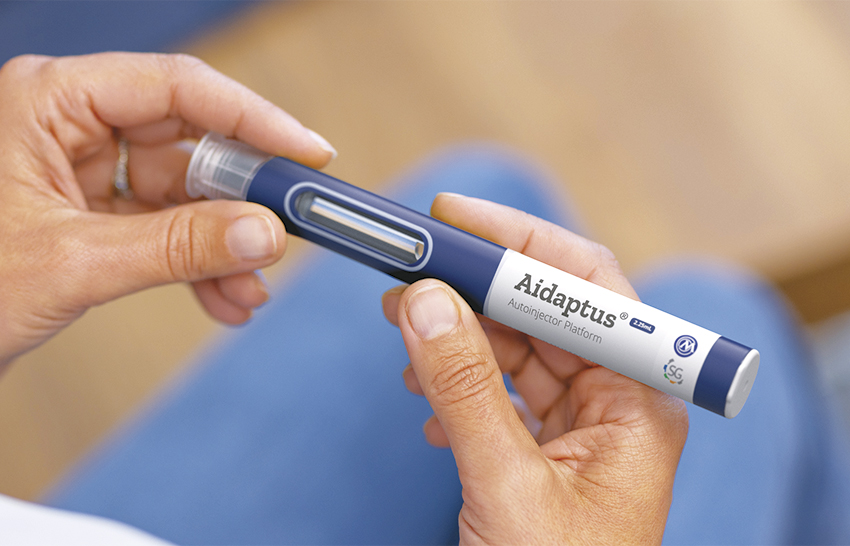
Aidaptus is a two-step, single-use autoinjector platform with a highly adaptable device architecture (Figure 1). Developed through an integrated collaboration model between Owen Mumford and Stevanato Group, and combining device, syringe, manufacturing and supply-chain expertise, the platform is designed to accommodate both 1 and 2.25 mL PFSs within the same form factor. Additionally, its plunger rod technology automatically adjusts to the fill volume, supporting flexible filling without changing device parts. The platform enables configuration choices for different formulation and delivery requirements and is available with low- and high-drive spring options – making it suitable for a range of viscosities.
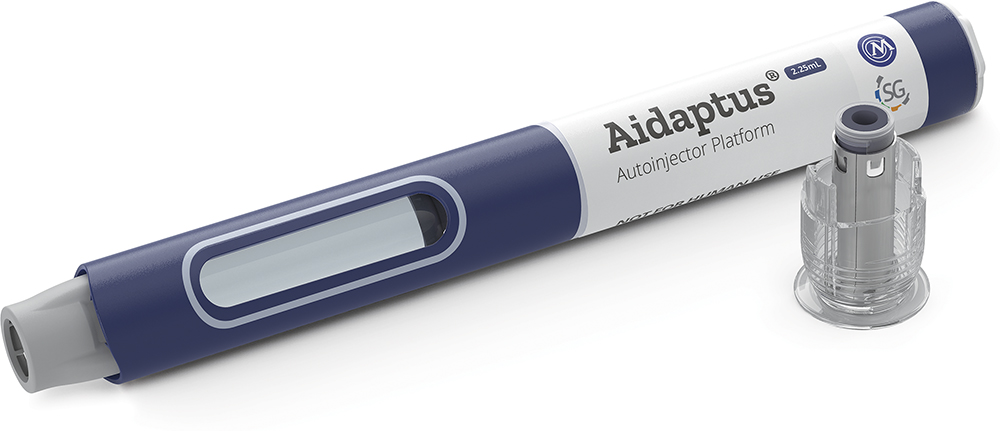
Figure 1: Aidaptus autoinjector platform.

Figure 2:
2.25 mL Nexa and Alba syringes.
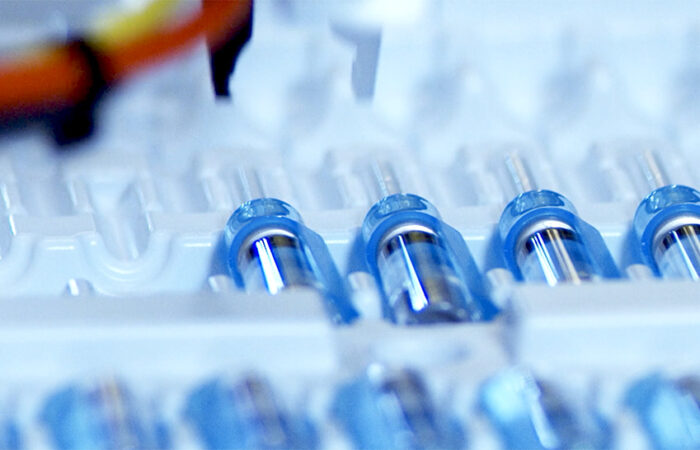
Within Stevanato Group’s syringe portfolio, Nexa® and Alba® offer different performance profiles for demanding injectable applications (Figure 2). Nexa glass syringes, featuring an optimised silicone level, are designed for biologics and offer tight dimensional tolerances, high cosmetic quality, consistent functionality and compatibility with multiple drug delivery devices.
Alba syringes are intended for next-generation biologics and formulations sensitive to silicone oil. Their internally cross-linked silicone coating is designed to deliver near-zero levels of silicone oil-related subvisible particles and reduce silicone migration along the barrel, supporting consistent gliding performance over time. Alba syringes do not require dedicated or ad-hoc plungers and can be used with commercially available ISO-standard, providing greater flexibility in plunger selection.
“THE VALUE OF COMBINING AIDAPTUS WITH STEVANATO GROUP’S PFSs IS NOT LIMITED TO COMPONENT COMPATIBILITY. IT FITS INTO A WIDER INTEGRATED OFFERING.”
The value of combining Aidaptus with Stevanato Group’s PFSs is not limited to component compatibility. It fits into a wider integrated offering: primary containers, delivery systems, final assembly knowledge and analytical testing, which can be co-ordinated within a single ecosystem. For customers, this reduces the number of interfaces to manage and helps to align container, device and testing decisions.
STUDY DESIGN: EVALUATING DELIVERY PERFORMANCE OVER REAL-TIME AGEING
Stevanato Group conducted a stability study to assess the injection-time performance of 2.25 mL Nexa and Alba syringes when assembled with the Aidaptus autoinjector sub-assemblies incorporating a low-drive spring.
The syringes were prefilled with a 1 cP biotech placebo solution and stored under real-time ageing conditions of 25°C and 60% relative humidity. The study evaluated performance at 0, 3, 6 and 12 months. Thirty samples per syringe category were used for each time point.
Delivery time was measured using a high-speed camera; after activation of the autoinjector, the camera recorded the interval from needle deployment to the end of liquid delivery (Figure 3). This provided a gauge of how the syringe and autoinjector performed together after ageing.
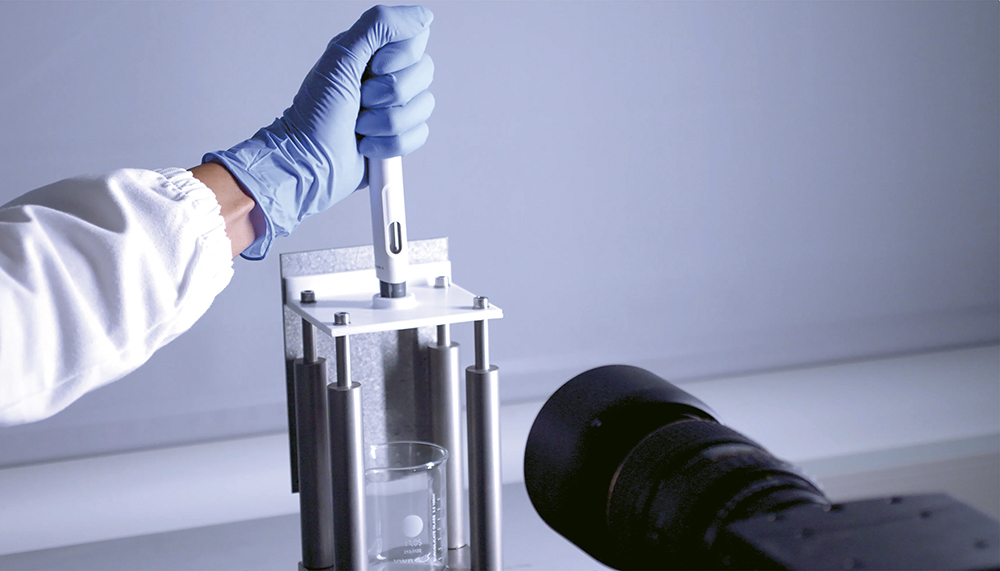
Figure 3: Injection-time testing using a high-speed camera.
WHY REPRESENTATIVE PLACEBO MODELS MATTER
For compatibility testing to be meaningful, the test model must reflect the stresses that a real formulation may place on the syringe and device system. Water for injection can be useful during early evaluations, but it does not necessarily challenge the container closure system in the same way as a biologic formulation would. Excipients and surfactants, such as polysorbate 80, can interact with siliconised surfaces and may influence break-loose force, gliding and injection time.3
In the stability study, Stevanato Group used a representative test formulation rather than water for injection. The aim was to create a more demanding and realistic model for observing delivery performance over time. This approach also illustrates a wider service capability – Stevanato Group’s Technology Excellence Centers can develop ad hoc models and test configurations that mimic customer formulation behaviour, helping customers to obtain predictive data before committing to later-stage verification activities.
WHY INJECTION TIME MATTERS
Injection time is a practical and patient-relevant indicator of combination product performance. In a spring-driven autoinjector, the available driving force is fixed, as determined by the device configuration. This means that, if the frictional behaviour of the syringe changes over time because of formulation-container interactions, silicone redistribution or changes in break-loose and glide forces, the time required to deliver the dose may also change.
From a patient perspective, excessively long or variable injection times may affect confidence, comfort and the likelihood that the full dose is delivered as intended. ISO 11608-1, which describes needle-based injection systems for medical use, stresses that, “the time or speed employed to deliver a discrete volume would be based upon tolerability or convenience”.4
From a development perspective, a consistent injection-time profile can give teams confidence that the selected syringe-device configuration is behaving predictably when ageing. This is why delivery-time testing, alongside other functional and physical assessments, can play an important role in de-risking combination product development.
STUDY RESULTS: CONSISTENT DELIVERY TIMES
Both Nexa and Alba syringe configurations worked effectively with the Aidaptus autoinjector under the study conditions. Both categories maintained successful delivery performance across all tested ageing conditions (Figure 4). Differences in injection-time behaviour reflected the distinct design and platform characteristics of the two syringe technologies, providing customers with options depending on their formulation and drug requirements. Under the evaluated conditions, Alba exhibited lower variability in injection time over ageing.
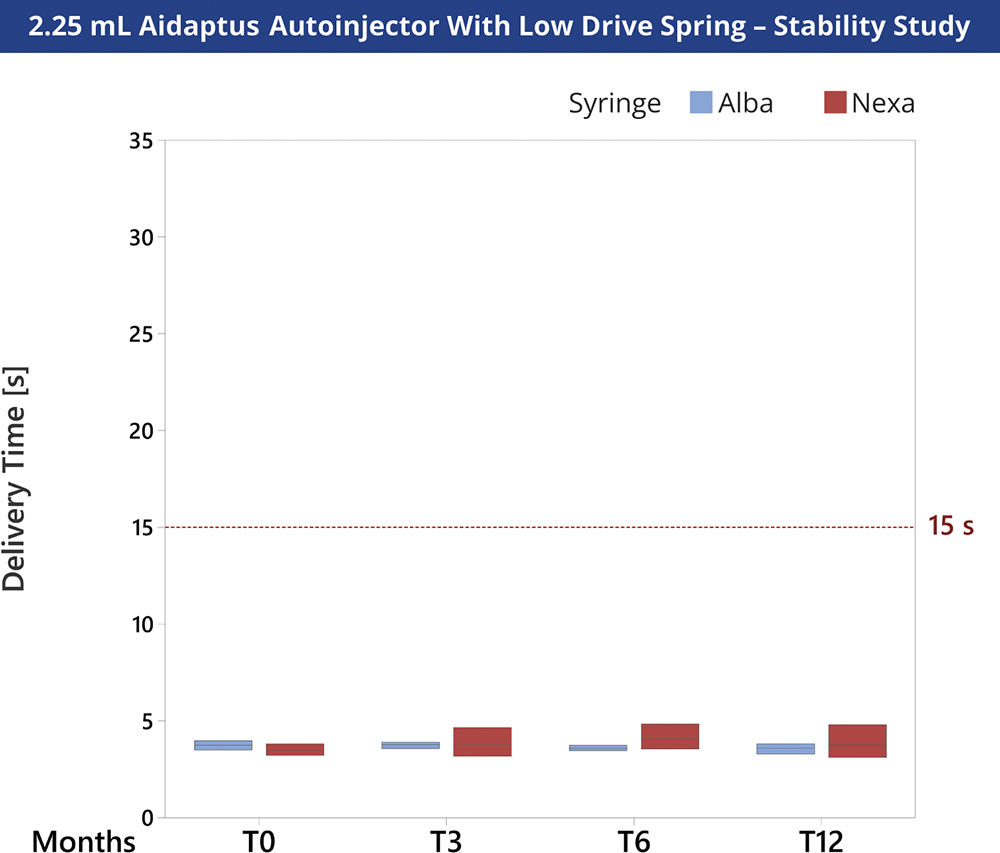
Figure 4: The stability study assessed and compared how injection time changed after 3, 6 and 12 months with Nexa and Alba PFSs assembled in the Aidaptus autoinjector. Both Alba and Nexa maintained delivery times well below 15 seconds throughout the evaluated ageing period.
Figure 5: Cap removal force testing.
In addition to injection-time performance, the compatibility assessment considered other functional parameters relevant to user handling and dose delivery. Cap removal force testing demonstrated that no additional effort was required to remove the cap (Figure 5) compared with controls. The observed cap-removal forces remained consistently low and well below the 30 N acceptance threshold (Figure 6), supporting ease of cap removal while maintaining the intended container closure integrity.
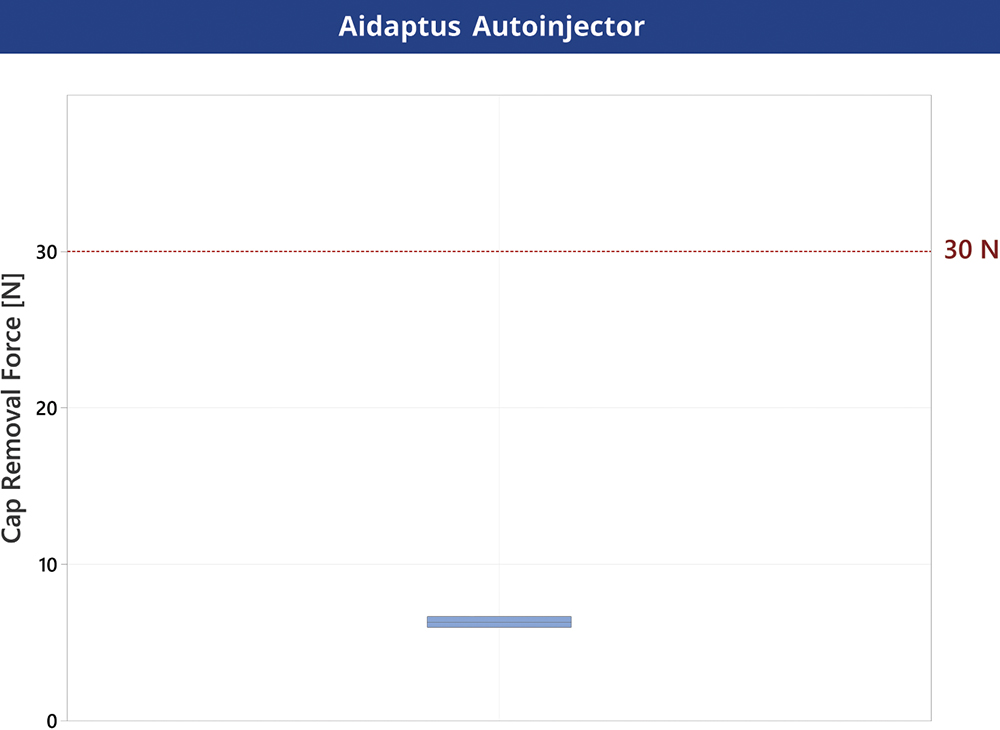
Figure 6: Graph representing cap removal force for Aidaptus autoinjector. No additional effort was required to remove the cap from the syringe, illustrated by the highly consistent results.
Dose-accuracy testing demonstrated that the combination of Aidaptus and either PFS configuration consistently delivered the intended target dose of 2.1 mL (Figure 7). The delivered volumes measured for the high- and low-spring variants were essentially equivalent, indicating reliable dose delivery performance. Under the evaluated conditions, both spring configurations accurately delivered the intended target dose.
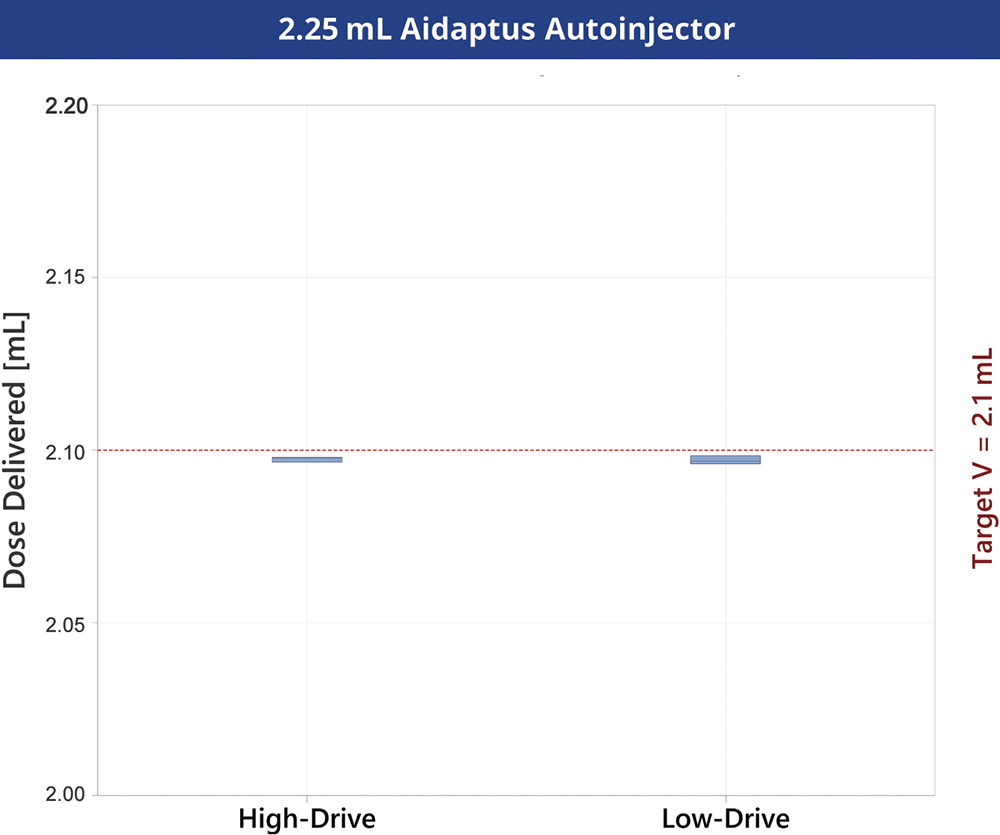
Figure 7: Graph of dose accuracy at high- and low-drive spring configurations. The dose-accuracy test established that the combination of Aidaptus and either PFS, Alba or Nexa, can accurately deliver the intended dose.
“EASIER DECISION-MAKING AT THE DEVICE SELECTION STAGE GIVES PHARMACEUTICAL TEAMS GREATER SCOPE TO FOCUS RESOURCES ON THEIR CORE PRIORITIES.”
TURNING EARLY EVIDENCE INTO A DEVELOPMENT ADVANTAGE
With the attention of pharmaceutical teams pulled in multiple directions during the development of a drug-device combination product, the study demonstrates how a device partner can ease some of this burden. Easier decision-making at the device selection stage gives pharmaceutical teams greater scope to focus resources on their core priorities, whether that be drug development, manufacturing strategy, clinical supply or commercialisation planning.
As injectable therapies continue to evolve, understanding the interactions between the primary container and delivery device is critical to avoid complications at later, more demanding stages of development. The compatibility study between Aidaptus and Nexa and Alba PFSs provides one example of how early data can provide a foundation for more confident device selection. Ultimately, the benefit is not simply a compatible syringe and autoinjector combination, but greater confidence in the path to commercial launch.
For further information on the evaluation and tested configurations, please contact Stevanato Group.
REFERENCES
- “Playing the long game: The promise of ultra long-acting injectables”. Blog, IQVIA, Aug 2025.
- Ahator SD et al, “Overcoming barriers to delivery of biologics by novel approaches and advanced delivery systems”, Adv Drug Del Rev, 2026, Vol 234, art 115875.
- Tingting W et al, “Impact of Surfactants on the Functionality of Prefilled Syringes”. J Pharm Sci, 2020, Vol 109(11), pp 3413–3422.
- “Needle-based injection systems for medical use – Requirements and test methods – Part 1: Needle-based injection systems”. International Organization for Standardization, 2022.