To Issue 188
Citation: Jost R, Kaufmann N, James S, “Beyond Drug Delivery: Three Lenses for Selecting an On-Body Platform”, ONdrugDelivery, Issue 189 (Sep 2026), pp 58–62.
Reto Jost, Nadine Kaufmann and Shawn James discuss three complementary decision lenses and explain how they offer a practical framework for evaluating early platform decisions that can shape outcomes across the entire product lifecycle.
On-body delivery is being reshaped by three converging trends. Biologic therapies are moving from intravenous (IV) infusion to subcutaneous (SC) administration in growing numbers: a systematic review of more than 1,300 biologics identified 182 that require SC doses above 2 mL, roughly two-thirds of which are in the 2–10 mL range1 (Figure 1). A new generation of biologics is also being developed specifically for large-volume, high-viscosity SC delivery. That shift alone changes what a delivery platform needs to be capable of. At the same time, self-administration is expanding further outside of the clinic – into homes – driven by both healthcare systems and patients. Alongside this, expectations around circularity and resource efficiency are increasingly shaping design decisions from the outset.
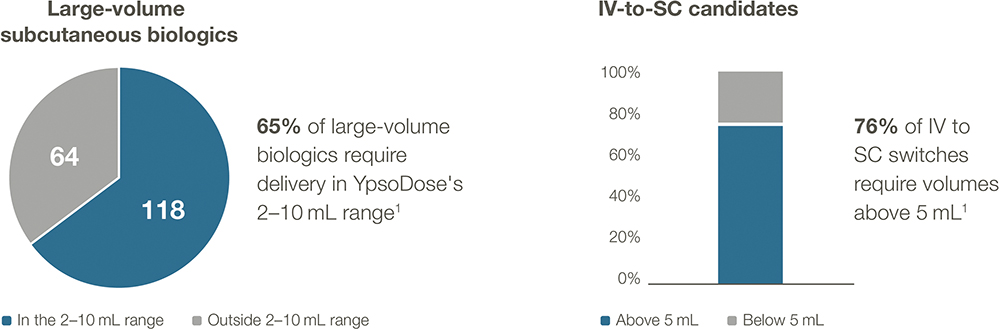
Figure 1: Large-volume biologics and IV-to-SC conversion candidates relative to YpsoDose’s 2–10 mL operating range.
Together, these pressures are testing previous assumptions about on-body device design. Selecting the right on-body platform therefore requires a balanced assessment across multiple dimensions, not a single pass–fail test as to whether a device can deliver a given drug. Ypsomed have devised three complementary decision lenses: technical and therapeutic fit, usability and programme readiness, and end-of-life considerations, which, combined, offer a practical framework to evaluate how early platform decisions can shape outcomes across the entire product lifecycle.
“EVERY ON-BODY DEVICE SELECTION BEGINS WITH THE THERAPY, NOT THE DEVICE.”
THROUGH THICK AND THIN: ENGINEERING FOR VISCOSITY, VOLUME AND BEYOND
Every on-body device selection begins with the therapy, not the device. Ask a device development or combination product lead how they assess a new on-body delivery programme, and the conversation rarely starts with the platform’s features; it starts with questions about the drug itself. How viscous is the formulation? What volume must be delivered? How long can the injection reasonably take? Is the drug product compatible with the primary container and fluid path? These questions come first because the answers determine which platforms are even viable candidates.
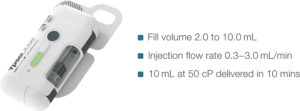
Figure 2: Key operating specifications of the YpsoDose platform.
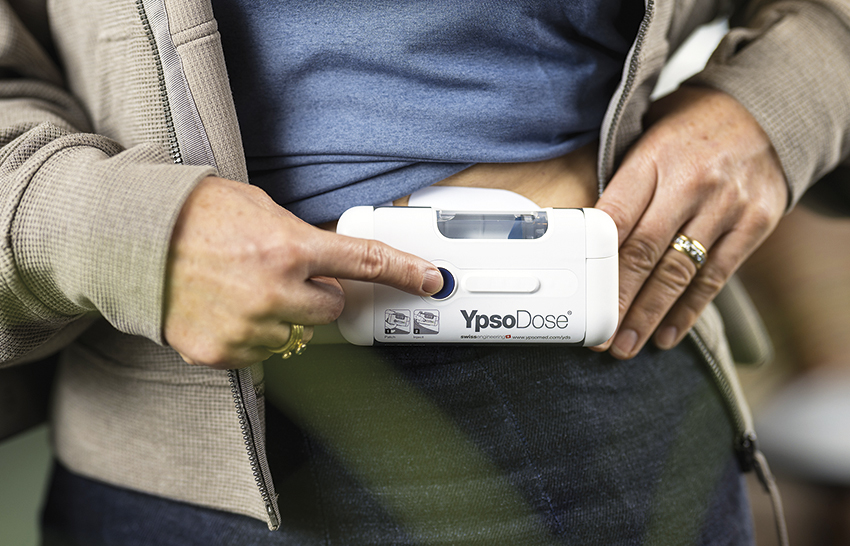
A platform capable of serving many different biologics needs range, not a single fixed point of performance. Volume and viscosity vary considerably from one therapy to the next, and a platform limited to either attribute restricts which programmes it can actually support. This is why operating range matters as much as raw capability: the same underlying platform should be able to serve a given programme’s specific requirements, rather than requiring a new device architecture for every new molecule. In practice, this range is what defines YpsoDose, Ypsomed’s prefilled and ready-to-use patch injector. Its specifications include: a fill volume of 2.0–10.0 mL, an injection flow rate of 0.3–3.0 mL/min and a motor-driven system supporting a broad viscosity range, for example, 10 mL of a 50 cP formulation delivered in 10 minutes (Figure 2).
Only once those requirements are met can a meaningful assessment of platform quality begin. At that point, the focus shifts from what the therapy requires to how well the engineering behind the platform holds up. Built-in sterility, for example, allows for final assembly outside of a cleanroom and reduces the complexity of aseptic assembly, simplifying manufacturing without compromising safety. An optimised fluid path can reduce the waste of high-value biologics. Designs that allow for component separation can open up recycling opportunities. Here, good engineering decisions reach further than delivery performance alone. They can shape development efficiency, patient usability, manufacturability at commercial scale and what is ultimately possible at end of life.
Meeting these technical demands draws on expertise well beyond the delivery mechanism itself, spanning fluid management, sterile systems, electronics, software and human factors. For Ypsomed, this multidisciplinary base was built over decades rather than being assembled for a single programme. In 1986, the company (then Disetronic) launched one of the world’s first microprocessor-controlled insulin pumps, and the fluid management, sterile systems and reliability engineering developed for continuous insulin therapy continue to inform how YpsoDose and other on-body platforms are built today.
Technical fit is the foundation, but it is not the whole picture. A platform must also support intuitive, confident use by the patient administering it, which is where the next dimension of platform selection comes in.
IN SAFE HANDS: USER CONFIDENCE AND PLATFORM MATURITY
A technically sound platform is only valuable if people can use it correctly, consistently and confidently. Human factors engineering focuses on how patients interact with a device in real-world settings, with the aim of minimising uncertainty, reducing opportunities for user errors and building confidence throughout the injection process.
That confidence cannot be added at the end of development. It has to be engineered in from the start. Human factors activities begin long before the final product design is set – using iterative user research and formative studies to understand how patients think, behave and interact with the device – with the goal of identifying and eliminating barriers before the product ever reaches patients. For example, an eye-tracking study conducted with ETH Zurich (Zurich, Switzerland) led to refinements of YpsoDose’s progress bar and status light, optimising their size, position, brightness and segmentation to ensure that patients could interpret device status quickly and confidently.
This attention to confidence matters most for therapies that are administered infrequently, as is typical for larger-volume biologics delivered by on-body devices. For autoimmune disease and cancer treatments, for example, dosing frequency can range from every week up to every six months. Unlike daily injections, infrequent administration gives patients fewer opportunities to become familiar with a device and therefore increases the chance of errors, which makes simple, intuitive handling essential for confident, long-term use.
This approach is directly highlighted in YpsoDose’s design. Its ready-to-use configuration removes cartridge and drug-handling steps, reducing opportunities for user error before the injection even begins. Skin-contact detection sensors confirm correct application before, during and after injection, while clear audio and visual feedback guides patients throughout use. The device is also designed to perform reliably across varying temperatures, orientations and injection sites, as patients rarely inject under identical conditions each time. Together, these features are built to reduce uncertainty and support confident self-administration outside clinical supervision.
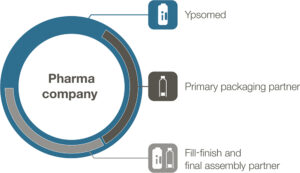
Figure 3: YpsoDose is a complete, clinic- and market-ready solution, supported by expert partners in primary packaging (SCHOTT Pharma) and final assembly (ten23 health).
For pharmaceutical companies, however, confidence in the patient experience is only part of programme readiness. A qualified manufacturing process, completed verification activities, an established primary container and an experienced partner network all help to reduce development risk and support a smoother path to commercialisation. These elements matter because design changes that surface late in development, after verification work is already underway, can delay regulatory submissions and add significant cost. Starting from a platform with established qualification data and a proven partner network avoids much of that risk before a programme even begins. For YpsoDose, this includes partnerships with SCHOTT Pharma for primary containment using the 10 mL cartriQ® cartridge and ten23 health for fill-finish and final assembly, bringing expertise across the value chain as programmes move towards commercialisation (Figure 3).
“SELECTING AN ON-BODY PLATFORM THEREFORE MEANS SELECTING THE ENGINEERING KNOWLEDGE, MANUFACTURING CAPABILITY AND PARTNER ECOSYSTEM THAT SURROUND IT, NOT JUST THE DEVICE ITSELF.”
Selecting an on-body platform therefore means selecting the engineering knowledge, manufacturing capability and partner ecosystem that surround it, not just the device itself. A mature platform can remove complexity throughout development, allowing pharmaceutical companies to focus more of their effort on the therapy itself. Confidence in use and confidence in execution go hand in hand, and for many programmes, that confidence now must also apply to end-of-life considerations.
LIFE AFTER DOSE: LCAs AND COMPONENT REUSE
The final injection should not mark the end of the engineering conversation. Decisions made during platform development shape what becomes possible once a device has fulfilled its intended purpose, and expectations around circularity, resource efficiency and product stewardship are becoming a more visible part of platform selection.
Like technical performance or usability, end-of-life performance cannot simply be added later. It is the result of engineering decisions made throughout product development. Choices around material selection, product architecture and component integration determine whether a device can support take-back, disassembly, recycling or component reuse. These same engineering decisions can also influence other aspects of lifecycle performance. With high-value biologics, even small amounts of residual drug left in the fluid path add up to meaningful cost and waste at scale, and manual filling steps can introduce further losses on top of that. YpsoDose addresses this through a prefilled cartridge and a simplified fluid path consisting of two cannulas and a short connecting tube. The device’s own fluid path contributes less than 0.015 mL of residual volume, bringing the total system residual, including the cartridge, to under 0.262 mL, while eliminating manual filling from the process entirely.
Lifecycle assessment (LCA) provides a way to move discussions from aspiration to evidence. Rather than relying on broad sustainability claims, pharmaceutical companies need to understand which decisions deliver measurable outcomes. To support this, Ypsomed has undertaken an LCA of YpsoDose in accordance with internationally recognised ISO 14040 and ISO 14044 standards. The assessment compares multiple end-of-life scenarios, including baseline disposal, battery removal and take-back, printed circuit board recycling and plastics recycling combined with printed circuit board (PCB) reuse. The assessment identified PCB reuse and recycling of battery and plastic components as the scenario with the greatest CO2 reduction potential, shrinking the product’s carbon footprint by over 23% compared with the LCA’s baseline scenario of only recycling the battery (Figure 4).
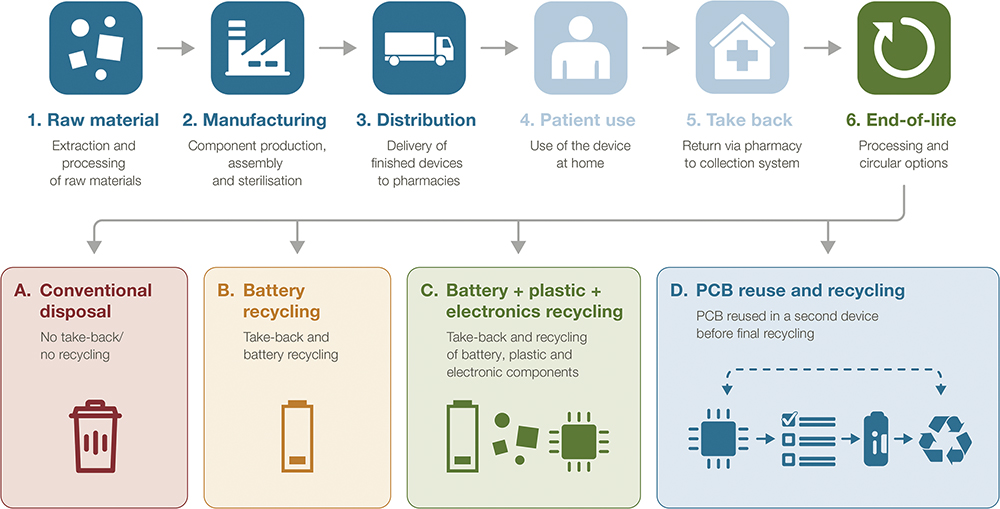
Figure 4: Lifecycle and end-of-life options for YpsoDose. Ypsomed’s LCA used a conservative assumption of one reuse per PCB, though more reuses are feasible.
Ypsomed is constantly evaluating practical take-back concepts and engaging with recycling partners across its entire platform portfolio. For YpsoDose specifically, Ypsomed is also designing disassembly tools, and even actively testing the reuse of PCBs, going well beyond mere compliance. PCB reuse in particular offers significant potential to reduce CO2 emissions and conserve valuable materials, especially as the PCB is one of the main contributors to the device’s environmental footprint. These activities also help Ypsomed to prepare for evolving regulatory requirements for electronic medical devices, particularly in Europe (e.g. the new EU Batteries Regulation). Ultimately, selecting an on-body delivery platform means considering the entire product lifecycle, from the earliest engineering decisions through commercialisation and beyond the final injection. Platforms developed with this broader perspective can help pharmaceutical companies to meet today’s technical and commercial requirements while remaining prepared for tomorrow’s.
A WIDE ANGLE: THREE LENSES, ONE DECISION
Selecting an on-body delivery platform has become a broader engineering and strategic decision than it once was. Technical capability remains fundamental, but it is no longer the only criterion that determines long-term success. Platform maturity, patient confidence, development efficiency, commercial readiness and lifecycle considerations all influence how effectively a therapy can move from concept to commercial reality.
These factors do not operate independently. Engineering decisions that improve technical performance can also strengthen patient usability, simplify development, reduce drug waste or create new opportunities for circularity. The strongest platforms are those that are built to balance these considerations from the outset, rather than addressing them one at a time as development progresses.
This integrated philosophy is reflected in the development of YpsoDose, where engineering, human factors, industrialisation and lifecycle design have been treated as connected parts of the same effort rather than separate workstreams.
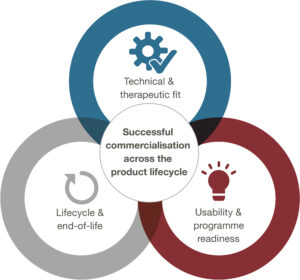
Figure 5: The three lenses for selecting an on-body platform.
As biologics, self-administration and sustainability expectations continue to reshape on-body delivery, the questions pharmaceutical companies ask when selecting a platform will also keep evolving. The platforms best positioned to meet them will be the ones designed to deliver value from the earliest engineering decisions to well beyond the final injection (Figure 5).
REFERENCE
- Green P, Schneider A, Lange J, “Navigating large-volume subcutaneous injections of biopharmaceuticals: a systematic review of clinical pipelines and approved products”. MABS, 2024, Vol 16(1), 2402713, pp 1–19.