To Issue 188
Citation: Weingärtner F, “Ultrasonic Joining Process Ensures Reliable Assembly of Sensitive CGM Components”, ONdrugDelivery, Issue 189 (Sep 2026), pp 74–77.
Fabio Weingärtner discusses the value of ultrasonic welding for wearable diagnostic and drug delivery devices, using a continuous glucose monitor developed by GlucoModicum as a case study, describing the joining challenges for distinct, delicate components and the innovative solutions produced to overcome complex design requirements.
“THE DECISIVE SUCCESS FACTORS PROVED TO BE THE DEDICATED DESIGN OF BOTH THE COMPONENT AND THE WELDING TOOL.”
Wearable devices, such as continuous glucose monitors (CGMs) and on-body injectors, can be challenging when it comes to fabrication. As a case study, a novel needle-free CGM designed by GlucoModicum (Helsinki, Finland), proved to be a particularly demanding application due to factors such as the presence of sensitive electronics, needing to join different plastics and a demand for short production cycles. Facing this stringent set of design requirements, Herrmann Ultraschall was able to meet them by developing a specialised ultrasonic joining process that ensured that the CGM could be fabricated quickly and reliably. In addition to close collaboration between the partners, the decisive success factors proved to be the dedicated design of both the component and the welding tool (Figure 1).
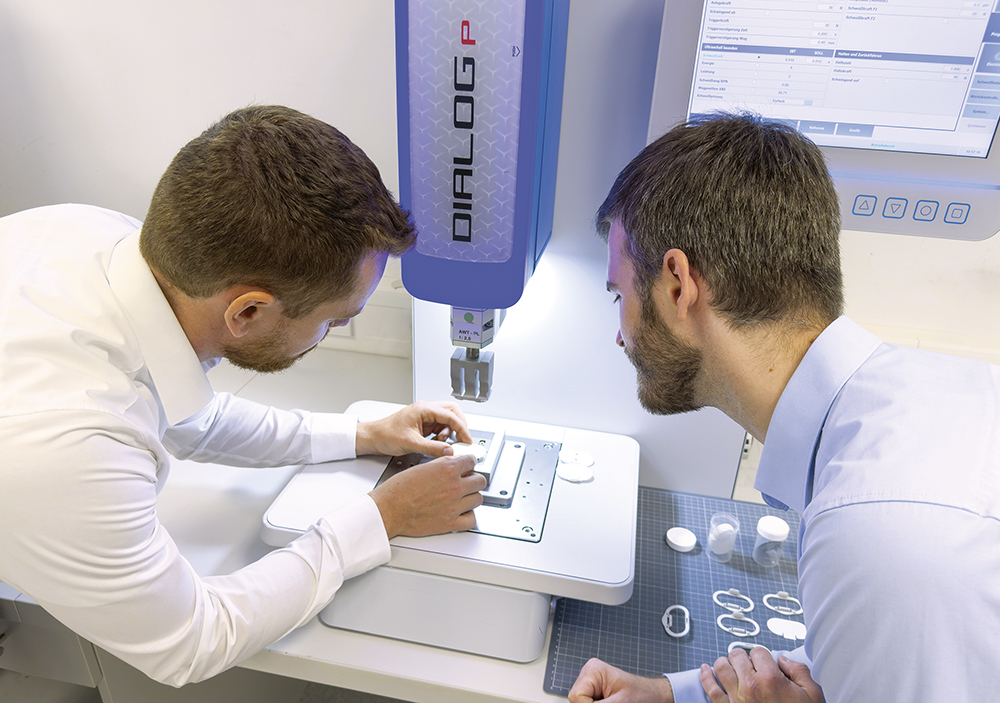
Figure 1: Despite the use of different plastics and a complex component design, Herrmann Ultraschall succeeded in developing a safe and reliable joining process for GlucoModicum’s new, needle-free CGM.
What makes GlucoModicum’s wearable CGM unique is its non-invasive operating principle, which differentiates it from conventional CGM systems. Unlike other CGMs on the market, which require a needle to puncture the skin and place a filament beneath it to access interstitial fluid, GlucoModicum uses its patented magnetohydrodynamics (MHD) technology to draw interstitial fluid through the skin to the sensor without piercing it. The wearable system consists of two components: a rechargeable transmitter and a one-day biosensor. The biosensor is made of a thin multilayer film supported by a plastic ring.
For the automated production of the biosensor, GlucoModicum needed a joining technology capable of dealing with different components within one process. To achieve this, the film must be attached to the plastic ring before the electrical connection pads are connected to the back of the plastic ring.
CRITERIA FOR THE RIGHT JOINING TECHNOLOGY
Both components involved demanding requirements that the joining technology had to fulfil. First, an especially gentle process was required for the sensitive film to protect the integrity of the electronics, in order to ensure the reliable functionality of the medical device itself. At the same time, the bond strength had to be sufficiently high to guarantee secure wear during everyday use.
Additionally, the system needed to be designed for high-volume manufacturing, with automated production of tens of millions units per year planned. As a result, the joining process also needed to support automated manufacturing with short cycle times and highly repeatable results (Figure 2).
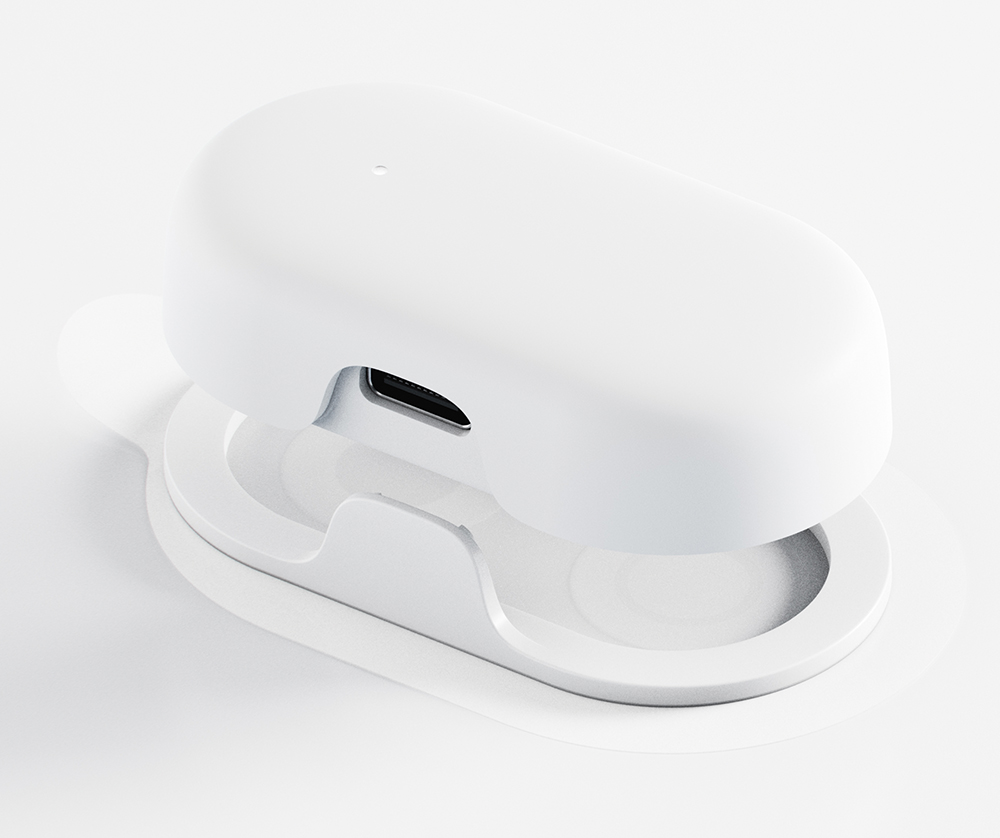
Figure 2: To ensure the safe, automated manufacturing of the CGM, GlucoModicum decided to use ultrasonics, which produces strong, durable connections without the need for additional bonding agents.
EARLY DECISION IN FAVOUR OF ULTRASONIC JOINING
Conventional joining technologies, such as adhesive bonding, reached their limits for this wearable application. The extremely small contact area between the film and the housing made it difficult to achieve a reliable bond using traditional methods, while curing times would have further slowed down the production process.
In contrast, initial feasibility tests conducted in Herrmann Ultraschall’s ultrasonic laboratory quickly demonstrated that ultrasonic technology could not only deliver the required bond strength but also meet all demands regarding appearance and processing speed.
CHALLENGING PROJECT DEVELOPMENT
In conventional ultrasonic welding of plastics, typically two identical materials are joined together. In this case, however, the film and the housing consisted of two different plastics that did not allow for a conventional weld.
As a result, a related process was used that is primarily applied for embedding membranes or non-wovens into housings. In this process, high-frequency vibrations are transferred to a plastic housing via a welding tool known as a sonotrode. The resulting frictional heat causes the plastic to melt and flow into the pores of the membrane, creating a highly robust mechanical bond.
Figure 3: With the consulting provided by Herrmann’s application engineers, the product design was slightly adjusted to make it ideal for ultrasonic bonding.
Unlike membranes, however, the fine plastic film used in the CGM does not contain pores – only microscopic surface roughness. In addition, it incorporates highly sensitive electronic sensors that must not be damaged during the joining process. The solution was a process best described as an interlocking of the materials, implemented through two different technical approaches (Figure 3).
SPECIALISED DESIGN OF COMPONENTS AND WELDING TOOLS
The first step was to adapt the component design itself. In close collaboration between product designers and application engineers, the plastic housing was further optimised to provide an ideal energy director for the process. This ensured that the introduced energy was concentrated locally during joining, protecting the surrounding areas of the component while ensuring that the bond was created only at the intended locations. Unlike conventional ultrasonic welding applications, the energy director in this project was not designed with a sharp geometry, but with rounded edges to protect the film from damage.
“THE COMBINATION OF A CUSTOMISED SONOTRODE DESIGN AND AN OPTIMISED ENERGY DIRECTOR ULTIMATELY ENABLED THE CREATION OF A ROBUST MECHANICAL INTERLOCK CAPABLE OF WITHSTANDING LARGER FORCES AND MECHANICAL STRESS.”
Initial trials showed that conventional sonotrodes were not capable of meeting GlucoModicum’s requirements regarding bond strength. Therefore, through multiple test series, the application engineers developed a unique sonotrode contour specific to this application. The combination of a customised sonotrode design and an optimised energy director ultimately enabled the creation of a robust mechanical interlock capable of withstanding larger forces and mechanical stress.
In the second joining application within the CGM, where the multilayer film had to be connected to electrical contacts, the primary focus was to protect the electronic components. Since the sonotrode operates directly on the electrical contacts, the contour of the welding tool once again became a critical factor. In this case, a sonotrode with a completely smooth surface and no additional structure proved to be the most suitable solution, enabling uniform and gentle transmission of vibrations into the component (Figure 4).
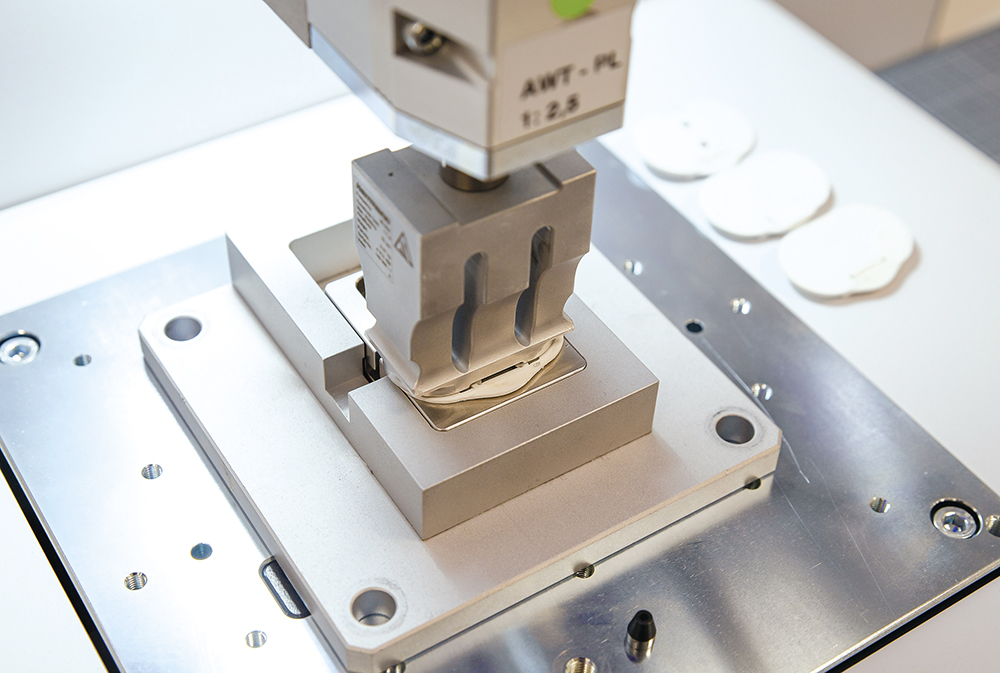
Figure 4: Thanks to a special contour on the welding tool, the delicate film containing the electronics could be gently yet firmly bonded to the plastic ring of the biosensor.
CASTING RESIN PROVIDES ADDITIONAL COMPONENT PROTECTION
To further protect the sensitive components, a dedicated fixture for the welding process was developed, made from a specialised casting resin with a hardness comparable to that of skateboard wheels. This material provides the ideal balance: rigid enough to securely position the component during the process and to protect the sensitive surface from damage. As a result, visual defects on the components could also be reliably avoided.
“WITH A CYCLE TIME OF ONLY 200 TO 250 MILLISECONDS, THE PROCESS WAS ALSO DESIGNED TO BE EXCEPTIONALLY FAST. AS IS TYPICAL FOR ULTRASONIC JOINING, NO ADDITIONAL CURING TIMES OR PRE- AND POST- ROCESSING STEPS ARE REQUIRED.”
FINE-TUNING THROUGH PROCESS PARAMETERISATION
After developing the appropriate welding tools, the next phase of the project focused on defining the optimal process parameters. In particular, the adjustment of energy input, force and welding time were essential to ensure a reproducible process that fulfilled all requirements regarding appearance, functionality and safety. When determining the ideal welding parameters, it is always about finding the right balance. Ultrasonic welding can create extremely strong bonds, but this may compromise the visual appearance. Conversely, connections can be optimised for a flawless appearance, but doing so can come at the expense of bond strength. In this case, through multiple rounds of testing in its laboratory, Herrmann Ultraschall was able to identify the ideal parameter set – strong enough to create a reliable bond, yet gentle enough to protect both the sensitive electronics and the visual appearance of the application.
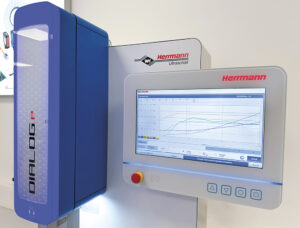
Figure 5: Key parameters can be visualised in real-time – an important step towards optimising the joining process.
With a cycle time of only 200–250 milliseconds, the process was also designed to be exceptionally fast. As is typical for ultrasonic joining, no additional curing times or pre- and post-processing steps were required. This makes the developed process ideally suited for high-volume automated production (Figure 5).
CLOSE COLLABORATION AS THE FOUNDATION FOR SUCCESS
This demanding process development highlights the importance of close collaboration between application engineers and product designers. By involving Herrmann Ultraschall at an early stage of the project, critical design features could be integrated into the component itself. In combination with the specially developed welding tools, these adaptations ultimately enabled the desired results.
At the same time, the project demonstrated the versatility of ultrasonic joining technology, showing that not only identical but also dissimilar plastics can be joined reliably, quickly and with excellent visual quality – even under highly demanding conditions.