To Issue 191
Citation: Hemmege Venkatappa P, “USP <382> System-Level Insights to Support Earlier Packaging Decisions”, ONdrugDelivery, Issue 191 (Oct 2026), pp 51–54.
Drawing on Aptar Pharma’s system-level collaboration framework, Pavan Hemmege Venkatappa, Technical Product Manager, explains how testing aligned with USP <382> can generate insights that support earlier decisions in packaging and delivery system development and can help development teams better understand system behaviour, identify potential risk areas and guide packaging system decisions before formal validation begins.
USP <382> defines new functional performance requirements for packaging and delivery systems used in injectable drug products, with pharmaceutical companies now responsible for demonstrating compliance at the final assembled-system level. However, beyond regulatory compliance, testing aligned with USP <382> can also generate insights that support earlier decisions in packaging and delivery system development.
“WHEN SYSTEM-LEVEL TESTING IS PERFORMED EARLIER AND THE RESULTING DATA ARE REVIEWED WITH THE RIGHT QUESTIONS IN MIND, IT CAN HELP TEAMS GAIN EARLY INSIGHTS INTO HOW A SYRINGE OR CARTRIDGE SYSTEM BEHAVES UNDER DIFFERENT CONDITIONS.”
FROM COMPLIANCE REQUIREMENT TO EARLY STRATEGIC INSIGHT
For many teams working on injectable products, USP <382> is a regulatory milestone in the development roadmap. The pharmacopoeia chapter addresses the functional suitability of packaging and delivery system components within the assembled system, emphasising overall system performance rather than individual component characteristics.
As a result, this approach moves the discussion away from isolated component behaviour and closer to the way the final system actually performs when all variables come together: components, geometry, liquid properties and manufacturing conditions (Figure 1).
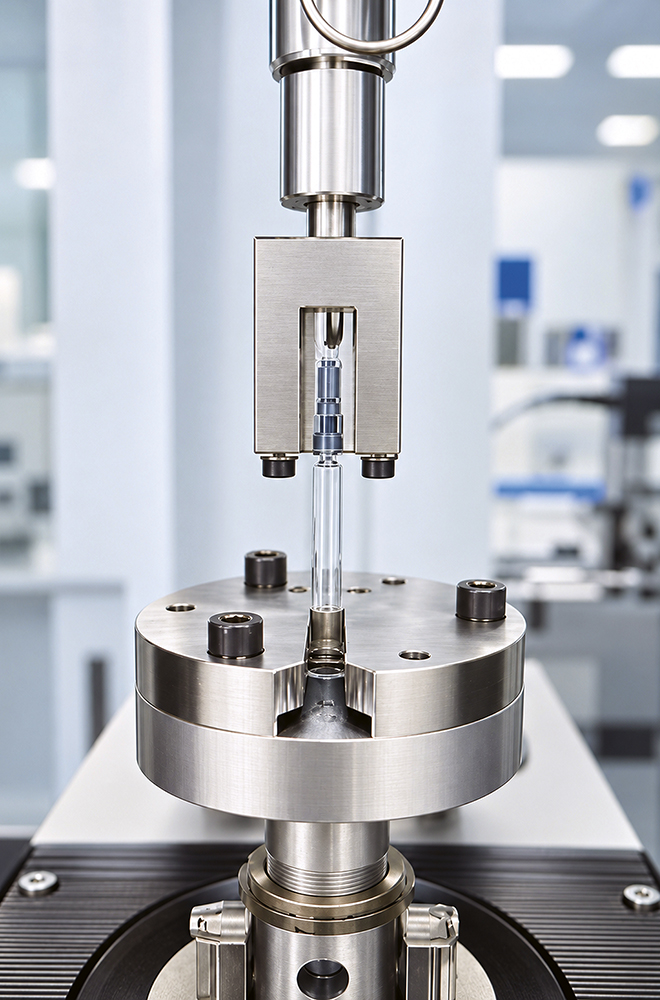
Figure 1: USP <382> assessment as a development checkpoint.
In practice, this broadens the value of the data generated around USP <382> beyond mere compliance. When system-level testing is performed earlier and the resulting data are reviewed with the right questions in mind, it can help teams gain early insights into how a syringe or cartridge system behaves under different conditions. This is especially relevant before the final drug product, final configuration or full validation strategy is available.
Such system-level testing and related early learnings can be achieved through close collaboration between component providers. The approach may include testing under standard conditions, with placebo formulations or with representative liquids. These data are not a substitute for final product testing and cannot be used directly as proof of regulatory compliance for a specific drug product. Nevertheless, they can provide useful directional information at a point in development where design teams are still comparing options and trying to understand where the system may be sensitive to variation.
LOOKING AT THE DATA INSIGHTS AS A KNOWLEDGE MAP
USP <382>-oriented preliminary data usually bring together several types of information – primarily from functional tests, such as break-loose force, glide force, leakage and container closure integrity (Figure 2). They may also include environmental conditioning, ageing at different time points, exposure to stress conditions and studies with different viscosities to represent a range of formulation behaviours.
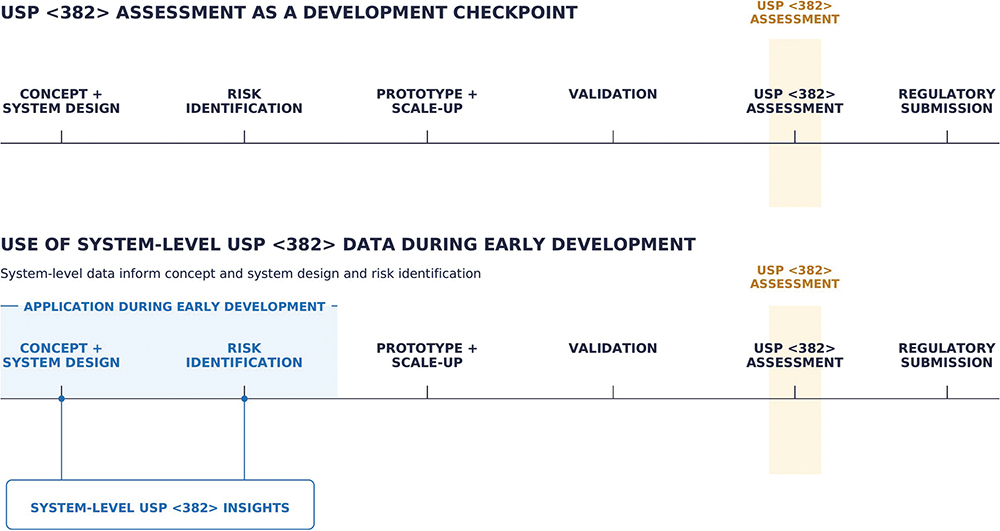
Figure 2: From compliance requirement to early de-risking insight.
Viewed individually, these results can answer narrow questions. For example, a force value may be assessed against an expected range; a leakage result may pass or fail; or a closure integrity result may support a given interpretation. However, when the same type of testing is available across comparable syringe configurations or material combinations, the data can begin to function as a map of system behaviour.
Each test can be seen as a way of probing the physics of the system. Break-loose and glide/extrusion force results give insights into friction, lubrication and plunger movement. Leakage and container closure integrity results point towards sealing performance and interface behaviour. Ageing and stress conditions help show whether performance remains stable over time or begins to drift. Viscosity studies can reveal how the liquid itself influences the forces required to initiate and maintain movement.
USING USP <382> DATA TO DE-RISK DEVELOPMENT
The value of the data depends largely on how they are used. If the review is limited to checking whether a result is within an expected range, the broader value of the data can be overlooked. A more useful approach is to ask what variables seem to influence the result and which mechanisms may explain the observed results.
Typical variables include barrel and plunger geometry, the interface between components, material properties, siliconisation level and distribution, and liquid properties such as viscosity. The output responses may include break-loose force, glide force profiles, leakage behaviour and sealing performance. By looking across those inputs and responses, teams can begin to identify cause-and-effect relationships.
In this sense, the data create a learning loop – system inputs such as configuration, formulation characteristics and use requirements can be connected to measurable outputs, helping teams refine the questions they ask and focus subsequent development work based on the answers (Figure 3).
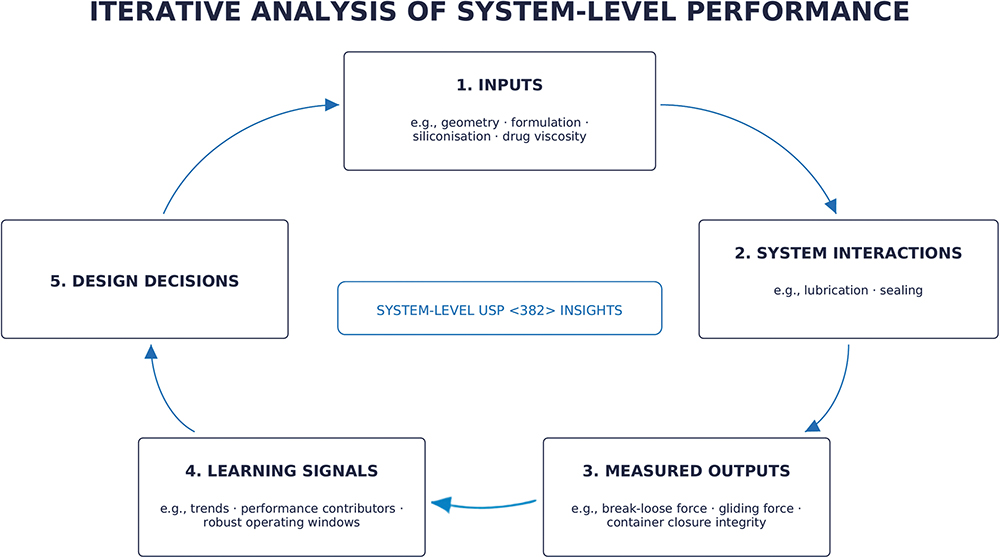
Figure 3: USP <382>-oriented data insights in a learning loop.
This learning-loop approach can be valuable during concept selection and early development. By generating evidence on how product, container and device characteristics interact, it can help teams identify potential risks sooner, focus development efforts on the most relevant performance drivers and build confidence in the robustness of the final combination product.
“WHEN DATA ARE GENERATED UNDER COMPARABLE CONDITIONS, IT CAN HELP DEVELOPMENT TEAMS BUILD A PRACTICAL VIEW OF THE DESIGN SPACE.”
USING COMPARATIVE DATA TO EXPLORE THE DESIGN SPACE
When data are generated under comparable conditions, it can help development teams build a practical view of the design space. They can help identify performance trends across design variants, observe sensitivity to certain parameters and distinguish between configurations that show stable behaviour and those that appear more sensitive to variation.
For example, one configuration may show relatively consistent glide forces across different representative liquids, while another may become more variable as viscosity increases. A sealing interface may remain robust after conditioning in one system but show a narrower operating window in another. While such observations do not remove the need for final testing with the intended drug product, they can help teams identify which systems appear most robust and pinpoint the areas that require particular attention.
By creating a shared basis for discussion between pharmaceutical companies and their device partners, these insights can help teams compare design and component options more systematically, particularly when multiple products or configurations may need to be considered within a broader platform approach.
That distinction can be particularly beneficial before scale-up activities introduce additional variability, before stability studies are launched or before customer-specific configurations are locked. It gives teams an earlier opportunity to discuss risk drivers. These discussions are easier to act on early, rather than after a design has been fixed and the project is moving towards validation.
A PRACTICAL EXAMPLE: READING FORCE PROFILES AS LEARNING SIGNALS
This can be illustrated by an early development team comparing two syringe system configurations for a formulation expected to have higher viscosity than water. At this stage, the team may not yet have the final drug product available for full testing. A representative data package using liquids of different viscosities can provide useful information. If one configuration shows a gradual and predictable increase in glide force as viscosity rises, while another shows more variable behaviour or a less stable force profile, the team has a useful signal. The result does not determine the final choice by itself, but it helps to frame the next questions (Figure 4).
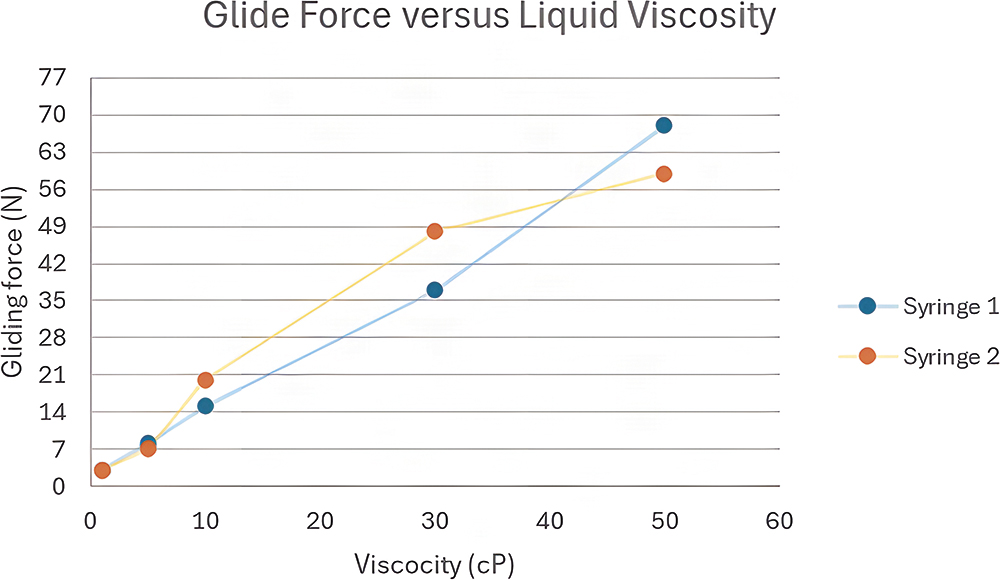
Figure 4: Illustrative glide force response across representative liquid viscosities. Syringe 1 demonstrates a predictable response to increasing viscosity, whereas Syringe 2 shows greater variability. Such trends can provide early insight into system sensitivity and help guide subsequent development activities. Data shown for illustration only.
Those questions may include whether the observed behaviour is linked to geometry, lubrication, the elastomer interface, liquid properties or a combination of factors. The team can then decide whether to run targeted follow-up tests, adjust a configuration, review the siliconisation strategy or focus attention on a narrower set of risk areas. This is a more efficient way to learn than running broad exploratory tests without a clear hypothesis.
CLARIFYING THE SCOPE AND BOUNDARIES OF EARLY PERFORMANCE DATA
However, there is an important boundary to maintain. Representative data packages are not final evidence of functional suitability for a specific drug product in its final packaging or delivery configuration. Final testing remains necessary, and the final assembler is responsible for demonstrating system performance under the appropriate conditions.
Early data serve a different purpose – they help teams ask better questions sooner; they support technical discussions before formulation assumptions become fixed; and they can reveal where the system behaves consistently and where it may be more sensitive to change. Their value lies in providing additional evidence to support risk assessments, strengthen development justifications and better understand formulation-related performance sensitivities, without replacing final product-specific testing.
CONCLUSION
USP <382> remains an important compliance milestone, but the data generated around it can also support development much earlier when reviewed as system-level evidence rather than as isolated test outputs.
“BY COMPARING RESULTS ACROSS DEFINED CONFIGURATIONS, MATERIALS, LIQUID PROPERTIES AND CONDITIONING CONDITIONS, DEVELOPMENT TEAMS CAN BETTER UNDERSTAND HOW THE PACKAGING AND DELIVERY SYSTEM RESPONDS TO CHANGE.”
By comparing results across defined configurations, materials, liquid properties and conditioning conditions, development teams can better understand how the packaging and delivery system responds to change. This can help to identify potential sensitivities, focus technical discussions on the most relevant risk areas and strengthen the rationale behind design decisions while options are still open.
Used in this way, USP <382>-oriented data provide an earlier knowledge base that can make subsequent development more informed, more transparent and better aligned with the objective of defining a robust final packaging system. Through its system-level collaboration with glass manufacturers and pharmaceutical partners, Aptar Pharma supports this earlier use of performance data to help inform packaging decisions before formal compliance activities begin.