To Issue 191
Citation: “Mastering Product Transfer for a Range of Injectables”, ONdrugDelivery, Issue 191 (Oct 2026), pp 72–73.
Lifecore Injectables explores product transfer, the often overlooked step between formulation and filling, and looks at how transfer technologies, mixing and recirculation strategies can be matched to the demands of water-like solutions, highly viscous products and fast-settling suspensions to maintain product quality throughout manufacturing.
For injectable drug products, quality is often associated with formulation development and final filling operations. However, an equally critical phase occurs between these stages – product transfer. The movement of a product from one processing step to the next can have a significant impact on consistency, uniformity and overall product integrity. As formulations become more complex, transfer operations must be designed to accommodate a wide range of physical and processing characteristics while maintaining product quality throughout manufacturing.
“A TRANSFER STRATEGY THAT WORKS EFFECTIVELY FOR A WATER LIKE SOLUTION MAY NOT BE SUITABLE FOR A HIGHLY VISCOUS PRODUCT OR A SUSPENSION PRONE TO RAPID SETTLING. AS A RESULT, TRANSFER TECHNOLOGIES MUST BE CAREFULLY ALIGNED WITH PRODUCT-SPECIFIC REQUIREMENTS.”
THE HIDDEN COMPLEXITY OF PRODUCT TRANSFER
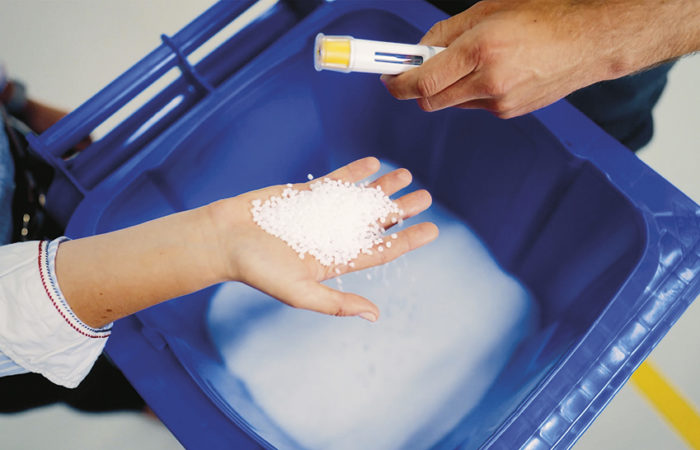
Different formulations can place very different demands on manufacturing systems. Fully understanding those demands is critical for success. A transfer strategy that works effectively for a water-like solution may not be suitable for a highly viscous product or a suspension prone to rapid settling (Figure 1). As a result, transfer technologies must be carefully aligned with product-specific requirements. The ultimate objective is to maintain molecular fidelity while delivering the product consistently and efficiently throughout the manufacturing process.
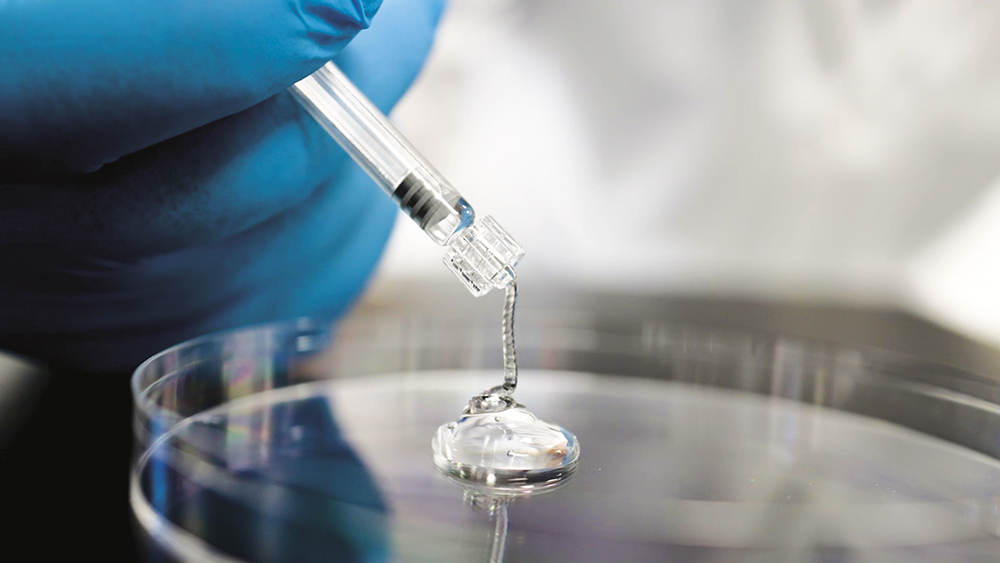
Figure 1: Highly viscous APIs, suspensions and water-like solutions all present different challenges and technical requirements when it comes to product transfer.
A TOOLBOX FOR DIVERSE PRODUCT CHALLENGES
A variety of transfer approaches can be employed depending on the characteristics of the product in question (Table 1). Peristaltic pumping technologies are commonly used for standard solutions, transferring products to a surge vessel before gravity feeding them to downstream operations. Sterile applied nitrogen may also be incorporated as part of the transfer process. For products requiring greater force, positive displacement technologies can provide an effective solution for both sterile and non-sterile applications. Extremely viscous products may require piston-driven transfer systems that use piston-and-cylinder technology.
| Product Type or Challenge | Transfer Solution |
| Standard solutions | Peristaltic pumping with surge vessel and gravity feed |
| Oxygen-sensitive formulations | Sterile applied nitrogen |
| Applications requiring controlled movement | Positive displacement systems |
| Extremely viscous products | Piston-and-cylinder technology |
| Formulation-specific challenges | Custom transfer solutions |
Table 1: Product transfer technology overview.
“UNLIKE TRUE SOLUTIONS, SUSPENSIONS CAN CHANGE OVER TIME AS PARTICLES SETTLE, CREATING THE POTENTIAL FOR PRODUCT VARIABILITY DURING MANUFACTURING.”
KEEPING SUSPENSIONS UNIFORM FROM START TO FINISH
Suspension-based products introduce another level of complexity to transfer operations. Unlike true solutions, suspensions can change over time as particles settle, creating the potential for product variability during manufacturing. Continuous mixing and recirculation strategies can help to maintain product homogeneity throughout processing (Table 2).
| Suspension Behaviour | Product Transfer Strategy |
| Settling occurs over hours | Continuous mixing within the vessel |
| Settling occurs within minutes | Recirculation loop extending towards downstream processing equipment |
| Product concentration variability is a concern | Active suspension management strategy |
Table 2: Suspension management approaches.
THE ROLE OF MIXING AND RECIRCULATION
For suspensions that remain stable for several hours before settling, continuous mixing within the vessel can help maintain product homogeneity. Products that settle within minutes may require recirculation systems extending towards downstream processing equipment to maintain homogeneity.
DESIGNING TRANSFER PROCESSES AROUND PRODUCT COMPLEXITY
Process developers understand that there is no universal solution for product transfer. The success of a transfer depends on selecting the appropriate combination of transfer technologies, mixing capabilities and recirculation strategies to address the specific characteristics of each formulation.
DOWNSTREAM CHALLENGES BEYOND PRODUCT TRANSFER
While product transfer lays the foundation for successful product handling, it represents only the first step in the overall manufacturing journey. Downstream filling operations introduce the next set of challenges, particularly for complex or sensitive products. Considerations such as oxygen, lighting and bubble control, temperature management, plunger-position accuracy, shear sensitivity and the management of highly viscous formulations become increasingly important when developing a robust end-to-end product handling and filling process that maintains product quality through to final container closure.