To Issue 191
Citation: “Interview with Patrick Anquetil: PRIME NEXUS – Advancing the Autoinjector with the Power of Software”, ONdrugDelivery, Issue 191 (Oct 2026), pp 125–129.
Q Springs have been the core of autoinjectors for decades – why introduce software into something that already works?
A To start at the beginning, Portal started out as a needle-free injector company. Ten years ago, it wasn’t as clear as it is today that the public would accept autoinjectors; after all, since the invention of the hypodermic needle, patients have never liked being injected. So we started out with the question “Can we go beyond the needle?” This was the hardest drug delivery problem at the time.
However, as the industry has evolved, we’ve changed along with it. Developing a needle-free delivery system doesn’t seem like the solution to the industry’s challenges the way it did a decade ago. What we ultimately discovered was that the real breakthrough wasn’t needle-free delivery itself; it was the electromechanical platform we developed along the way.
“ITS CLOSED-LOOP CONTROL, ON-DEMAND POWER AND PRECISELY TAILORED INJECTION PROFILE ARE ALL DRIVEN BY SOFTWARE. THAT’S WHAT MAKES PRIME NEXUS FUNDAMENTALLY DIFFERENT – AND UNIQUELY SUITED TO THE INDUSTRY’S MOVE BEYOND 2 mL BIOLOGICS.”
That’s been a powerful insight. We realised that we didn’t need to be needle-free to access the benefits of our PRIME NEXUS platform. Its closed-loop control, on-demand power and precisely tailored injection profile are all driven by software. That’s what makes PRIME NEXUS fundamentally different – and uniquely suited to the industry’s move beyond 2 mL biologics.
As you know, with some of the drugs coming out of pharma pipelines today, 2 mL is already too much volume to handle for a spring-based device to then deliver consistently. If you go beyond 2 mL, that problem only compounds. The spring can’t keep up.
Then there’s the problem of injection time. If you have a 1 mL injection, it’s typically finished within a few seconds. Go up to 2 mL and it becomes harder to complete in under 10 seconds. Go beyond that, up to a 5 mL injection, and you’re pushing above 30 seconds, or even up to a minute. That’s a long time for an injection, so how do you make sure that the patient doesn’t get confused and make an error during that hold time?
Historically, when targeting larger volumes, the industry has looked towards on-body devices. However, those have proven more challenging than anticipated to successfully bring to market. There are some beautifully engineered on-body solutions on the market that work perfectly – the problem is that patients don’t like them. It turns out that patients don’t want to stick a drug delivery device to their bodies; they’d much prefer a straightforward injection that they can administer and then move on with their lives.
But, while spring-based devices are amazing, they simply do not scale beyond 2 mL, let alone 3 or 5 mL. There’s a clear demand for these larger-volume injections, but spring-based platforms are struggling to meet it. So how do you square that circle? What we’ve realised is that our electromechanical, software-based system is ideally positioned to answer this unmet need. Relative to a spring, it has almost unlimited, on-demand power and through closed-loop feedback control, that power can be channelled into a delivery time that is precisely met.
Q Can you expand on Portal’s platform technology a little – what can PRIME NEXUS do that similar drug delivery technologies fundamentally cannot?
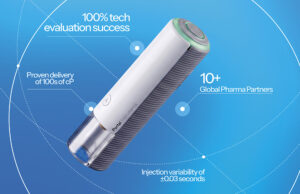
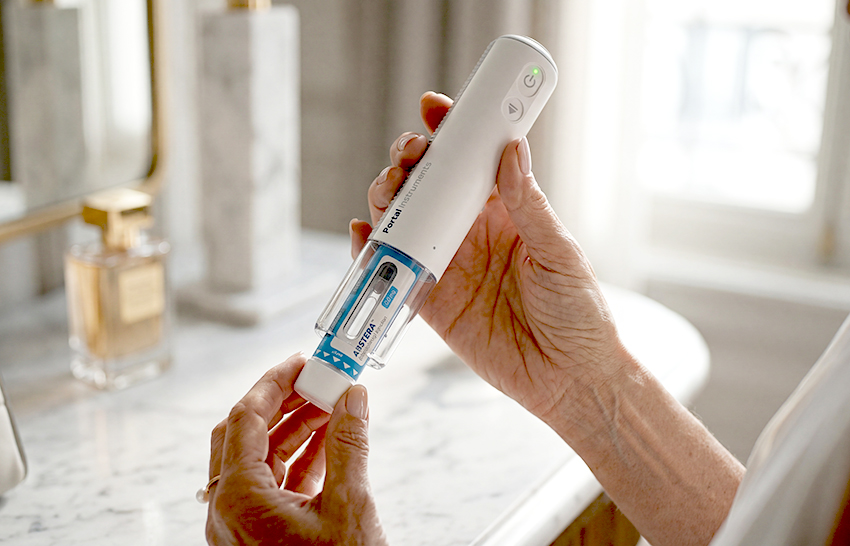
Figure 1: Portal Instruments’ PRIME NEXUS software-driven autoinjector platform.
A There can be a misconception that software is unnecessarily complicated or expensive. This simply isn’t the case – it’s efficient, it’s reliable and, from an engineering perspective, it’s physically small. PRIME NEXUS works via a linear electromechanical actuator that pushes the plunger, all controlled using an ARM processor, much like you’d find in an iPhone (Figure 1). The software monitors the injection in real time as it happens, which gives us active control on how the drug is delivered from start to finish.
As a practical example, let’s say you’ve got a daily injection that’s kept in the fridge. If you forget to take it out of the fridge on time and don’t let it warm up to room temperature, the viscosity is going to be higher than the device was intended for. A spring-based system is not going to be able to adapt. With PRIME NEXUS, because of that active control, the software can tell that it’s pushing against a much harder force than expected and adjusts the motor’s output accordingly in a few milliseconds; the patient will not even notice the difference.
The injection duration precision of PRIME NEXUS is about ±0.03 seconds, regardless of the viscosity, which is astounding. For pharma partners, the platform is highly adaptive to the drug – you don’t have to redesign the whole device, the software can handle most of the necessary adjustments for that new drug (Figure 2). This means that the same platform can be deployed across a wide variety of drugs within a pipeline.
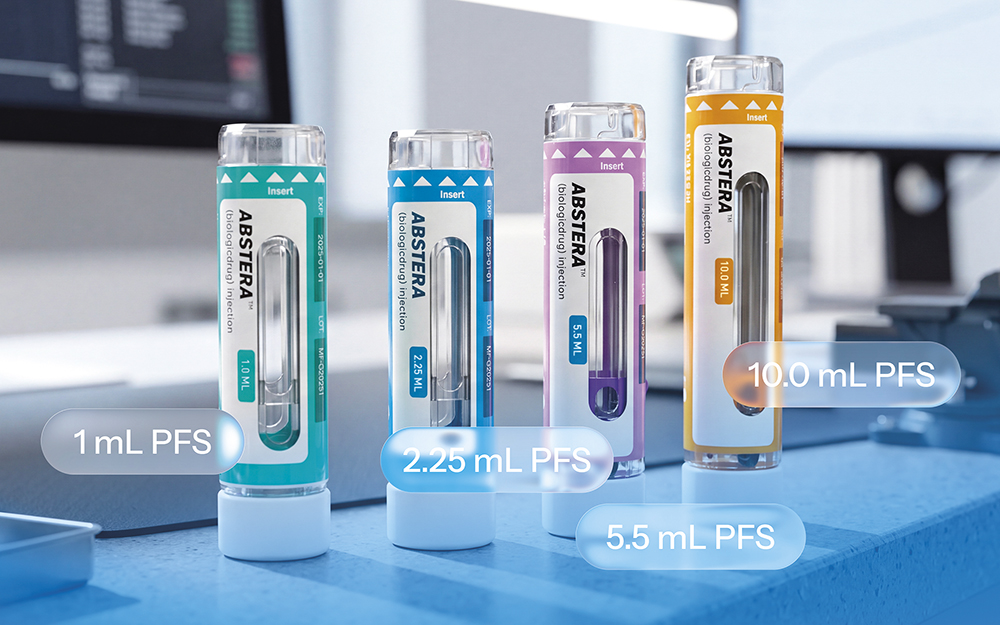
Figure 2: PRIME NEXUS is highly adaptable to a wide range of APIs and formulations without needing to redesign the device each time.
“WHAT THAT MEANS IS THAT PRIME NEXUS IS READILY AVAILABLE WHEN THE DRUG’S READY, WHICH IS THE EXACT OPPOSITE OF THE WAY THINGS HAVE BEEN DONE HISTORICALLY.”
With a spring-based device, you have to design it, you have to make it, you have to verify it and then you have to scale it; it can take months to adapt a platform to a new formulation. With PRIME NEXUS, typically, we don’t have to change anything in the code at all, and if we do it’s usually done in only a matter of minutes, not months. What that means is that PRIME NEXUS is readily available when the drug’s ready, which is the exact opposite of the way things have been done historically.
It’s hard to overstate how impactful this is. It’s the difference between driving a car with cruise control, where software automatically modulates the engine to keep you driving at a constant speed, and driving a car with the gas pedal fixed in place, where you’ve got a set amount of power and your speed is at the mercy of the road conditions. That’s the difference between PRIME NEXUS and a spring-based system.
The opposite is also true – if the resistance suddenly drops because the patient has removed the injector early or activated it by mistake, PRIME NEXUS can just stop the plunger so that you don’t have drug squirting out into open air and it could also tell you how much of the dose was not delivered. I think this is a real pain point for spring-based devices; once they’re launched, there’s no way for them to stop. A software-based electromechanical system just gives you so much more precision, control and reactivity than is possible with springs.
Q How does an electromechanical device fit into the industry’s push towards sustainability?
A Sustainability is obviously of key importance to the industry, but I think this question is backwards, in a way. Today, the industry standard is the single-use disposable autoinjector. Few could have predicted just how successful these devices would become, particularly with the extraordinary rise of glucagon-like peptide-1 therapies over the past few years. I think that, right now, there are around 300 million devices being used per year, and I’ve seen a forecast that it could be up to a billion devices per year by 2030. These are single-use devices: you use it once and then you discard it. That’s the big sustainability challenge for the industry right now – that’s a huge amount of money and material to throw away.
From our perspective, a platform like PRIME NEXUS, where the bulk of the device is reusable and it’s just the cartridge that’s disposable is more sustainable than throwing out a whole autoinjector every time you inject. And, so far, the feedback from pharma has been extremely receptive, in Europe in particular. Of course, it’s not the singular feature that would convince them to work with us, but it’s an important one.
Sustainability is a bit like connectivity – it’s increasingly expected, but it’s rarely the primary reason a pharmaceutical company chooses a delivery platform. Their first question is always, “What can your device do for my drug?” For us, the answer is enabling the reliable delivery of larger, more complex biologics in the 5–10 mL range. That’s what grabs their attention. And then you let it build from there, “Can you also do 2 mL?”, “Can you offer connectivity?”, “What about sustainability?”. Ultimately, everything needs to serve the drug and the patient as part of a full package.
Q Given that pharma is a naturally conservative industry, why would they adopt such a fundamentally different platform?
A In my view, the pharma industry isn’t averse to new technology; it regularly adopts new technology when it clearly meets an unmet need. It’s a sort of “if it’s not broken, don’t fix it” mentality, so if something is broken, pharma is more than ready to fix it. It’s what they do on the molecule side day in, day out. Pharma has demonstrated that they’re ready to invest billions of dollars in incredibly complex biology if it solves an unmet need. I think it’s the same thing with drug delivery devices as well.
“WE’RE COMPLEMENTARY TO THE PHARMA COMPANIES WE WORK WITH, SO WE NEED TO HAVE AN ATTITUDE WHERE WE TRY TO HELP THEM SOLVE THEIR UNMET NEEDS AS BEST WE CAN.”
With that in mind, we’ve made it our philosophy to be the easiest company to work with. We’re complementary to the pharma companies we work with, so we need to have an attitude where we try to help them solve their unmet needs as best we can.
How do you convince a pharma company to work with you? In short: data. We do feasibility studies, we give them devices, we let them generate data with their own formulation or we let them send their formulations to us and we generate the data. Then, ultimately, when they see the results, they’ve got strong evidence that PRIME NEXUS works, that it does what it’s advertised to do and that it’s truly a different type of injection. And, based on the reception we’ve received from the pharma industry, this approach works. All our feasibility studies have been 100% successful.
Q What stage has Portal reached in its development and partnership talks with pharma?
A Earlier this year, we announced a co-development partnership we’ve entered into with a biotech company to deploy the NEXUS platform as the delivery device for several of their assets. We’re also working with a second company, which hasn’t been announced yet. We expect to be able to share more details later on this year.
In many ways, PRIME NEXUS feels like an overnight success that took 10 years. Underneath, the device is fundamentally the same architecture that we started working on back in our needle-free beginnings. But, believe it or not, it’s only been around 18 months since we’ve pivoted our technology to its current iteration, so it simultaneously feels brand new and deeply familiar.
Our next milestone is to get into the clinic with our pharma partners with a drug-device combination product. That will happen next year; we’re working very, very hard to make both projects clinic-ready. Then, next year, we’ll have the first IND submission with PRIME NEXUS where the the drug and device will actually be combined in human trials. We’re very excited about that.
Q What type of team does it take to solve a problem at the intersection of software, engineering and pharma?
A Unsurprisingly, it’s a multidisciplinary endeavour, so we need people who are at the intersection of software, robotics, mechanical engineering, electronic engineering, pharmaceutical science and bioengineering. It’s quite the array of skills, so we had to assemble a diverse team. I think what’s interesting is that you also have to foster a culture that can support that sort of team – you need a culture where people are driven by innovation but are also open-minded. You need everyone to understand that no single person can know everything.
That philosophy of collegiality is then something we extend to our partners. When we work with a pharma company, our team will embed themselves with our pharma colleagues. Their drugs become our drug. Their patients become our patients. And that passion is genuinely shared because we see the device as an extension of the drug.

Figure 3: Attention has been paid to PRIME NEXUS’s aesthetics to make it welcome in patients’ homes.
Q What does PRIME NEXUS change for patients?
A For us, the best analogy is the electric toothbrush. If you’ve ever used an electric toothbrush, you’ll know that it does a better job than just brushing your teeth manually. And, over time, brushing our teeth becomes a habit; we don’t really think about it. That’s how we see drug delivery devices. I take the NEXUS device home and pretend that I’m a patient; I try to see where the device would live in my house and so on. That’s part of why we’ve put so much effort into ensuring that PRIME NEXUS is aesthetically pleasing, as it will live in the patient’s home and therefore has to look good (Figure 3).
I also think that, in the future, connectivity will be a standard feature of drug delivery devices. It could be very basic, such as simply recording injection data and delivering alerts, although I think we’ll come to expect some more advanced features, such as artificial intelligence-powered pattern identification. Having that data readily available could be transformative for the relationship between physicians and patients, allowing for much more direct and productive conversations. That’s something that we can enable with PRIME NEXUS.
Of course, for connectivity to be cost-effective, it has to be on a reusable device, which brings us back to sustainability. I think that there’s a real appetite among patients for more sustainable alternatives to their current treatments, especially for reusable devices – they’re intuitively less damaging to the planet. Combined with electromechanical usability and connectivity, sustainability is the third pillar that we’re building PRIME NEXUS on.
Q With the autumn conference season set to start, can you give our readers a rundown of where Portal will be over the coming months?
A We’re aiming to be at all the major conferences this season, including CPHI, PDA Universe, PODD and DDF. We’re also doing a number of meetings in September as a bit of a push ahead of conference season. We’re keen to get together with both new potential partners and long-standing collaborators and have some genuinely productive conversations.
One of the great things about conference season is getting to catch up with partners in person. I mentioned earlier that we’ve got two biopharma partners, but we also work with other great companies across the industry for various aspects where we don’t have the expertise in-house. For example, we work with Insight (Chicago, IL, US) on our human factors work and device testing, and we’re also working with some very well-established companies such as Gerresheimer to make sure we’re prepared for commercial-scale production when the time comes (Figure 4).

Figure 4: Portal has partnered with established players in the industry for human factors, device testing and commercial readiness.
Q Is there a final key takeaway you’d like to give to our readers?
A In our industry, there are a lot of promises and generalisations being made, so I think it’s only natural to ask “is it real or is it not real?”. If there’s one thing I want your readers to take away from this interview, it’s that the unmet need here is very real – 5 and 10 mL injections – pharma needs it.
Today, there isn’t an ideal solution for this emerging class of therapies. You can administer them intravenously, but there’s a strong industry-wide push to move treatment into the home whenever possible. You can split the dose into multiple injections, but that adds complexity and cost, and often reduces patient convenience. On-body delivery systems are an excellent solution for very large volumes, but for the 5–10 mL range they can be more device than the application requires. That’s where we see a clear unmet need.
“IT’S THE MULTIPLE FEASIBILITY STUDIES THAT WE’VE DONE THAT HAVE BEEN 100% SUCCESSFUL, AND IT’S THOSE EARLY CO-DEVELOPMENT DEALS THAT WE’VE ENTERED INTO. I WANT TO EMPHASISE THAT THIS ISN’T JUST FLUFF AND COOL TECH THAT DOESN’T SCALE; WE ARE ON AN INDUSTRIAL PATH WITH PRIME NEXUS.”
I think we’ve got a great solution for it. What’s the evidence for that? It’s the multiple feasibility studies that we’ve done that have been 100% successful, and it’s those early co-development deals that we’ve entered into. I want to emphasise that this isn’t just fluff and cool tech that doesn’t scale; we are on an industrial path with PRIME NEXUS.
Of course, we cannot do it alone, so we’re always ready to welcome new partners with open arms. We’d love to interact with your readers and the wider industry to find ways to work together to reach the goal of enabling those larger-volume injections that pharma genuinely needs.