
To Issue 187
Citation: O’Connell D, “Roller Compaction in Modern Oral Solid Dose Development”, ONdrugDelivery, Issue 187 (Jun 2026), pp 6–9.
David O’Connell delves into oral solid dosage production, highlighting the advantages of roller compaction for sensitive drugs as well as the possibilities for integration into existing manufacturing lines.
“ROLLER COMPACTION REPRESENTS THE PREDOMINANT DRY GRANULATION APPROACH IN MODERN PHARMACEUTICAL PRODUCTION.”
Roller compaction has become an increasingly important technology in oral solid dosage (OSD) development. It offers a robust dry granulation route for formulations that are difficult to process by direct compression and are unsuitable for wet granulation. This matters in a market where OSD products remain dominant – one recent market analysis valued global OSD manufacturing at US$599 billion (£445 billion) in 2025, rising to $623 billion in 2026.1 Tablets alone are expected to account for approximately 70% of the market in 2026. Within this large OSD base, dry granulation is widely used as a practical enabling technology for formulations that are moisture-sensitive, heat-sensitive, poorly flowing or intended for continuous manufacture. Roller compaction represents the predominant dry granulation approach in modern pharmaceutical production.
For technical teams, the attraction of roller compaction is clear. It densifies powders without the addition of a liquid binder, creates granules with improved flow and handling properties, and removes the need for a drying step. This combination can reduce process complexity while supporting product stability, especially for APIs vulnerable to hydrolysis, thermal stress or unwanted solid-state change. It can also fit well with current development priorities, including quality by design (QbD), containment for highly potent compounds and a broader shift towards continuous manufacturing.2
THE ROLLER COMPACTION METHOD
In simple terms, roller compaction converts a powder blend into a ribbon by feeding the material between two counter-rotating rollers under pressure (Figure 1). The ribbon is then milled into granules with controlled particle size distribution suitable for downstream tableting, encapsulation or sachet filling. Although the sequence appears to be simple, the process depends on careful control of feed consistency, compaction conditions and milling intensity, as each affects granule structure and therefore final dosage form performance.
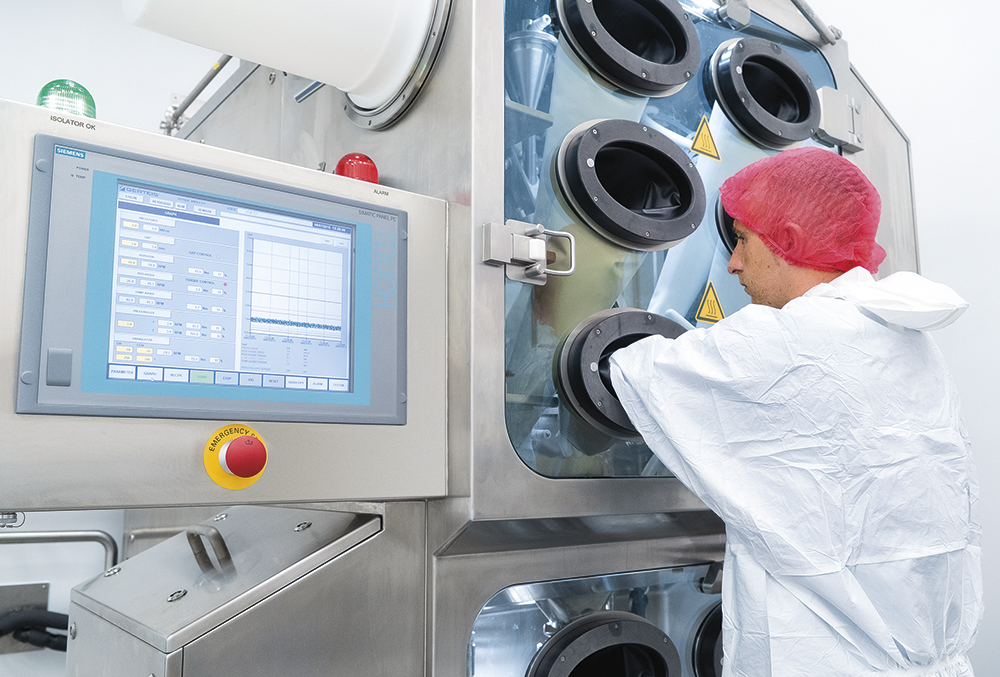
Figure 1: A Gerteis (Jona, Switzerland) roller compactor in use at PCI Pharma Services.
The process starts with delivery of the powder blend to the compaction zone, usually through a hopper and screw-based feed system designed to provide consistent de-aerated powder flow (Figure 2). Good feeding is essential because fluctuations in powder supply directly influence ribbon density and thickness. At the nip point between the rollers, particles rearrange, deform and bond under stress to form a coherent, compact stream. This compacted ribbon is subsequently broken down using a controlled milling step, where mill screen size, rotor speed and mill geometry determine the balance between target granules and undesirable fines.
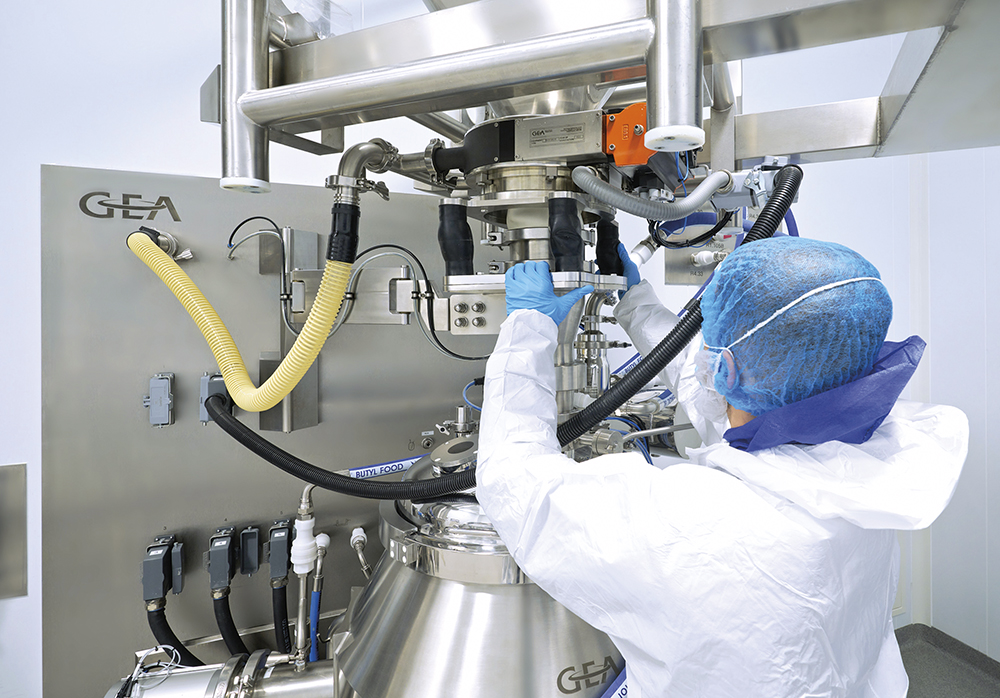
Figure 2: High-potent granulation suite at PCI.
The dry route offers clear advantages over both slugging and wet granulation. Slugging, the older dry granulation method, depends on pre-compressing large slugs on a tablet press followed by milling, but it is typically less consistent and less scalable than roller compaction. Wet granulation remains highly useful, but it introduces liquid addition and drying, which can create issues for compounds that are water- or heat-sensitive. By removing those steps, roller compaction can simplify the process and reduce the risk of stability-related problems that arise during manufacture.
CRITICAL PROCESS VARIABLES
From a development perspective, three variables dominate process behaviour: specific compaction force, roller gap and roller speed. Specific compaction force governs the degree of densification and the strength of the ribbon. If the applied force is too low, ribbons may be weak and generate excessive fines during milling; if it is too high, the material can become over-compacted, which may reduce tabletability and adversely affect downstream compression behaviour. Therefore, the optimal setting depends on formulation properties and must be established experimentally rather than assumed from prior product manufacture.
Roller gap and speed are equally important, as they affect dwell time, ribbon thickness and throughput. A narrow gap can promote higher densification, while higher roller speed may increase output but shorten the effective time under load. In practice, these variables interact strongly with feed rate and formulation compressibility; therefore, process understanding should rely on structured experimentation rather than one-factor-at-a-time studies. For this reason, roller compaction is well suited to QbD-based development, where design of experiments can be used to map the relationship between process settings, ribbon properties, granule attributes and final tablet performance.
The milling stage also deserves more attention than it sometimes receives. Once the ribbon has been formed, overly aggressive milling can remove the benefits achieved during compaction by generating too many fines or damaging granule structure. Gentle oscillating mills are often preferred because they can produce a narrower granule size distribution with less attrition than more aggressive approaches. This is not a minor downstream detail – granule size distribution affects die filling, segregation risk, blend uniformity and ultimately the robustness of tablet compression or capsule filling.
EQUIPMENT AND CONTROL
Equipment architecture can materially affect process consistency. Broadly, pharmaceutical roller compactors are configured either as fixed-gap or floating-gap systems. In a fixed-gap system, the roller distance is held constant, so changes in feed characteristics or material behaviour can appear as variations in compaction force. In a floating-gap system, the gap adjusts dynamically in response to process conditions to maintain a more constant compaction force, helping to stabilise ribbon density and granule quality. For development and scale-up, this improved control can be valuable, particularly when dealing with blends that have variable flow, compressibility or air retention.
“ROLLER COMPACTION IS NOT SIMPLY A BATCH ALTERNATIVE TO WET GRANULATION; IT IS ALSO A KEY BRIDGE TO MODERN INTEGRATED MANUFACTURING STRATEGIES.”
Roller compaction is also advantageous because it aligns naturally with continuous manufacturing. A 2021 review of small-molecule continuous manufacturing notes that dry granulation with a roller compactor is inherently continuous and sits comfortably within integrated feeder-blender-compactor-mill-tablet press lines.2 The same review highlights the regulatory support for continuous approaches from agencies including the EMA, US FDA and MHRA, as well as the close alignment between continuous processing, advanced control strategies and QbD principles. In other words, roller compaction is not simply a batch alternative to wet granulation; it is also a key bridge to modern integrated manufacturing strategies.
That said, the benefits are not automatic. Continuous roller compaction still requires a rigorous control strategy, including an understanding of the effects of residence time, disturbance handling, material traceability and, where relevant, real-time monitoring or feed-forward control. As with any advanced process, success depends on combining suitable equipment with a deep understanding of powder properties and process dynamics. When that understanding is built early, the same basic platform can support rapid transitions from development to commercial scale by adjusting run time rather than redesigning the process around entirely different unit operations.
POTENT COMPOUNDS AND CONTAINMENT
Another reason roller compaction has gained strategic relevance is the increasing importance of highly potent APIs. Many newer small molecules require containment levels beyond what can be managed safely with procedural controls and personal protective equipment alone. At the same time, developers want efficient manufacturing routes that minimise open handling and unnecessary unit operations. Roller compaction can help on both counts because it is a dry, enclosed process and can be integrated with contained feeding, sealed transfer and milling solutions (Figure 3).
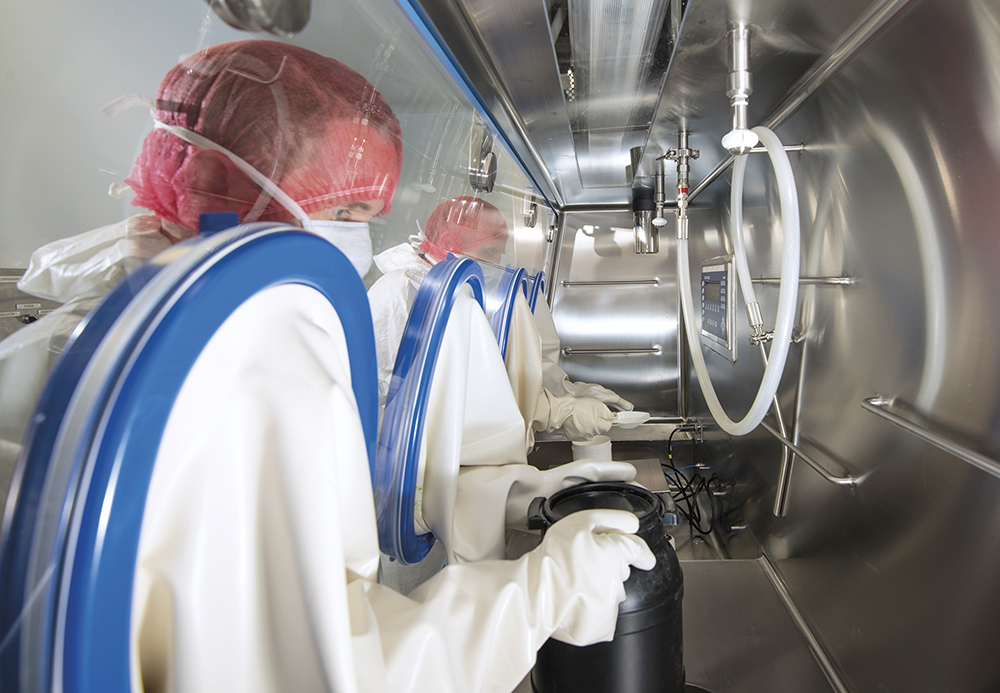
Figure 3: Interior of a manned high-potent isolator.
For a CDMO environment, this combination of dry processing and containment is particularly useful. Technical teams can evaluate wet and dry routes in parallel, then select the approach that best balances stability, manufacturability and occupational safety. In practice, roller compaction is often a strong candidate when the API is moisture-sensitive, when the formulation is poorly flowing or when exposure control is a central design constraint. Its value is therefore not limited to one narrow class of products; it sits at the
intersection of formulation science, process engineering and industrial hygiene.
DEVELOPMENT IMPLICATIONS
From a formulation standpoint, one of the most important development questions is whether the material will tolerate the stress of densification without losing its ability to form a strong final tablet. Some excipients and APIs respond well to roller compaction, while others show strain hardening that can reduce compactibility upon recompression. This is why development work should not stop at making acceptable granules. Teams need to link ribbon density, granule size distribution and the proportion of fines to downstream tableting properties, such as hardness, friability, disintegration and dissolution. The roller compaction step has to be judged in terms of the final dosage form, not just the intermediate granule.
A technically sound development programme therefore begins with material characterisation and route selection. If direct compression is not viable and wet granulation carries unacceptable stability risks, roller compaction becomes an obvious route to evaluate. Initial studies should establish feasible ranges for compaction force, gap and speed, while also screening excipient systems that support both ribbon formation and downstream compression. As the process matures, the focus should shift towards defining a robust design space, supported where possible by in-process measurements and a control strategy proportionate to the product risk.
LOOKING AHEAD
Against the scale of today’s OSD market, even a modest proportion of products requiring dry granulation translates into a significant technical opportunity. Precise global penetration data for dry granulation are limited in the public domain, but the available technical literature consistently positions roller compaction as the predominant pharmaceutical dry granulation method and a preferred option for moisture- and heat-sensitive products, as well as products oriented towards continuous manufacturing. This makes it highly relevant not as a niche equipment option but as an advanced manufacturing capability within the much broader and still expanding OSD sector.
“AS OSD PRODUCTS CONTINUE TO DOMINATE THE PHARMACEUTICAL LANDSCAPE, ROLLER COMPACTION IS LIKELY TO REMAIN AN ESSENTIAL OPTION IN THE DEVELOPMENT TOOLKIT, PARTICULARLY FOR FORMULATIONS THAT CHALLENGE CONVENTIONAL WET PROCESSING ROUTES.”
For pharmaceutical scientists and engineers, the significance of roller compaction lies in the combination of practicality and strategic fit. It improves powder handling, avoids liquid addition, supports containment and lends itself to continuous processing, which can be scaled successfully when appropriately developed. As OSD products continue to dominate the pharmaceutical landscape, roller compaction is likely to remain an essential option in the development toolkit, particularly for formulations that challenge conventional wet processing routes.
REFERENCES
- “Oral Solid Dosage Manufacturing Market”. Market Report, Roots Analysis, 2026.
- Wahlich J, “Review: Continuous Manufacturing of Small Molecule Solid Oral Dosage Forms”. Pharmaceutics, 2021, Vol 13(8), art 1311.
Previous article
MICRONISATION SUCCESS STARTS WITH SOLID-STATE UNDERSTANDINGNext article
Testing Prefilled Syringes to ISO 11040