

To Issue 190
Citation: Flippe M, Lelias S, “Simplifying Combination Therapies: Dual-Injection Functionality for Existing Platform Autoinjector Systems”, ONdrugDelivery, Issue 190 (Sep/Oct 2026), pp 6–11.
Marc Flippe and Sophie Lelias discuss how dual-injection technology provides a promising approach to combination therapies and explain how, through the development of BD’s novel valve component, the company has reimagined dual injection within existing and established platform systems.
As the pharmaceutical pipeline continues to evolve, combination therapies, also known as fixed-dose combinations (FDCs), are gaining traction as a strategy to enhance therapeutic efficacy, reduce treatment burden and improve patient outcomes. These benefits are especially important for complex diseases characterised by diverse pathological mechanisms, where patients may require several therapies simultaneously to achieve optimal disease management.
FDCs include two or more APIs within a single dosage form, and can include a combination of existing, approved and marketed monotherapies or a combination of marketed and novel therapies. Over the past several decades, FDCs have evolved from a niche strategy to an increasingly relevant tool within today’s pharmaceutical development pipelines. Particularly, as the cost of bringing a new drug to market continues to escalate, with estimates ranging from US$314 million (£231 million) to $2.8 billion,1 FDCs offer an interesting approach to potentially “repurpose” approved drugs with established safety profiles beyond their original therapeutic application and scope.
“CONSIDERING THE UNIQUE BENEFITS THAT FDCS MAY OFFER TO CHRONIC DISEASE TREATMENT, THEIR APPLICATION IN THE BIOLOGICS PIPELINE IS GAINING MOMENTUM.”
Unlike small molecules, where co-formulated FDCs are a well-established strategy, biologics face stability, permeability, solubility and immunogenicity challenges due to their inherent characteristics. These complex mixtures co-formulating two or more biologic drugs may introduce significant development risks, including cross-reactivity, physical and chemical instability, safety concerns and complex analytical characterisation.2–4 This may be especially true for formulations with different pHs, excipient types and ionic strengths.2 However, considering the unique benefits that FDCs may offer to chronic disease treatment, their application in the biologics pipeline is gaining momentum.
Recognising the challenges of co-formulation for biologics, an alternative approach may be dual injection, allowing for the co-administration of two liquid drugs while maintaining separation until use. Dual injection may avoid the risks associated with the interaction of the combined drug formulations before use while preserving the benefits of FDCs.
Although several dual-injection solutions exist, many require specialised container formats, new materials and/or significant changes to device-system architecture, limiting their compatibility with the standard container and device platforms used in the chronic disease landscape today, such as prefillable syringes and autoinjectors. Thus, a key challenge remains: how can pharmaceutical and biotech companies enable dual-injection functionality without introducing significant complexity into existing drug delivery systems and processes? To address this challenge, BD has reimagined dual injection through the development of a novel valve component designed to provide the functionality of a dual-chamber system within existing and established platform systems.
THE BD® DUAL-INJECTION VALVE AND SYRINGE SYSTEM
Within the biologic-device combination product landscape, prefilled syringes (PFSs) and autoinjectors are the most widely adopted device types, given the increasing demand for self-administration for chronic disease treatment. With the broad use of these container and device systems, pharmaceutical companies are more frequently applying a “platform approach”, defining sets of components, containers and devices that can be used across multiple drug assets in their development pipelines. The potential benefits of a platform approach include using existing data, supply chain simplification, cost efficiencies, reduction of technical risks and established regulatory approval track record.
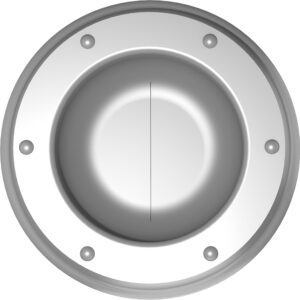
Figure 1: BD® dual-injection valve.*
The BD® dual-injection valve (Figure 1) is a novel slitted valve component that maintains physical separation of two or more liquids within a standard single syringe until the point of delivery. It features an external shape designed to support compatibility with existing glass prefillable syringes, autoinjectors and dual-chamber fill-finish lines, allowing pharmaceutical companies to use established platform systems and manufacturing infrastructures.
Upon activation, Liquid 1 is released, followed by the release of Liquid 2, which passes through the valve (Figure 2). As the passage of the liquid is through the valve, it does not require a bypass channel or specialised container geometry, enabling multiple fill volume combinations within the same standard syringe. Uniquely, the valve component is functionally symmetrical, simplifying orientation during automated handling. Furthermore, it uses well-characterised materials and widely used packaging and sterilisation processes, thereby potentially reducing the risks typically associated with new component adoption.
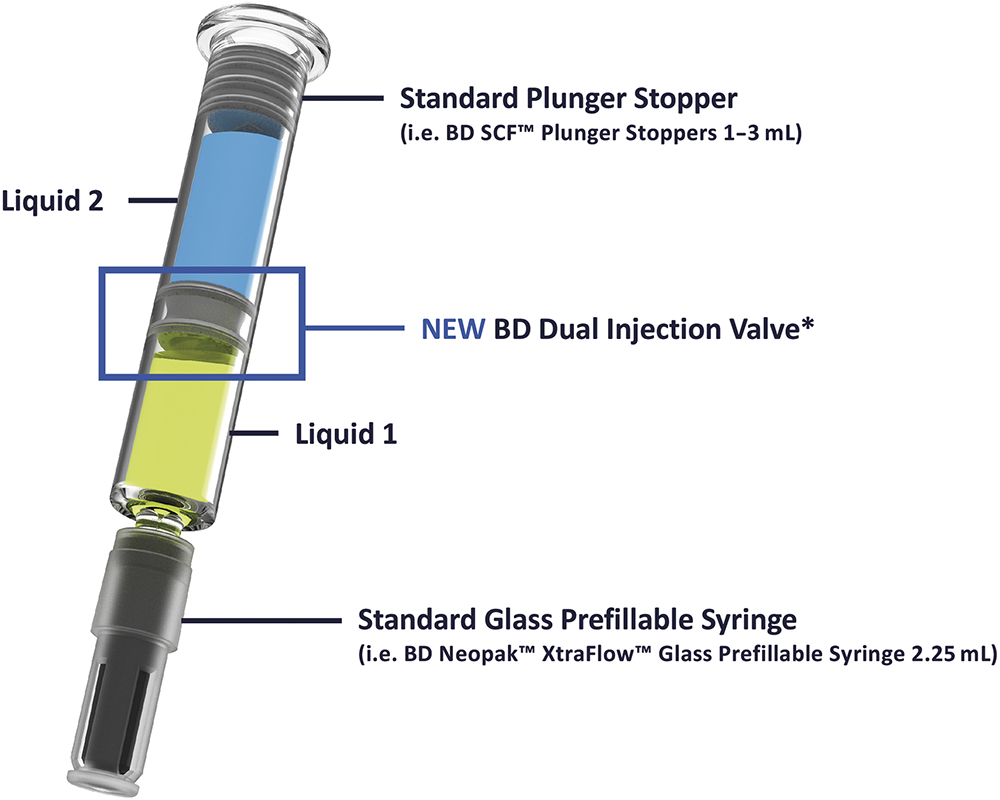
Figure 2: BD® dual-injection syringe system.*
Through the use of a single-valve component, dual-chamber functionality can be achieved without fundamentally redesigning existing platform systems. By reducing the scope of change required, combination product pathways are simplified, development burdens are lowered compared with systems that require major changes at the container and/or device-system level, and scalable integration is enabled across existing platform syringe and autoinjector systems.
ADDRESSING REQUIREMENTS FOR AUTOINJECTOR INTEGRATION
Enabling dual-injection functionality within existing autoinjector platforms requires satisfying a complex set of interdependent requirements across the full drug delivery system. BD approached this challenge through a system-level framework, cascading from device-level performance requirements down to component-level specifications (Figure 3). This includes autoinjector performance requirements (e.g. ISO 11608), prefillable syringe system requirements (e.g. ISO 11040-8 and ISO 11040-4), integration interfaces between syringe and device, and component-level specifications for the novel valve, as well as for the other existing components, such as the end plunger stopper.
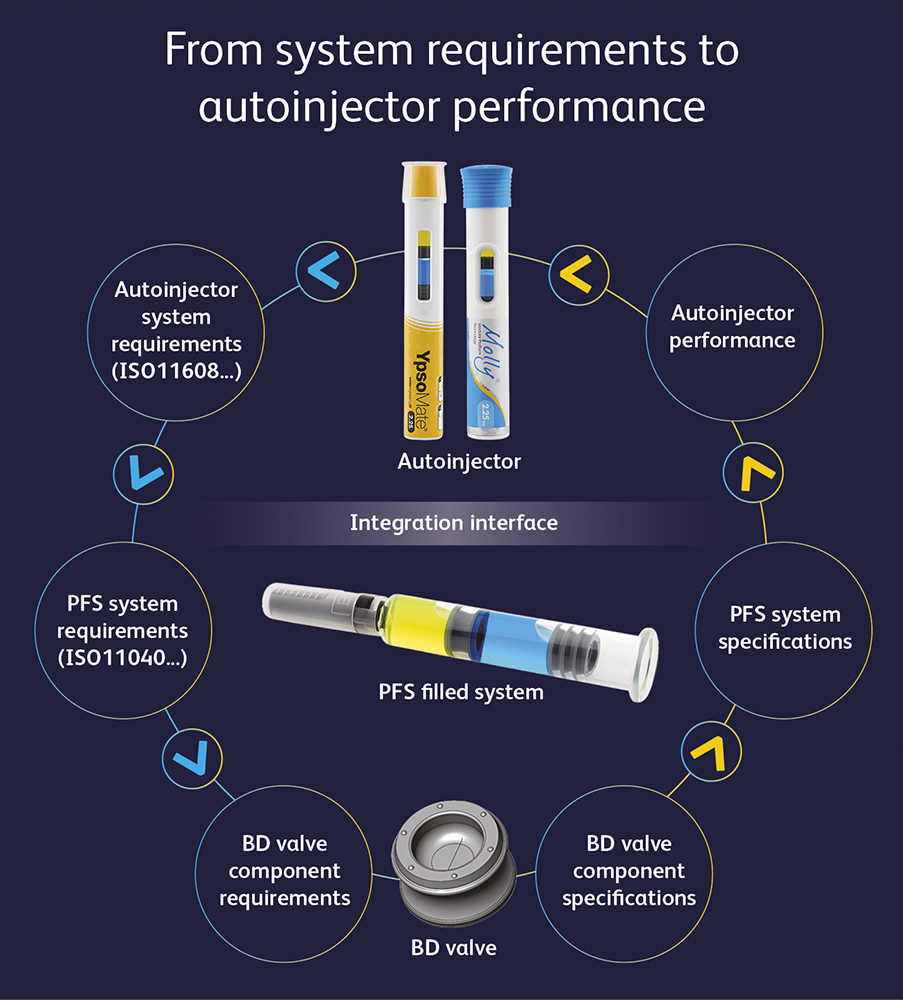
Figure 3: Interdependent requirements across PFS and autoinjector systems to allow dual-injection functionality.
At the core of this approach is the objective to preserve the functionality of standard PFS/autoinjector systems while introducing dual-injection capability. To achieve this, BD collaborated with leading autoinjector manufacturers, SHL Medical and Ypsomed, to de-risk integration and demonstrate the compatibility of the valve combined with the BD Neopak™ 2.25 mL Glass Prefillable Syringe platform and established platform autoinjectors such as SHL Medical’s Molly® 2.25 and Ypsomed’s YpsoMate® 2.25. To ensure that the valve component remains fully compatible with the mechanical output of the tested autoinjector platforms, early alignment with ecosystem partners on injection performance parameters, including break-loose and extrusion forces and overall injection force profiles, were critical.
“THE INTRODUCTION OF THE VALVE TO THESE SYSTEMS ADDS AN ADDITIONAL FUNCTIONAL LAYER REQUIRING PRECISE CONTROL OF THE VALVE BEHAVIOUR UNDER REAL-WORLD CONDITIONS.”
The introduction of the valve to these systems adds an additional functional layer requiring precise control of the valve behaviour under real-world conditions. The valve must remain securely closed throughout storage, transport and handling, only opening when a defined pressure threshold is reached during injection. This ensures that the drugs remain separated until the point of delivery, preventing premature mixing or leakage, while enabling a complete dual-liquid injection. In parallel, the system must maintain dose accuracy, including controlled residual volume.
These requirements extend across the entire product lifecycle, including storage, shipment and until point of injection. The system must demonstrate resilience to mechanical stresses such as drop events, maintain stability through shipping and shelf life, and ensure consistent performance at point of use. The result is a solution that behaves effectively as a standard syringe system from the perspective of autoinjector performance, while embedding additional capabilities of dual-drug delivery without requiring major architectural modifications of established platform autoinjectors.
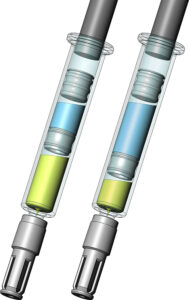
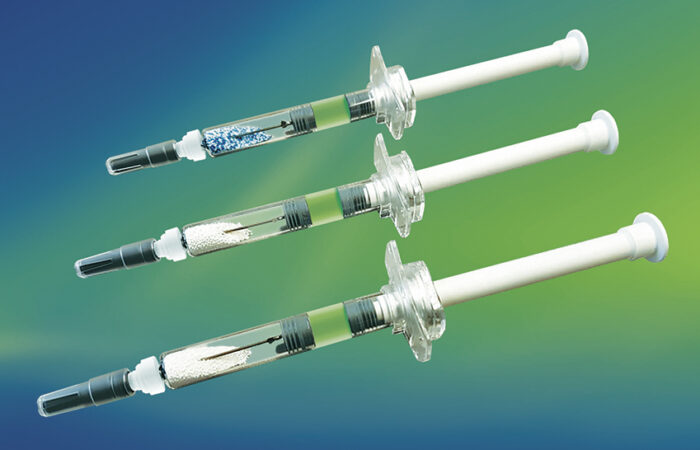
Figure 4: Varying fill volume combinations with the BD® dual-injection valve.
AUTOINJECTOR COMPATIBILITY TESTING
To demonstrate compatibility of the BD® dual-injection valve with standard platform autoinjectors, BD partnered with Ypsomed and SHL Medical in separate testing programmes to evaluate system integration and functional performance. Before testing, BD employed various modelling tools developed to calculate predicted performance outputs. These modelling tools were developed to handle various autoinjector architecture features, such as spring force profile. With these tools, BD was able to verify the various parameter conditions to ensure delivery of complete dose via an autoinjector with the BD® dual-injection valve considering varying drug viscosities and fill volumes (Figure 4). Importantly, BD developed a model to assess injection time performance with the BD® dual-injection valve. This model incorporates key variables, such as syringe barrel and needle geometry, drug volume and rheological properties (including Newtonian and non-Newtonian behaviours), elastomer component properties (including ageing effects), liquid transfer dynamics (informed by computational fluid dynamics analysis), and autoinjector force profiles based on device architecture and integration principles. The model was built with direct input from BD’s autoinjector partners.
By capturing variability in critical parameters, the model enables design space exploration and robust system optimisation. This approach enables BD to work collaboratively with its pharmaceutical customers and autoinjector partners to guide syringe and needle selection and support successful device integration. For example, modelling results indicate that placing the higher-viscosity drug in the front chamber closest to the needle can help balance injection times between chambers and improve overall injection performance.
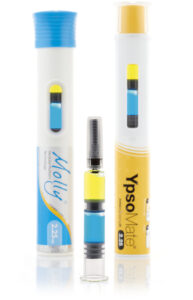
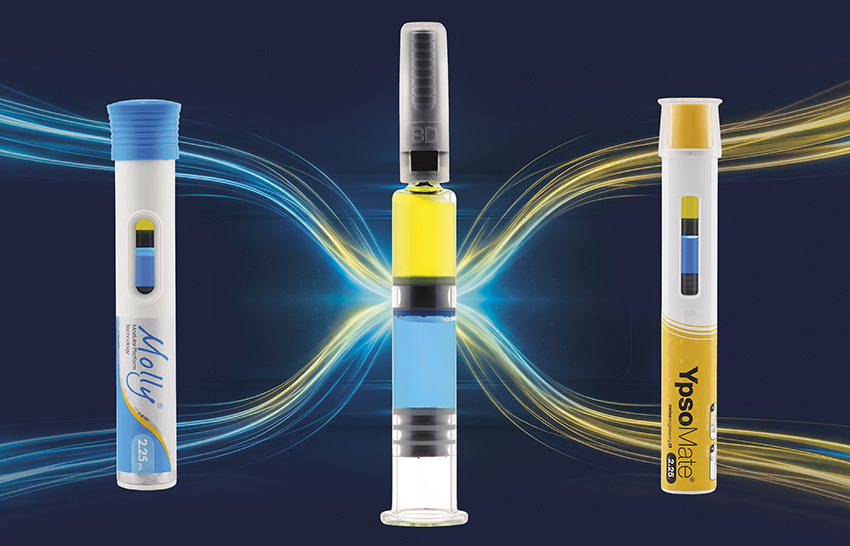
Figure 5: The BD® dual-injection valve and syringe system with the SHL Medical Molly® 2.25 mL autoinjector and Ypsomed YpsoMate® 2.25 mL autoinjector.
In addition to this modelling work, BD conducted extensive collaborative bench testing with SHL Medical and Ypsomed, beginning in the early development stages of the BD® dual-injection valve component and prototype evaluation. Integration studies demonstrated that standard autoinjector platforms could successfully accommodate the BD® dual-injection valve without modification, maintaining full device functionality (Figure 5). Key performance assessments focused on dose accuracy, injection time and compliance with ISO 11608-1 robustness requirements. Testing across a range of viscosities (1–30 cP) using the BD Neopak™ 2.25 mL Glass Prefillable syringes confirmed accurate dose delivery and consistent injection performance (Figure 6). The results also indicated that injection time results can be readily tuned through syringe and device design parameters, such as needle gauge and length and spring force.
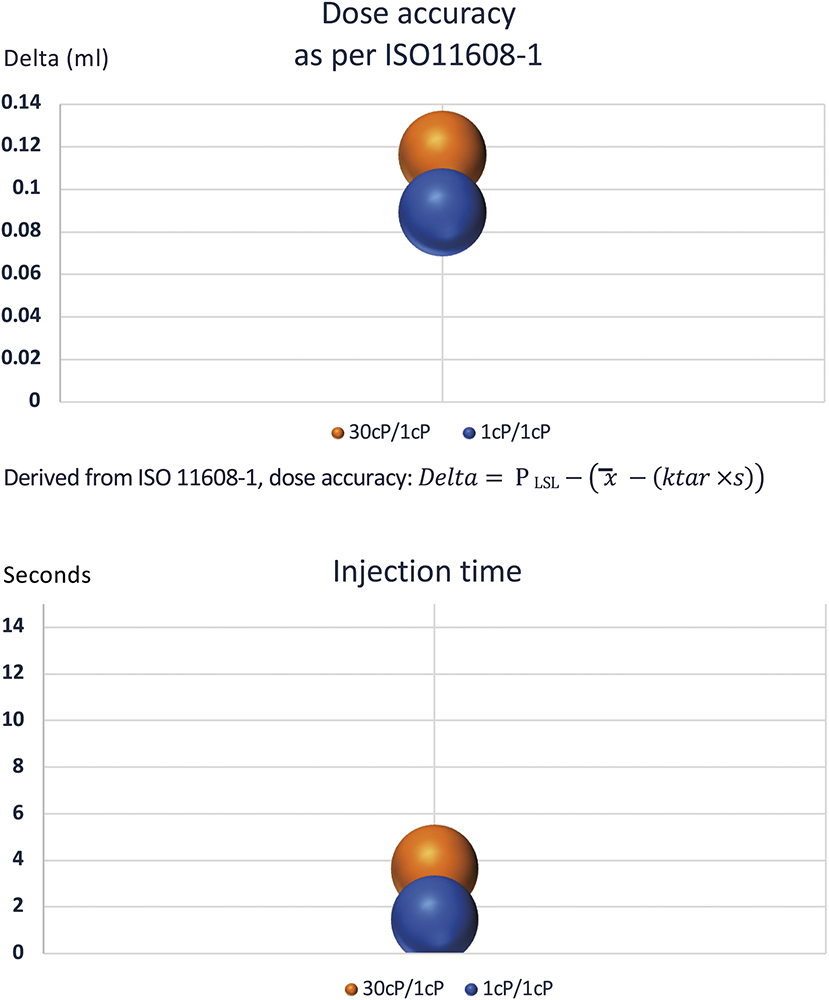
Figure 6: Summarised injection time and dose accuracy results from bench testing of the BD® dual-injection valve across different
autoinjectors and varying volume and viscosity combinations. Results shown are averaged across the tests performed.
In addition, drop testing was performed to evaluate valve integrity under simulated use conditions. Across multiple autoinjector platforms and test conditions, no liquid transfer or leakage between chambers was observed following drop events, meeting ISO 11608-1 free fall requirements and demonstrating the valve’s ability to maintain chamber separation and support reliable delivery performance.
“INTEREST IN FDCS CONTINUES TO GROW ACROSS THE PHARMACEUTICAL DEVELOPMENT PIPELINE, DRIVEN BY THEIR POTENTIAL TO IMPROVE THERAPEUTIC OUTCOMES AND ENHANCE PATIENT CONVENIENCE.”
CONCLUSION
Interest in FDCs continues to grow across the pharmaceutical development pipeline, driven by their potential to improve therapeutic outcomes and enhance patient convenience. However, co-formulation of biologics can introduce significant formulation and development challenges, driving demand for delivery solutions that unlock these treatment possibilities while employing established drug delivery platform systems.
The BD® dual-injection valve presents an alternative approach, enabling the separate storage of two liquid drugs within a standard prefillable syringe until the point of delivery, while maintaining compatibility with established autoinjector platforms. Through a combination of system-level design, modelling and collaborative testing undertaken with Ypsomed and SHL Medical, this novel valve component demonstrated the ability to integrate into standard platform autoinjector ecosystems without requiring modifications to device architecture or compromising key performance attributes, such as dose accuracy and injection time.
By minimising changes to proven container and device platforms, the BD® dual-injection valve has the potential to reduce development complexity and support more efficient advancement of biologic combination products. As pharmaceutical companies continue to pursue therapies targeting multiple disease pathways, platform-compatible dual-injection technologies may help unlock new opportunities for combination drug development while enabling the use of established delivery systems already familiar to patients, healthcare professionals and regulators.
ACKNOWLEDGEMENTS
The authors would like to thank Antoine Ciboulet from BD, Christoph Egloff from SHL Medical, and Claudio Gobet from Ypsomed for their contributions to this article.
YpsoMate 2.25 is a registered trademark of Ypsomed AG. © 2026 Ypsomed. All rights reserved.
Molly is a registered trademark of SHL Medical AG. © 2026 SHL Medical. All rights reserved.
BD, the BD Logo, Neopak and XtraFlow are trademarks of Becton, Dickinson and Company. © 2026 BD. All rights reserved.
*The BD® dual-injection valve and syringe system are products in development. Some statements made are forward-looking and are subject to a variety of risks and uncertainties.
REFERENCES
- Wouters OJ, McKee M, Luyten J, “Estimated Research and Development Investment Needed to Bring a New Medicine to Market, 2009–2018”. JAMA, 2020, Vol 323(9), pp 844–853.
- Chauhan V M et al, “Advancements in the co-formulation of biologic therapeutics”. J Control Release, 2020, Vol 327, pp 397–405.
- Mueller C, Altenburger U, Mohl S, “Challenges for the pharmaceutical technical development of protein coformulations”. J Pharm Pharmacol, 2018, Vol 70(5), pp 666–674.
- Krieg D, Winter G, Svilenov H L, “It is never too late for a cocktail: Development and analytical characterization of fixed-dose antibody combinations”. J Pharm Sci, 2022, Vol 111(8), pp 2149–2157.