To Issue 190
Citation: Eden S, Merhige J, “Ahead Of The Curve: How Innovation Without Change® Delivers an End-To-End Dual-Chamber Solution”, ONdrugDelivery, Issue 190 (Sep/Oct 2026), pp 14–18.
Sian Eden and John Merhige consider how dual-chamber solutions have moved from a niche product to a mainstream consideration for stability-challenged formulations, offering formulation teams an alternative path to get these promising therapies into the hands of the patients that need them, and highlight how Credence is uniquely positioned to deliver on the potential of dual-chamber systems.
DUAL-CHAMBER SYSTEMS HAVE ENTERED THE SPOTLIGHT
Dual-chamber syringes sit at the intersection of two key trends in the world of drug delivery. Firstly, there is an increasing number of therapies in pharmaceutical pipelines that are proving difficult to formulate in a stable liquid form. Drug development programmes are running into untenable delays, or even being abandoned entirely, as formulation teams struggle to develop a stable formulation or co-formulation. Secondly, there is the continuing demand for products with a use and safety profile that facilitates the transition of care from clinical environments to at-home delivery. Both trends put new pressures on drug delivery systems; they must meet the needs of demanding molecules by keeping drug constituents separate until the time of injection, while also supporting intuitive delivery and the continued transition towards at-home administration.
While dual-chamber systems are not a new idea, they are garnering increasing attention as a clear solution to these challenges. A current market report puts the value of the dual-chamber device market at US$6.25 billion (£4.61 billion) in 2026 and projects it to grow to $17.56 billion by 2040 at a compound annual growth rate of 7.7%.1 This is reflected in the increased industry focus on dual-chamber systems, with the topic highlighted as a key trend to watch out for in 2026.2
The question, therefore, is why now? What has driven the transition of dual-chamber systems from a niche solution to a topic for mainstream discussion? The answer to this is multifaceted. One factor is that pharma is aggressively pursuing combination therapies, a key example being Novo Nordisk’s CagriSema – a dual injection of semaglutide and cagrilintide.3 For applications where maintaining stability in a single co-formulation presents significant challenges, sequential dual-chamber delivery of two liquids provides an alternative approach by keeping components separate until the point of administration while still providing intuitive usability that mirrors the injection of a single liquid. In addition to combination therapies, this can be particularly valuable for stacked vaccines as well as large-volume subcutaneous injections where hyaluronidase is used to increase tissue permeability prior to delivery of the therapeutic.
Another factor contributing to the increased attention is that, due to the sensitivity of many modern therapeutics – including biologics – many pharma companies require lyophilisation or spray drying as a means of storing the drug in dry form. This dry-storage approach provides a cost-effective alternative to cold-chain storage. These macro industry factors make delivering the resulting drug products significantly more complex, requiring two injections or additional preparation/administration steps, and place unnecessary risk on the user. Dual-chamber systems are a natural solution to this issue, although they come with several considerations.4
It should be no surprise, then, that the dual-chamber space has become increasingly competitive in recent years, with new players and devices coming in with a range of approaches. Naturally, these varying approaches come with a range of advantages and disadvantages, and prioritise different considerations. Gone are the days when a dual-chamber system only needed to prove itself against a cumbersome vial-and-syringe alternative – pharma must now navigate a complex and competitive market to find the right solution for its therapies. They must also assess the capabilities for filling dual-chamber systems, as this need has traditionally been met by only one industry service provider.
“CHOOSING THE RIGHT PLATFORM PARTNER FOR A PROJECT IS GOING TO BE AN ESSENTIAL ASPECT OF SUCCESS OR FAILURE, SO IT IS CRITICAL TO GO WITH AN EXPERIENCED PARTNER WITH A DEEP UNDERSTANDING OF THE DUAL-CHAMBER SPACE.”
So, where to start? Much like when selecting any other drug delivery system, it is important to ask the right questions. Is the system suitable for the task at hand, be that sequential delivery of two liquids, liquid-liquid mixing or reconstituting a dry powder? What injection volumes and drug characteristics can it support? Is it ready for human use? How many novel components are involved? Is the infrastructure for filling ready and available? What are the needs of the user, and in what setting will the product ultimately be administered? Choosing the right platform partner for a project is going to be an essential aspect of success or failure, so it is critical to go with an experienced partner with a deep understanding of the dual-chamber space.
CREDENCE MEDSYSTEMS AND INNOVATION WITHOUT CHANGE®
Credence MedSystems is an established player in injectable drug delivery, having developed proven ready-to-supply platform technologies designed to solve injectable drug delivery challenges in the areas of safety, usability, delivery of unstable drug formulations and precision dosing. Its portfolio includes the Credence Companion®, Credence Dual Chamber Syringe and Credence Metered Dosing platforms. Credence has received its ISO 13485 certificate of registration and is compliant with ISO 13485:2016 and 21 CFR Part 820.
Central to the development of these technologies, and Credence’s overall business model, is the company’s Innovation Without Change® philosophy: introducing innovation to enable its pharma partners to deliver needed therapies to patients, while maintaining compatibility with proven primary components, established fill-finish processes and existing manufacturing infrastructure wherever possible (Figure 1). Innovation Without Change® is based on a simple principle – innovation should solve drug delivery challenges without introducing unnecessary complexity elsewhere. Credence’s technologies are therefore designed around proven primary components and established manufacturing processes, helping pharmaceutical partners adopt new drug delivery capabilities while minimising implementation risk and operational disruption.
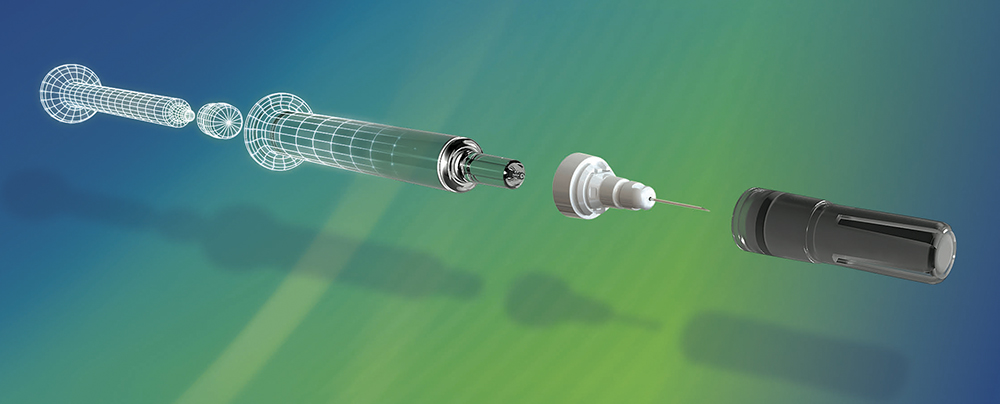
Figure 1: Credence’s Innovation Without Change® philosophy maintains compatibility with proven primary components, established fill-finish processes and existing manufacturing infrastructure while addressing challenges in drug delivery.
THE CREDENCE DUAL CHAMBER SYRINGE PLATFORM
Naturally, Innovation Without Change® is a core principle of the Credence Dual Chamber Syringe Platform. By using a standard off-the-shelf syringe barrel as a base, the Credence Dual Chamber system does not rely on a bypass built into the container barrel, instead using the combination of an innovative needle assembly with a separating stopper to facilitate dual-chamber delivery. The result is a format that is both immediately familiar and innovative at the same time. This familiarity has advantages for patients as well as industry, as the final product is presented in the form of a standard prefilled syringe (PFS), which increases usability and facilitates at-home use by patients.
Credence has led the wave of recent entrants into the sector,5 enabling the company to offer pharma partners a deep understanding of dual-chamber device technology, filling and assembly that supports combination product development through to commercial supply. The Credence Dual Chamber Syringe Platform is an advanced delivery system enabling reconstitution or sequential injection in industry-standard PFSs, with passive integrated needle safety and clear end-of-dose cues. Designed to simplify the delivery of complex drug products, it offers straightforward administration, reduces the risk of user error and supports the transition towards at-home use.
“THE CREDENCE DUAL CHAMBER SYRINGE PLATFORM PRIORITISES USABILITY, AIMING TO EMULATE THE FUNCTION OF A STANDARD PFS AS CLOSELY AS POSSIBLE.”
The Credence Dual Chamber Syringe Platform prioritises usability, aiming to emulate the function of a standard PFS as closely as possible, eliminating the need to twist the plunger or require integration within an autoinjector. Furthermore, the platform features an integrated pre-attached needle with passive safety in the form of needle retraction, which serves not only as a safety feature but also as a tactile, audible and visual cue for completion of the injection.
For the Sequential Dual Chamber system, both liquids are stored in the syringe barrel and are completely isolated from each other prior to injection (Figure 2). Performing the injection is as simple as a regular injection, with the user simply depressing the plunger in a single stroke as they would with any other syringe – the two liquids are injected in sequence, all clearly observable through the syringe barrel. Credence’s design minimises dead volume and any interaction between the liquids during injection. To offer further alternatives based on pharma preference, Credence is partnering with leading collaborators to develop a two-step autoinjector that is compatible with the Sequential Dual Chamber system.
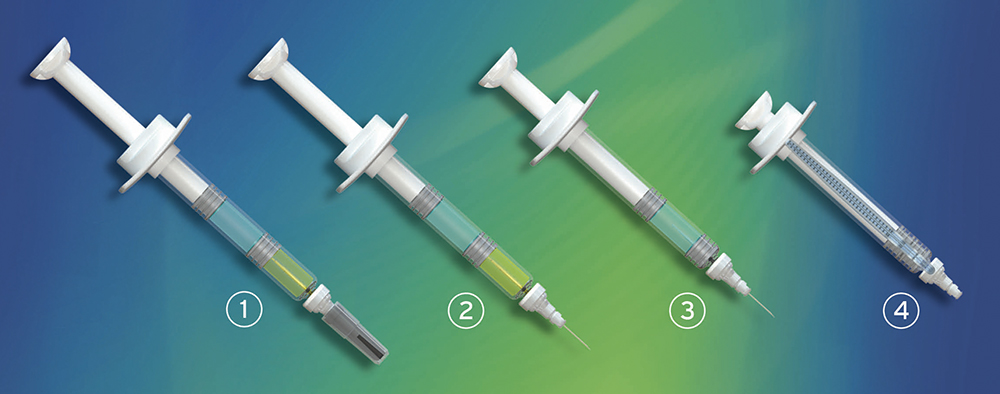
Figure 2: The Credence Sequential Dual Chamber system stores two liquids separately in the same standard PFS and allows the two liquids to be delivered with a single push of the plunger rod while also providing passive needle safety.
Much like the sequential system, Credence’s Reconstitution Dual Chamber system stores the two drug constituents separately within the syringe barrel until use. The use sequence is designed to remain straightforward. First, the user depresses the plunger until the two stoppers meet, seamlessly transferring the liquid from the rear chamber to the front for mixing. The system allows the rear liquid to mix with spray dried or lyophilised powder as well as with another liquid in the front chamber. The mixing mechanism eliminates a common risk area in external bypass dual-chamber syringes, wherein liquid can be trapped in the rear chamber and prevent full reconstitution. After reconstitution, the user removes the needle shield and injects as they would with a standard syringe. At the end of the injection, the user feels and hears the end-of-dose cues and the needle retracts into the plunger rod to protect the user and prevent reuse.
This emphasis on usability across the platform offers multiple advantages. The integrated pre-attached needle eliminates user steps and risk of incorrect needle-attachment. Passive needle retraction provides needlestick protection, prevents reuse, and provides tactile, audible and visual confirmation at the end of dose. Combined with a familiar PFS format and straightforward use sequence, the system supports user confidence and at-home administration (Figure 3).
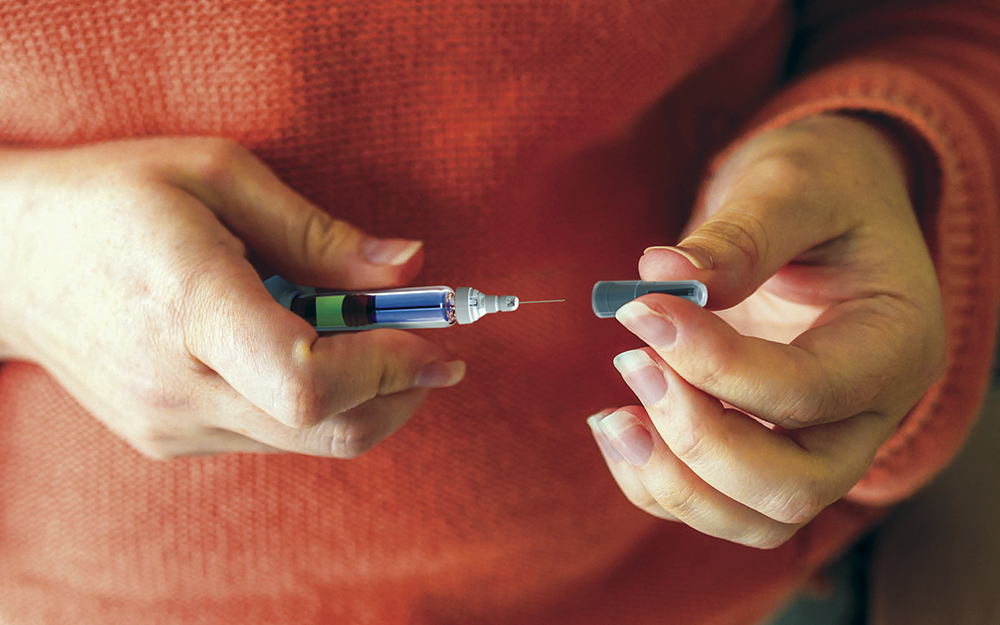
Figure 3: The usability and safety of the Credence Dual Chamber Platform supports the transition to at-home administration of complex drug products.
Sustainability is another important consideration in dual-chamber system design.6 Credence understands that for sustainability measures to be implemented, they must be paired with a compelling business case – sustainable products and practices can and should be profitable. This is true in the case of the Credence Dual Chamber Platform. With the drugs all stored within the syringe itself, the complete product maintains a small, efficient form factor and keeps material requirements low. This is especially the case because the Credence Dual Chamber Platform can be used safely and effectively without an additional needle-safety exoskeleton add-on or an autoinjector. This has significant impact on material use as well as weight and footprint, which affect overall logistics costs. This becomes especially important if cold-chain storage is involved. These factors reduce the overall cost of ownership. Furthermore, Innovation Without Change® means that Credence’s technology makes the most use out of existing infrastructure and components, minimising the need for bespoke infrastructure and lowering the cost of adoption.
The Credence Dual Chamber Platform is scaling to include reconstitution and sequential delivery options in 1 mL long, 2.25, 3 and 5 mL syringe barrels with 25, 27 and 29G pre-attached retracting needles. In addition, Credence supports customisation projects outside of the core ready-to-supply platform verification envelope, with examples including needle-free options and syringe barrels ranging up to 200 mL.
PROVIDING AN END-TO-END SOLUTION – ANSWERING THE FILLING QUESTION
Across the injectables sector, industrialisation is becoming an increasingly important differentiator for whether a drug development programme succeeds or fails.7 With advances in dual-chamber syringe technologies and the need for additional dual-chamber filling options to serve the industry, a key concern is, how and where are these devices going to be filled? The more complex the system, the harder this question can be to answer.
Figure 4: Credence has invested in dual-chamber fill-finish GMP readiness with its CDMO collaborators to support its pharma partners from development to commercial supply.
Credence is addressing this challenge by developing the device and its fill-finish pathway in parallel. Dual-chamber syringes are supplied in a ready-to-fill format designed for implementation in established filling isolators and modules, and Credence has invested in dedicated filling equipment located with, and operated by, its CDMO collaborators. This approach is advancing GMP filling readiness while minimising disruption to established fill-finish operations (Figure 4). By establishing fill-finish partnerships early in platform development, Credence supports pharma partners across device supply, filling, final assembly, labelling and packaging, providing a clear pathway from development through to commercial supply.
“IF THESE CHALLENGES ARE NOT ADDRESSED, PROMISING THERAPIES MAY NOT REACH THE PATIENTS THAT NEED THEM.”
CONCLUSION
As pharmaceutical pipelines evolve, they are including therapies with increasingly demanding formulations, stability challenges and delivery requirements. If these challenges are not addressed, promising therapies may not reach the patients that need them. This is driving the need for advanced drug delivery solutions. Dual-chamber systems offer a new path for therapies requiring reconstitution or sequential delivery, but the growing number of available technologies means pharma must consider more than device functionality alone.
The question is no longer whether dual-chamber delivery will play an important role in the future of injectable therapies, but which approaches can provide the right balance of drug compatibility, user experience, safety, manufacturability and commercial readiness. For Credence, the answer lies in combining its advanced drug delivery capability with proven primary components, established manufacturing processes and a clear pathway to supply. It is an approach designed to solve the challenges of reconstitution and sequential delivery, without introducing unnecessary complexity elsewhere, to accelerate the delivery of therapies to patients. That is Innovation Without Change®.
REFERENCES
- “Dual Chamber Devices Market”. Market Report, Roots Analysis, Apr 2026.
- Oakley T, Vasiev A, “Trends for 2026”, ONdrugDelivery, Issue 182 (Jan 2026), pp 22–28.
- “What is CagriSema? We explain this newest weight loss drug”. Oxford Online Pharmacy, Jan 2026.
- Balson MFM, “Delivering Complexity: Device Considerations for Two-Component Injectable Formulations”. ONdrugDelivery, Issue 177 (Sep/Oct 2025), pp 32–37.
- “John A Merhige, Credence MedSystems”. ONdrugDelivery, Issue 83 (Feb 2018), pp 12–16.
- Merhige J, Thayer D, “Opportunity Through Innovation – Environmental and Social Sustainability in Injection Devices”. ONdrugDelivery, Issue 165 (Sep/Oct 2024), pp 18–22.
- Wertheim A, “Industrialising Drug Delivery in an Uncertain World”, ONdrugDelivery, Issue 188 (Jul 2026), pp 36–41.