To Issue 190
Citation: Sugalski E, Handel T, “Unstacking the Dual-Chamber Syringe: A Cartridge-Based Path to Reliable Reconstitution”, ONdrugDelivery, Issue 190 (Sep/Oct 2026), pp 40–44.
Eric Sugalski and Tom Handel introduce Pristal, the cartridge-based reconstitution platform from Ampulis, and explain how it overcomes some of the usability, manufacturing and supply-chain challenges that have limited stacked dual-chamber syringes.
Pristal™ is a cartridge-based reconstitution platform built on standard fill-finish infrastructure, designed to make reconstituted drug delivery faster and simpler for self-administration and for emergency and critical-care settings where speed of delivery is paramount.
“MANY OF THE MOST PROMISING BIOLOGICS AND OTHER SENSITIVE THERAPEUTICS ARE LYOPHILISED TO PRESERVE STABILITY AND EXTEND SHELF LIFE.”
Many of the most promising biologics and other sensitive therapeutics are lyophilised to preserve stability and extend shelf life. This format carries a price, however. The drug must be prepared before use, and the speed and consistency of this step matter greatly across different settings. For at-home self-administration, there is no clinician present to prevent a misstep. In emergency settings, every second counts, and any errors can delay critical care. Conventional vial-and-transfer preparation requires the user to manage multiple components and steps under the exact conditions least suited to it.
Dual-chamber syringes (DCSs) reduce that burden, storing lyophilised drug and diluent separately within a single device and combining them at the point of use. The dominant approach to date has been a “stacked”, or coaxial, chamber configuration, and despite years of availability, this configuration has struggled to solve the very problems it set out to fix.
THE LIMITATIONS OF STACKED DCS DESIGNS
In a stacked DCS, the lyophilised formulation (lyo) and diluent chambers sit coaxially, one behind the other, within a single barrel. Most stacked designs require a vented air pocket to enable diluent transfer and, depending on the orientation in which the device is held, that air pocket can cause diluent lockout. Furthermore, as the air pocket compresses and bypass features or valves engage, users can experience a variable force profile during diluent transfer: this force can spike, drop suddenly once a bypass is reached or double when two plungers must be pushed simultaneously. These situations are suboptimal for either a patient self-administering at home or a clinician needing to respond quickly in an emergency setting.
These usability compromises are compounded by formulation and manufacturing constraints. Fixed cartridge geometries limit achievable lyo-to-diluent ratios, and the specialty valves and alternative rubber formulations used to enable diluent transfer can introduce extractables and leachables (E&L) risk, particularly in tip-up filling operations.
On the fill-finish side, most stacked DCS primary containers require tip-up lyophilisation, where the liquid formulation is further from the freezing plate. This results in a low-efficiency thermal process that prolongs cycle time in the lyophilisation chamber. Meanwhile, this tip-up configuration leaves the liquid formulation resting against the plunger for a longer time, potentially worsening E&L concerns for sensitive formulations.
After the lyophilisation process is complete, the container is capped, often maintaining an internal vacuum. It is then flipped 180 degrees so that the tip is pointed down, and the second stage of diluent filling and stoppering occurs. Completed in an aseptic environment, this eight-step fill-finish process (Figure 1) often requires extensive automation to scale.
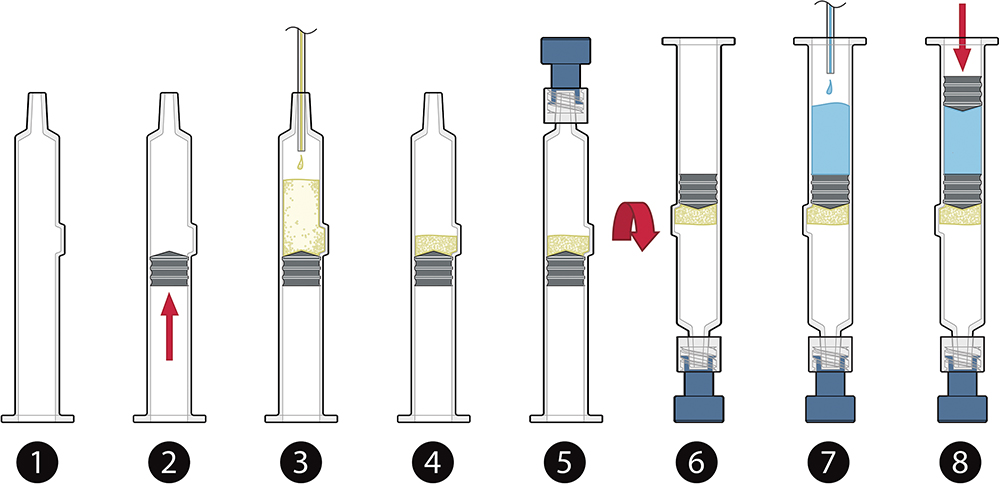
Figure 1: Aseptic fill-finish process for stacked DCS devices.
Multistep filling, the need to flip containers mid-process, the delicate balance of materials and tolerances required to prevent inadvertent plunger movement and the premature mixing that follows, all add cost, complexity and supply chain risk. Few contract manufacturers are equipped to run these non-standard processes, particularly at the low volumes typical of early development and clinical trials.
BYPASSING DUAL-CHAMBER LIMITATIONS: THE PRISTAL SOLUTION
Ampulis developed Pristal to sidestep these usability and manufacturing constraints that exist within the single-body, stacked-chamber architecture. Instead of housing both lyo and diluent within one device’s coaxial chambers, Pristal stores each in its own standard, off-the-shelf cartridge, physically separated until administration, with no possibility of premature mixing. A safety cap conceals the plunger rod in its stored state, preventing accidental activation before use (Figure 2).
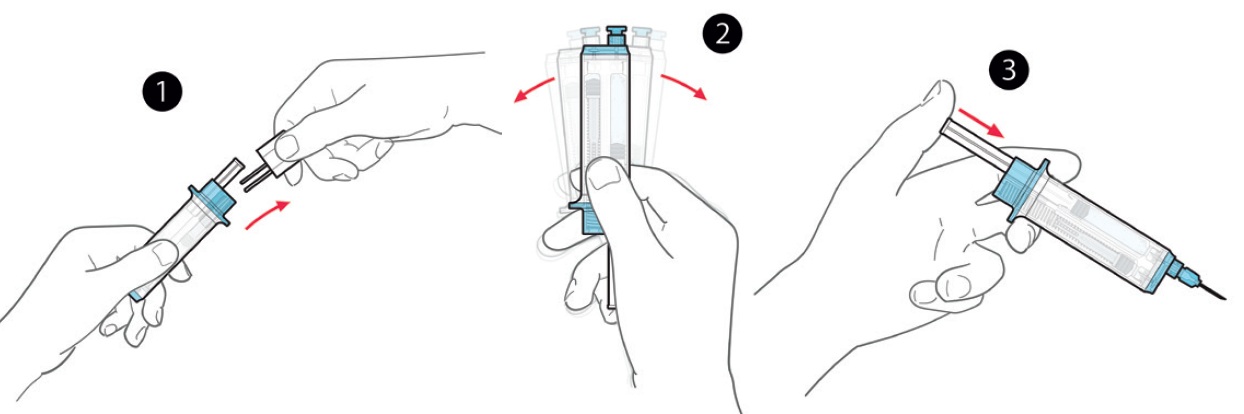
Figure 2: Operating steps for Pristal.
Operating Pristal takes three simple steps.
Step 1: Remove Cap
First, the user removes the cap. This triggers an internal spring mechanism that causes both cartridges to be pierced by internal needles. These internal needles connect the cartridges to a fluid pathway between them. After the cartridges are fully seated, the spring continues to advance, driving the diluent from its cartridge into the lyo cartridge while automatically raising the lyo plunger and plunger rod into the injection position, all without any user input.
Step 2: Agitate
Second, the user agitates the device to confirm complete reconstitution of the drug, in the same way as with vials. Agitation duration depends on the solubility of the drug. The user can view the solution through clear housings to confirm mixing completion.
Step 3: Dose
Third, the user doses the drug exactly as they would with a standard prefilled syringe: prime and inject. As reconstitution happens automatically during cap removal and agitation, the dosing step itself involves moving only a single plunger: there is no air pocket to compress, no bypass to clear and no change in force profile partway through the plunger stroke. That matters most in exactly the two settings where stacked DCS designs can struggle – home self-administration, where an automated process with consistent force leaves far less room for user error, and emergency or critical-care use, where a faster, simpler, more predictable path from cap removal to injection can meaningfully shorten time to treatment.
“AS PRISTAL IS BUILT FROM TWO INDEPENDENTLY FILLED, STANDARD CARTRIDGES, IT LEAVES FILL-FINISH, LYOPHILISATION AND ASSEMBLY INFRASTRUCTURE ESSENTIALLY UNTOUCHED.”
As Pristal is built from two independently filled, standard cartridges rather than a specialty dual-chamber container, it leaves fill-finish, lyophilisation and assembly infrastructure essentially untouched. There is no new bypass geometry, no specialty valve and no custom plunger to develop, which opens the door to a broader supplier base, making the platform viable at both small clinical batch sizes and high commercial volumes, without a large capital outlay.
AUTOMATED DILUENT TRANSFER
Removing the safety cap does more than expose the plunger rod – it releases a compression spring that drives the entire reconstitution sequence to completion in a few seconds, with no timing, technique or metering left to the user (Figure 3).
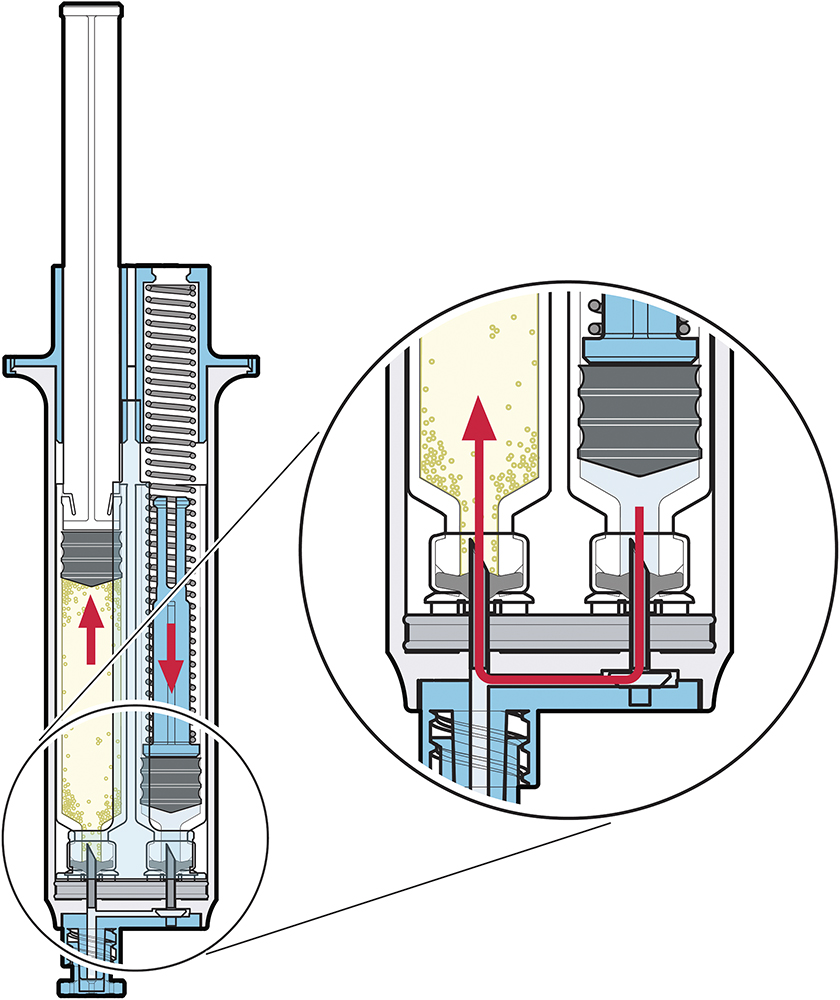
Figure 3: Automated diluent transfer mechanism.
As the spring decompresses, it advances the cartridge carrier until two rigid needles simultaneously pierce the septa of the lyo and diluent cartridges. This opens a sealed fluid pathway between the two cartridges. The spring continues to travel, acting on the diluent cartridge’s plunger and displacing its full contents through the fluid pathway into the lyo cartridge. As diluent enters, the rising volume pushes the lyo plunger, and with it the dosing plunger rod, upwards into its injection-ready position.
The automated diluent transfer process works in any orientation and does not require the careful manual transfer process required by users operating stacked DCS devices. This automated transfer mechanism is simple enough for users to complete in home environments and fast enough for clinicians to perform in emergency situations.
“AS PRISTAL DOES NOT CONSTRAIN LYO AND DILUENT TO A SINGLE FIXED-GEOMETRY CONTAINER, FORMULATION RATIOS ARE NOT DICTATED BY THE DEVICE.”
FORMULATION BENEFITS
As Pristal does not constrain lyo and diluent to a single fixed-geometry container, formulation ratios are not dictated by the device. Pharma partners retain the flexibility to set the lyo-to-diluent ratio for their formulation needs, rather than reverse-engineering it to fit cartridge dimensions, a constraint that stacked DCS platforms can impose by design.
Pristal also uses standard plunger and rubber formulations already validated for E&L performance across existing prefilled syringe and cartridge platforms, produced at extremely high volumes by major component suppliers. Formulation teams are not starting E&L characterisation from scratch with a specialty rubber compound. Moreover, pharma companies gain the economies of scale that come from sourcing components already in widespread production, rather than commissioning custom tooling for a low-volume specialty part.
FILL-FINISH BENEFITS
Pristal’s two-cartridge architecture also simplifies lyophilisation and stoppering. As the lyo cartridge is a standard, single-liquid container, it can be filled and lyophilised tip-down, interfacing primarily with glass rather than resting against a rubber plunger. This tip-down orientation places the drug product proximal to the freezing plate, shortening the lyophilisation cycle relative to the tip-up processes required for stacked DCS containers.
Stoppering is similarly conventional. As there is no stored vacuum spanning multiple chambers, there is no need for the extremely tight tolerances that stacked DCS platforms rely on to mitigate unintentional plunger movement and the premature mixing it can cause. Stoppering can be performed directly within the lyophilisation chamber – a simple and conventional process that prevents moisture from entering the lyophilised drug product.
Filling is a two-cartridge process rather than a process in a single specialty container: the lyo cartridge and diluent cartridge are each filled independently, using standard, proven processes, rather than filling one cartridge with two different liquids in sequence. This eliminates the need to flip containers mid-process or perform secondary filling and secondary stoppering steps on the same device, along with the bespoke automation needed to manage the aseptic gymnastics required of current DCS devices. The result is a smoother path to reliable container closure integrity and a shorter runway from formulation to filled product.
SUPPLY CHAIN BENEFITS
Globally, there are approximately 390 pharmaceutical CDMOs capable of fill-finish at scale.1,2 However, there are approximately 105 CDMOs with lyophilisation capabilities, and approximately 100 CDMOs with cartridge capabilities (Figure 4). The number of pharma CDMOs with both lyophilisation and cartridge capabilities is a further subset of approximately 50.
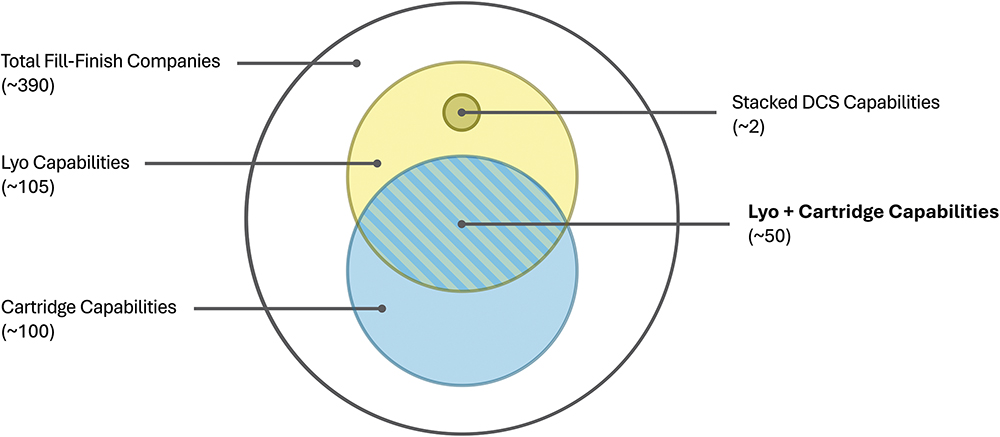
Figure 4: Fill-finish CDMOs by capability.
“BEYOND THE SIGNIFICANT USABILITY BENEFITS OF PRISTAL, ITS GREATEST IMPACT MAY BE OPENING NEW SUPPLY CHANNELS THAT EXPAND THE MARKET FOR SAFE, RELIABLE DCSs FOR LYOPHILISED DRUGS AND BIOLOGICS.”
While 50 CDMOs may already seem like a small number, there are only about two companies worldwide that can perform stacked DCS fill-finish at large scale. The result of this tightly concentrated supply base is a major bottleneck: two-year backlogs to launch new programmes, high numbers of refusal to quote on sub-threshold volumes and exorbitant pricing that leaves minimal room for negotiation. Beyond the significant usability benefits of Pristal, its greatest impact may be opening new supply channels that expand the market for safe, reliable DCSs for lyophilised drugs and biologics.
Final assembly is similarly straightforward and automation-compatible – the cartridges drop into a pre-sterilised housing, and the components snap together while maintaining a sterile fluid pathway, with no additional packaging required. By using standardised components (cartridges, plungers), maintaining compliance with existing fill-finish infrastructure and simplifying the final assembly process, Pristal gives pharma partners a broader, more resilient supply chain base at every stage, from early clinical supply through commercial scale-up.
CONFIGURATION OPTIONS
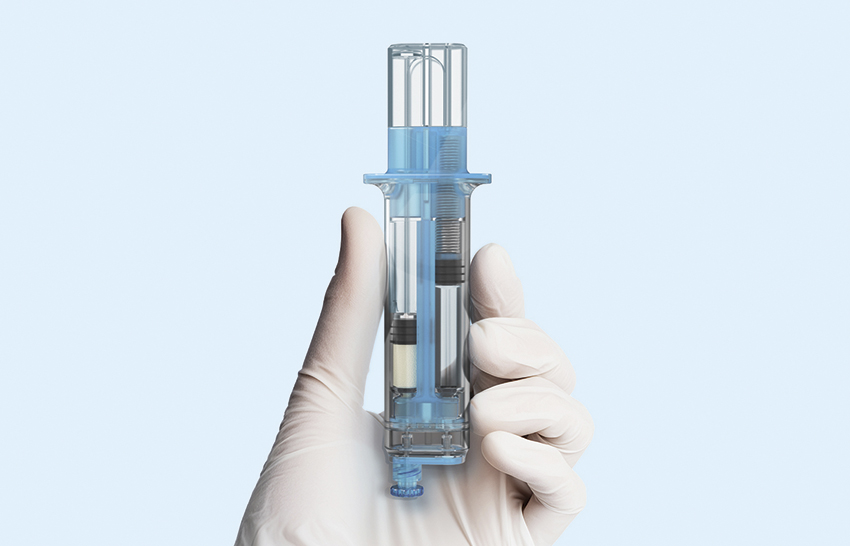
Pristal is available across a range of total dose volumes (1, 3, 5 and 10 mL) to accommodate a wide range of therapeutic and dosing requirements (the device in the article’s header image is the Pristal 3 mL configuration). The device accommodates staked needles for subcutaneous or intramuscular administration, a standard Luer connection for intravenous use or user-applied needle assemblies, and can be configured with an integrated safety shield to meet US OSHA requirements. The device housing also provides a large flat surface for branding, labelling and instructions-for-use content, with configurable colours to meet partner brand requirements.
A TRANSPARENT PATH TO MARKET
Ampulis built Pristal around a simple premise: the best way to solve the usability, manufacturing and supply chain challenges that have limited stacked DCS adoption is to avoid creating them in the first place by using cartridge and fill-finish infrastructure that already works at scale.
Ampulis collaborates with each partner’s existing supply chain, or supports the development of a new one, providing full transparency into cost structures at each volume tier and prioritising longer-term supplier risk reduction. Paired with a device that simplifies reconstitution to three simple steps, this approach makes reconstituted therapies more practical to develop, manufacture and deliver, whether in a care setting, home or the first minutes of an emergency response.
REFERENCES
- “Fill Finish Pharmaceutical Contract Manufacturing Market”. Market Report, Roots Analysis, Oct 2024.
- “Lyophilization Services Market”, Market Report, Roots Analysis, Aug 2026.