
To Issue 188
Citation: Wertheim A, “Industrial Architecture: The Next Competitive Advantage in Wearable Injectors”, ONdrugDelivery, Issue 189 (Sep 2026), pp 70–73.
Andy Wertheim puts forward the case that wearable drug delivery devices comprise two separate architectures – therapeutic and industrial – that must be developed and implemented in tandem if a development programme is to achieve long-term commercial success.
Every wearable injector has two interconnected architectures (Figure 1). The first of these, the “therapeutic architecture”, defines how the product safely and effectively delivers the therapy – a sophisticated combination of formulation science, device engineering, human factors and digital connectivity, designed to move complex biologics out of the clinic and into the patient’s home. The second, the “industrial architecture”, determines whether or not that product can be manufactured consistently, verified efficiently, supplied reliably and sustained profitably throughout its commercial life.
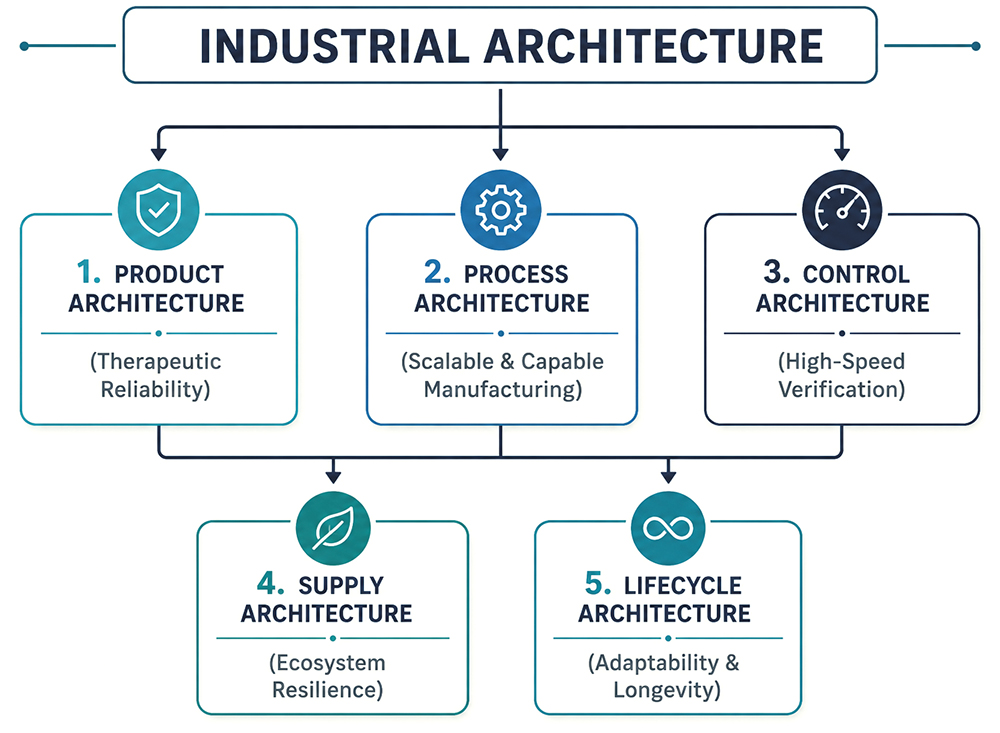
Figure 1: The therapeutic and industrial architectures of a wearable device.
“WHILE THE THERAPEUTIC ARCHITECTURE IS WELL UNDERSTOOD AND HEAVILY FUNDED, ITS INDUSTRIAL COUNTERPART RECEIVES FAR LESS EXPLICIT ATTENTION. YET, HISTORY ACROSS THE DRUG DELIVERY LANDSCAPE DEMONSTRATES THAT TECHNICAL INNOVATION ALONE RARELY GUARANTEES MARKET DOMINANCE.”
While the therapeutic architecture is well understood and heavily funded, its industrial counterpart receives far less explicit attention. Yet, history across the drug delivery landscape demonstrates that technical innovation alone rarely guarantees market dominance. The recent boom in the glucagon-like peptide-1 (GLP-1) market provides perhaps the clearest example – extraordinary therapeutic innovation and unprecedented patient demand for semaglutide and tirzepatide were nevertheless constrained by the ability of their manufacturers to expand manufacturing capacity at sufficient speed. Novo Nordisk has subsequently committed US$4.1 billion (£3 billion) to expanding US manufacturing capacity, including additional aseptic manufacturing and fill-finish capacity,1 while Eli Lilly has committed a further $5.3 billion to its Lebanon (IN, US) site to expand API capacity for Mounjaro® (tirzepatide, Eli Lilly) and Zepbound® (tirzepatide, Eli Lilly).2
Products succeed not simply because the therapy or device is innovative, but because the industrial systems supporting them can deliver that innovation reliably at commercial scale. As such, the current industry-wide shift towards home-based, high-volume subcutaneous delivery has heightened scrutiny on supply reliability.3,4 Regulators have moved rapidly to address these industrial complexities. For example, ISO 11608-6:2022 sets explicit standards for on-body systems, and the US FDA’s 2024 draft guidance on Essential Drug Delivery Outputs reinforces the need to manage manufacturing variation across the entire product lifecycle.
Wearable injectors are no longer just medical devices; they are integrated drug, engineering and manufacturing ecosystems. To realise their full commercial potential, organisations must stop treating device design, manufacturing, quality and supply as isolated workstreams. They must consciously engineer both architectures simultaneously.
“CHOOSING A SPECIFIC PRIMARY CONTAINER MODIFIES AUTOMATED HANDLING LINE REQUIREMENTS – OPTING FOR AN ELECTROMECHANICAL DRIVE OVER A MECHANICAL SPRING ALTERS VERIFICATION PROTOCOLS AND COMPONENT SOURCING.”
FROM INNOVATION TO INTEGRATION
The wearable injector industry has achieved remarkable technical milestones over the past decade. Sophisticated mechanical and electromechanical platforms now routinely handle complex delivery profiles outside traditional healthcare settings. However, the industry’s primary vulnerability is no longer a lack of engineering capability; it is a lack of disciplinary integration.
Wearable injector programmes are traditionally managed in functional silos – formulation scientists optimise the drug, device engineers refine the fluid path, quality teams map compliance and manufacturing engineers build the assembly lines. Each discipline executes its role exceptionally well, but commercial failure routinely occurs in the blind spots between them. Programmatic decisions that seem entirely logical from a single technical perspective frequently create catastrophic downstream consequences when the design is frozen and changes become cost-prohibitive.
The GLP-1 supply crisis has offered a stark lesson in this dynamic. Demand for therapies such as Wegovy® (semaglutide, Novo Nordisk), Mounjaro® and Zepbound® expanded faster than the industrial infrastructure supporting them. Novo Nordisk responded with multibillion-dollar investment in additional manufacturing and fill-finish capacity, while Eli Lilly similarly embarked on major capacity expansion. This lesson extends well beyond GLP-1s – commercial demand is only valuable when the industrial ecosystem can translate it into product available to patients.
The importance of industrialisation is increasingly visible within the wearable injector market itself. For example, BD’s Libertas™ platform has been engineered not only around drug delivery performance and patient usability but also around compatibility with established prefillable syringe filling processes and commercial equipment. BD also highlights validated filling and assembly processes as part of the platform’s development proposition. This illustrates an important evolution in device development – manufacturability and industrial integration are becoming attributes of the platform itself, rather than activities deferred until after device design.
As devices expand into highly complex biologic territories, such as the on-body presentation of Sarclisa® (isatuximab-irfc, Sanofi), the intersection of advanced formulations, micro-electronics and high-volume assembly demands even tighter integration. As devices become more capable, the industrial systems required to build them become exponentially more complex. Competitive advantage will belong to the companies that design better industrial systems, not just better devices.
THE FIVE DIMENSIONS OF INDUSTRIAL ARCHITECTURE
This holistic perspective can be defined as “industrial architecture”. It does not replace established frameworks such as systems engineering, quality by design, or design for manufacture and assembly. Instead, it focuses on a broader commercial question: “Has the entire industrial system been engineered to deliver the required product performance consistently, efficiently and sustainably throughout its market life?” To answer this, multidisciplinary teams must evaluate five interconnected dimensions of industrial architecture early in the development lifecycle, ensuring that clinical choices do not inadvertently break the commercial model (Figure 2).
Figure 2: Industrial architecture considers five dimensions – product, process, control, supply and lifecycle – that ask whether a development programme is prepared for industrial-scale production and commercialisation.
Product: Can the Product Design Support its Own Industrialisation?
The “product” dimension spans the formulation, primary container, fluid path, drive mechanism, electronics, primary adhesive and user interface. While traditionally evaluated against clinical safety and usability, the product dimension also dictates the industrial constraints that follow. Choosing a specific primary container modifies automated handling line requirements – opting for an electromechanical drive over a mechanical spring alters verification protocols and component sourcing. Product design and industrial design must evolve in unison; a device designed in a vacuum will inevitably struggle on the factory floor.
Cost reduction and sustainability are not late-stage procurement exercises; they are architectural design objectives. Component count, material selection, tolerances, testability, automation complexity, scrap risk and supplier strategy all determine the cost base and environmental footprint long before commercial launch. Industrial architecture enables teams to reduce cost and environmental impact by design while protecting performance, quality, supply resilience and regulatory confidence.
Process: Can the Manufacturing Process Naturally Deliver Critical Performance Outputs at Scale?
Commercial viability hinges on process capability, not raw capacity. A manufacturing line capable of producing millions of units is a liability if the process cannot repeatedly hit the narrow window of characteristics required for therapeutic performance. Wearable delivery involves a highly volatile mix of component tolerances, assembly forces, material behaviours and electronic calibrations.
Modern process validation is not a pre-launch checkbox. The FDA’s process-validation guidance explicitly frames validation as a lifecycle activity built on scientific understanding and control of manufacturing variation.5 For wearable injectors, that means engineering a manufacturing process in which natural, statistical variation does not compromise the device’s essential outputs.
Control: Is the Device Designed to be Verified at High Speed, or Will Inspection Strangle the Supply Chain?
Quality cannot be inspected into a product; it must be designed into it. The “control” dimension identifies the specific variables that dictate therapeutic success and determines the most efficient way to assure them, whether through raw material specifications, in-line vision systems, statistical process control or end-of-line functional testing. Because wearables fuse mechanical, fluidic, electronic and software systems into one combination product, testability must be treated as a core design requirement. If demonstrating compliance requires slow, overly complex or destructive end-of-line testing, the commercial model will buckle under the cost of verification.
Supply: Can the Broader Industrial Ecosystem Withstand Commercial Shocks?
A wearable injector is only as resilient as its weakest sub-tier supplier. Electronics, specialised elastomers, high-performance adhesives, moulded components and batteries each bring distinct supply chain risks. The “supply” dimension maps these dependencies early. Questions surrounding multicavity tooling ownership, second-sourcing, technology transfer protocols and geographic manufacturing footprints must be resolved during the design phase, not after launch, transforming supply chain vulnerabilities into conscious, managed strategic choices. The value of redundancy is measurable – modelling of pharmaceutical supply-chain reliability has found that, under baseline assumptions, adding a backup supplier to a lean configuration reduced expected shortages from 10% to 4%.6
Lifecycle: Can the Industrial System Adapt as the Product and Market Evolve?
Launch is not the finish line; it is the baseline. Over a product’s commercial lifespan, production volumes scale up, new clinical indications are approved, electronic components face obsolescence, software requires patching and manufacturing lines are transferred to new sites. The “lifecycle” dimension treats post-launch changes as active design inputs rather than operational emergencies. The goal is to design a flexible product and manufacturing framework that can absorb inevitable lifecycle changes without triggering disruptive regulatory refiling or supply interruptions.
The evolution of West Pharmaceutical Services’ SmartDose® platform illustrates this lifecycle reality. Developed across multiple delivery-volume configurations, the platform has continued to evolve as market requirements have changed. In 2026, West transferred the manufacturing and supply rights and associated facilities for its 3.5 mL system while continuing to develop and manufacture other SmartDose® configurations, including its 10 mL platform.7 Industrial architecture must therefore accommodate not only scale-up but technology evolution, portfolio changes and manufacturing transfer throughout a platform’s commercial life.
INDUSTRIAL ARCHITECTURE IN PRACTICE
To see the interplay of the dimensions of industrial architecture, consider a common scenario: a development team decides to increase a formulation’s concentration to reduce the overall injection volume, aiming to improve patient convenience. Clinically and commercially, the choice appears flawless. However, the cascading industrial consequences are profound:
- Product & Process: Higher concentration increases fluid viscosity, requiring a significantly higher delivery force. This forces a shift from a standard mechanical spring to a high-force drive system, altering component tolerances and increasing required assembly forces.
- Control & Supply: The increased assembly forces require more stringent in-line automated inspection to prevent cosmetic and structural component damage. Meanwhile, the high-force mechanism requires specialised materials, narrowing the supply base to a handful of tier-one vendors.
What began as a straightforward pharmaceutical optimisation ripples through the entire system, ultimately dictating production yields, capital expenditure and long-term gross margins. Industrial architecture does not stifle this type of clinical innovation; it eliminates the surprises, allowing teams to balance these trade-offs consciously while design changes are still viable.
FIVE QUESTIONS BEFORE DESIGN FREEZE
Before committing to major capital investment and freezing a device design, a combination product programme must answer five questions with absolute clarity:
- Essential Outputs: Have the essential drug delivery outputs been clearly isolated from non-critical metrics and structurally protected?
- Process Capability: Does the manufacturing process naturally deliver the essential outputs via statistical capability, or does it rely on excessive end-of-line inspection?
- Verification Efficiency: Is the control strategy balanced, combining material specifications, automated in-line metrics and functional testing without creating a production bottleneck?
- Ecosystem Resilience: Have sub-tier dependencies – including tooling capacity, electronic components and material single-sources – been mapped, stressed and explicitly accepted?
- Lifecycle Flexibility: Can the device design and the manufacturing line absorb a component swap, a software update or a site transfer without halting commercial supply?
CONCLUSION
The future of wearable injectors will undoubtedly be driven by breakthrough science, such as ultra-high-volume delivery, advanced digital connectivity and deeply intuitive patient-centric design – technical innovation remains the entry ticket. However, as devices become more sophisticated, the basis of competition shifts. The ultimate market winners will not necessarily be the companies with the most complex device features, but those that achieve true integration by unifying the device, process, control system, supply chain and lifecycle strategy into a singular, resilient commercial system.
Successful industrialisation is no longer the passive handover of a finished design to a manufacturer. It is a deliberate, upfront integration strategy. Every wearable injector has two architectures, and the organisations that consciously design both are the ones that will dominate the market.
REFERENCES
- “Novo Nordisk Announces US$4.1B Investment to Expand US Manufacturing Capacity”. Press Release, Novo Nordisk, Jun 2024.
- “Lilly Increases Manufacturing Investment to $9 Billion at Newest Indiana Site to Boost API Production for Tirzepatide and Pipeline Medicines”. Press Release, Eli Lilly, May 2024.
- Mathaes R et al, “Subcutaneous Injection Volume of Biopharmaceuticals-Pushing the Boundaries”. J Pharm Sci, 2016, Vol 105(8), pp 2255–2259.
- Viola M et al, “Subcutaneous delivery of monoclonal antibodies: How do we get there?”. J Control Release, 2018, Vol 286, pp 301–314.
- “Process Validation: General Principles and Practices”. Guidance for Industry, US FDA, 2011.
- Tucker EL, Daskin MS, “Pharmaceutical supply chain reliability and effects on drug shortages”. Comput Ind Eng, 2022, Vol 169, art 108258.
- “West Completes Sale and Transfer of the Manufacturing and Supply Rights for SmartDose® 3.5mL On-Body Delivery System”. Press Release, West Pharmaceutical Services, Jul 2026.