To Issue 191
Citation: Jeangoudoux I, Salfati L, “Breakthrough for Large-Volume Manual Injection: A First-of-its-Kind Large-Volume PFS in a Passive Safety System”, ONdrugDelivery, Issue 191 (Oct 2026), pp 81–86.
Isabelle Jeangoudoux and Léa Salfati introduce the industry’s first fully integrated large-volume passive safety system, combining the syriQ BioPure® 5.5 mL prefillable glass syringe with the Safe’n’Sound® 5.5 mL passive safety system. The authors explain how joint development, compatibility testing and human factors research are de-risking large-volume subcutaneous self-injection at home.
Subcutaneous (SC) drug delivery continues to expand as an alternative to intravenous infusion, supporting the broader shift towards decentralised, patient-centric care. This shift is accompanied by a growing focus on large-volume biologics, with an increasing number of therapies requiring dose volumes beyond the 1–2.25 mL range historically associated with prefillable syringes (PFSs). To meet this need safely and conveniently at home, SCHOTT Pharma and Nemera have worked together to design the first large-volume passive safety system supporting manual self-injection at home: Nemera’s Safe’n’Sound® 5.5 mL passive safety system built specifically around SCHOTT Pharma’s syriQ BioPure® 5.5 mL staked-needle glass PFS – the first large-volume staked-needle glass PFS on the market.
The syriQ BioPure 5.5 mL PFS was the first-of-its-kind to be verified for at-home use with an autoinjector. There was an unmet need, however, for a 5.5 mL PFS combined with a passive safety system for manual injection. Manual injection devices may be preferred by some users because they retain the familiarity and simplicity of a PFS. Manual injections can also provide greater control over the injection experience, including injection speed and visual confirmation of dose delivery. Furthermore, manual devices can be more economical to produce due to the lower complexity of the subassembly, which may be important for some patient groups and geographic regions. Pharmaceutical companies may choose to launch a formulation in both an autoinjector and a manual injection device to cover a broader range of markets.
Requirements for the Safe’n’Sound 5.5 mL system were shaped through direct dialogue with pharmaceutical customers, and the development builds on the established platform compatibility already proven between SCHOTT Pharma and Nemera with 1 and 2.25 mL formats. The result is a large-volume drug delivery solution that offers flexibility of grip posture and strong commercial attractiveness – capabilities that current large-volume delivery options on the market cannot fully match – while making at-home self-injection of biologics accessible to a much larger pipeline of drug formulations. To support this development, SCHOTT Pharma and Nemera have run a structured programme of mechanical, performance and human factors testing.
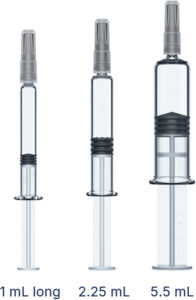
Figure 1: The syriQ BioPure range
from SCHOTT Pharma (1 mL long,
2.25 mL and now 5.5 mL) built on a single, proven glass syringe platform.
BUILDING ON AN ESTABLISHED PFS SYSTEM: THE syriQ BioPure 5.5 mL
The syriQ BioPure 5.5 mL is SCHOTT Pharma’s first large-volume, staked-needle PFS, extending the proven syriQ BioPure platform beyond its established 1 mL long and 2.25 mL formats (Figure 1). The glass barrel is manufactured from Type I FIOLAX® Borosilicate Glass, engineered for controlled hydrolytic resistance and produced using SCHOTT Pharma’s converting process for ultra-low residual tungsten.
First-class components and materials have been chosen for the design of syriQ BioPure 5.5 mL to provide a low extractables and leachables profile that is fit for purpose for sensitive biologics. A high-quality 27G 0.5″ special thin-wall needle, with an increased inner diameter relative to a standard 27G thin-wall needle, reduces extrusion force and improves flow performance for more viscous formulations. The syriQ BioPure 5.5 mL is also available with a 25G needle variant to broaden the design space and support highly viscous drugs.
For fill-finish partners, syriQ BioPure 5.5 mL is packaged in SCHOTT Pharma’s standardised SCHOTT iQ® 3″ tub (42 units per tub), the same secondary packaging format used across all three syriQ BioPure volumes, simplifying integration into existing filling lines. The syriQ BioPure 5.5 mL features a shorter, wider syringe geometry that reduces plunger rod length, supporting improved ergonomics, easier device integration and more comfortable handling for patients during self-administration.
INTRODUCING THE NEMERA SAFE’N’SOUND 5.5 mL
Safe’n’Sound 5.5 mL is a single-dose passive safety system intended to handle volumes up to 5.5 mL for SC injection. The safety device is designed to ensure complete dose delivery while protecting users from accidental needlestick injury after injection. The intended patient population spans children to adults, with intended users comprising patients, caregivers and healthcare professionals.
The device user interface comprises four key elements: the rigid needle shield (RNS), the syringe body, the plunger rod and the extended finger flange, sized for the 5.5 mL format (Figure 2). In use, the patient removes the RNS to expose the needle, inserts the needle at a 45°–90° angle, firmly and steadily pushes the plunger rod down until the syringe body is empty and then releases the plunger rod. This activates the spring-driven safety system, retracting the needle automatically into the body system and shielding it from further contact.
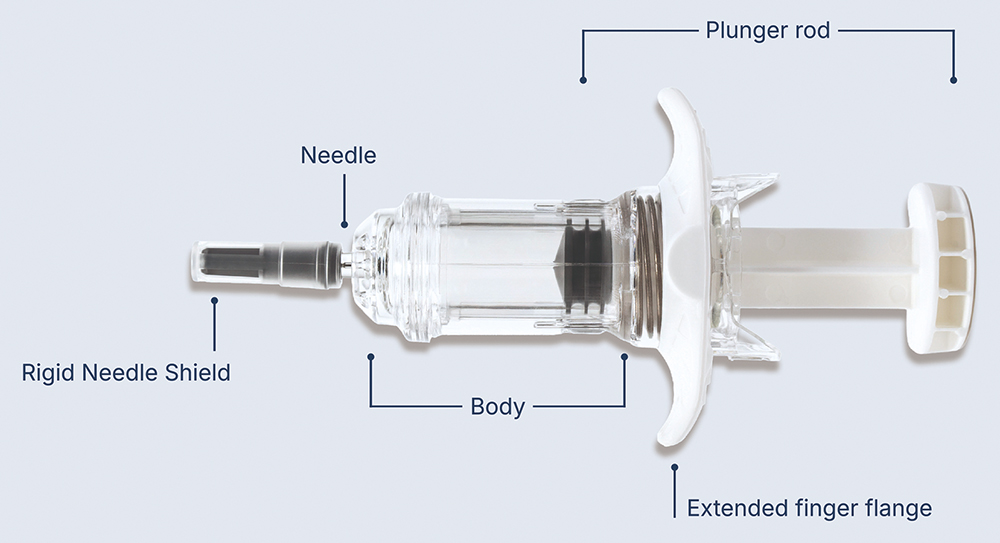
Figure 2: Safe’n’Sound 5.5 mL, showing the rigid needle shield, syringe body, plunger rod and extended finger flange.
A DEVELOPMENT PARTNERSHIP BUILT FOR LARGE VOLUME
SCHOTT Pharma, a pioneer in drug containment and delivery solutions, and Nemera, a global leader in drug delivery devices, have combined their respective expertise to bring the first fully integrated large-volume passive safety system to market. Three principles underpinned the collaboration:
- First fully integrated 5.5 mL passive safety system designed specifically for large-volume SC self-injection
- Seamless compatibility between SCHOTT Pharma’s syriQ BioPure glass PFS and Nemera’s Safe’n’Sound passive safety device, enabling smoother clinical and commercial development
- A joint system approach that reduces integration risk and accelerates time-to-market for large-volume and biologic therapies.
“DESIGNED FROM THE OUTSET AS AN INTEGRATED SYSTEM AROUND THE SYRIQ BIOPURE 5.5 mL STAKED-NEEDLE GLASS PFS, THE DEVICE AVOIDS THE LIMITATIONS OF RETROFIT APPROACHES AND ENSURES FULL COMPATIBILITY BY DESIGN.”
AN INTEGRATED SYSTEM FOR LARGE-VOLUME THERAPIES
While Nemera’s passive safety system platform is already established at 1 and 2.25 mL, Safe’n’Sound 5.5 mL is the first passive safety device specifically engineered for large-volume SC injection with a glass PFS (Figure 3). Developed jointly by Nemera and SCHOTT Pharma, it combines Nemera’s capabilities in drug delivery devices with SCHOTT Pharma’s expertise in primary packaging. Designed from the outset as an integrated system around the syriQ BioPure 5.5 mL staked-needle glass PFS, the device avoids the limitations of retrofit approaches and ensures full compatibility by design.
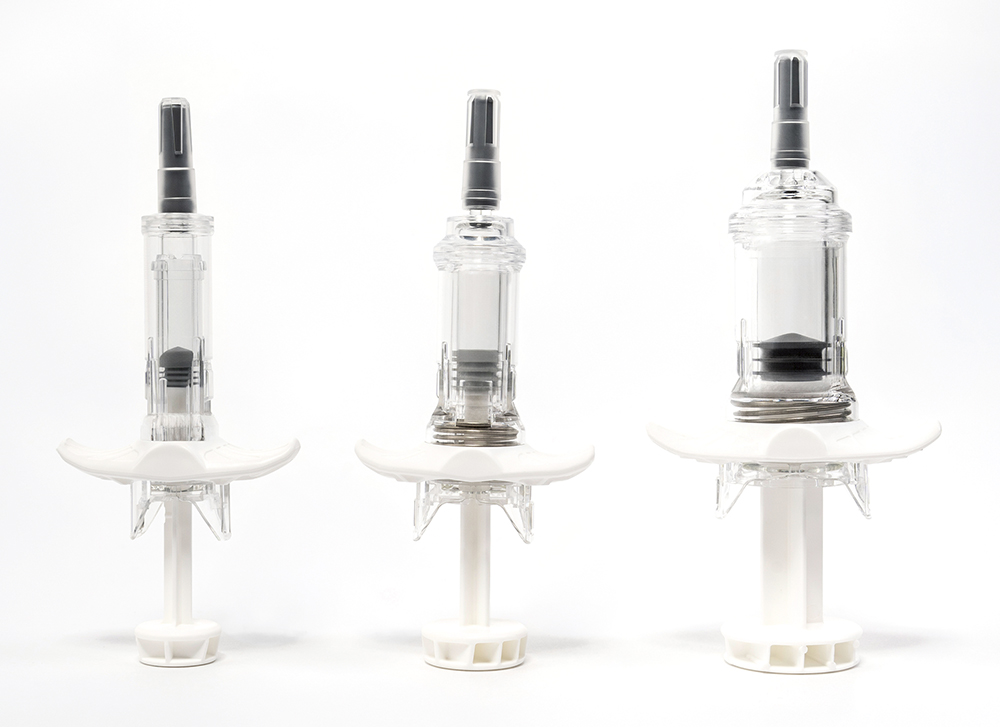
Figure 3: Nemera’s Safe’n’Sound range – a proven passive safety system designed to support evolving drug delivery needs (1, 2.25 and now 5.5 mL).
DE-RISKING LARGE-VOLUME MANUAL SELF-INJECTION THROUGH COMPATIBILITY
Table 1 summarises the key functional and safety attributes considered during compatibility assessments of the large-volume safety system. By distinguishing syringe-specific performance from attributes governed by the syringe and safety system combination, this framework enables a targeted risk assessment and highlights where compatibility has already been verified through integrated system testing.
| Function | Verification Category | PFS Only | PFS + Passive Safety System |
| Syringe flange breakage | Dimensional & mechanical fit | ✓ | |
| PFS assembly into device | ✓ | ||
| Force to unload the syringe | ✓ | ||
| Plunger rod pull-out force | ✓ | ||
| Free fall – before use | Functional performance | ✓ | |
| Free fall – after use | ✓ | ||
| RNS pull-off force | ✓ | ||
| Break-loose extrusion force | ✓ | ||
| Gliding force | ✓ | ||
| Manual safety system activation | ✓ | ||
| Residual volume | ✓ | ||
| Override of safety system once activated |
✓ | ||
| Needle access distance after use | ✓ |
Table 1: Functional performance and safety features that guide the compatibility assessment of the large-volume safety system.
In a joint verification process, compatibility between the syringe and device was verified functionally as well as dimensionally. Testing for syriQ BioPure 5.5 mL and Safe’n’Sound 5.5 mL followed a three-tier framework spanning dimensional and mechanical fit, functional performance and human factors usability (Figure 4).

Figure 4: The joint SCHOTT Pharma–Nemera compatibility testing framework, from dimensional fit through functional performance to human factors usability.
Dimensional and Mechanical Fit
Nemera mapped the critical dimensions of the syriQ BioPure 5.5 mL syringe against the safety device interface, defining the tolerances required for reliable engagement and consistent activation (Figure 5).
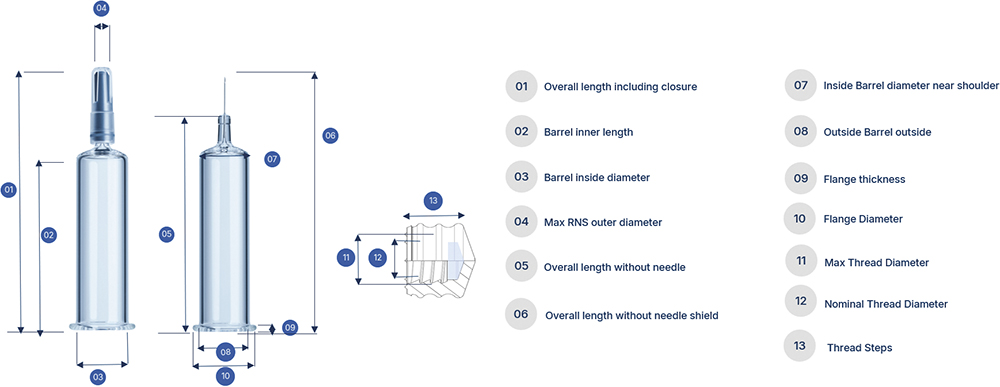
Figure 5: Critical syringe dimensions mapped for syringe-to-device compatibility between syriQ BioPure 5.5 mL and Safe’n’Sound 5.5 mL.
Functional Performance
A crucial aspect of functional performance of the syringe in manual use is RNS pull-off force. Additionally, for prefilled syringes, break-loose extrusion force over shelf life is key. Glide-force performance of the plunger inside the FIOLAX glass barrel was assessed on water-filled 5.5 mL syringes stored at 5°C and 25°C. Average and maximum glide force showed no significant change versus initial performance, confirming stable, predictable gliding over shelf life – a prerequisite for complete-dose delivery and reliable safety system activation within Safe’n’Sound. The functional performance of the syringe in the passive safety system is defined by features including manual passive safety system activation force, force to unload the syringe and needle access distance after use.
“IT IS CRITICAL THAT THE TARGET POPULATION CAN USE THE SYSTEM AND THAT THE MECHANISM DEPLOYS CORRECTLY TO PROTECT USERS FROM ACCIDENTAL NEEDLESTICKS.”
Human Factors and Usability
It is critical that the target population can use the system and that the mechanism deploys correctly to protect users from accidental needlesticks. The design of the needle, syringe, safety system and grip features, along with the drug viscosity, directly impact the difficulty performing an injection. Human factors testing evaluated whether the larger volume of 5.5 mL was associated with increased injection difficulty and whether patients could successfully self-administer the 5.5 mL volume with a low-viscosity and a high-viscosity formulation.
HUMAN FACTORS SUPPORTING USABILITY OF LARGE VOLUME
A dedicated human factors study was conducted by Insight by Nemera in collaboration with SCHOTT Pharma to validate the ability of users to self-administer the Safe’n’Sound 5.5 mL with syriQ BioPure in simulated-use conditions. The study enrolled 30 adult participants across two cohorts to reflect the target patient population: 15 users with self-reported hand weakness or dexterity limitations (e.g. arthritis, carpal tunnel syndrome) and 15 users without, including both device-naïve and experienced users.
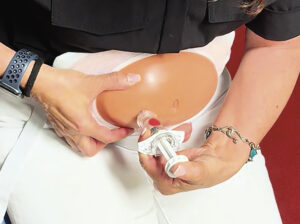
Figure 6: As part of a human factors study, participants completed simulated self-injections into an abdominal injection pad at a 90° angle.
Each participant completed simulated self-injections into an abdominal injection pad using two device permutations – a 27G 0.5″, 6 cP placebo configuration and a 25G 0.5″, 20 cP placebo configuration, representing the intended viscosity range – in counterbalanced order (Figure 6), followed by a third scenario using a one-hand pinch grip. Task success was evaluated and supplemented by post-scenario rating-scale questions and root-cause probing of any use errors.
A 90° injection into the abdomen represented a worst-case posture and allowed for robust qualitative assessment of perception of ease of use. Limited visual instructions were provided, but without information on grip technique, to learn how the participants might choose to hold the device intuitively.
“A TOTAL OF 100% OF THE PARTICIPANTS COMPLETED THE INJECTIONS SUCCESSFULLY WITH BOTH THE HIGH- AND LOW-VISCOSITY DEVICE CONFIGURATIONS, INCLUDING SAFETY SYSTEM ACTIVATION. NO USE ERRORS OCCURRED DURING SIMULATED SELF-INJECTION OR IN SAFETY SYSTEM ACTIVATION.”
Results of the study showed that well-designed manual systems can effectively address the challenges of larger injection volumes. A total of 100% of the participants completed the injections successfully with both the high- and low-viscosity device configurations, including safety system activation. No use errors occurred during simulated self-injection or in safety system activation. A variety of different grip postures were observed, including two-handed approaches, and were supported by the device design. One hundred percent of participants reported feeling protected by the safety shield.
Participants were instructed to push firmly and steadily, but not “as fast as possible” and injection time was recorded. The mean injection time for the 5.5 mL volume was less than 30 seconds (Table 2). On average, it took participants 24 seconds to inject Device A (27G, 6 cP placebo) and 23 seconds to inject Device B (25G, 20 cP placebo).
| Injection Time (s) | |||
| Condition | Statistic | User Group P | User Group H |
| Device A 90° | Mean | 21 | 28 |
| Standard Deviation | 15 | 18 | |
| Max | 70 | 79 | |
| Min | 11 | 10 | |
| Device B 90° | Mean | 20 | 27 |
| Standard Deviation | 8 | 14 | |
| Max | 38 | 51 | |
| Min | 11 | 10 | |
| Device B 45° One Hand | Mean | 17 | 27 |
| Standard Deviation | 6 | 20 | |
| Max | 32 | 81 | |
| Min | 9 | 11 | |
Table 2: Mean injection time was under 30 seconds for all scenarios. User group P included adults without hand weakness or hand dexterity symptoms, while user group H included those with hand weakness or hand dexterity symptoms.
When asked to rate their agreement with the statement, “I felt sufficiently protected by the safety shield of the device after I gave the injection”, 100% of participants agreed or strongly agreed. The user-centric design of Safe’n’Sound 5.5 mL is supported by this evidence. Testing demonstrated robustness and reliability for large-volume self-administration, supporting patient acceptance.
CONCLUSIONS FOR THE FUTURE OF LARGE-VOLUME MANUAL INJECTION AT HOME
Beyond safety and usability, the integrated syriQ BioPure 5.5 mL and Safe’n’Sound 5.5 mL system is designed to support pharmaceutical companies’ drug pipelines end to end, thereby helping secure time-to-market, enabling early preparation for clinical trials and easing the transition from the clinical to the commercial phase. SCHOTT Pharma syriQ BioPure 5.5 mL is commercially available. Not-for-human-use samples of the Nemera Safe’n’Sound 5.5 mL are available for testing and feasibility studies. The full commercial launch for human-use products is expected by 2028.
Compatibility of the PFS and the passive safety system, backed by structured system verification, human factors data and regulatory documentation, helps reduce development risk and avoid the late-stage integration challenges that arise when syringe and device are qualified independently – a clear advantage in the rapidly evolving landscape of large-volume biologics and advanced therapies. As the first fully integrated large-volume passive safety system on the market, syriQ BioPure 5.5 mL with Safe’n’Sound gives biopharma companies a proven, de-risked route to bring high-volume SC biologics to the at-home environment – reducing treatment burden for patients while giving drug developers a faster path from investigational product to approved, commercially supplied combination product.