To Issue 191
Citation: Lange J, James S, “For the Record: How Past Experience Enables Future Success”, ONdrugDelivery, Issue 191 (Oct 2026), pp 10–14.
Dr Jakob Lange and Shawn James discuss the value of the experience hidden behind metrics such as completed projects and commercialised devices – the wealth of accumulated process knowledge that enables a company to bring hard-learned lessons forwards to benefit each new development programme and evolve its product portfolio to meet the needs of an evolving sector.
Every pharmaceutical company evaluating the track record of a drug delivery partner starts with roughly the same checklist – years in business, products launched, devices delivered, manufacturing capacity, number of customers and partnerships, regulatory approvals. These figures are real, and they matter, because they show that a company has repeatedly navigated the technical, regulatory and industrial demands of bringing a combination product to market. They demonstrate that a company’s technologies have progressed beyond concepts and prototypes, its manufacturing has progressed beyond pilot production and its regulatory strategies have been tested under real commercial conditions. They provide proof.
What they cannot show is what the company has actually learned in the process, and that is the harder, more useful question for any leadership team choosing a long-term partner. Every development programme builds on and adds to an existing body of knowledge: engineering insights, human factors evidence, regulatory precedent and manufacturing lessons that only become visible once a product is marketed at commercial scale. When those lessons are captured and disseminated rather than left tied to a single project, experience stops simply being a record of the past and becomes a resource that the next customer can inherit before their development programme has even begun.
Ypsomed’s four decades in the self-injection industry are a useful test of that idea. More than 80 commercial combination products is a meaningful figure in its own right, but the more telling detail is what sits behind it – thousands of engineering decisions, usability findings, manufacturing refinements and regulatory conversations that continue to shape the company’s platforms in development today. Viewed this way, experience is less a summary of what has already been delivered and more a foundation for what can be built next.
“EACH PROGRAMME ASKED SOMETHING DIFFERENT OF THE ORGANISATION IN TERMS OF THERAPEUTIC, TECHNICAL AND USABILITY EQUIREMENTS, AND TOGETHER THEY BUILT AN UNDERSTANDING OF HOW TO DESIGN, VALIDATE AND INDUSTRIALISE SELF-INJECTION SYSTEMS THAT NO SINGLE PROJECT COULD HAVE PRODUCED ALONE.”
KNOWLEDGE UNLOCKED: HOW A PLATFORM APPROACH OPENS DOORS
Ypsomed’s earliest devices were built to solve very different problems. OptiPen, launched in 1985, helped move insulin delivery beyond syringes and vials, while KabiPen followed in 1989 with a dual-chamber cartridge designed for lyophilised growth hormone. OptiSet, introduced in 1999, brought preset dosing to reduce dosing errors and the Gonal-f pen extended the company’s device experience into fertility treatment for the first time. Each programme asked something different of the organisation in terms of therapeutic, technical and usability requirements, and together they built an understanding of how to design, validate and industrialise self-injection systems that no single project could have produced alone.
The more significant shift came in 2006, when Ypsomed moved from bespoke device development towards modular platforms. Rather than starting each new project from a blank page, proven architectures became the technical foundation for future development programmes while remaining adaptable to different drugs, containers, patient populations and commercialisation strategies. Shorter development timelines were one outcome of that shift, but the more consequential one was structural; every subsequent programme now contributes back to the platform itself, allowing engineering knowledge to accumulate across programmes rather than remaining locked inside any single product (Figure 1). This raises the question at the centre of this article – if experience is meant to transfer from one programme to the next, how much of it actually carries forwards?
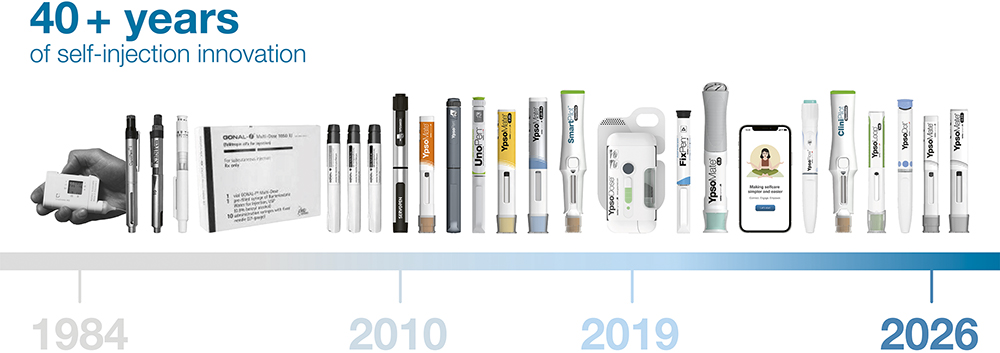
Figure 1: Ypsomed has been innovating in self-injection devices for over 40 years.
COMPOUND INTEREST: HOW EXPERIENCE PAYS OFF
The answer is that not everything carries forwards. Some lessons remain specific to a particular molecule, container or patient population, while others prove useful across many development programmes; distinguishing between the two is a substantial part of the engineering challenge itself.
The primary container illustrates this well. An autoinjector performs as an integrated system, and its behaviour depends on the interaction between the device and the container it surrounds – break-loose and glide forces, siliconisation, dimensional tolerances and needle-shield removal all influence injection performance, and small variations can affect injection time, drive-system behaviour and the assembly process. Each combination product still requires its own technical assessment and historical experience does not substitute for that work. What it does provide is established test methods, historical performance data and a clearer sense of where risk is most likely to emerge.
“THE TWO-STEP, BUTTON-FREE USER INTERFACE OF YPSOMATE REFLECTS YEARS OF OBSERVING HOW PEOPLE APPROACH SELF-INJECTION OUTSIDE A CLINICAL SETTING.”
Human factors evidence accumulates along similar lines. Self-injection devices are used by people with varying levels of dexterity, confidence and experience, typically without professional supervision, and any single study can only answer a defined question for a defined population. When considered together, however, a large body of studies begins to reveal patterns that are difficult to observe within one development programme alone: where users hesitate, which interface choices consistently reduce errors and which assumptions are worth challenging before the next study begins. The two-step, button-free user interface of YpsoMate reflects years of observing how people approach self-injection outside of a clinical setting. In 2025/26 alone, Ypsomed conducted more than 25 human factors studies involving over 1,200 participants, adding to an evidence base that now spans multiple therapies, patient populations and levels of user experience.
Regulatory understanding accumulates in a similar way, and its reach occasionally extends well beyond a single programme. Questions raised during previous reviews, approaches regulators have accepted and evidence generated across many submissions gradually build a broader picture of regulatory expectations. The EMA’s qualification of the molecule-independent device bridging approach, supported by evidence generated on the YpsoMate and YpsoMate 2.25 mL platforms, is a case in which platform-level evidence contributed to an entirely new regulatory methodology.
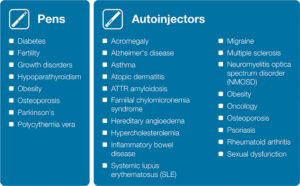
Figure 2: Platform experience spans a broad range of therapies, patient populations and treatment contexts.
Manufacturing experience compounds in much the same way, since device design, assembly, tooling, process validation and quality control are closely connected, and knowledge gained industrialising one product directly informs the design, technology transfer and scale-up of the next.
Taken together, these different forms of experience produce something a launch count cannot capture on its own. Experience accumulated across a broad range of therapies and development programmes builds engineering judgment about where established knowledge applies, where genuine uncertainty remains and where further investigation is warranted before a decision is made (Figure 2).
FIT FOR PURPOSE: GETTING PLATFORMS INTO SHAPE
If accumulated experience could simply be copied from one development programme to the next, combination product development would be considerably more predictable than it actually is. Every programme introduces its own variables – formulation, viscosity, injection volume, primary container, intended users, injection frequency, regulatory strategy and commercial objective – and a platform well suited to one therapy may be the wrong starting point for another. Experience does not eliminate those differences. What it does provide is the context needed to identify and evaluate variables more quickly.
Platform-based development does not require a trade-off between standardisation and optimisation. In reality, the relationship tends to run the other way – a well-understood platform provides a stable technical foundation precisely because it allows a development team to concentrate on what is genuinely specific to a development programme rather than revisiting engineering questions that earlier programmes have already answered. As pharmaceutical pipelines diversify, the value lies in combining accumulated experience with a broad portfolio of configurable platforms, allowing the most appropriate starting point to be selected and configured to match the specific needs of each new programme.
Ypsomed’s own platform portfolio has evolved along the same lines as the questions it has been asked to answer. The challenges facing self-injection in 2026 are not the ones the company was addressing when its first pens reached patients. At the same time, expectations have extended well beyond device performance alone – sustainability is influencing material selection and product architecture, digital technologies are supporting therapy management and increasingly successful self-administered therapies are placing new demands on manufacturing capacity and global supply.
Recent platforms reflect that evolution directly. YpsoLoop applies established autoinjector usability to a platform designed for circularity, with automated disassembly and material recovery. YpsoFlow and YpsoDot extend the portfolio into emerging biologic and peptide therapies, incorporating bio-based materials and new architectures. CliniPilot and the Clear to Clinic offerings support customers from clinical development through commercialisation, while the SmartPilot family extends established injection platforms with connected capabilities. Each addresses a different therapeutic and commercial requirement, yet all of them draw on the same underlying engineering disciplines, usability principles and industrial experience, built across more than 80 commercialised combination products and applied differently in each case (Figure 3).
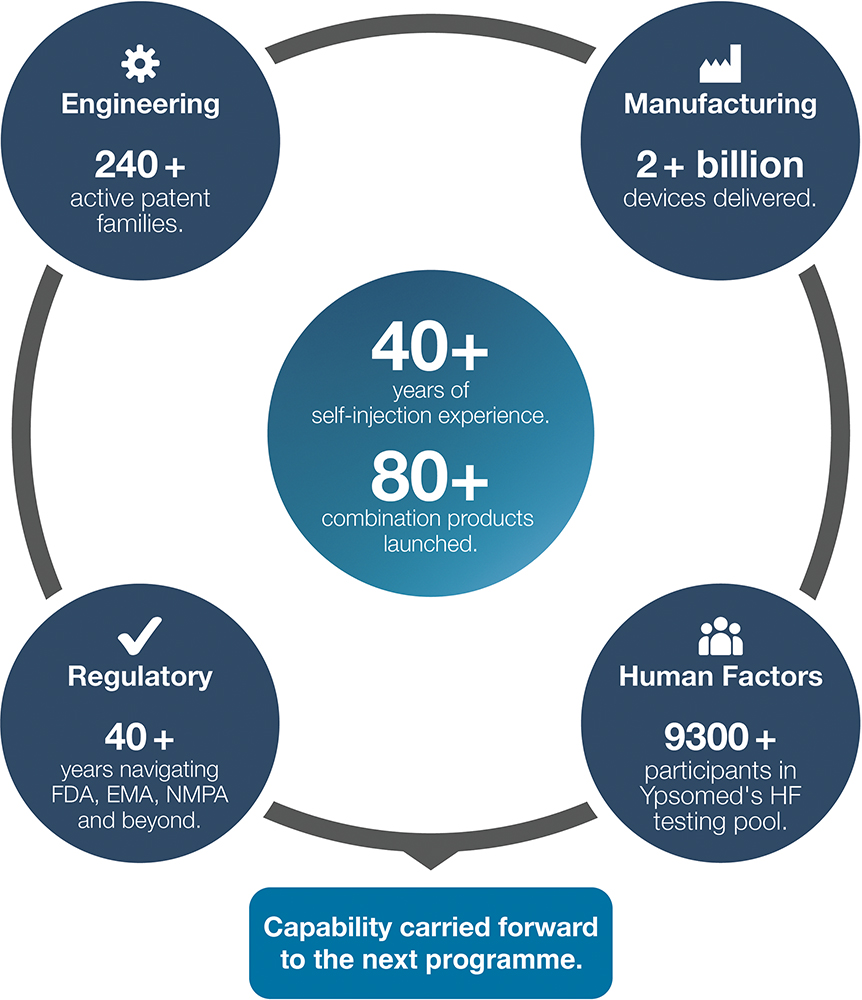
Figure 3: How experience accumulates and compounds across Ypsomed.
REPEAT PERFORMANCE: PRODUCTION IN THE SPOTLIGHT
Engineering knowledge has limited value if it cannot be translated into reliable commercial supply. Every combination product eventually reaches the point where laboratory testing, usability studies and regulatory submissions give way to manufacturing reality: processes must be validated, supply chains must remain robust and production capacity must grow alongside demand without compromising consistency. This is where challenges emerge that are often invisible at a smaller scale, and it is where an organisation’s manufacturing experience is genuinely built.
“THAT EXPERIENCE ALSO SHAPES INVESTMENT DECISIONS – SINCE CAPACITY CANNOT BE BUILT SOLELY FOR TODAY’S PRODUCTS; IT MUST ANTICIPATE FUTURE DEMAND AND SUPPORT CUSTOMERS ACROSS THE FULL COMMERCIAL LIFECYCLE OF SUCCESSFUL THERAPIES.”
That experience also shapes investment decisions – since capacity cannot be built solely for today’s products; it must anticipate future demand and support customers across the full commercial lifecycle of successful therapies. Ypsomed’s recent investments reflect that long-term view. An expansion at Ypsomed’s Schwerin (Germany) site, inaugurated in 2024, added capacity for 100 million pens and autoinjectors annually. A further expansion currently underway represents an investment of more than CHF500 million (£456 million) and is expected to add approximately 400–500 million devices of annual capacity. In China, Ypsomed opened its Changzhou facility in 2025, with capacity for up to 100 million devices annually for the Chinese market. Together, these investments support the company’s commitment to an annual production capacity of one billion self-injection devices by 2030 (Figure 4).
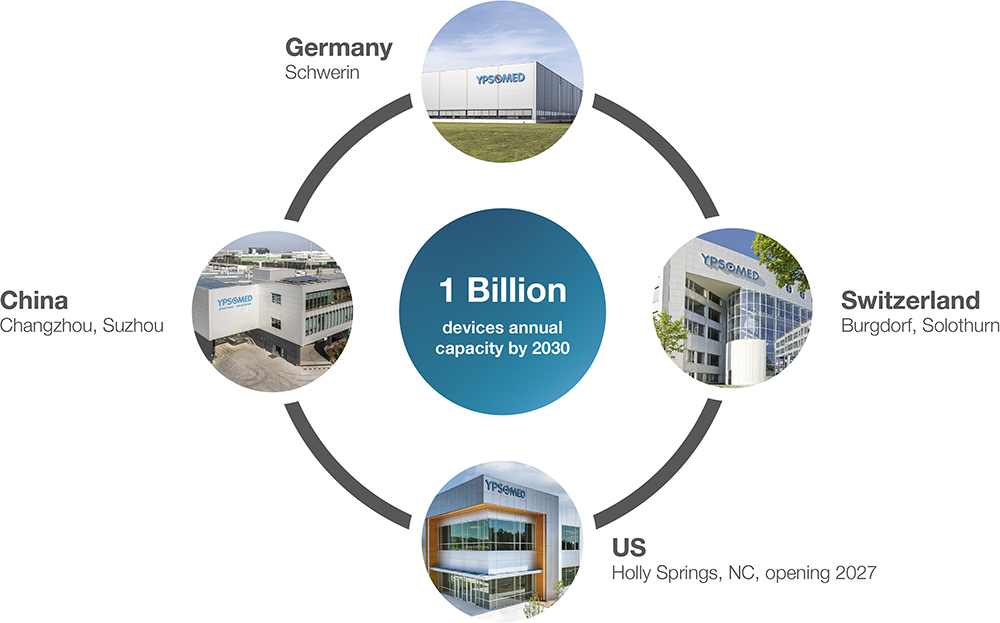
Figure 4: Ypsomed’s global manufacturing network – spanning Switzerland, Germany, China and the United States – is scaling towards 1 billion devices in annual capacity.
That continuity matters more than it might initially seem, because a partner selected during clinical development may remain responsible for commercial supply for a decade or longer. In that context, reliability is measured not simply by what has already been delivered, but by the ability to apply accumulated experience consistently across development, industrialisation and long-term supply. Engineering expertise, manufacturing capability and long-term capacity are not separate considerations in that context; in practice they are a single decision made early and relied upon for years.
Ultimately, the strongest evidence of a partnership’s value may be what customers choose to do once a development programme is complete, or even before a specific programme has finished. Choosing a partner for the first time is a matter of due diligence and technical evaluation. Selecting the same partner again reflects something else: direct experience of how the relationship performed across development, regulatory review, technology transfer and commercial supply. Repeat business partnerships, seen in that light, are not simply a commercial metric but a demonstration of confidence built through delivery; two in three of Ypsomed’s customers are engaged in multiple projects.
FOR FUTURE REFERENCE: PUTTING THE PAST TO WORK
Metrics such as years in business, commercial launches and manufacturing capacity remain meaningful indicators of experience. They provide evidence of what has already been achieved. Their greater value, however, lies in the accumulated experience they represent: engineering judgment, human factors evidence, regulatory understanding and manufacturing knowledge. These are the assets that allow each new development programme to begin from a stronger position than the last, applying proven knowledge where it fits, identifying uncertainty earlier where it does not and supporting better decisions throughout development.
For more than four decades, Ypsomed has continued to accumulate and apply that experience, bringing it to each new programme while continuing to develop platforms and capabilities for changing therapeutic needs, connected healthcare and more sustainable product design. Every commercial programme adds a further layer of understanding; every new platform applies that understanding differently.
A track record is often treated as a record of the past. Its real value lies in what it makes possible in the future. That is the foundation Ypsomed is building from, and what makes it a partner that is chosen for the first programme – and trusted for the next.