To Issue 191
Citation: Leconte-Ostrowski C, Grinda C, “Building a Biopharmaceutical-Grade PFS: From Glass Tubing to Finished Container”, ONdrugDelivery, Issue 191 (Oct 2026), pp 112–116.
Charlotte Leconte-Ostrowski and Christoph Grinda present ENOVIA™, a quality level designed to enhance understanding and achievement of high quality device design for combination products, biologics and biosimilars.
The rapid growth of biologics, biosimilars and new complex injectable therapies is creating new expectations for primary packaging systems. Unlike traditional small molecules, biopharmaceutical drug products may exhibit increased sensitivity to particulate matter, elemental impurities and silicone oil. As a result, pharmaceutical companies are increasingly seeking a deeper understanding of how syringe manufacturing processes influence critical quality attributes.
This article describes NIPRO’s journey towards a biopharmaceutical-grade prefillable syringe (PFS) platform. Research activities spanning glass tubing manufacture, syringe conversion, analytical characterisation and functional performance assessment identified several key quality drivers, including dimensional consistency, cosmetic quality, particulate burden, residual tungsten levels and silicone management. By applying an approach for full-process understanding, rather than focusing solely on end-product specifications, NIPRO developed ENOVIA™, a new quality level designed to support evolving requirements for biologics, biosimilars and combination products.
WHY BIOLOGICS ARE DIFFERENT
The pharmaceutical landscape is undergoing a profound transformation. While small molecules continue to dominate marketed therapies today, more than 80% of the current development pipeline of injectable drug products consists of biologics, biosimilars, oligonucleotides and new complex drug products (Figure 1). New therapies based on such sensitive drug products are expected to drive the future growth of injectable drug delivery systems and, increasingly, are being administered using PFSs and autoinjectors.
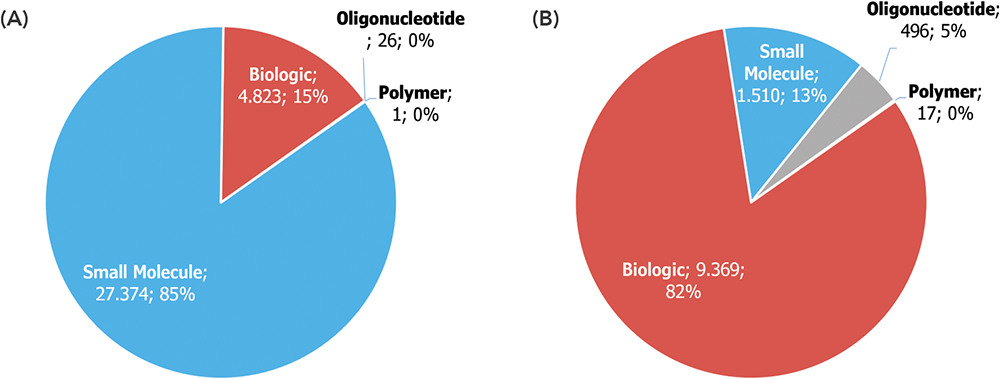
Figure 1: (A) Proportion of marketed drugs for injection divided by molecule type. (B) Proportion of pipeline drugs for injection divided by molecule type.
“PROTEIN AGGREGATION, PARTICLE FORMATION, ADSORPTION AND INTERACTIONS WITH CONTAINER CLOSURE SYSTEM MATERIALS CAN AFFECT DRUG STABILITY, EFFICACY AND SAFETY.”
Unlike traditional small molecules, biologics are highly sensitive to their environment. Protein aggregation, particle formation, adsorption and interactions with container closure system materials can affect drug stability, efficacy and safety. As a result, biopharmaceutical manufacturers are increasingly evaluating not only the primary packaging configuration itself, but also the underlying manufacturing processes, extractables profiles, particulate burden, residual metal content and functional performance throughout shelf life.
Injectable Biologics are Reshaping Drug Delivery
Historically, syringe quality has often been assessed based on final product specifications alone. However, as biologics have become more complex and drug concentrations have continued to increase, a more holistic approach is required. Every step in the manufacturing chain, from glass tubing production and syringe conversion to ready-to-use processing – including washing, siliconisation, closure assembly and final sterile packing – contributes to the overall quality profile of the finished container.
Recognising these evolving requirements, NIPRO initiated a multiyear development programme to identify the critical factors influencing syringe performance for biologic drug products. The outcome of this work was not a single process improvement, but rather a comprehensive quality concept spanning raw material selection, process control, analytical characterisation and finished container specifications.
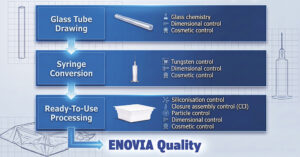
Figure 2: The process to building a biopharmaceutical-grade syringe.
Building Quality from the Beginning: The Importance of the Glass Tubing
The quality of a PFS begins long before the conversion process (Figure 2). Glass tubing constitutes the foundation for the final container and establishes the dimensional, cosmetic and chemical characteristics that will ultimately influence syringe performance.
For biopharmaceutical applications, glass chemistry must provide consistent hydrolytic resistance while minimising variability. NIPRO’s NSV-51 borosilicate glass demonstrates stable hydrolytic resistance, supported by the Vello manufacturing process (Figure 3). It also benefits from a heavy-metal-free refining process, resulting in low levels of critical extractable elements, such as aluminium oxide, while also providing excellent pH stability. Together, these attributes contribute to a robust extractables profile and support the industry’s increasing focus on the control of elemental impurities and mitigating glass-drug interactions.
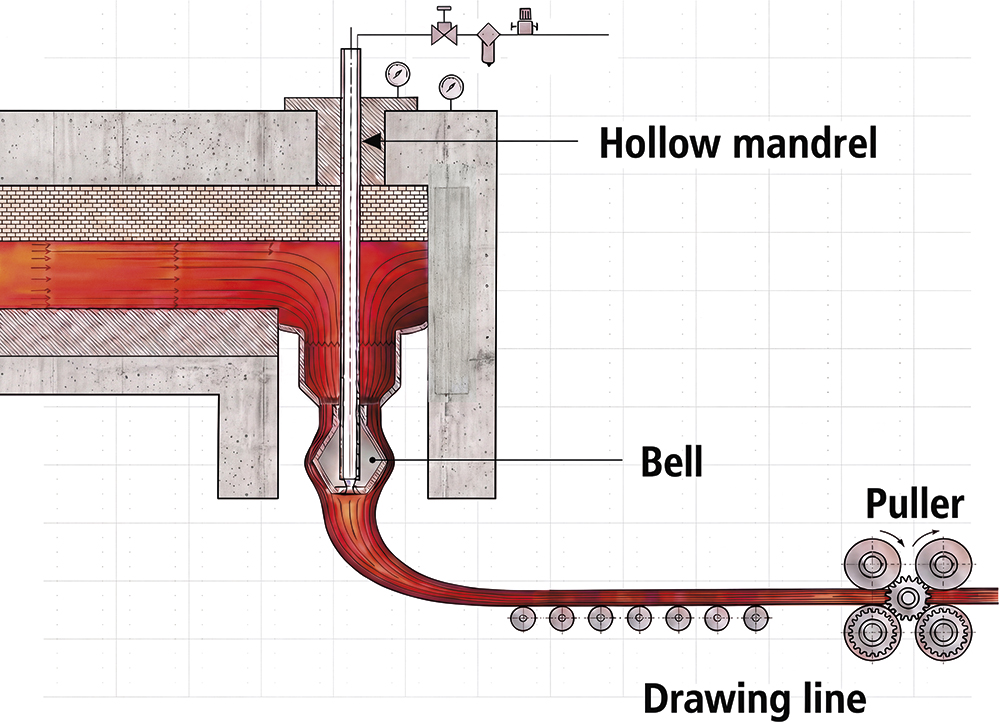
Figure 3: NIPRO’s NSV-51 borosilicate glass tubing, manufactured using the Vello process.
Beyond chemistry, dimensional consistency has become increasingly important for high-value combination products. Modern autoinjectors require significantly tighter demands on syringe geometry than traditional manual injectors. Even small variations in outer or inner diameter, wall thickness or ovality can affect fill-finish performance, device integration and functional performance, including dose delivery accuracy and injection time consistency.
To address these requirements, NIPRO has implemented advanced in-line dimensional monitoring systems that continuously measure key dimensional attributes during the drawing process, including wall thickness and outer and inner diameter, enabling targeted tolerances of ±0.05 mm on both outer and inner diameters for selected tubing formats.
Cosmetic quality represents another critical consideration for biologics developers. Defects such as inclusions, air lines and glass cords have traditionally been monitored through sampling-based inspections. However, recent advances in optical inspection technology now enable higher-resolution detection and more accurate in-line classification of cosmetic defects during tubing production. These improvements help to ensure a more consistent starting material, supporting reproducible quality throughout the manufacturing process before syringe conversion even begins.
“ESTABLISHING A TIGHTER AND MORE CONSISTENT RAW MATERIAL SPECIFICATION CREATED THE FOUNDATION UPON WHICH SUBSEQUENT CONVERSION IMPROVEMENTS COULD BE BUILT.”
For NIPRO, the development of “ENOVIA quality” biopharmaceutical-grade tubing was viewed as the first essential pillar of syringe quality. Establishing a tighter and more consistent raw material specification created the foundation upon which subsequent conversion improvements could be built.
Why Conversion is Critical
While tubing quality provides the foundation, the syringe conversion process largely determines the final performance profile of a PFS. The manufacture of a staked-needle syringe introduces multiple potential sources of variability, including particle generation, metal residues, cosmetic defects and glass stress. Historically, many of these process variables have been optimised independently. However, biologic drug products require a more integrated approach in which all process steps are evaluated collectively.
To support this objective, NIPRO has developed a dedicated converting line equipped with precision syringe-forming machines, a bulk-washing station, a 100% electric annealing oven with highly stable temperature control and multiple dedicated inspection technologies. This line supports syringe formats ranging from 0.5 to 3 mL.
Identifying Washing before Annealing as a Critical Factor
Through a series of development studies conducted across multiple syringe formats, NIPRO identified optimal washing process parameters to achieve ultra-low tungsten levels and reduce particles and water stains originating from upstream conversion processes. Additionally, these studies were designed to assess the impact of the washing process on the quality and performance of the final PFS.
Residual tungsten has long been recognised as a concern for certain biologic formulations because of its potential interaction with sensitive proteins. For this reason, minimising tungsten residues became a key objective of the development programme. Although no globally accepted specification for residual tungsten exists, syringe suppliers increasingly target low tungsten levels, with advanced biopharmaceutical platforms often aiming for residual tungsten concentrations below 500 ppb.
Using highly sensitive analytical methods, such as inductively coupled plasma mass spectrometry, NIPRO investigated the relationship between forming-pin wear and tungsten extraction levels. The studies demonstrated a direct correlation between pin degradation and measurable tungsten residues. As pin wear progressed over time, extracted tungsten levels increased correspondingly.
These findings enabled the implementation of a proactive control strategy. By combining optimised washing prior to annealing with controlled pin replacement intervals, NIPRO established an ultra-low tungsten process capable of supporting a specification of ≤100 ppb tungsten in the final product, reaching ENOVIA quality. Tungsten-free alternatives for Luer Lock configurations are already available.
Silicone Balancing Functionality and Biopharmaceutical Expectations
Silicone oil remains essential for syringe functionality. However, the formation of silicone droplets has become an increasing area of focus for biologic drug developers.
To better understand the relationship between siliconisation and syringe performance, NIPRO conducted a comprehensive design-of-experiment study involving multiple parameters, including bulk washing before annealing and silicone quantity, that led to 30 different siliconisation combinations.
Stability data from up to 12 months of accelerated ageing (equivalent to 129 days at 40°C/35% relative humidity) for a 1 mL PFS filled with a test formulation containing 0.01% polysorbate 80 and equipped with a coated plunger, identified two key parameters influencing performance: bulk washing before annealing and silicone quantity. These variables had the greatest influence on glide-force performance while simultaneously positively affecting visible and sub-visible particulate burden levels.
“THE ENOVIA QUALITY CONCEPT WAS DESIGNED TO ADDRESS THE SPECIFIC NEEDS OF BIOLOGICS, BIOSIMILARS AND OTHER SENSITIVE DRUG PRODUCTS.”
The study also demonstrated that lower silicone levels could be achieved while maintaining acceptable functional performance. Based on these findings, NIPRO developed ultra-low silicone configurations targeting approximately 0.25–0.35 mg of silicone oil, significantly lower than traditional levels. Silicone-free configurations can be provided upon request.
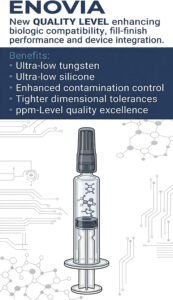
Figure 4: NIPRO’s new concept – ENOVIA.
BRINGING IT ALL TOGETHER: THE CREATION OF ENOVIA
The insights gained from tubing development, conversion optimisation and analytical characterisation ultimately converged into a new quality concept: ENOVIA (Figure 4). The ENOVIA quality concept was designed to address the specific needs of biologics, biosimilars and other sensitive drug products. This concept builds on NIPRO’s existing quality hierarchy while introducing tighter controls and enhanced specifications where scientific evidence has demonstrated clear benefits.
The ENOVIA concept introduces a new biopharmaceutical-grade tubing specification with tighter dimensional tolerances, enhanced cosmetic and contamination controls, and expanded process monitoring. The quality level also incorporates an additional washing step to reach ultra-low tungsten targets below 100 ppb. Beyond the syringe itself, ENOVIA has undergone validation with best-in-class elastomer components, including rigid needle shields and coated plungers, to support robust container closure system performance.
“FOR PFSs, QUALITY CAN NO LONGER BE VIEWED SOLELY AS A FINISHED-PRODUCT ATTRIBUTE. RATHER, IT IS THE CUMULATIVE RESULT OF DECISIONS MADE THROUGHOUT THE ENTIRE MANUFACTURING PROCESS.”
CONCLUSION
As biologics continue to reshape the pharmaceutical pipeline, expectations for primary packaging performance will continue to rise. For PFSs, quality can no longer be viewed solely as a finished- product attribute. Rather, it is the cumulative result of decisions made throughout the entire manufacturing process, beginning with glass tubing production and extending through conversion, washing, siliconisation and final inspection.
By combining innovations in tubing manufacturing with next-generation conversion technologies, ENOVIA has been designed to support the evolving needs of biologics, biosimilars and complex combination products, while providing pharmaceutical companies with greater confidence in the performance of their primary container system.