
To Issue 191
Citation: Schatz S, Novak W, “Cannula Selection for Prefilled Syringe Applications”, ONdrugDelivery, Issue 191 (Oct 2026), pp 140–144.
Dr Wenzel Novak and Stephan Schatz discuss the considerations that go into optimising cannula selection for an injection device, including patient comfort, drug requirements, manufacturability and intended use case, arguing that the best selection will be one that successfully balances these factors rather than maximising a single parameter.
PAIN REDUCTION – OPTIMISING PATIENT COMFORT
The cannula is one of the most critical components of an injection system – it represents the first physical interface between the patient and the medication and therefore has a significant impact on patient comfort, confidence and overall acceptance of the therapy. As such, minimising pain is a key factor in cannula selection. Several cannula parameters contribute to the overall patient experience:
- Low Penetration Force: Primarily influenced by cannula tip geometry and outer diameter. A sharper, smoother tip and a smaller outer diameter generally reduce the force required to penetrate the skin.
- Low Gliding Force Through the Skin: Mainly influenced by surface coating and surface roughness. A smooth, polished and appropriately coated surface can reduce friction and minimise the force required during insertion.
- Low Injection Force and Short Duration: Primarily driven by cannula inner diameter and drug viscosity. A larger inner diameter and lower drug viscosity can reduce flow resistance, resulting in lower injection force and shorter injection times.
- Controlled Tissue Penetration and Minimised Trauma: Influenced by the way the cannula penetrates and opens the skin. A cutting geometry can create a cleaner skin opening than a punching mechanism and support faster wound healing.
- High Mechanical Stability: Primarily determined by wall thickness and tip design. Sufficient wall thickness and a robust tip design can help prevent bending, deformation or hooking during handling and insertion.
- Best Fit for Intended Use: Driven by the target population and specific usage scenario.
“THE OPTIMAL CANNULA DESIGN DEPENDS ON THE CONTEXT OF USE – AN EMERGENCY-USE SCENARIO REQUIRES DIFFERENT CHARACTERISTICS THAN AT-HOME USE, WHERE EASE OF USE, COMFORT AND PATIENT CONFIDENCE MAY BE MORE CRITICAL.”
The optimal cannula design depends on the context of use – an emergency-use scenario requires different characteristics than at-home use, where ease of use, comfort and patient confidence may be more critical. Ultimately, the right combination of features determines the suitability for the intended use. The patient experience is determined by multiple interacting cannula, drug and intended use parameters. Optimising for one parameter alone is not sufficient.
DRUG REQUIREMENTS – UNDERSTAND THE DRUG
Alongside patient needs, the drug molecule defines a decision-critical set of design requirements based on its size, complexity, fragility, concentration and viscosity. The correlation between these factors is described by the Hagen-Poiseuille equation; a simplified relationship for a Newtonian liquid flowing through a cylindrical cannula:
- ΔP = 8ηLQ/πr4
- η = Viscosity
- L = Cannula length
- Q = Flow rate
- r = Internal radius.
The r4 relationship is particularly important – a small reduction in internal diameter can cause a very large increase in pressure, and therefore injection force. Imagine 5 N of force depressing the plunger of a 1 mL syringe containing saline (η of 1.02 cP at 20°C) and with a cannula length of 25 mm. As the inner diameter of the cannula is reduced, the free-flow delivery time varies significantly:
- 25G cannula (0.28 mm): ~5 sec
- 27G cannula (0.21 mm): ~10 sec
- 29G cannula (0.16 mm): ~31 sec
- 31G cannula (0.14 mm): ~71 sec
It is important to note that, for needles and cannulas, the gauge (the standardised size designation) primarily refers to the outer diameter, with lower gauge numbers corresponding to larger outer diameters. However, for flow rate and injection pressure, the inner diameter is the relevant parameter, and different wall-thickness standards can be available for the same needle gauge, resulting in different inner diameters. Typical wall-thickness classifications include (Figure 1):
- Standard wall
- Thin wall
- Extra-thin wall
- Ultra-thin wall.
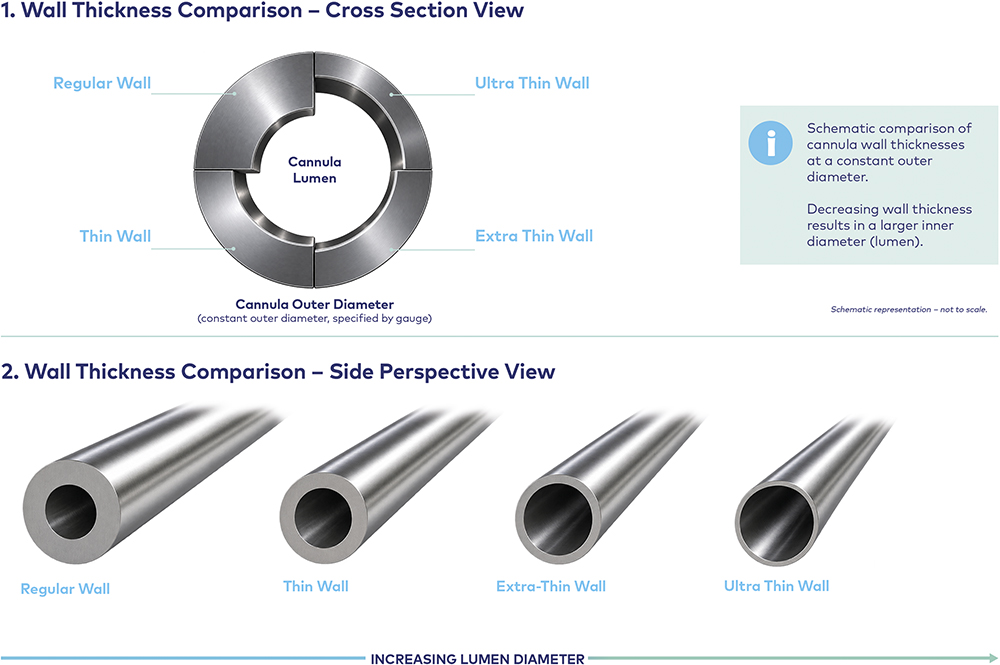
Figure 1: Influence of cannula gauge, wall thickness and cannula length on water flow resistance.
Therefore, a cannula should not be described by gauge alone. The wall thickness and resulting inner diameter are equally important, particularly when evaluating flow rate, injection pressure, injection time and shear forces.
For a given cannula and fluid, injection time is inversely proportional to pressure and proportional to injection length and volume. Therefore, doubling the pressure or reducing the cannula length or injection volume by half will reduce the injection time by approximately 50%. The drug viscosity is generally determined by pharmaceutical requirements, such as efficacy, stability and formulation constraints, and therefore cannot usually be adjusted to optimise injection time.
Water-based drugs can typically be delivered through a 25G or 27G cannula with relative ease; by optimising the relevant delivery parameters, a 29G cannula can also be suitable for 1 mL applications. Using thinner cannulas increases the required injection pressure and can lead to longer delivery times, potentially exceeding the “10-second rule”, the commonly targeted maximum injection time to achieve complete dose delivery and patient acceptance. A 31G cannula or smaller is generally more suitable for low-viscosity, low-volume applications, for the required injection force and delivery time to remain within acceptable limits (Figure 2).
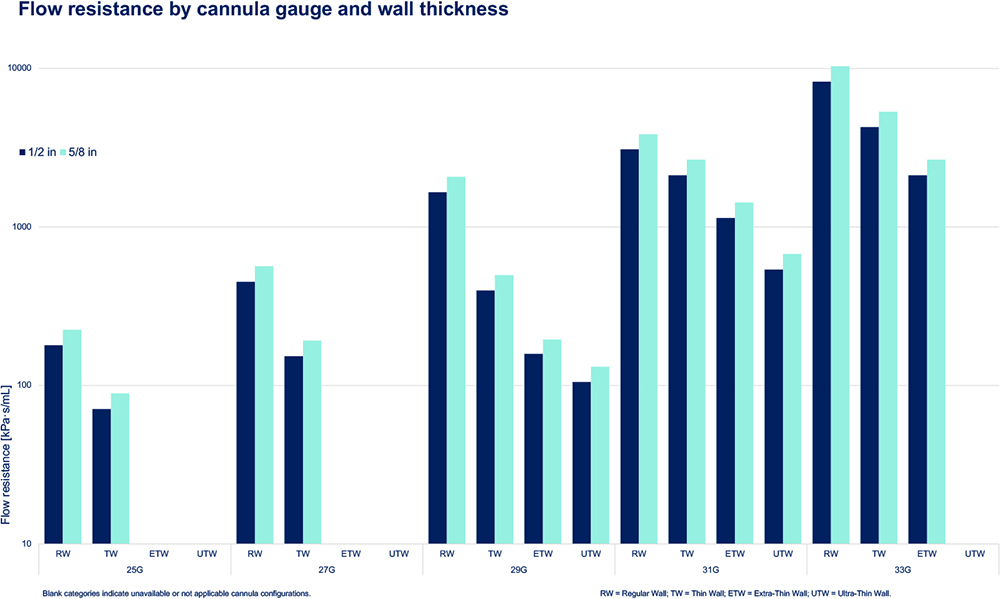
Figure 2: Increasing complexity and potential mechanical stress susceptibility of injectable drug products.
Autoinjectors and injection pens can compensate for smaller cannula diameters by applying higher injection pressures, thereby reducing delivery time. However, higher injection pressure may increase the risk of pain, tissue trauma or haematoma. This is one of the key drivers behind wearable delivery systems, which enable controlled administration over longer periods and therefore allow the use of smaller cannulas while maintaining acceptable injection pressures and patient comfort.
The temperature of the drug is typically assumed to be close to room temperature. Even when a drug is taken directly from a refrigerator, the impact on viscosity and delivery performance is generally limited, although lower temperatures can still cause patient discomfort. Cold injections should therefore be avoided where possible by allowing the drug to reach an appropriate temperature before use.
The integrity of the drug molecule is highly relevant – the therapeutic effect depends on maintaining the molecule in its fully functional form. Small molecules are generally robust and can withstand significant mechanical stress without a relevant impact on their functionality. However, as molecular complexity increases – from proteins and monoclonal antibodies to viruses and living cells (Figure 3) – sensitivity to mechanical stress and shear forces generally increases.

Figure 3: Effect of cannula wall thickness on lumen diameter at a constant outer diameter.
The shear forces generated during drug delivery can therefore potentially impact molecular integrity, biological activity and, ultimately, the efficacy of the medication. The potential impact should be assessed and verified during formulation development and clinical/device trials, along with cannula design compatibility testing. As such, it is the drug that defines the performance requirements of the cannula.
CANNULA DESIGN – TRANSLATING REQUIREMENTS INTO TECHNOLOGY
Drug stability, injection volume, acceptable application force, delivery device compatibility, minimum acceptable inner diameter and required mechanical stability define the appropriate inner and outer diameters of a cannula. For example, an extra-thin-wall cannula may provide better flow performance but could be too fragile for emergency applications.
The application environment, such as home care or emergency use, determines the critical tip requirements. For example, in a military emergency, adrenaline may need to be administered through clothing. In such a situation, a highly optimised cutting tip designed for conventional injection may not be the best solution. Tip sharpness, mechanical stability and cutting/penetration capability need to be optimised for the specific use case.
Whether the cannula is used by healthcare professionals or patients at home, whether injections are performed frequently or repeatedly at the same site, and the characteristics of the target demographic all influence the requirements for patient comfort and tissue response. For example, older patients may have reduced wound-healing capacity, making low penetration force and minimised pain particularly important for optimal wound healing. All of these requirements are ultimately translated into the physical parameters of the cannula:
- Cannula gauge
- Cannula length
- Wall thickness
- Tip geometry and bevel
- Mechanical strength and stability.
Cannula design is about optimising the complete system – not maximising a single parameter. The best solution is the one with the best overall balance, not the best individual specification.
MECHANICAL DESIGN OPTIONS – THE IMPACT OF GEOMETRY
Material Selection
AISI 304 and 316L stainless steel are the most common materials for injection cannulas. They provide a good combination of mechanical strength, corrosion resistance, manufacturability and dimensional stability, making them suitable for a broad range of intended uses. Where higher flexibility or super elasticity is required, materials such as nitinol (nickel-titanium) can be considered, although these are typically used for more specialised applications.
If material purity and control of elemental impurities are critical for the drug product or patient safety, low-cobalt or cobalt-controlled stainless steel can be selected to further reduce the proportion of cobalt in the cannula material. Ultimately, the intended use defines the necessary balance between functionality, patient safety, manufacturability and cost.
Gauge and Wall Thickness
For a cannula, wall thickness is a key parameter for mechanical stability, but it must always be considered together with the gauge and the material properties. ISO 9626:2016 describes the standard range from 10G to 34G, giving the standard inner and outer diameters and their tolerances, including definition of wall thickness. Some other diameters outside the ISO standard do exist, but diameters are always related to tube and material availability. Critically, the thinner the wall is, the greater the risk of bending or buckling – standard wall thickness is already low, so thinner walls must be handled with care (Table 1).
| Wall Classification | Wall Thickness | Inner Diameter | Relative Bending Stiffness | Critical Buckling Force |
| Regular wall | 0.064 mm | 0.209 mm | 100% | 1.78 N |
| Thin wall | 0.051 mm | 0.235 mm | 90% | 1.60 N |
| Ultra-thin wall | 0.038 mm | 0.261 mm | 75% | 1.34 N |
Table 1: Illustrative bending and buckling statistics for a 29G needle.
“THE OPTIMAL DESIGN IS ALWAYS A COMPROMISE BETWEEN SHARPNESS, ROBUSTNESS, MANUFACTURABILITY AND THE INTENDED USE.”
Tip Geometry
The tip geometry is the first point of contact with the patient and therefore has a direct impact on penetration force, tissue interaction, coring, tip stability and patient comfort. The optimal design is always a compromise between sharpness, robustness, manufacturability and the intended use.
Two standard tip geometries are 3-bevel, which is well-established, robust and cost-efficient, with a good balance between penetration performance, tip strength and manufacturability; and V-bevel, which is typical for prefilled syringes and autoinjectors, offering reduced penetration force but more controlled penetration behaviour. Beyond those two, there is a wide range of additional tip geometries that are used for specific applications and requirements, such as particular penetration conditions, blood collection, intradermal delivery and other medical applications (Figure 4).
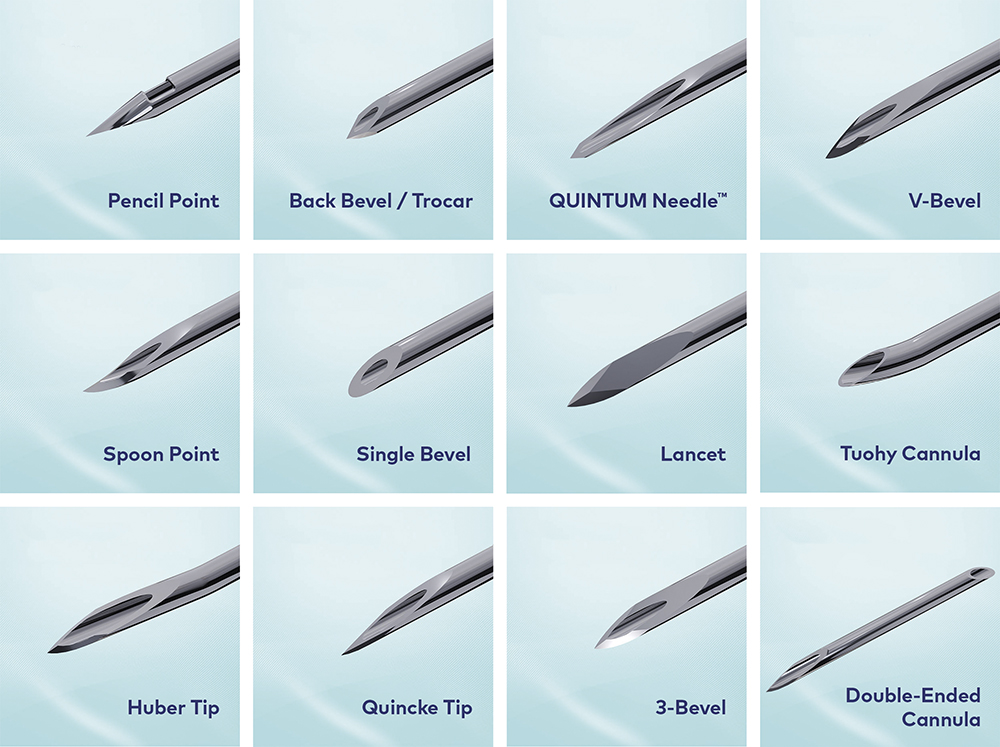
Figure 4: Examples of specialised cannula tip designs.
Coring is relevant both during needle-shield assembly and during skin penetration. It describes the risk of cutting and removing small particles or plugs from the penetrated material, such as elastomeric needle-shield material or skin tissue. The geometry and sharpness of the cannula tip have a direct impact on coring – as a general rule, a very sharp front tip and sharp cutting edges, combined with a smoothly finished cannula “eye”, are highly effective in minimising coring.
THE OPTIMAL SOLUTION FOR THE MEDICATION, THE PATIENT AND MECHANICAL STABILITY
There is no perfect cannula – the optimal design is always a carefully balanced compromise between patient comfort, drug delivery performance, mechanical stability and manufacturability. For example, a low-cost, infrequently used medication may require a very different cannula than a high-value, frequently administered or highly sensitive medication. The key factors to consider for each aim are:
- Patient Comfort: As small as practical, optimised sharpness, smooth surfaces and minimised coring. Enables lower penetration force, less tissue trauma and improved patient acceptance.
- Drug Delivery Performance: Inner diameter as large as practical, using a material with a suitable extractables and leachables profile. Enables lower injection forces and shorter delivery times while maintaining drug compatibility.
- Manufacturability: Standardised designs, optimised bevel geometry and standard diameters. Enables reduced manufacturing complexity, shorter cycle times and lower cost and process variability.
- Intended Use: The application determines the optimal combination of parameters – the design must reflect the most relevant use-case factors, such as frequency of use, drug value, injection volume, viscosity, user population, device type and required robustness.
“THE BEST CANNULA IS NOT THE ONE THAT MAXIMISES A SINGLE PARAMETER – IT IS THE ONE THAT DELIVERS THE BEST OVERALL PERFORMANCE FOR THE SPECIFIC APPLICATION.”
The best cannula is not the one that maximises a single parameter – it is the one that delivers the best overall performance for the specific application. The drug delivery industry has decades of experience in developing and manufacturing cannulas and an established partner can provide the right solution for each intended use. New designs continue to minimise coring, improve patient comfort, reduce tissue trauma and enable billions of cannulas to be manufactured annually with consistent, reproducible quality. The technology is available – the key is to choose the right cannula.