To Issue 190
Citation: Green P, Abbott K, “Capa Valve Launches New Valve System for Dual-Chamber Devices”, ONdrugDelivery, Issue 190 (Sep/Oct 2026), pp 46–50.
Dr Phil Green and Kevin Abbott discuss how Capa Valve’s patented valve technology provides a compelling alternative to bypass-based dual-chamber syringes, as its pressure-sensitive valve-based design enables much greater compatibility with existing fill-finish infrastructure and offers the flexibility to precisely tune the device via the geometric position of the valve within the syringe barrel.
A NEW GENERATION OF DUAL-CHAMBER DEVICES
Dual-chamber devices (DCDs) are bespoke combination drug-device products that typically contain a freeze-dried drug and its diluent in separate chambers within a single device. The two chambers are usually linked with a bypass channel formed in the barrel of the syringe or cartridge. DCDs are designed to improve the stability and convenience of biopharmaceutical products, particularly those that require reconstitution immediately before administration. By integrating both components into one system, DCDs significantly reduce the number of preparation steps, minimising the risk of handling errors and improving ease of use for both patients and healthcare professionals.
Interest in DCDs continues to grow, driven largely by the increasing demand for self-administration devices and home-based healthcare. However, despite having been available for several decades, their widespread adoption has remained relatively limited. This is largely attributed to challenges associated with device design, manufacturability, formulation compatibility and overall cost.
“CAPA VALVE’S SYSTEMS WERE DEVELOPED TO ADDRESS MANY OF THE LIMITATIONS OF THE BYPASS SYRINGE APPROACH WHILE IMPROVING BOTH MANUFACTURABILITY AND COMMERCIAL VIABILITY.”
Capa Valve’s systems were developed to address many of the limitations of the bypass syringe approach while improving both manufacturability and commercial viability. Its patented technology provides a simple, robust and cost-effective solution for dual-chamber injectable products, whether for reconstitution of a lyophilised drug within a prefilled syringe or for the delivery of liquid-powder formulations for injection. The additional components are designed to integrate with standard prefilled syringes and can be scaled across a wide range of syringe sizes. To date, the Capa Valve technology has been successfully evaluated in standard 0.5 mL prefilled syringes as well as larger 60 mL infusion syringes.
Compared with conventional methods for reconstituting lyophilised drugs for injection, Capa Valve’s solutions offer several important advantages. By enabling reconstitution within a closed, integrated system, it reduces the risk of contamination and preparation errors, improves patient safety and shortens the time required for preparation prior to administration. In addition, it can reduce packaging requirements, transportation and storage costs and supply-chain complexity.
“THE NEW DESIGN FEATURES A PRESSURE-ACTIVATED OPENING MECHANISM, WITH THE ACTIVATION THRESHOLD PRECISELY TUNEABLE TO MEET THE REQUIREMENTS OF SPECIFIC CLINICAL APPLICATIONS, PROVIDING A DIRECT, COST-EFFECTIVE REPLACEMENT FOR CONVENTIONAL DUAL-CHAMBER BYPASS SYRINGES.”
The use of a valve, rather than a bypass within the syringe barrel, offers two significant advantages. Firstly, it enables a DCD to be created from an existing standard primary container, and, secondly, it allows the ratio of chamber sizes to be infinitely adjusted via precise valve placement during the fill-finish process.
THE CAPA VALVE APPROACH TO DCDs
Capa Valve’s portfolio of patent-protected technology provides simple and cost-effective solutions to realise reconstitution within a prefilled syringe. The new valve variant detailed here expands Capa Valve’s portfolio of valve systems. This recently developed variant enables every functional configuration required for dual-chamber syringe applications. The new design features a pressure-activated opening mechanism, with the activation threshold precisely tuneable to meet the requirements of specific clinical applications, providing a direct, cost-effective replacement for conventional dual-chamber bypass syringes. As with all Capa Valve technologies, the new valve can be seamlessly integrated into existing syringe designs, allowing primary container manufacturers to convert standard syringes into low-cost DCDs without the complexity or expense of redesigning the syringe itself.
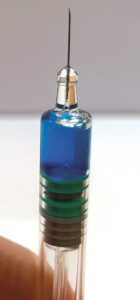
Figure 3: Solid drug dissolves in diluent.
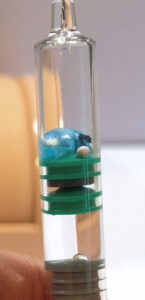
Figure 2: Valve opening due to applied pressure.
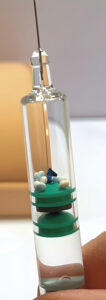
Figure 1: Valve separates solid drug and diluent.
Figure 1 shows the new valve design in the closed position separating the prefilled contents, with the solid drug contained within the front chamber and the diluent in the rear chamber. The system has been tested and works with equal efficiency with the diluent in the front chamber and the solid drug in the rear chamber, which may be a more desirable arrangement for the fill finish process and also to prevent needle occlusion in use. When the user starts to apply force to the plunger rod, the back chamber containing the diluent is pressurised and the valve opens to transfer the diluent into the front chamber (Figure 2). The activation pressure can be set by adjusting geometrical parameters of the valve parts for any specific applications, such as manually operated syringes versus syringes or cartridges for autoinjectors. Figure 3 shows the solid API in the front chamber being reconstituted within the syringe ready for immediate injection.
“IN THE DEVELOPMENT OF ALL ITS VALVE VARIANTS, CAPA VALVE HAS WORKED CLOSELY WITH COMPANIES WITH FILL-FINISH EXPERTISE TO ENSURE THAT ITS TECHNOLOGY DOES NOT POSE ANY SIGNIFICANT CHALLENGES FOR THE EXISTING PROCESSES AND EQUIPMENT CURRENTLY BEING USED FOR THE FILL-FINISH OF DCDs.”
FILL-FINISH AND SCALABILITY
During the development of all its valve variants, Capa Valve has worked closely with companies with fill-finish expertise to ensure that its technology does not pose any significant challenges for existing processes and equipment currently being used for the fill-finish of DCDs. Close attention to detail in optimising the geometry of Capa Valve’s components through extensive testing and design iterations has not only ensured robust failsafe operation of the valve but also extended to the automated processes employed to realise the technology at scale.
As an example, the original sequential valve was designed to be manipulated using the standard bowl feeders currently used for the handling and orientation of standard stoppers. This is achieved by bowl-feeding the valve in the open position, as, in this state, the form factor of the valve replicates that of a standard stopper. It is during the mechanical stoppering of the valve that the valve is then transitioned to the closed position.
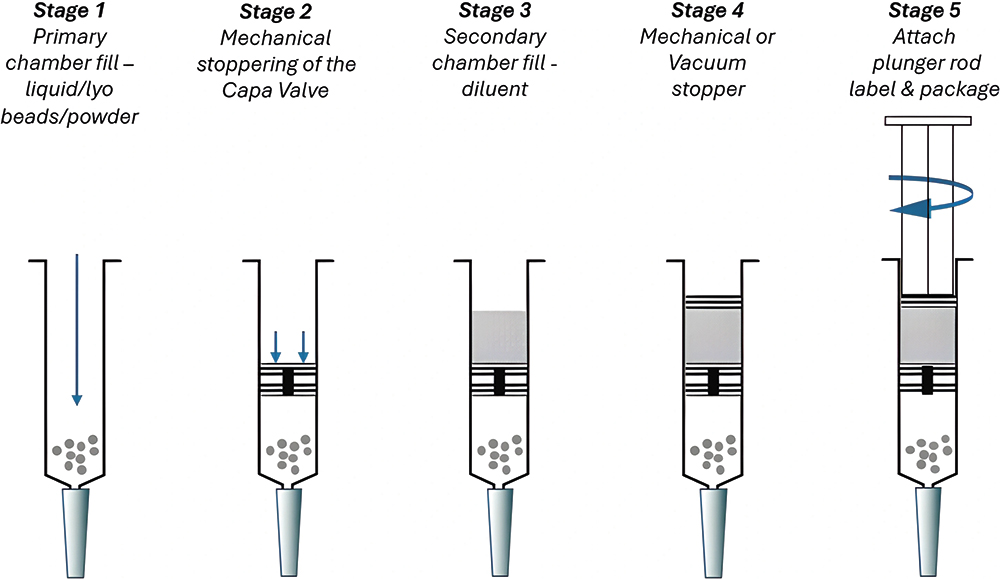
Figure 4: Fill-finish stages of the Capa Valve.
The only modification needed for the fill-finish equipment is the size of the protrusion on the stoppering rod to ensure that the valve is always stoppered in the closed position. This same approach has been adopted with the new pressure-operated valve discussed here, again ensuring that the technology can be seamlessly introduced into existing fill-finish lines. Figure 4 provides an overview of the automated placement of the valve in the container barrel and Figure 5 illustrates the automated feeding and stoppering of the valve.
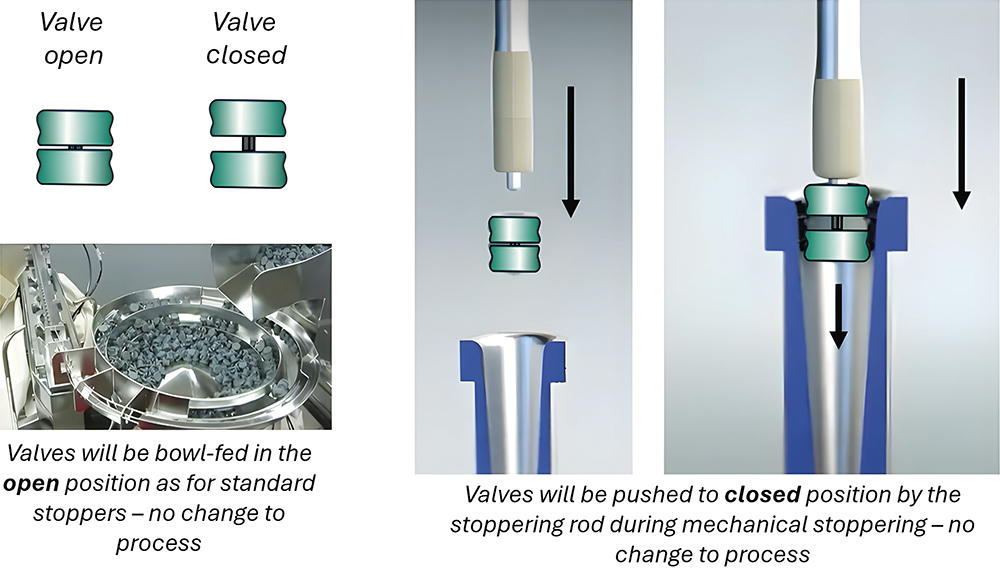
Figure 5: Automated feeding and stoppering of the Capa Valve.
MARKET NEED AND THE CAPA VALVE VALUE PROPOSITION
The costly, time-consuming and relatively high-risk process of reconstituting lyophilised drugs or powders for injection can be addressed by a prefilled solution using Capa Valve’s technology. This technology was originally developed to address the significant growth and application for DCDs in the growing market of injectable freeze-dried drugs requiring reconstitution prior to administration. There is an abundance of information and data supporting the rapid growth of lyophilised injectables (Figure 6).
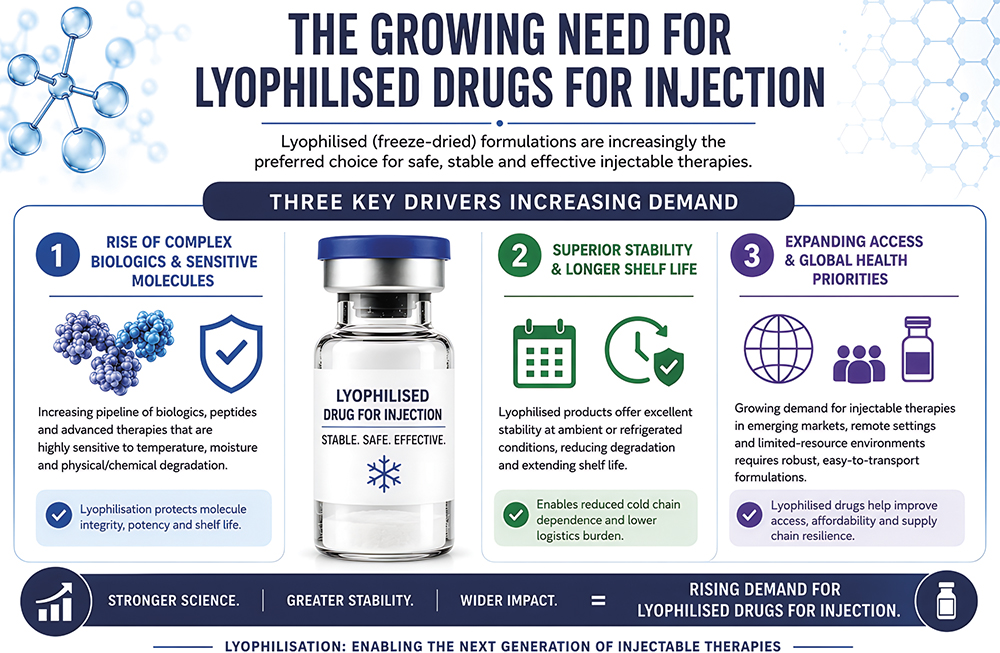
Figure 6: Market opportunity for novel lyophilised injectable device.
Expansion of Biologics and Advanced Therapies
The rapid growth of biologics, including monoclonal antibodies, peptides, vaccines and cell and gene therapies, has increased the demand for lyophilised formulations, as many of these molecules are unstable in liquid form. Lyophilisation improves stability, extends shelf life and helps to maintain potency during storage and transport. Recent reviews also note that many first-in-class biologics were initially commercialised as lyophilised products while stable liquid formulations were still under development.1
Growth in Oncology and Anti-Infective Injectable Medicines
Oncology and infectious disease pipelines increasingly rely on injectable medicines that require excellent long-term stability. Many cytotoxic drugs, antibiotics and biologics are therefore formulated as lyophilised powders for reconstitution prior to administration. A recent review reported that more than 70% of antibiotics on the WHO’s Essential Medicines List are supplied as lyophilised sterile powders for injection, highlighting the established and growing dependence on this dosage form.2
“LYOPHILISED INJECTABLES OFFER A LONGER SHELF LIFE, REDUCED DEGRADATION AND GREATER FLEXIBILITY FOR STOCKPILING AND DISTRIBUTION, PARTICULARLY WHERE
COLD-CHAIN INFRASTRUCTURE IS LIMITED.”
Need for Improved Supply-Chain Resilience and Reduced Cold-Chain Dependence
Healthcare systems increasingly require medicines that can tolerate storage and transport challenges. Lyophilised injectables offer a longer shelf life, reduced degradation and greater flexibility for stockpiling and distribution, particularly where cold-chain infrastructure is limited. The covid-19 pandemic exposed shortages in lyophilisation manufacturing capacity, prompting significant investment in additional freeze-drying capacity worldwide to improve resilience and support future demand.3
REFERENCES
- Alexeenko A, Korang-Yeboah M, Tchessalov S, “Critical Needs and Opportunities for Advanced Manufacturing of Lyophilized Injectables”. Pharm Res, 2025, Vol 42(6), pp 1059–1064.
- “Lyophilized Injectable Drugs – Global Strategic Business Report”. Market Report, Market Glass, Aug 2026.
- “Lyophilized Injectable Drugs Market Size, Market Share, Application Analysis, Regional Outlook, Growth Trends, Key Players, Competitive Strategies and Forecasts, 2025 To 2033”. Market Report, Acute Market Reports, Jun 2025.