To Issue 188
Citation: Johnston D, “From Space Propulsion to Drug Delivery: A New Subcutaneous Platform from Torramics”, ONdrugDelivery, Issue 189 (Sep 2026), pp 78–81.
David Johnston introduces the NanoFlow platform, a wearable injector based on semiconductor architecture rather than a traditional mechanical pump, enabling enhanced dosing precision and further miniaturisation than is possible with legacy systems.
SC DELIVERY AS THE PREFERRED ROUTE FOR NEW THERAPIES
Over the past two decades, subcutaneous (SC) drug delivery has emerged as the preferred route for an expanding class of therapeutics. Led by insulin delivery, newer therapeutics, such as glucagon-like peptide-1 (GLP-1) agonists, monoclonal antibodies (mAbs) and other agents have been developed for or moved from intravenous (IV) or intramuscular administration into patient-controlled SC systems. This shift has been enabled by advances in mechanical self-injection technology – autoinjectors, injection pens and wearable pumps – that have brought self-administration and automation to millions of patients.
These mechanical systems represent significant engineering achievements in service of people in need. Insulin pump adoption now accounts for over 50% of insulin therapy in paediatric patients with Type 1 diabetes in the US and 29% among adults. The development of reliable, miniaturised mechanical assemblies has been central to this adoption.
However, mechanical assemblies operate within inherent engineering constraints. Miniaturisation has reached points of diminishing returns, even with advanced designs and precision fabrication. For therapies requiring highly reliable, manageable extended precision delivery and sensing – or for achieving further reductions in device size and energy consumption – an alternative technological foundation is necessary.
“TORRAMICS IS DEVELOPING TECHNOLOGY TO APPLY SEMICONDUCTORS TO PRODUCE A NANOCOMPRESSOR WITH UNPRECEDENTED REDUCTIONS IN SIZE AND ENERGY REQUIREMENTS, AS WELL AS MORE PRECISE DELIVERY AND IMPROVED SENSING CAPABILITIES.”
Torramics is developing technology to apply semiconductors to produce a nanocompressor with unprecedented reductions in size and energy requirements, as well as more precise delivery and improved sensing capabilities. This platform shift creates new possibilities for wearable drug delivery across the entire range of subcutaneously administered therapies.
PLATFORM TECHNOLOGY: NANOCOMPRESSOR
The nanocompressor was developed at by Torramics’s team at the NASA Ames Research Center (Mountain View, CA, US) with the original aim of developing novel propulsion technology. The basic operating principle of the nanocompressor combines thermoelectrics with thermal diffusion to move air molecules from cold to hot in nanodimensions within a micro-electromechanical systems chip structure, developing compression (Figure 1).
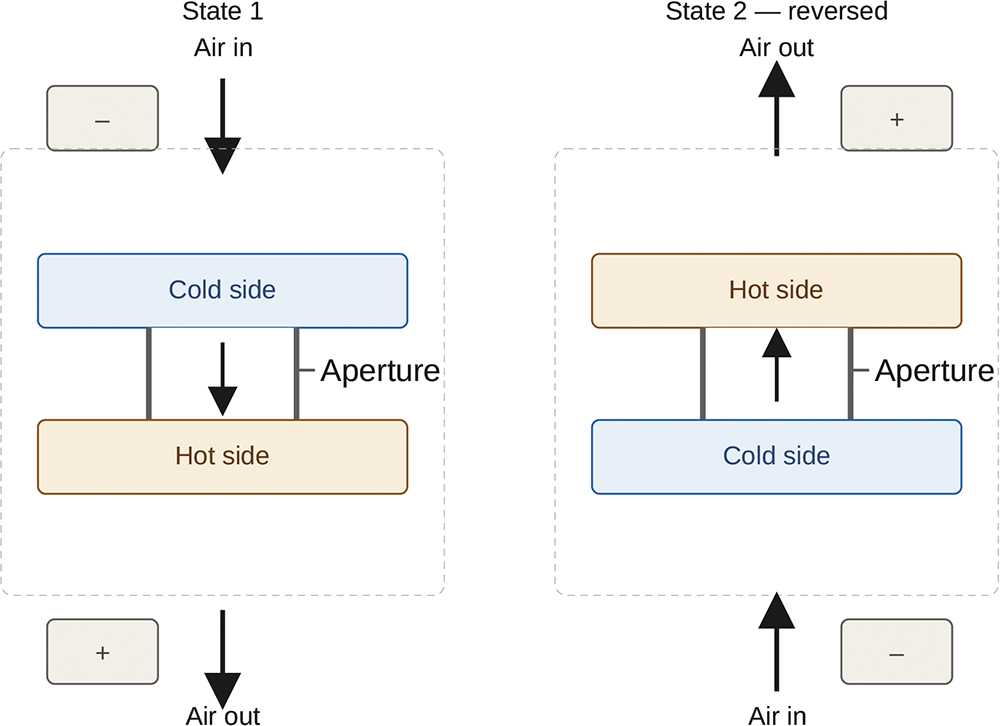
Figure 1: Gas compression through thermoelectrics/thermal diffusion.
This action is bidirectional, with a change in polarity of the electrical current changing the direction of the temperature gradient. Air compressed this way is transferred to a membrane in Torramics’s nanofluidics system, providing push and pull forces for pumping liquid.
The nanocompressor replaces mechanical assemblies pushing on a membrane, valve or piston, enabling device designer to move from designs with many large moving parts to ones with no moving parts. Molecular gas compression actuation by Torramics’s technology uses low voltages and currents, little power and produces very small amounts of waste heat, which can help to protect heat-sensitive drug molecules.
PLATFORM TECHNOLOGY: NANOFLUIDICS
The delivery chamber is made up of three sections: an inlet from the drug reservoir, a pumping section for measuring and moving drug solution, and an outlet to the infusion set (Figure 2). This three-chamber architecture provides multiple levels of control and safety, and has been applied in drug delivery systems many times before.
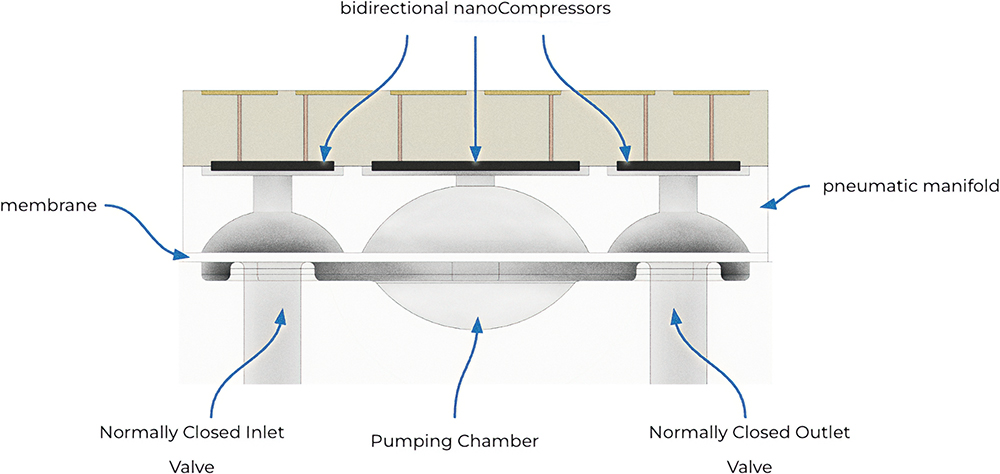
Figure 2: Anatomy of the Torramics nanofluidics system.
Each compression stroke delivers a precise volume of drug – 500 nL per cycle for the insulin delivery design. This design has been shown to deliver ±2% accuracy in extensive lab testing over a range of fluid viscosities from 1 to 180 cP. The inlet and outlet valves prevent free flow in either direction, protecting against unintended delivery and other issues.
The design provides pressure-sensing with real-time occlusion detection, overcoming problems with delayed detection in mechanical pump designs. Some cases with existing insulin pumps can take many hours to sense occlusions, during which the drug is not being delivered. On occasion, occlusions may actually be sensed by the user’s continuous glucose monitor before the pump itself. Furthermore, test results demonstrate low risk for extractables and leachables, along with no loss of drug potency during delivery.
INITIAL PRODUCT APPLICATION: NANOFLOW FOR INSULIN DELIVERY
Torramics has selected insulin delivery as the initial target application for this platform, with a fully closed-loop design. The closed-loop controls will replace the bolus deliveries tied to meal announcements in currently marketed devices. The device measures 33 mm in diameter and 7 mm in height above the skin, with a mass of approximately 5 g when filled with 2 mL of aqueous drug. These dimensions are a direct result of the miniaturisation and low-energy requirements made possible by the semiconductor-based platform compared with mechanical alternatives.
Currently marketed systems often deliver insulin via an assembly of mechanical parts. While these systems have substantially expanded the options available for insulin therapy, product size is no longer a competitive advantage among these products, as the size of mechanical pumps has reached a minimum. All new devices have tended to be about the same size as the market growth leader – Omnipod (Insulet, Acton, MA, US).
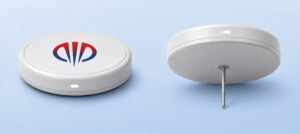
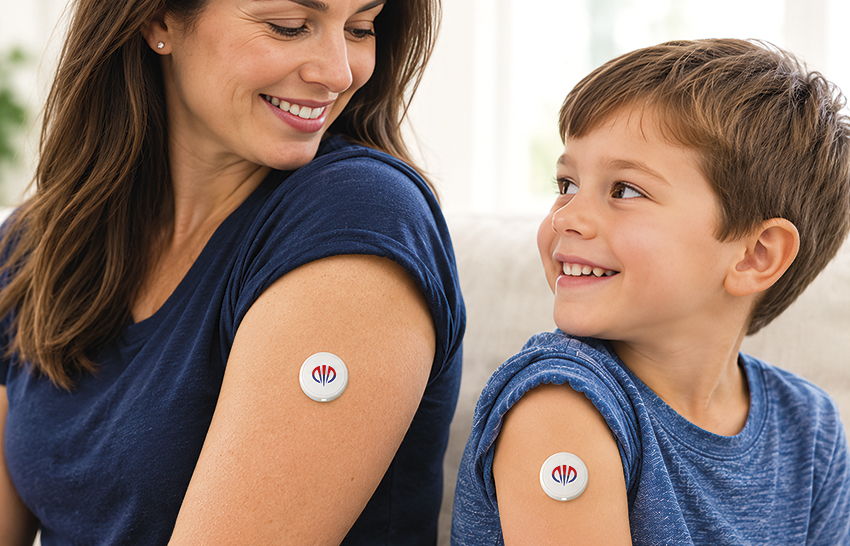
Figure 3: Torramics’s NanoFlow system.
The substantially smaller form factor of Torramics’s NanoFlow offers advantages in profile reduction and operational simplicity, achieved through the underlying shift in technology rather than through a refinement of the mechanical design. NanoFlow’s more compact form offers several practical benefits – for example, a smaller device presents fewer catch-points during daily activities and can reduce complications related to large adhesive patches (Figure 3).
One simple advantage comes from limiting the area of the skin occupied by the device, leaving more scarce body area for rotating sites. This is a simple but profound advantage for younger persons with Type 1 diabetes due to their smaller bodies. For insulin users, these factors contribute to simplified therapy management.
As already noted, NanoFlow will support delivery rate modulation in real time via data from a continuous glucose monitor and fully closed-loop control algorithms. This capability is a basic requirement for any future insulin delivery device seeking broad acceptance.
SAFETY MONITORING: REAL-TIME OCCLUSION DETECTION
Occlusion – the blockage of the delivery pathway – represents a common cause of therapy interruption present in all SC delivery systems, particularly with insulin delivery. Current mechanical pumps can detect occlusion through pressure sensing or by observing delivery failures. Detection latency varies by system, with some systems requiring hours at low delivery rates to identify an occlusion event.
Occlusion represents roughly 64,000 events reported to the US FDA each year for the latest versions of insulin delivery pumps – those that are “Alternate Controller Enabled (ACE) Infusion Pumps” with closed-loop controls. Occlusion may lead to elevated blood glucose, which may further advance to diabetic ketoacidosis if not alleviated.
NanoFlow will incorporate real-time occlusion detection by directly sensing resistance to flow in the nanocompressor. This technology enables algorithmic decision-making to minimise both false alarms and actual lack of delivery. For many therapeutic agents, acute phenomena in response to delayed dosing are not as likely as they are for insulin. However, other factors, such as excessive total time on body or lack of effect, may increase the value of this capability.
Additional Sensing Capabilities
Along with real-time occlusion sensing, NanoFlow also has the potential for real-time leak and air bubble detection. However, Torramics needs to fully understand the utility/capability balance for these attributes before committing to them in its existing design. Actual in-line flow-rate sensing and temperature sensing are also in consideration for additional potential benefits.
APPLICATIONS AND MARKET OPPORTUNITIES
Insulin: Established Market With Continued Growth
The global insulin pump market is valued at approximately US$8.2 billion (£6 billion), with projections to reach $22.5 billion by 2034, representing a compound annual growth rate of 13.4%. This growth is driven by the increasing prevalence of Type 1 diabetes, patient preference for automated delivery over multiple daily injections, expanding reimbursement coverage and increased use with Type 2 diabetes. Within this growing market, NanoFlow represents an alternative platform based on semiconductors that offers significant advantages over traditional mechanical delivery.
GLP-1 Agonists: Expanding Delivery Options
GLP-1 agonist therapy has expanded greatly, with new indications being found beyond Type 2 diabetes, including obesity management and cardiovascular risk reduction. Current delivery approaches include weekly SC injections (semaglutide, tirzepatide) and, more recently, daily administration of oral formulations.
Dosing via a weekly injection concentrates drug delivery into discrete events, which can produce adverse dose-related gastrointestinal events that limit dose escalation in some patients, and contribute to a loss of adherence and persistence. Extended-release oral formulations present bioavailability, daily adherence and some retained gastrointestinal challenges.
“THE DEVICE BEING ON-BODY FOR THE WEEK COULD GIVE PATIENTS THE ABILITY TO ADJUST DOSING TO THEIR INDIVIDUAL TOLERANCE RATHER THAN BE SUBJECTED TO DOSES DESIGNED FOR THE MASS POPULATION.”
A wearable patch capable of continuous, programmable delivery over extended periods, such as a once-weekly application delivering over seven days, would distribute drug exposure over time and potentially reduce dose-associated side effects. This delivery profile would be enabled by NanoFlow’s precise rate-control, enabling the platform to manage blood levels, with a non-traumatic, once-weekly application. The device being on-body for the week could give patients the ability to adjust dosing to their individual tolerance rather than be subjected to doses designed for the mass population.
mAbs: High-Volume SC Delivery
mAb therapeutics represent one of the fastest-growing categories in drug development. Current delivery has been dominated by IV infusion or SC depot injection, with the latter limited by patient tolerance for large-injection volumes. IV administration of these agents is a costly regimen that involves visits to an IV centre every few weeks for a 30–60 min infusion over months or even years. As such, drug developers have been pursuing SC delivery for some time as a substantial improvement to the patient experience.
Makers of mechanical pump systems have rallied to develop devices that can enable this switch. However, mechanical systems face a volumetric constraint: the device itself is typically three to 10 times the volume of the drug payload – a device-to-drug ratio of 3:1 to 10:1. This ratio limits wearability for high-volume therapeutics and leads to changes in drug formulation to minimise the time that they need to be on-body out of regard for the burden of the system’s size.
The much smaller semiconductor architecture of NanoFlow can achieve more efficient volumetric ratios, targeting 1:4 or better – where the device volume is much smaller than the therapeutic dose. This efficiency enables developers to pursue alternate dosing strategies, including wearable delivery of larger drug volumes, possibly multiple times per week, with reduced burden, thereby expanding SC delivery options and improving the success rate for mAb administrations. The strategic vision for this application is “person maximum/kit minimum”, prioritising the patient’s needs.
Additional Therapeutic Applications
Beyond the therapeutic areas already discussed, NanoFlow’s precise rate control and compact form factor support application to other SC therapies, potentially including pain management, hormone replacement, ADHD medication and emerging biologic agents. In particular, NanoFlow has the potential to shine in applications where controlled delivery, extended delivery and delivery-on-demand can offer clinical options that are not currently available.
CONCLUSION
SC drug delivery has evolved substantially through advances in mechanical engineering. The transition to monolithic semiconductor technology represents a platform shift, replacing moving mechanical assemblies with nanoscale thermal actuation. This change represents the potential to reduce device sizes, energy consumption and delivery variability – advantages that could open new possibilities for insulin, GLP-1 agonists, mAbs and other therapies where precise, extended, wearable delivery can improve patient outcomes.
A technology shift of this nature follows previous technology swaps from vacuum tubes to transistors, from individual transistors to millions of transistors on a single semiconductor device, from chemical photographic films to complementary metal-oxide-semiconductor image capture. Torramics is working with its partners and investors to bring this new approach to drug delivery and enhance not only delivery efficiency and the patient experience, but also give patients the freedom to live the active lifestyles they deserve.