To Issue 188
Citation: Yates D, “Wear it Well: How On-Body Delivery Systems Have Evolved to Empower Patients and Embolden Innovators”, ONdrugDelivery, Issue 189 (Sep 2026), pp 52–55.
Dan Yates considers how wearables have increased their value for both patients and pharma partners through intentional design optimisation, highlighting how insights from real-world use have led to intentional design directions that satisfy the needs of these critical stakeholder groups, further building confidence in a configurable platform that maintains significant potential for future innovation.
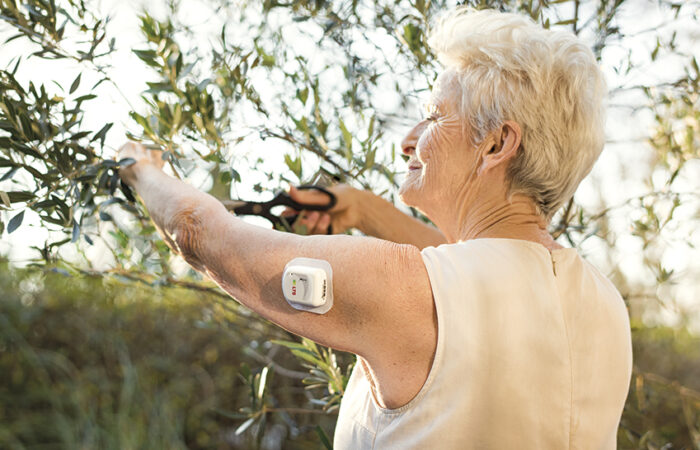
In the pharmaceutical industry, far from the world of fast fashion, “ready to wear” takes on a whole new meaning. Here, it applies to wearable medical devices that, over the past decade, have rapidly transitioned from promising concept to patient-ready product. Today, momentum continues to build in this segment of the market, which is helping to fuel a transformational shift in patient care by filling a gap between intravenous infusions and subcutaneous (SC) autoinjectors. With a projected compound annual growth of 11% taking the global value of on-body injectors to an estimated US$29.36 billion (£21.75 billion) by 2034, wearables are definitely not a passing trend.1
The success of wearables and on-body delivery systems (OBDSs) can largely be attributed to confidence. This can be seen in patients through their ability to safely facilitate the controlled delivery of ever-increasing volumes of injectable therapies beyond the confines of healthcare facilities and without oversight from a healthcare professional. For those managing chronic conditions, who might face the burden of frequent injections or infusions of high-dose and potentially viscous biologic treatments, this aspect of wearables undoubtedly provides various important benefits.
At the same time, innovation in device design has provided pharma partners with greater confidence in the feasibility and future potential of wearable platforms. Advances in areas such as manufacturing agility, component compatibility, reliability and dose deliverability have lowered development risk while enabling timeframes to be reduced. As such, wearable devices have opened new commercial opportunities for market share and sales growth, addressing unmet patient needs via novel treatments and differentiated delivery.
DESIGNING FOR REAL PEOPLE WITH REAL NEEDS
Alongside pen injectors and autoinjectors, wearables have answered a growing call for greater flexibility in the delivery of injectable therapies, providing greater autonomy and convenience for patients while also easing the demand on healthcare professionals and clinical facilities. Specifically, wearables answer this call where the combination of drug concentration and viscosity result in therapies of larger volumes and/or longer injection durations. By exceeding the traditionally accepted 1–2 mL limitation of SC injections for self-administration with an autoinjector, wearables aim to support maximal patient convenience with minimal injection discomfort. Over time, these devices have evolved to accommodate larger drug formulation volumes and a wider range of therapies, further extending their potential to reduce injection frequency and reliance on infusion-based delivery.
West’s SmartDose® 10 OBDS is the product of an optimisation strategy integrated into the device from its inception. An earlier, lower-volume version of the OBDS was selected for SC delivery of a biologic medication for lowering cholesterol and protecting against major cardiovascular events.2 The in-market experience and real-world feedback gained from this application fed directly into a design-enhancement process, with the platform subsequently being revised, adapted and extended to accommodate dose volumes of up to 10 mL. This updated platform was employed in the FUROSCIX (furosemide) On-Body Infusor launched by scPharmaceuticals (Burlington, MA, US) in 2022 as the first at-home SC diuretic for patients with heart failure or chronic kidney disease.
“IN A FAST-MOVING SPACE, THE SMARTDOSE OBDS DESIGN TEAM AT WEST CAREFULLY AND INTENTIONALLY GUIDED THE PLATFORM’S DEVELOPMENT ON A TRAJECTORY OF CONTINUOUS IMPROVEMENT.”
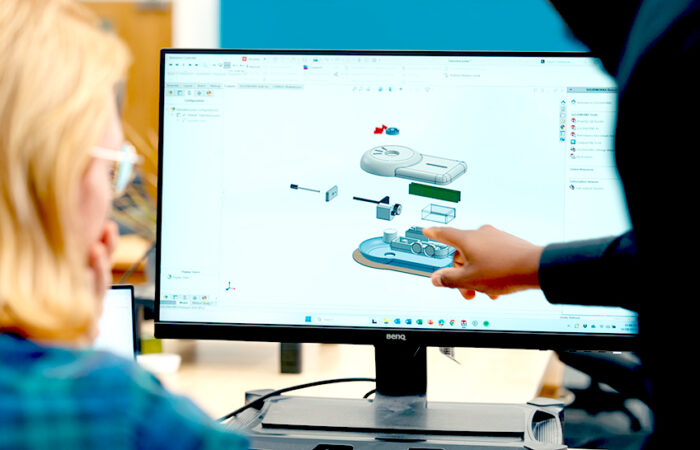
In a fast-moving space, the SmartDose OBDS design team at West carefully and intentionally guided the platform’s development on a trajectory of continuous improvement. While strong foundations were laid with the original platform, device design is very rarely a “one and done” process. More typically, it is based on a sequence of optimisation cycles, allowing for vital iteration of discrete variables in search of even better answers.
COMBINING CONTAINMENT AND DELIVERY CONSIDERATIONS
Enhancing the patient experience was always a key priority to meet both their high-level treatment requirements and their everyday practical needs based on human factors insights. In a regulatory context, this approach of iterative product development is aligned with the US FDA’s Patient-Focused Drug Development initiative.3 From an engineering perspective, it fits with the philosophy of patient-centric design, where innovation is rooted in a clear definition of user pain points.
In this case, the key questions concerned how the usability of the SmartDose OBDS could be further enhanced or refined in the interests of a better experience and improved therapeutic outcomes. The increase in capacity from 3.5 to 10 mL, for example, enabled a wider range of high-dose biologics to be administered in a single treatment, but this benefit could only be realised if both elements of containment and delivery could be successfully addressed and answered – both in isolation and as part of an integrated system.
Here, there is no “chicken or egg” conundrum regarding which should be tackled first, as secure containment of the drug product over its lifecycle will always be the primary concern. Indeed, robust verification of attributes such as container closure integrity and the mitigation of unwanted interactions between drug and packaging component are absolute prerequisites that must be prioritised early in development.
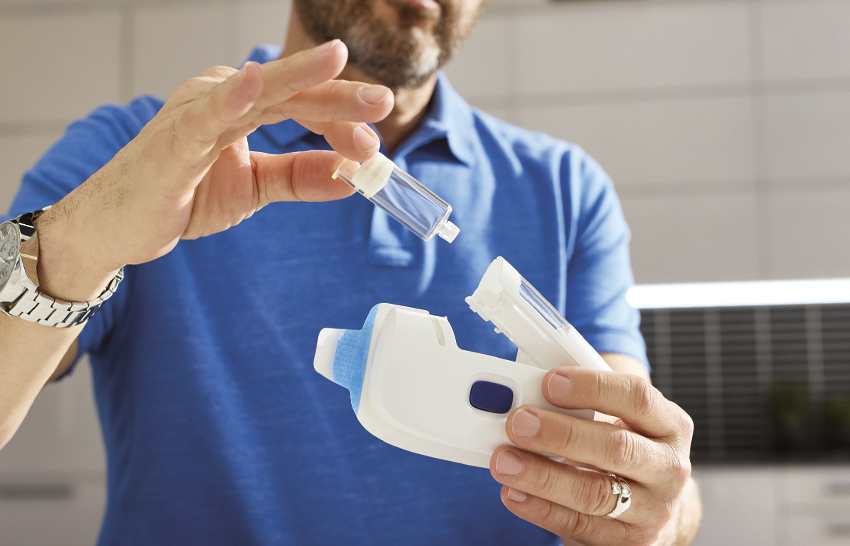
In the case of West’s SmartDose 10 OBDS, the two distinct elements of drug container and delivery mechanism combine to form a user-loaded wearable system. This differs from some systems where the primary container is incorporated into a self-contained, preloaded device. While the act of loading a cartridge represents an additional step in the injection process for the patient, this is counterbalanced by a series of important benefits.
“THE POTENTIAL TO ENHANCE PATIENT CONFIDENCE IN DOSING IS FURTHER BOOSTED WITH SMARTDOSE 10 OBDS THROUGH THE USE OF VISUAL, TACTILE AND AUDIBLE FEEDBACK TRIGGERS THAT MAKE THE PROCESS OF USER-LOADING MORE INTUITIVE AND SUPPORT ERROR REDUCTION.”
First among these benefits is the fact that user-loading gives patients a valuable opportunity to visually inspect the dose prior to administration, providing them with a level of assurance that “blind” closed mechanisms cannot. The potential to enhance patient confidence in dosing is further boosted with SmartDose 10 OBDS through the use of visual, tactile and audible feedback triggers that make the process of user-loading more intuitive and support error reduction. Furthermore, with a user-loaded device, if any electromechanical issues arise at initiation, they can be addressed separately while the container element is preserved, avoiding costly drug wastage.
A FULLY INTEGRATED APPROACH – FULL CONFIDENCE IN DELIVERY
Such benefits highlight the many advantages of separating dose and delivery. At the same time, however, they accentuate the importance of guaranteeing complete compatibility between these two elements when they combine to form a delivery system. Simply put, the interface between the container and the delivery component must be flawless to ensure the required levels of performance, reliability and error prevention. Having mastery over both container and device design makes it possible to optimise key interfacing features. In the case of SmartDose, these include making loading only possible if the drug container is correctly oriented; requiring the drug container to be loaded to facilitate locking of the drug-container compartment and enabling the activation button, as well as preventing patients from piercing the container on insertion.
Any risk that the two elements of container and device do not seamlessly dovetail together introduces the potential for usability problems, loading errors and a lack of confidence in full delivery of the injectable dose. Such compatibility risks are typically prompted by supply chain inconsistencies, where container and delivery mechanism are sourced from different providers. Even with extensive due diligence, the tight tolerances involved in such precision-engineered components can mean compatibility is not fully optimised between the container profile and the electromechanical component. This issue is mitigated with the SmartDose 10 OBDS because all key elements of the device and container system are sourced from West. This integrated approach both strengthens and simplifies the potentially complex development pathway for a combination device, enabling manufacturing and regulatory requirements to be met alongside patient needs.
Sitting within this philosophy is the Crystal Zenith® cyclo-olefin polymer cartridge officially licensed from Daikyo Seiko (Tochigi, Japan), a strategic partner of West’s since 1973. The decision to employ a polymer rather than glass cartridge within the SmartDose 10 OBDS was driven by a series of containment benefits, many of which are particularly pertinent for the complex, sensitive biologics that are suited to wearable delivery but prone to interaction and degradation when in contact with packaging-related compounds.
Polymer containers are lightweight and feature a much stronger breakage profile than glass. This not only safeguards against production line issues but also, crucially, underpins the superior strength needed for the delivery of highly viscous drug products. In addition, tighter dimensional tolerances and no added silicone oil make for highly consistent break-free and extrusion forces, ensuring reliable performance.
“THE SMARTDOSE OBDS WAS CONCEIVED TO DELIVER A BETTER EXPERIENCE FOR PATIENTS REQUIRING INJECTABLE TREATMENTS, AND THIS PROMISE HAS DRIVEN ITS EVOLUTION, ALONG WITH THE OPTIMISATION OF KEY DEVICE ATTRIBUTES.”
SOLVING PATIENT NEEDS, ANSWERING PARTNER CHALLENGES
The SmartDose OBDS was conceived to deliver a better experience for patients requiring injectable treatments, and this promise has driven its evolution, along with the optimisation of key device attributes. These include the ability to carry out preloading checks of the drug container; the use of a high-performance polymer container to safeguard dose integrity and deliverability; and the adoption of a single-source component strategy to guarantee compatibility between drug container and injector mechanism, thus promoting overall system integrity.
However, solving patient challenges has not been the only aspect of the intentional iteration of the platform’s design. West has also been able to deliver complementary advantages for pharmaceutical companies that de-risk and accelerate development, reducing cost and time to market. For example, maintaining adherence to the user-loading model not only introduces the ability for a patient to check the dose, it also reduces complexity in manufacturing, storage and distribution. Standard filling processes can be employed because the containers are engineered to standard dimensions. In addition, because the drug doses and device are not integrated into a unified unit, there is no requirement to manage the co-ordination of primary container and device assembly, potentially with a validated manufacturing partner, which would introduce associated quality assurance processes, incurring further time and cost requirements.
ENGINEERING A DEVICE TO DELIVER PERFECT FIT
Clearly, these are valuable benefits for pharma partners, but they are rooted in a patient-centric design framework that prioritises the needs of the patient first and foremost. After all, it is only when guided by a systematic assessment of users’ problems that solutions that truly fit can be engineered; and it is only by understanding users’ real-world intentions that intentionality can be applied to the design to deliver a device with real-world appeal.
In the case of SmartDose 10 OBDS, patients are not just provided with a wearable device but with the confidence to autonomously administer injections of higher volumes at lower frequencies. It was not long ago that such approaches were aspirational, but advances in user-centric technology are writing the next chapter of the wearable injector story and redefining what is possible for at-home patient care. West believes that, far from being a fashionable trend, such devices are set to further embed themselves in the drug delivery landscape based on a clear strategic intent – when patients wear West’s device, they need to wear it well.
West’s SmartDose® on-body delivery system is not independently cleared or approved by any Regulatory Body for general healthcare professional or patient use, nor is it available for general commercial purchase. Its distribution and use are subject to applicable regulatory requirements for clinical investigation and for marketing authorization, as used in combination with a specific drug or biological product. Each component of a combination product is subject to the requirements established by the Regulatory Body for that component (drug, biologic or device). The regulatory process can be more complicated for combination products including an evaluation of the product characteristics, delivery system and its functionality, intended users and use environment(s), as well as the potential for undesirable interactions between the drug or biologic and the delivery system. As a result, we note that the SmartDose® on-body delivery system’s compatibility with any particular drug or biologic must be confirmed, and its ability to achieve the desired patient benefits must also be confirmed, on a case-by-case basis in a manner sufficient to meet Regulatory Body requirements. Failure to follow product instructions for use may result in compromised sterility; contamination; leakage (including possible exposure to medication); and/or underdosing. Product misuse could potentially lead to needlestick injury, user and/or patient exposure to pathogens or infection, and/or suboptimal or delayed therapy. Products are shown for information purposes only. Important product and safety information and warnings available online.
SmartDose® is a registered trademark of West Pharma. Services IL, Ltd., a subsidiary of West Pharmaceutical Services, Inc.
REFERENCES
- “Wearable Injectors Market Overview”. Fortune Business Insights, Jul 2026.
- Badkar A et al, “Subcutaneous Delivery of High-Dose/Volume Biologics: Current Status and Prospect for Future Advancements”. Drug Des Devel Ther, 2021, Vol 15, pp 159–170.
- “FDA-led Patient-Focused Drug Development (PFDD) Public Meetings”. US FDA, Mar 2025.