To Issue 191
Citation: Mond M, Abedian R, “From 3 mL to 5 mL: Extending an Autoinjector Platform for Larger-Volume Biologics”, ONdrugDelivery, Issue 191 (Oct 2026), pp 106–110.
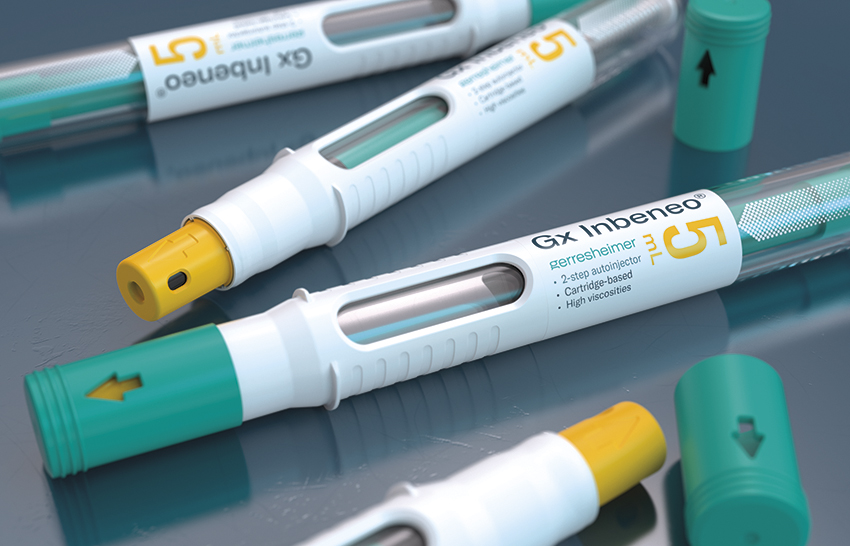
Moritz Mond and Dr Reza Abedian consider the subcutaneous delivery of larger volumes and higher viscosities, sharing the innovative engineering behind the Gx Inbeneo 5 mL autoinjector concept, designed to offer future developers greater flexibility for drug delivery via a handheld device.
Subcutaneous (SC) delivery of biologics, once largely comprising injections less than 1 mL, is progressively moving towards injection volumes greater than 2 mL. Of 1,338 approved and clinical-stage intravenous and SC biopharmaceuticals, 182 drugs were identified as SC injections over 2 mL. This represents 14% of all biopharmaceuticals, with most being monoclonal antibodies (mAbs) between 2 mL and 5 mL. The large-volume SC pipeline continues to grow, driven by multiple factors such as reduced dose frequencies. This pipeline demands drug delivery solutions that provide similar benefits to smaller volume solutions while addressing the specific challenges of larger volumes.1–3
Delivery formats are evolving rapidly for self-administered drugs in volumes of up to 5 mL. Historically, autoinjectors were developed around existing prefilled syringe (PFS) formats and consequently can handle up to 2.25 mL of total injection volume.4 To deliver larger volumes, formulation scientists must either raise the concentration and find a solution to handle the subsequent higher viscosity, split the dose, move to an on-body delivery device or select an autoinjector that incorporates a larger primary container. Each option has consequences for the drug developer to consider, such as primary container selection, fill-finish process and evidence required for market approval of the combination product.
“A KEY QUESTION IS WHETHER AN AUTOINJECTOR CAN BE DESIGNED FOR SAFE AND EFFECTIVE HANDLING OF BOTH HIGHER VISCOSITIES AND LARGER VOLUMES WHILE ENHANCING THE PATIENT EXPERIENCE AND USABILITY.”
In the homecare setting, these choices also have significant consequences for the patient. Higher viscosity may impact delivery time, splitting a dose doubles the number of injections and an on-body system can potentially introduce new use steps. A key question is whether an autoinjector can be designed for safe and effective handling of both higher viscosities and larger volumes while enhancing the patient experience and usability.
DEMANDS ON DEVICES FOR VOLUMES ABOVE 2.25 mL
Volume versus Concentration and Viscosity
Drug formulation and device development have multiple interdependencies. While an increase in formulation concentration may help to lower injection volumes, it may also lead to higher viscosities, stability issues or manufacturing constraints. Opting for larger volumes can reduce complexity for formulation development but requires drug delivery devices capable of administering larger volumes. Splitting the dose between two injections via an autoinjector is another possibility, although it adds handling steps and may increase treatment burden.1,2
The appropriate trade-off depends on the specific molecule and the capabilities of a given injection device. A device platform that can be configured across a range of volumes, viscosities, needles and delivery times therefore enables greater flexibility for formulation scientists, as they do not need to fix the formulation before the device is selected.
Potential Impact on User Experience
Clinical studies in healthy volunteers have assessed SC injections at volumes above the traditional 1–2 mL range, delivered via various injection methods.5–7 These studies demonstrate that moderate-to-large volumes can be acceptable under select conditions, but they also show that tolerability is considered in conjunction with injection rate, viscosity, injection site, drug formulation and whether the formulation contains permeation enhancers.
The data are useful for defining a feasibility range, however they do not establish one upper limit that applies to every drug or patient population.4–7 Bench testing, clinical evidence and human-factors evaluations are required to confirm that an intended formulation can be delivered at an acceptable rate and with an acceptable user interaction.
DESIGNING AN AUTOINJECTOR PLATFORM FOR HIGH-VISCOSITY AND LARGE-VOLUME FORMULATIONS
The Gx Inbeneo® autoinjector 3 mL platform was specifically developed to address self-administration of large volumes of highly viscous drug formulations. Gerresheimer’s Gx Inbeneo 3 mL is built around a robust prefilled glass cartridge, which raises the accessible volume to 3 mL.
Exceeding PFS-Based Autoinjector Force Limits
In a PFS-based autoinjector, a compressed spring is held by a locking mechanism that must release reliably upon device activation. Unlike this method, Gx Inbeneo 3 mL uses a pre-pressurised design in which the spring force is retained by the cartridge and is activated by the opening of the fluid path downstream. This makes a separate spring-locking mechanism redundant, eliminating the spring force impulse at the point of injector activation, while reducing the associated potential of misfiring. As a result of these inherent design characteristics, the platform can employ high spring forces in order to deliver higher viscosities and injection volumes.
Handling High-Viscosity Biologics
In addition to high-spring-force capabilities, Gx Inbeneo uses a double-ended dry needle system. Unlike PFS-based autoinjectors, which use a staked-in needle, the needle is separated from the drug container until the device is activated through a single step of pushing the device against the skin. With the fluid pathway isolated from the drug container during storage, the chance of needle clogging is reduced.
Moreover, this novel double-ended needle helps to balance injection time and the patient experience. The top needle end, which pierces the cartridge septum, has a larger diameter, while the bottom end or the SC needle section, which pierces the patient’s skin, has a smaller diameter. This unique design reduces the resistance in the fluid pathway, enabling higher viscosities to be delivered in shorter time compared with those administered through a uniform-diameter needle.
“THROUGH COMPREHENSIVE TESTING OF VARIOUS NEEDLE GAUGE AND SPRING FORCE CONFIGURATIONS, GERRESHEIMER HAS DEMONSTRATED THE EFFICACY OF THE GX INBENEO 3 mL PLATFORM TO DELIVER A BROAD RANGE OF VISCOSITIES.”
Through comprehensive testing of various needle gauge and spring force configurations, Gerresheimer has demonstrated the efficacy of the Gx Inbeneo 3 mL platform to deliver a broad range of viscosities. For example, 3 mL of a viscous 250 cP solution of water and glycerol was expelled from a 3 mL glass cartridge in 30 seconds, using a 25G needle.9–11
Putting Patients at the Forefront
The Gx Inbeneo autoinjector platform was designed to meet the high-performance requirements of larger volumes but was also optimised for safe and reliable self-administration. Straightforward two-step activation enhances the user experience, as the patient simply pulls the cap from the device and pushes it against their skin to begin administration. The standard viewing window in the middle of the device, in addition to a unique transparent top casing, enable the user to track injection progress regardless of the type of grip they use (Figure 1).
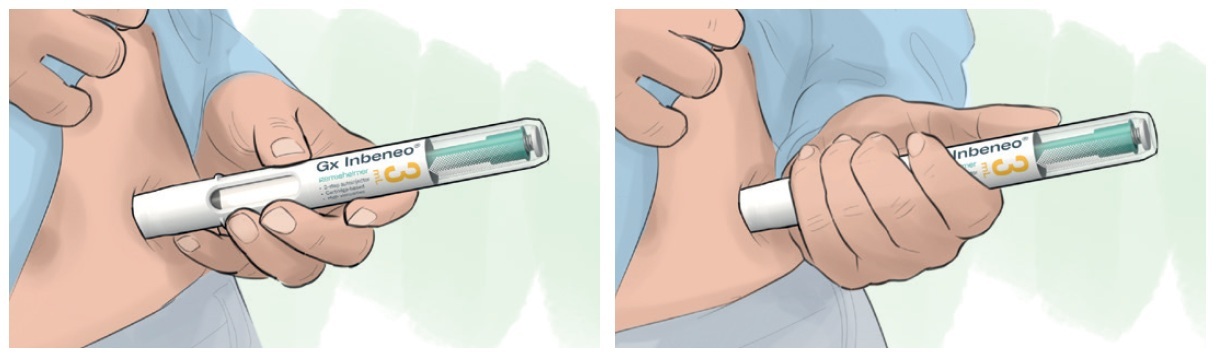
Figure 1: Injection progress can be clearly visualised via the top viewing indicator regardless of grip method.
Whether using a power grip (holding the device in a closed fist) or a precision grip (using the thumb and index finger) the user can always clearly visualise injection progress. An audible click further confirms dose completion. The double-ended needle design mentioned earlier also presents an advantage to the patient, as it employs a smaller needle diameter at the injection site and therefore reduces discomfort.
Studies have successfully demonstrated that users can maintain their grip on an autoinjector over injection durations of up to approximately 30 seconds.8 Formative user studies conducted by Gerresheimer during development of the Gx Inbeneo reinforced this finding. In one study, 44% of participants rated a simulated injection duration of up to 26 seconds as fully acceptable and 56% as acceptable.
“TAKING INTO ACCOUNT THE CARTRIDGE- ASED CONCEPT, STRONG SPRING FORCES, UNIQUE NEEDLE ARCHITECTURE AND USABILITY DESIGNED FOR VARIED INJECTION DURATIONS, THE PLATFORM IS WELL POSITIONED FOR EXTENSION TO HANDLE VOLUMES ABOVE 3 mL.”
Taking into account the cartridge-based concept, strong spring forces, unique needle architecture and usability designed for varied injection durations, the platform is well positioned for extension to handle volumes above 3 mL.
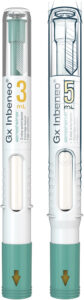
Figure 2: Gx Inbeneo 3 mL autoinjector platform and Gx Inbeneo 5 mL autoinjector concept.
EXTENDING THE GX INBENEO PLATFORM TO 5 mL
To provide pharmaceutical companies with even greater flexibility when formulating biologics, Gerresheimer has developed a concept for a 5 mL cartridge – a larger volume version of the Gx Inbeneo autoinjector platform that builds on the proven design of the 3 mL version (Figure 2).
Leveraging Proven Architecture
The pre-pressurised, cartridge-based design and actuation method developed for the Gx Inbeneo 3 mL has been carried over to the 5 mL concept. The main differences are a housing with a slightly larger diameter – required to accommodate a 5 mL cartridge – and springs with higher force.
The Gx Inbeneo 5 mL concept encapsulates a 14 mm outer-diameter cartridge, which requires only a slight increase in device size relative to the increase in injection volume. Consequently, in the Gx Inbeneo 5 mL concept, the additional spring force and larger cartridge only increase the device diameter by 2.6 mm with no change in length compared with the 3 mL version.
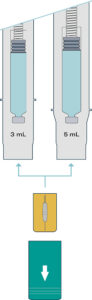
Figure 3: Identical front components used in the Gx Inbeneo 3 mL and 5 mL concept with the rear section adjusted to accommodate a larger cartridge and spring with higher force.
The unique design of Gx Inbeneo decouples the activation and double-ended needle mechanism from the drive spring. This inherent design characteristic reduces the complexity of integrating a new cartridge format. The activation and double-ended needles mechanism on the front end of the device are unaffected by the change from a 3 mL to a 5 mL cartridge. The drive spring at the rear end of the device is scaled in proportion to the larger cartridge diameter (Figure 3). The 5 mL concept is therefore a platform extension around a larger primary container rather than a new device design.
Enabling Flexible Configuration
The Gx Inbeneo 5 mL concept is aimed at drug programmes with doses in the 3–5 mL range that are intended for SC self-administration of viscous formulations. It adds a larger volume option to the Gx Inbeneo autoinjector platform without changing the core architecture or straightforward two-step handling established with the 3 mL version. The concept incorporates a 5 mL cartridge with a fill range of 3–5 mL and standard options of 25G, 27G and 29G for the patient-facing end of the needle. The combination of spring, needle, cartridge and delivery parameters can be selected by a pharmaceutical company depending on the specific formulation and target injection time (Table 1).
| Gx Inbeneo 3 mL | Gx Inbeneo 5 mL concept | |
| Device architecture | Pre-pressurised, cartridge-based design | |
| Cartridge | ISO 3 mL cartridge | 5 mL cartridge (14 mm outer Ø) |
| Device diameter | 19.5 mm | 22.1 mm |
| Device length | 196.5 mm | |
| Patient-facing needle | Double-ended 25G, 27G and 29G as standard | |
| Usability | 2-step autoinjector: pull cap, push to inject | |
Table 1: Comparison of features of the Gx Inbeneo 3 mL and the Gx Inbeneo 5 mL concept.
Based on Confirmed Usability
The usability and handling of the 5 mL concept remains consistent with the 3 mL version. The patient simply pulls off the cap and pushes the device against their skin to begin drug delivery. Injection progress can be tracked in real time via the standard central viewing window, or the top viewing indicator and an end-of-dose click confirms successful dose completion. During a formative usability study with the Gx Inbeneo 3 mL, 93% of participants (n=34) rated activation of the autoinjector as easy or very easy. Additionally, 97% of the participants stated that they found it easy to track injection progress, with 66% using the transparent top window for monitoring.
The visual difference between the 5 mL Gx Inbeneo compared with the 3 mL version will be the slightly larger diameter required to accommodate the larger cartridge. The predominant impact on usability may be a slightly longer injection duration. Acceptability would need to be evaluated via a formative user evaluation once the specifications of a drug and device combination have been defined.
Ready for Development
While the Gx Inbeneo 5 mL is a concept in development and has not yet been fully industrialised, the concept may be evaluated through feasibility assessments or co-developed with partners, with final performance and specifications established for each individual drug-device combination. The 5 mL concept provides pharma companies with an additional option during early device selection. Feasibility work will establish how a specific formulation can be delivered within a suitable injection time and confirm that the intended user population can complete drug administration reliably.
CONCLUSION
The pipeline of SC biologic injectables above 2 mL is growing, meaning that the need for safe and reliable autoinjectors to administer higher volumes will only become more evident. Delivering high doses of biologic drugs via self-administration demands an increase in volume, concentration, division of the dose or transfer to an on-body device. Each option has distinct implications for formulation, primary packaging, fill-finish and the evidence required to gain market approval for a final combination product.
In order to maintain a handheld format for large-volume and high-viscosity formulations, the determining factor is the capability of the device to generate and control the force required for delivery within an acceptable injection timeframe to support the user experience. The Gx Inbeneo platform fulfils this requirement through its two-step handling, pre-pressurised, cartridge-based architecture and double-ended dry needle. This unique design reduces flow resistance for faster delivery than with a standard needle and removes the risk of needle clogging in storage.
The 3 mL version of the Gx Inbeneo has undergone extensive testing to confirm its technical design, performance range and usability. The 5 mL concept incorporates identical double-ended needles, an activation mechanism and a needle safety shield in the front housing. The rear housing and spring will be adjusted and scaled in proportion to the larger 5 mL cartridge.
As with the Gx Inbeneo 3 mL, the specific patient-facing needle diameter, spring force and resulting injection duration can be configured to meet the criteria for a specific therapy. Feasibility testing and formative evaluations with the target patient population are required to confirm the final design parameters of the combination product. The Gx Inbeneo 5 mL concept therefore offers pharma customers a platform for future co-development projects.
REFERENCES
- Bittner B, Richter W, Schmidt J, “Subcutaneous Administration of Biotherapeutics: An Overview of Current Challenges and Opportunities”. BioDrugs, 2018, Vol 32(5), pp 425–440.
- Badkar AV et al, “Subcutaneous Delivery of High-Dose/Volume Biologics: Current Status and Prospect for Future Advancements”. Drug Des Devel Ther, 2021, Vol 15, pp 159–170.
- Green P, Schneider A, Lange J, “Navigating Large-Volume Subcutaneous Injections of Biopharmaceuticals: A Systematic Review of Clinical Pipelines and Approved Products”. mAbs, 2024, Vol 16(1), art 2402713.
- Schneider A et al, “Autoinjectors for Large-Volume Subcutaneous Drug Delivery: A Review of Current Research and Future Directions”. Expert Opin Drug Deliv, 2023, Vol 20(6), pp 815–830.
- Dias C et al, “Tolerability of High-Volume Subcutaneous Injections of a Viscous Placebo Buffer: A Randomized, Crossover Study in Healthy Subjects”. AAPS PharmSciTech, 2015, Vol 16(5), pp 1101–1107.
- Woodley WD et al, “Clinical Evaluation of Large Volume Subcutaneous Injection Tissue Effects, Pain, and Acceptability in Healthy Adults”. Clinical and Translational Science, 2022, Vol 15(1), pp 92–104.
- Akinseye C et al, “Investigation into the Acceptability of Moderate-to-Large Volume Subcutaneous Injections in Healthy Volunteers: Results from a Single-Center Randomized Controlled Study”. Medical Devices: Evidence and Research, 2024, Vol 17, pp 369–384.
- Schneider A et al, “Hold the Device Against the Skin: The Impact of Injection Duration on User’s Force for Handheld Autoinjectors”. Expert Opin Drug Deliv, 2020, Vol 17(2), pp 225–236.
- Primavessy D et al, “Gx Inbeneo® – Developing an Autoinjector that Responds to the Challenges of Biologics”. ONdrugDelivery, Issue 152 (Oct 2023), pp 32–36.
- Seddighi F, Saaler-Reinhardt S, Primavessy D, “Comprehensive Testing Proves Design Concept of Novel Autoinjector Platform”. ONdrugDelivery, Issue 166 (Oct 2024), pp 52–56.
- Saaler-Reinhardt S et al, “Greater Formulation Freedom with a Novel Autoinjector Platform that Extends Volume and Viscosity Limits”. ONdrugDelivery, Issue 172 (May 2025), pp 68–73.