To Issue 191
Citation: Berndt E, Schmidt P, “From Component Testing to System Performance: The Shift in Verifying Modern Drug Delivery Systems”, ONdrugDelivery, Issue 191 (Oct 2026), pp 152–157.
Erik Berndt and Peter Schmidt consider the relationship between ISO and USP requirements for the effective verification of modern drug delivery systems, providing an overview linking relevant chapters of the US Pharmacopeia to the corresponding ISO-based test requirements.
“WHAT MATTERS IS NO LONGER SIMPLY WHETHER A SINGLE COMPONENT MEETS THE REQUIREMENTS, BUT WHETHER THE ENTIRE SYSTEM CAN RELIABLY AND REPRODUCIBLY PERFORM ITS INTENDED FUNCTION UNDER REALISTIC CONDITIONS OF USE.”
Modern drug delivery systems are becoming increasingly complex. Prefilled syringes (PFSs), needle safety devices (NSDs), autoinjectors, pens and other system components must not only comply with specifications individually but also function reliably when used together. This shifts the central focus of verification – what matters is no longer simply whether a single component meets the requirements, but whether the entire system can reliably and reproducibly perform its intended function under realistic conditions of use.
This shift is particularly relevant for injection systems in which the container, API, mechanical functional unit and application scenario are closely interlinked. A PFS may comply with standards when considered in isolation, but produce different results within the overall system when, for example, friction characteristics, spring force, trigger mechanism, drug viscosity or conditions of use interact. The testing strategy must be able to account for these interactions.
The current revision of ISO 11040-8 reflects this development. It illustrates how the industry is increasingly shifting from an isolated component-based approach towards evaluating functional system performance. The most important changes to the standard are summarised in Box 1.
BOX 1: KEY CHANGES TO ISO 11040-8:2026
Systems Rather than Individual Components: PFSs are increasingly being considered in the context of NSDs, autoinjectors and other drug delivery systems.
- Standardised Administration Time: Administration time is evaluated as a functional performance characteristic.
- More Statistical Design Verification: Reliability level and confidence level are gaining importance.
- Expanded Requirements for Leakage and Stopper Movement: Leakage and unintended stopper movements are being examined in greater detail.
- Greater Emphasis on Methodology and Documentation: Standardised test procedures, statistical evaluation and traceable documentation are becoming increasingly important.
Practical Implications for Testing Laboratories: Most of the new requirements continue to be based on established force, displacement and pressure measurements. The primary changes relate to methodology, evaluation and documentation.
WHY COMPONENT TESTING ALONE IS NO LONGER SUFFICIENT
In traditional testing strategies, individual components were often evaluated separately. This approach is still necessary. However, this is no longer sufficient when the quality of an injection system is determined by the interaction of multiple components.
Particularly with modern combination products, relevant performance characteristics only emerge at the system level. These include, for example, injection time, dose delivery, activation behaviour, leakage performance and the functionality of safety mechanisms. Individual components provide only a portion of the necessary information.
System performance therefore describes not just an additional test parameter but a fundamentally different approach to verification. The test set-up, software, evaluation and documentation must be co-ordinated in such a way that reliable conclusions can be drawn about the actual performance of the entire system as a whole, while ensuring data integrity and traceability at the same time.
“AS THE FOCUS ON SYSTEM-LEVEL CONSIDERATIONS GROWS, MECHANICAL TESTING AND PHARMACOPOEIA-RELATED REQUIREMENTS ARE BECOMING INCREASINGLY INTERTWINED.”
MECHANICAL VERIFICATION MEETS PHARMACOPOEIA REQUIREMENTS
As the focus on system-level considerations grows, mechanical testing and pharmacopoeia-related requirements are becoming increasingly intertwined. Mechanical performance evaluation, drug delivery and regulatory requirements are increasingly being considered together in development, verification and validation processes.

Figure 1: USP-ISO matrix – relevant pharmacopeial and standard requirements at a glance.
As a result, ISO and USP requirements are viewed less as separate sets of regulations and more as components of a common verification strategy. Linking pharmaceutical requirements to the corresponding mechanical tests creates additional transparency within complex regulatory landscapes and supports the consistent evaluation of modern drug delivery systems (Figure 1).
From Testing System to Modular Drug Delivery Platform
The paradigm shift is particularly evident in the needle-based injection systems outlined in ISO 11608. With autoinjectors, pens and on-body delivery systems (OBDSs), for example, factors such as injection time, dose delivery, activation forces and the function of safety mechanisms must be evaluated. These performance characteristics arise only through the interaction of the drug, the primary container and the device technology, and therefore cannot be considered in isolation. For these applications, ZwickRoell offers a portfolio of testing solutions suitable for development, design verification and quality testing. Consistent measurement principles and evaluation algorithms ensure the comparability of test results across different testing platforms and device generations. This preserves the value of existing data and enables long-term trend analysis.
For autoinjectors, testing solutions compliant with ISO 11608-5 are available based on the ZwickRoell zwickiLine and AllroundLine testing systems. Development activities often involve frequently changing device variants and testing requirements; the zwickiLine supports this type of application with short changeover times and the flexibility to adapt to different device generations. As a result, new concepts, variants and design changes can be evaluated efficiently.
Comprehensive development, verification and quality control tests often require combining multiple test tasks within a single platform. The AllroundLine enables different test methods – from method development and method transfer to quality control – to be implemented on a common system platform. As a result, development and verification data remain directly comparable.
A typical example of design verification is the membrane injection test, which can be used to demonstrate that the medication is administered precisely at the intended skin depth. Additional sensors, automation options and a second test area enable the combination of various test tasks within one platform. This allows for the automated testing of not only autoinjectors but also PFSs and simple pen tests – with consistent testing workflows and a common data foundation across development, verification and quality assurance.
For OBDSs, a testing solution compliant with ISO 11608-6 is available, specifically designed to meet the requirements of wearable injection devices. In addition to function testing, acoustic and visual device signals can also be evaluated. A microphone, video-synchronised recording and automated evaluation capture clicks, beeps or flashing patterns and document these events, along with the injection process, in a traceable manner. A specially developed testing technology prevents electrostatic charging and air-related influences on the API, such as crystallisation or evaporation during long injection times. In addition, adhesion force and function tests can be performed directly on the same specimen. This allows the real-world application process of an OBDS to be evaluated efficiently, reproducibly and without additional re-clamping.
For pen systems, in accordance with ISO 11608-1, the focus is on dose setting, dose delivery and torque, force and function tests. These can be combined into a seamless testing workflow using the zwickiLine and AllroundLine. Advanced configurations also enable the automatic setting of different dose levels, thereby reducing the need for manual intervention. This allows the individual functional steps of a pen system to be evaluated within a single, seamless test sequence (Figure 2).
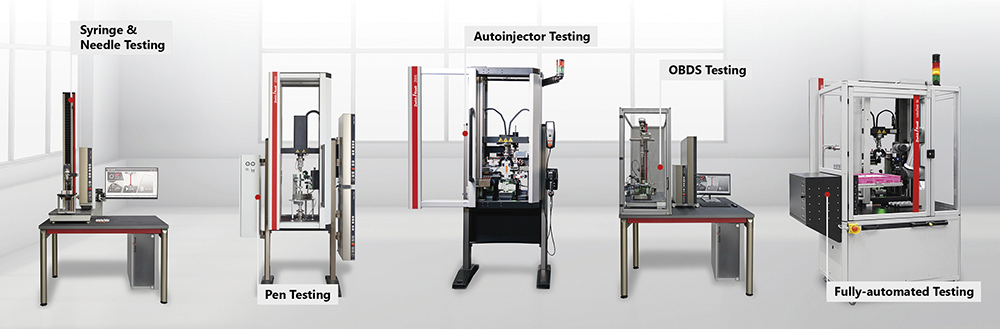
Figure 2: From syringes to autoinjectors – the right solution for every injection system.
Reproducibility Begins Before the Actual Test
As system performance becomes increasingly important, the quality of the test conditions plays a decisive role. To support reliable and reproducible testing, ZwickRoell testing systems can incorporate vision sensors, daily checks, poka-yoke principles and injector-specific interchangeable parts, depending on the configuration. Vision sensors automatically identify the correct test specimen along with its position, colour and geometry. Daily checks are standardised function tests for sensors and measuring equipment. For example, they check load cells, vision sensors, lasers, balances or microphones before the start of a test series and help detect deviations early on. This ensures that the measurement data are based on verified test conditions.
Figure 3: Poka-Yoke via barcode scan – the test can only begin if the correct components are in the right place.
Poka-yoke describes a foolproof concept for test specimens, interchangeable parts and test programmes. Only when the correct fixture, correct test specimen and appropriate test programme have been matched is the test released. This prevents errors before testing begins, rather than detecting them only after measurement. This reduces operator errors, increases process efficiency and supports the traceability of results (Figure 3).
Injector-specific interchangeable parts are of particular importance. Injection devices such as autoinjectors and pens differ significantly in terms of geometry, material behaviour and mechanics. If unsuitable interchangeable parts are used, both the test specimen and the measurement result can be affected. Excessive gripping forces can damage the housing or components or impair the device’s mechanical functions. Insufficient holding forces can cause the specimen to shift or slip out of the fixture during the test. If the force is applied to an unsuitable position, device actuation may be affected or prevented. Reproducible results therefore require an injector-specific clamping set-up.
From Injection Time to the Last Drop
Today, measuring system performance for modern injection systems requires a combination of different measurement and sensing technologies. Injection time, dose delivery, actuation forces, injection depth, click signals, visual indicators and the functionality of safety mechanisms all need to be recorded and reproducibly evaluated.
High-resolution balances, optical measurement systems and additional sensors for acoustic and visual signals are used for these tasks. Camera-based measurement systems can also be calibrated, ensuring metrological traceability and reliable measurement results. This is particularly relevant in GMP-regulated environments, as it allows the measurement to be documented and validated. At the same time, the same camera serves for both the actual measurement and subsequent documentation. Subsequent analysis is thus based precisely on the data that were also used during the measurement.
Precise gravimetric measurement methods are used to determine volume. Special collection containers reduce electrostatic charge, which could otherwise affect the measurement. This allows even small volume fluctuations to be recorded with precision. At the same time, drug dispensing is accounted for down to the last drop, which can be particularly relevant for highly viscous formulations.
PFSs and Cartridges in a System Context
The performance of modern drug delivery systems is based on the interaction of their components. Therefore, PFSs, cartridges, stoppers, needle systems and NSDs must not only be evaluated in terms of individual performance characteristics but also considered in the context of their subsequent function. Mechanical properties, primary containers and application systems are thus integrated within a unified testing strategy.
For testing in accordance with ISO 11040 and ISO 7886-1, ZwickRoell follows a modular approach. Rather than requiring numerous specialised test fixtures, the company’s system uses a small number of universal test set-ups capable of performing a wide range of mechanical tests. Depending on the configuration, up to ten different test methods can be implemented on a single platform. The same concept can be used for both PFSs and cartridges (Figure 4).
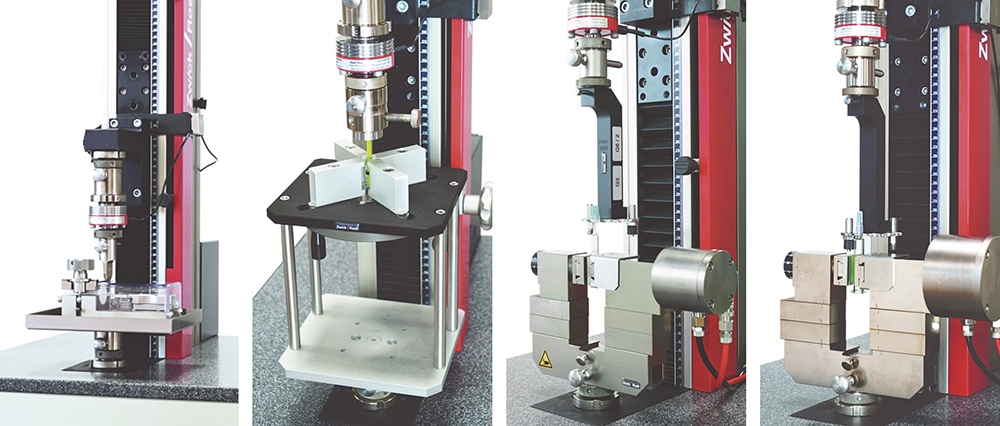
Figure 4: Selection of modular test set-ups for standards-compliant testing of relevant ISO 11040 requirements: Luer cone breakage resistance, syringe glide force, Luer lock collar pull-off force and needle shield pull-off force.
This is particularly relevant for syringes equipped with an NSD. Thanks to the flexibility of the second test area, the AllroundLine enables the determination of cap removal force, breakaway force, glide force and injection volume, as well as the activation and blocking force of an NSD within a single, seamless test sequence. As a result, testing is aligned more closely with real-world use conditions and less with the isolated evaluation of individual components.
Scalable Testing Solutions from Standard Systems to Full Automation
Depending on the product phase and testing requirements, different system concepts are required: readily available standard solutions for established testing requirements, customised adaptations for specific devices or processes, and the appropriate level of automation for the required throughput.
ZwickRoell’s standardised test configurations are based on years of application experience and close collaboration with customers in the medical and pharmaceutical industries. They are readily available, reliable and already proven for many common test tasks. Where standard solutions are insufficient, test set-ups can be customised or developed from scratch – for example, with specific fixtures, interchangeable parts, feeding concepts, sensor systems, software workflows or automation solutions tailored to the test specimen, process, throughput and regulatory requirements.
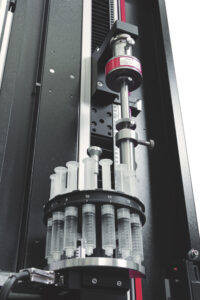
Figure 5: Rotary table system for
high-precision testing of dose accuracy, breakaway force and glide force in syringes.
The level of automation can be selected with equal flexibility. The spectrum ranges from manual testing stations and semi-automated solutions to fully automated systems. XY tables enable the sequential testing of larger numbers of specimens with defined positioning, reduced operator influence, and quickly interchangeable magazines or racks. Rotary tables increase throughput through indexed feeding and are particularly well suited for repetitive test tasks. A balance can also be integrated to determine parameters such as dose accuracy. Robotic systems combine handling, feeding, testing and unloading within a standardised workflow, making them ideal for high-throughput applications, continuous test processes and maximum repeatability (Figures 5 & 6).
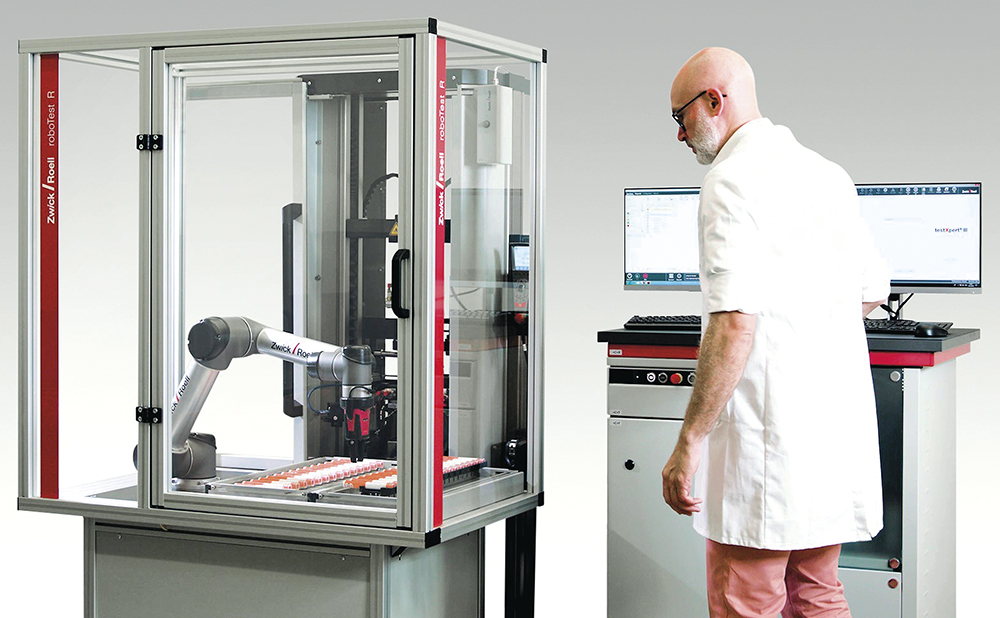
Figure 6: RoboTest N for automated function testing of autoinjectors.
From Test Requirements to Audit-Ready Implementation
As regulatory complexity continues to increase, the challenge does not end with selecting the right testing system. Particularly in GMP-regulated environments, requirements, test methods, qualification, data integrity and audit readiness must be considered holistically from the outset. US FDA 21 CFR Part 11 requirements, such as traceability, electronic records and comprehensive documentation, are therefore becoming integral components of successful verification projects.
To support this process, ZwickRoell assists customers from the early stages of a project, for example by supplying user requirements specification templates, application consulting and pre-tests that allow test methods to be evaluated and confirmed in advance. A dedicated application laboratory enables feasibility studies, demonstrations and customer-specific testing under realistic conditions. In addition, customer training courses help users to gain confidence in test procedures, software functions and documentation requirements.
For implementation in regulated environments, ZwickRoell offers specialised qualification teams. These teams support projects from requirements specification through factory acceptance testing, design qualification, installation qualification, operational qualification and performance qualification support, all the way to commissioning. ZwickRoell can also provide support for subsequent modifications, machine relocations or requalifications. In addition, risk analyses, such as failure mode and effects analysis, as well as digital services and audit trails, help establish robust and audit-ready testing processes.
“THE DEVELOPMENT OF MODERN DRUG DELIVERY SYSTEMS CLEARLY SHOWS THAT EVALUATING INDIVIDUAL COMPONENTS ALONE IS NO LONGER SUFFICIENT. PERFORMANCE INCREASINGLY ARISES ONLY FROM THE INTERACTION BETWEEN THE CONTAINER, THE DRUG, THE DEVICE AND THE APPLICATION SCENARIO.”
SYSTEM PERFORMANCE REQUIRES AN END-TO-END TESTING STRATEGY
The development of modern drug delivery systems clearly shows that evaluating individual components alone is no longer sufficient. Performance increasingly arises from the interaction between the container, the drug, the device and the application scenario.
The revision of ISO 11040-8 highlights this development, but it is only part of a larger trend. In the future, the ability to reproducibly demonstrate actual system performance under realistic conditions will be crucial.
As a result, component testing, system verification, software, automation and regulatory requirements are becoming increasingly intertwined. Successful testing strategies combine these disciplines into an integrated testing concept that equally supports development, verification and quality assurance. The challenge no longer lies solely in testing individual components in accordance with standards but in providing robust evidence of the overall system’s performance throughout the entire product lifecycle. This makes it all the more important to have a partner that integrates regulatory requirements, testing technology and qualification, while supporting users throughout the entire product lifecycle. This is where the quality of modern drug delivery verification will be determined in the years to come.