To Issue 191
Citation: Vasiev A, “Getting Out of a Jam: Suspension Delivery, Occlusion and Device Design”, ONdrugDelivery, Issue 191 (Oct 2026), pp 74–80.
Dr Alex Vasiev discusses suspension-based parenteral systems, including micro- and nanoparticle suspensions and colloidal dispersions, where sedimentation, mechanical bridging and interfacial forces can strongly influence delivery performance.
SUSPENSIONS AND PARTICULATE FORMULATIONS IN DRUG DELIVERY
Suspensions and particulate formulations are an important area of innovation in drug development and delivery.1 They are used across multiple routes of administration, including inhalation, oral, ophthalmic, nasal and parenteral delivery.2
Their value lies in enabling the administration of compounds or payloads that are difficult to stabilise or deliver as conventional solutions. Particle morphology, chemistry and solid-state form can be engineered to modify dissolution, improve stability, protect labile payloads, control biodistribution or alter pharmacokinetics. For proteins and monoclonal antibodies (mAbs), particulate, crystalline and matrix-based approaches are also being investigated to address high-concentration formulation challenges, reduce injection volume, eliminate certain solvents and mitigate aggregation or degradation risks.3
Long-acting injectable technologies can extend dosing intervals from days to weeks or months, reducing treatment burden, clinic visits and adherence challenges. These technologies include implants, injectable depots, drug-eluting devices and suspension-based formulations.4
Commercial adoption of long-acting injectables is well established in psychiatry, particularly for long-acting antipsychotic depots used for schizophrenia treatment, where poor adherence to daily oral therapy is associated with relapse, hospitalisation and poorer long-term outcomes. In 2022, Okoli et al reported that long-acting injectable antipsychotics may improve outcomes compared with oral antipsychotics, including adherence, relapse, rehospitalisation and symptom-related measures.5
A similar rationale is emerging in HIV therapy and prevention, where long-acting injectable antiretroviral products based on cabotegravir and rilpivirine nanosuspensions have reduced reliance on daily oral dosing. Survey data suggest strong patient interest in injectable nanoformulated antiretroviral therapies, particularly for monthly dosing.6 Cabotegravir and rilpivirine have also been described as long-acting injectable nanosuspensions designed to enable dosing intervals beyond once-monthly usage.7
“AS WELL AS PSYCHIATRY AND INFECTIOUS DISEASE, LONG-ACTING INJECTABLE AND DEPOT FORMULATIONS ARE ESTABLISHED IN ENDOCRINOLOGY, ONCOLOGY AND METABOLIC DISEASE.”
As well as psychiatry and infectious disease, long-acting injectable and depot formulations are established in endocrinology, oncology and metabolic disease, including peptide and hormone-based depots, such as leuprolide, octreotide and exenatide formulations (Table 1).8 Interest is also expanding in immunology and biologics, driven by the need for less frequent dosing, improved stability and better deliverability of high-concentration products. However, particulate, crystalline and suspension-based approaches for mAbs and larger biologics remain at comparatively early stages, with much of the work still focused on formulation development, preclinical evaluation or translational studies.3
| Product | Owner/Developer | Drug | Therapeutic field | Route |
| Abilify Asimtufii | Otsuka Pharmaceutical (Tokyo, Japan) | Aripiprazole | Psychiatry | IM |
| Abilify Maintena | Otsuka Pharmaceutical (Tokyo, Japan) | Aripiprazole | Psychiatry | IM |
| Abraxane | Bristol Myers Squibb | Paclitaxel (protein bound) | Oncology | SC |
| Apretude | Viiv Healthcare (London, UK) | Cabotegravir | Infectious disease | SC |
| Aristada | Alkermes (Dublin, Ireland) | Aripiprazole lauroxil | Psychiatry | SC |
| Aristada Initio | Alkermes (Dublin, Ireland) | Aripiprazole lauroxil | Psychiatry | IM |
| Brixadi | Camurus (Lund, Sweden) | Buprenorphine | CNS/addiction | IM or IA |
| Bydureon | AstraZeneca | Exenatide | Metabolic disease | IM |
| Bydureon BCise | AstraZeneca | Exenatide | Metabolic disease | SC |
| Cabenuva | Viiv Healthcare (London, UK) | Cabotegravir + rilpivirine | Infectious disease | IM |
| Depo-Medrol | Pfizer | Methylprednisolone acetate | Rheumatology | IV |
| Depo-Provera CI | Pfizer | Medroxyprogesterone acetate | Women’s health | IM |
| Depo-SubQ Provera | Pfizer | Medroxyprogesterone acetate | Women’s health | IM |
| Erzofri | Luye Pharma Group (Hong Kong, China) | Paliperidone palmitate | Psychiatry | IM |
| Fyarro | AADI Biosciences (Morristown, NJ, US) | Sirolimus (protein bound) | Oncology | IM or IA |
| Invega Hafyera | Janssen Pharmaceuticals (now Johnson & Johnson Innovative Medicine) | Paliperidone palmitate | Psychiatry | IM |
| Invega Sustenna | Janssen Pharmaceuticals | Paliperidone palmitate | Psychiatry | IM |
| Invega Trinza | Janssen Pharmaceuticals | Paliperidone palmitate | Psychiatry | IM |
| Kenalog | Bristol Myers Squibb | Triamcinolone acetonide | Rheumatology, orthopaedics | IM |
| Lupron Depot | AbbVie | Leuprolide acetate | Oncology, endocrinology, reproductive health | IM or IA |
| Lutrate Depot | GP Pharm (Barcelona, Spain) | Leuprolide acetate | Oncology | IM |
| Okedi | ROVI (Bromley, UK) | Risperidone | Psychiatry | IM |
| Rekambys | Janssen Pharmaceuticals | Rilpivirine | Infectious disease | IM |
| Risperdal Consta | Janssen Pharmaceuticals | Risperidone | Psychiatry | SC |
| Rykindo | Luye Pharma Group (Hong Kong, China) | Risperidone | Psychiatry | IM |
| Sandostatin LAR Depot | Novartis | Octreotide acetate | Endocrinology | IM |
| Signifor LAR | Novartis | Pasireotide | Endocrinology | IM |
| Skytrofa | Ascendis Pharma (Hellerup, Denmark) | Lonapegsomatropin | Endocrinology | SC |
| Trelstar | Verity Pharmaceuticals (Mississauga, Canada) | Triptorelin pamoate | Oncology | IM |
| Triptodur | Azurity Pharmaceuticals (Woburn, MA, US) | Triptorelin | Endocrinology | IM |
| Uzedy | Teva Pharmaceuticals; MedinCell (Montpellier, France) | Risperidone | Psychiatry | SC |
| Vivitrol | Alkermes (Dublin, Ireland) | Naltrexone | CNS/addiction | IM |
| Vocabria injection | Viiv Healthcare (London, UK) | Cabotegravir | Infectious disease | IM |
| Zilretta | Pacira Biosciences (Brisbane, CA, US) | Triamcinolone acetonide | Orthopaedics | IA |
| Zyprexa Relprevv | Eli Lilly | Olanzapine pamoate | Psychiatry | IM |
Table 1: Overview of parenteral suspensions and depot delivery systems. IM: intramuscular; IV: intravenous; SC: subcutaneous; IA: intra-articular.
“COMPLETE AND REPRODUCIBLE RESUSPENSION IS THEREFORE A CRITICAL PART OF DOSE PREPARATION AND PRESENTS A CHALLENGE FOR BOTH THE USER AND THE DEVICE.”
CHALLENGES IN DELIVERING SUSPENSIONS
A well-designed suspension must balance physical stability with usability. It should remain sufficiently uniform to permit accurate dosing, avoid forming hard cakes during storage and redisperse readily before use.2 In practice, suspensions may sediment, aggregate or adhere to container surfaces. Many products therefore require shaking, reconstitution or other preparation steps before administration. Even when these steps are followed, rapid sedimentation can alter the dispersed volume fraction during injection and affect dose uniformity. Complete and reproducible resuspension is therefore a critical part of dose preparation and presents a challenge for both the user and the device.
Injection performance is governed by both formulation properties and device geometry. Volume fraction, particle-size distribution, viscosity, particle rigidity, particle shape and particle-particle or particle-container interactions can all alter flow behaviour during administration. These variables may contribute to force spikes, inconsistent delivery profiles, surface adhesion, partial or complete occlusion and failure to deliver the intended dose.
Weak and Strong Jams
When a suspension is delivered through a needle, cannula or catheter, the flow path may transition between flowing, weakly jammed and permanently blocked states. For device development, it is useful to distinguish between reversible events – which may clear under additional pressure, vibration, shear or changes in flow – and permanent events. These events are often stochastic, where identical injections can produce different outcomes (Figure 1). In a single-step breakdown model, the probability of reaching permanent occlusion at a particular step (n) in the flow is:
pn(1−p)
Depending on the nature of the particles and device, an intermediate reversible blocked state may occur. In this case, the system may first enter a weakly jammed state with probability 1−p, or progress to permanent occlusion with probability 1−q. The probability of occlusion at step n is therefore:
pn(1−p)(1−q)
Although simplified, this probabilistic framing provides a useful way to separate transient events and force spikes from genuine delivery failure.
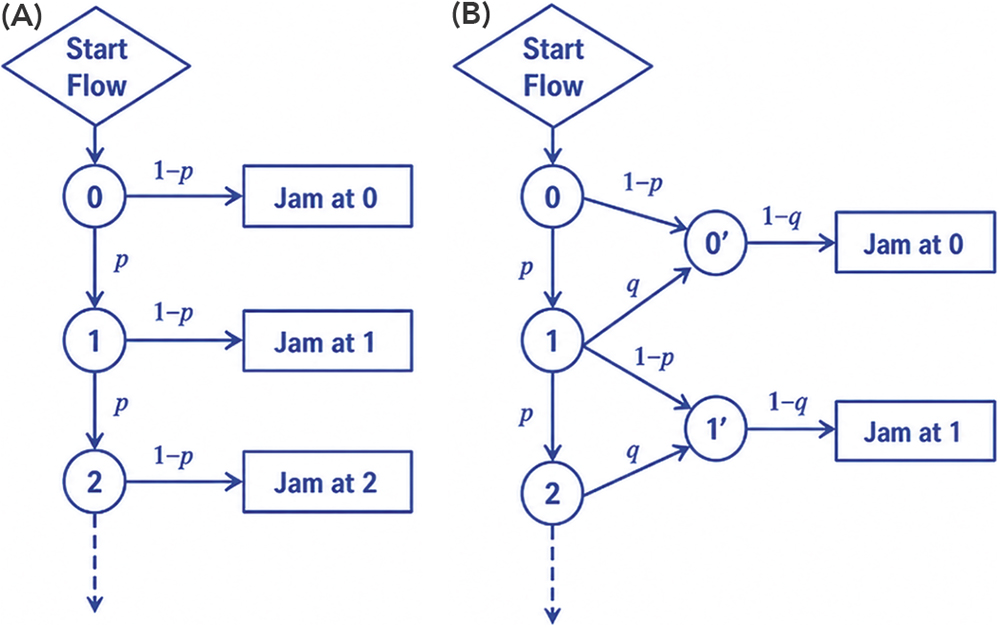
Figure 1: Illustration of flowing and blocked states for reversible and permanent occlusion events. (A) A linear sequence of flow states, (B) an intermediate reversible blocked state.
Occlusion Mechanisms
Having established that multiple factors can contribute to jam formation, and that these may lead to either reversible or permanent occlusion, the next step is to identify the parameters most useful for prediction.
Micro- and nanoparticle suspensions can exhibit a mechanical jamming behaviour when the particle concentration or volume fraction become sufficiently high. As suspensions flow through a constricted path, particles compete for space and may form mechanically stable arches through the development of force chains between neighbouring particles (Figure 2). The dominant occlusion mechanism depends strongly on particle-particle interactions, particularly whether attractive interactions are present. Simulations with dense suspension flow have also demonstrated discontinuous shear thickening and thinning behaviour at high shear rates.9
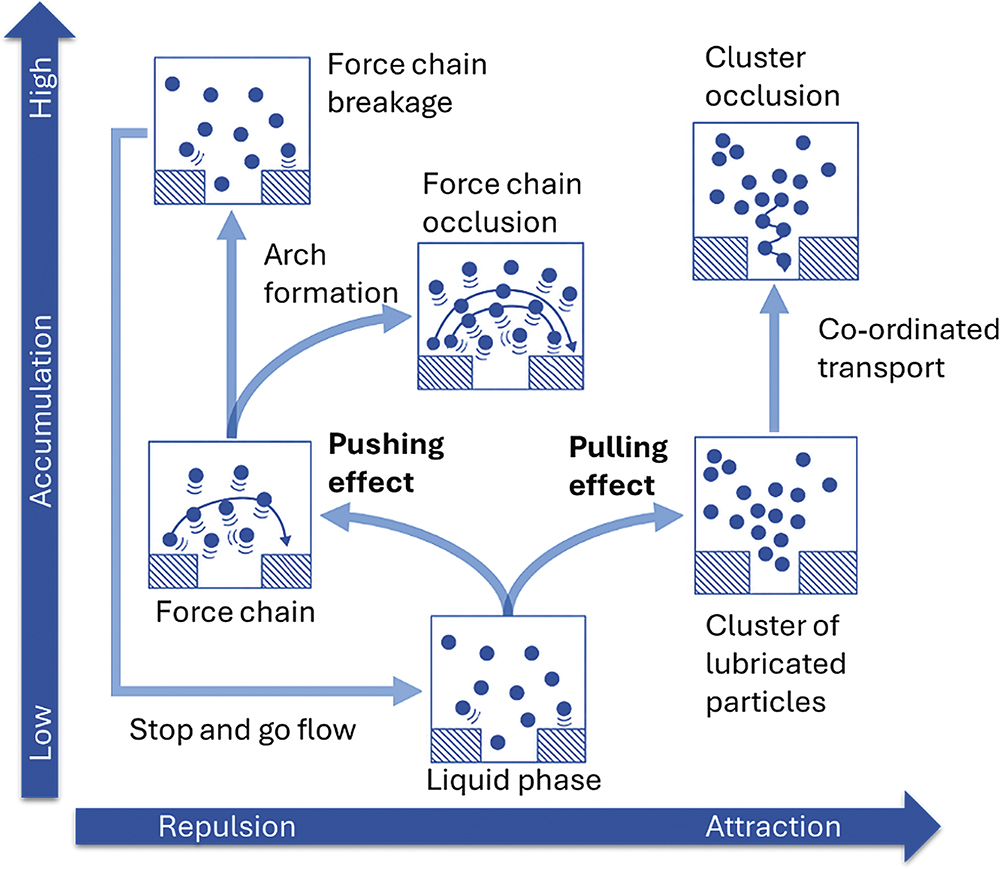
Figure 2: Occlusion mechanisms for different particle interactions.
Weak jams are typically stabilised by tangential frictional forces and may be disrupted by vibration, transient pressure fluctuations or local shear, often described in terms of fragility.2,3 This distinction is important from a device-development perspective because weak jams can often be mitigated or reversed through delivery system design.
Beyond particle concentration, the constriction ratio (C) is one of the most important predictors of mechanical jamming:
C = D/d
where D is the flow path or inlet diameter and d is the particle diameter. As this ratio decreases, the probability of blockage increases, particularly as the constriction ratio falls below approximately four, although the exact threshold depends on the system geometry, interparticle interactions and flow conditions under consideration.3–5
This mechanism is particularly relevant for larger microparticles, embolic beads and cell therapies. In these systems, occlusion can be usefully described in terms of the number of particle escapes through the constriction before a stable jam forms, providing a practical measure of occlusion probability and delivery robustness. This concept becomes especially useful when considering probabilistic models of blockage and delivery performance.
Surface Chemistry, Aggregation and Adhesion
Colloidal and nanoscale suspensions are generally too small to bridge a constriction mechanically, meaning occlusion is more likely to arise through particle-particle aggregation, particle-wall adhesion or gradual surface deposition. The extended Derjaguin–Landau–Verwey–Overbeek (DLVO) theory is commonly used to describe the tendency of suspended particles to aggregate or adhere to surfaces.10 The total interaction energy between a particle, fluid and surface can be expressed as:
Gtotal = Gel + GAB + GLW
where Gel is the electrostatic double-layer interaction, GLW is the Lifshitz–van der Waals interaction, and GAB is the acid-base interaction term associated with polar, hydrophobic and hydrogen-bonding effects.
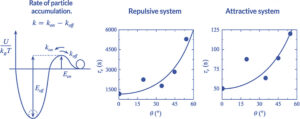
Figure 3: Energy barriers for adsorption and separation, and resulting characteristic clogging time τc as a function of wall angle for repulsive and attractive particle systems. Reproduced from Van de Laar et al.11
Formulation and surface chemistry are therefore major determinants of delivery performance. Hydrophobicity is especially relevant in pharmaceutical delivery systems because many syringe lubricants, such as silicone oil, and several primary-container materials, including cyclo-olefin co-polymers and cyclo-olefin polymers, are themselves hydrophobic. Valsesia et al demonstrated that hydrophobic interactions can significantly increase nanoparticle adsorption onto hydrophobic surfaces by lowering the energy barrier for particle-surface contact (Figure 3).10 In practice, hydrophobic particles may therefore adhere more readily to hydrophobic polymers and may also exhibit increased particle-particle aggregation, a well-recognised phenomenon of suspension formulations.
Although suspension surface energetics are largely established during formulation development, the implication for delivery-device design is clear: systems not developed with suspensions in mind may not provide reliable performance. Adhesion risk should therefore be assessed holistically using representative formulations, contact materials and flow geometries.
“RELATIVELY SMALL CHANGES IN WALL GEOMETRY, FLOW VELOCITY, VISCOSITY, INTERACTION POTENTIAL OR TEMPERATURE CAN PRODUCE LARGE CHANGES IN THE CHARACTERISTIC TIME TO OCCLUSION.”
Formulations that maintain strong electrostatic or steric repulsion are generally less likely to accumulate at surfaces, whereas attractive particle-particle or particle-wall interactions can accelerate deposition and occlusion. These adhesion-mediated processes also introduce a strong dependence on local geometry and interaction potential, forming the basis of the transition-state clogging framework discussed next.
Characteristic Clogging Time
For dilute colloidal suspensions, clogging can be described using a transition-state framework in which particles progressively accumulate until a stable occlusion forms. Van de Laar et al investigated this mechanism using a microfluidic model containing repeated constrictions with defined entrance angles.11 As the particles were much smaller than the channel dimensions, clogging was driven by adhesion-mediated accumulation rather than granular arch formation. The resulting characteristic clogging time can be described by:
τc = τ0 exp[−Fv cos(θ) / (kBT)]
Where:
- τc: The characteristic clogging time
- τ0: The characteristic agglomeration time in the absence of flow enhancement
- Fv: The viscous force acting on the particle
- δ: The activation length associated with the interaction potential
- θ: The wall or pore-entrance angle defined by the local geometry
- kB: Boltzmann’s constant
- T: The absolute temperature.
In this model, particle attachment is treated as a thermally activated process in which a particle must first overcome an energy barrier before adhesion can occur. Flow modifies the aggregation rate because a particle near an inclined wall experiences viscous forces with both normal and tangential components. The normal component promotes attachment, while the tangential component promotes shear-driven removal. As a result, relatively small changes in wall geometry, flow velocity, viscosity, interaction potential or temperature can produce large changes in the characteristic time to occlusion. This also has implications for human factors and use conditions, particularly for therapies administered directly from cold storage.
The transition-state framework is most relevant for colloidal and nanoscale suspensions where occlusion develops progressively through particle-wall adhesion, aggregation and surface deposition. However, the particle-escape-number model, clogging-volume measurements and characteristic clogging-time approach all provide related stochastic measures of delivery robustness. The escape-number framework is more naturally associated with mechanical arch formation in concentrated dispersions containing larger particles, whereas the transition-state model is more applicable when adhesion-mediated accumulation dominates.
Figure 4 illustrates this experimentally through measurements of delivered volume prior to occlusion for different fully resuspended microparticle formulations dispensed through a range of needle geometries, including a proprietary design in column J. The wide variation in delivered volume highlights the stochastic nature of clogging and demonstrates how relatively small changes in formulation or geometry can substantially alter delivery robustness. Some combinations exhibit rapid and repeatable occlusion, while others maintain flow for large-volume delivery without blocking.
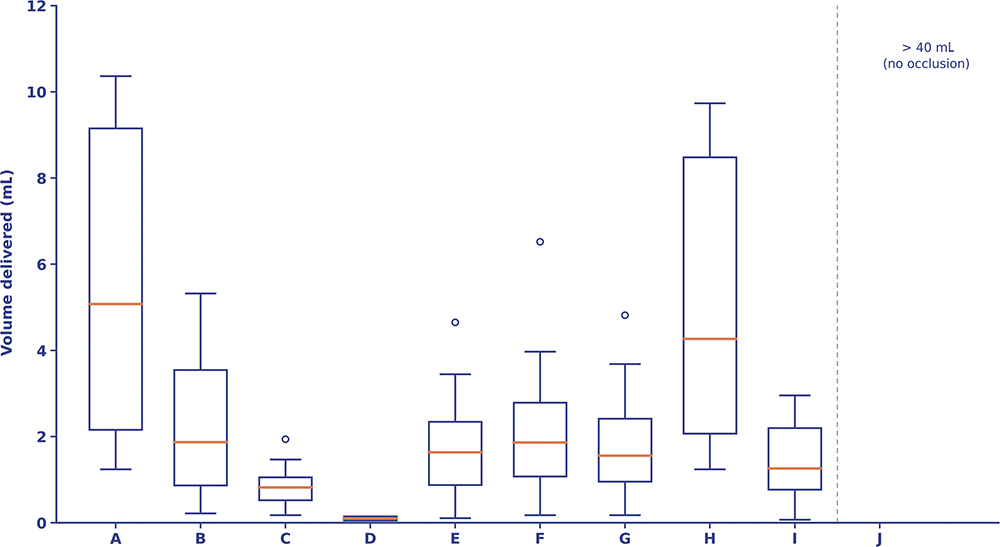
Figure 4: Example measurements of flow until a block occurs for different fully resuspended microparticle formulations dispensed through different needle geometries, including an experimental design (J) developed through mathematical and statistical modelling based on previous test data.
Measuring particle escapes, delivered volume before blockage or characteristic time-to-occlusion provides a practical basis for comparing formulation-device combinations under representative conditions. These measurements capture the stochastic nature of clogging and allow experimentally observed blocking behaviour to be expressed as a probability distribution rather than a single pass/fail outcome.
Figure 5 illustrates how measured blocking-volume data can be converted into a probabilistic prediction of delivery performance. The data are first fitted with an appropriate probability distribution, such as a truncated normal distribution. This distribution is then converted into a cumulative distribution function and inverted, allowing uniformly distributed random numbers to be transformed into sampled blocking volumes using inverse transform sampling. Each sampled value represents one possible blocking outcome from the experimentally observed distribution.
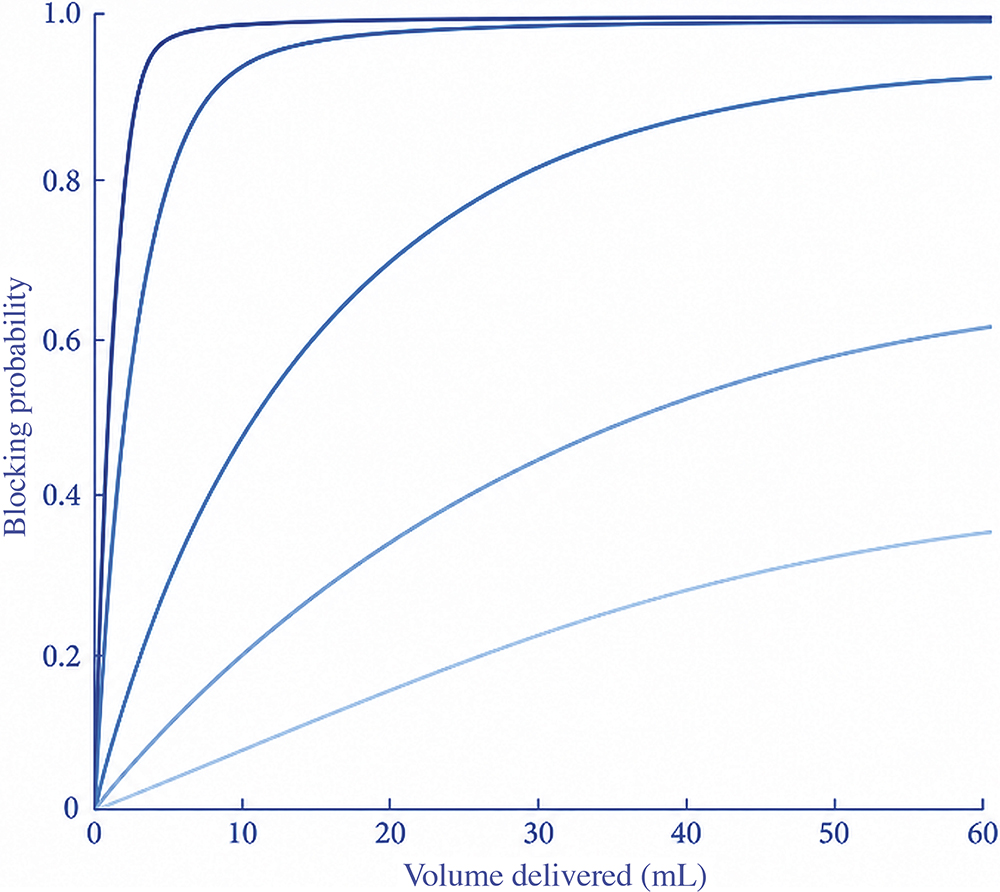
Figure 5: Graph of the blocking probability against volume delivered for different configurations of a delivery system obtained through inverse sampling and Monte Carlo simulation of limited experimental data.
By repeating this process many times, a Monte Carlo simulation generates a population of simulated delivery events, without wasting expensive drug product. The proportion of simulations that undergo a blockage before the target dose is delivered provides an estimate of the blocking probability for that formulation-device combination. Weak or reversible blocks can also be included as conditional events, where a second random number is used to determine whether a blockage clears or becomes permanent based on the experimentally measured probability of weak blocking.
This approach allows experimental data, mechanistic understanding and device-design variables to be combined into a single framework. With appropriate scaling based on measured behaviour, the model can be used to explore changes in formulation, geometry, concentration or flow conditions beyond the specific cases tested experimentally. The result is a practical tool for comparing design options and developing more robust drug-device combinations.
“FOR SUSPENSION-BASED THERAPIES, THE CHALLENGE IS NOT SIMPLY TO DETERMINE WHETHER A FORMULATION CAN PASS THROUGH A NEEDLE, BUT TO UNDERSTAND THE FACTORS THAT INFLUENCE OCCLUSION RISK UNDER REAL-USE CONDITIONS.”
CONCLUSION
For suspension-based therapies, the challenge is not simply to determine whether a formulation can pass through a needle, but to understand the factors that influence occlusion risk under real-use conditions. The application of fundamental science, representative testing, human factors insight and probabilistic modelling can help to characterise the formulation-device interactions most likely to drive delivery failure. This understanding can then be carried forwards from early concept development through device design, verification and commercial-scale manufacturing.
REFERENCES
- Barker SA, “Suspensions”. Clinical Gate, 2015.
- “Pharmaceutical Suspension Formulations: An Overview of Key Advantages and Desirable Properties”. Report, Vici Health Sciences, 2023.
- Li M et al, “Investigating Crystalline Protein Suspension Formulations of Pembrolizumab from MAS NMR Spectroscopy”. Mol Pharmaceutics, 2022, Vol 19(3), pp 936–952.
- Owen A, Rannard S, “Strengths, weaknesses, opportunities and challenges for long acting injectable therapies: Insights for applications in HIV therapy”. Adv Drug Deliv Rev, 2016, Vol 103, pp 144–156.
- Okoli CTC et al, “The effect of long-acting injectable antipsychotic medications compared with oral antipsychotic medications among people with schizophrenia: A systematic review and meta-analysis”. Int J Ment Health Nurs, 2022, Vol 31(3), pp 469–535.
- Williams J et al, “Long-acting parenteral nanoformulated antiretroviral therapy: interest and attitudes of HIV-infected patients”. Nanomedicine, 2013, Vol 8(11), pp 1807–1813.
- Spreen WR, Margolis DA, Pottage JC Jr, “Long-acting injectable antiretrovirals for HIV treatment and prevention”. Curr Opin HIV AIDS, 2013, Vol 8(6), pp 565–571.
- Butreddy A et al, “PLGA/PLA-Based Long-Acting Injectable Depot Microspheres in Clinical Use: Production and Characterization Overview for Protein/Peptide Delivery”. Int J Mol Sci, 2021, Vol 22(16), p 8884.
- Barakat J, Hancock M, “Multiphysics Simulation of Shear Thickening & Clogging in Prefilled Syringes”. Proceedings of the COMSOL Conference 2025 Boston, Veryst Engineering, 2025.
- Valsesia A et al, “Direct quantification of nanoparticle surface hydrophobicity”. Commun Chem, 2018, Vol 1, art 53.
- Van De Laar T et al, “Transition-state theory predicts clogging at the microscale”. Sci Rep, 2016, Vol 6, art 28450.