To Issue 191
Citation: Genovese P, Livemont L, Fontayne A, “The Effect of Freeze-Thaw Cycles on the Euroject® System”, ONdrugDelivery, Issue 191 (Oct 2026), pp 120–124.
Pauline Genovese, Laury Livemont and Dr Alexandre Fontayne, present the findings of nine studies that investigated the impact of freezing and thawing on the company’s Euroject® injection system and its ability to deliver the appropriate dose.
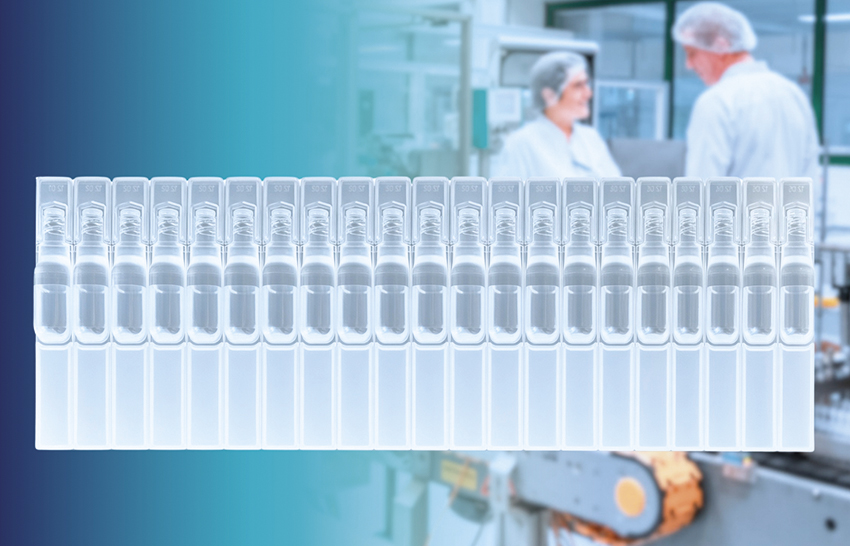
Euroject® is a prefilled single-dose injection system developed by Unither using blow-fill-seal (BFS) technology and low-density polyethylene (LDPE). Unlike conventional injectable presentation formats such as multidose vials and most prefilled syringes, Euroject is ready to use and allows drugs to be administered directly without any prior preparation. This simplified administration process may reduce the risk of dosing errors and cross-contamination while decreasing preparation time for healthcare professionals (Figure 1). These advantages are enabled by BFS technology, a fully automated aseptic manufacturing process that supports large-scale production with high operational efficiency.
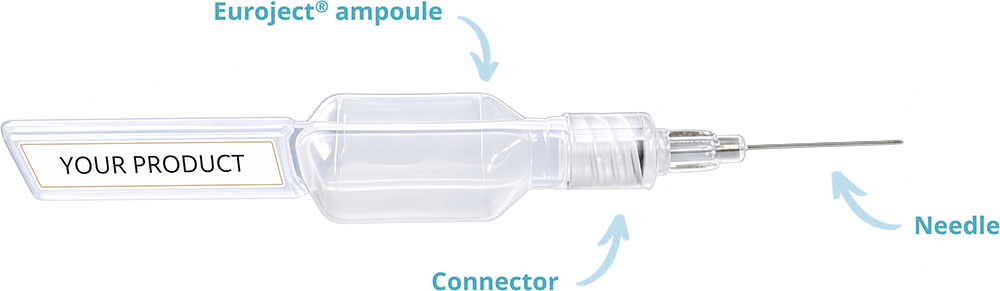
Figure 1: The Euroject injection device and its components.
With a global production capacity of up to 5 billion doses per year at Unither, Euroject offers a more cost-effective fill-finish solution than traditional multidose glass vials or prefilled syringes. This technology improves access to vaccines and injectable therapeutics by enabling rapid, high-volume production at lower cost, particularly in low- and middle-income countries, thereby contributing to better global health outcomes.
In addition to its operational benefits, Euroject offers significant economic and environmental advantages. The single-dose format eliminates the overfill commonly associated with multidose products, while its lightweight and robust polymer containers reduce the risk of breakage during transport and storage. Furthermore, its recyclable mono-material design and improved cold-chain efficiency contribute to a lower environmental footprint and improved sustainability across healthcare supply chains.
To investigate the impact of freezing and thawing on device performance, a series of nine studies was conducted on the Euroject ready-to-use injection system. The studies evaluated the ability of the device to maintain its mechanical and physical characteristics after repeated freeze-thaw cycles, including during exposure to ultra-low storage conditions at -80°C. Five samples were tested under each study condition (Table 1). The assessment focused on container integrity, device robustness, impact resistance, system tightness and dose delivery performance.
| Sample name | Condition | Storage condition | Freezing | Thawing | Storage period |
Storage configuration |
| A | Control sample | Room temperature (RT) | RT | RT | Since manufacturing at RT | 0 cycle |
| B | Study 1 | -80°C | -80°C | 2°C to 8°C | 24 hours | 1 cycle |
| C | Study 2 | -80°C | -80°C | 2°C to 8°C | 24 hours/cycle | 2 cycles |
| D | Study 3 | -80°C | -80°C | 2°C to 8°C | 24 hours/cycle | 3 cycles |
| E | Study 4 | -80°C | -80°C | RT | 24 hours | 1 cycle |
| F | Study 5 | -80°C | -80°C | RT | 24 hours/cycle | 2 cycles |
| G | Study 6 | -80°C | -80°C | RT | 24 hours/cycle | 3 cycles |
| H | Study 7 | -80°C | -80°C | Oven 35°C | 24 hours | 1 cycle |
| I | Study 8 | -80°C | -80°C | Oven 35°C | 24 hours/cycle | 2 cycles |
| J | Study 9 | -80°C | -80°C | Oven 35°C | 24 hours/cycle | 3 cycles |
Table 1: Experiment design – different conditions of freeze/thaw cycles.
ASSESSMENT OF DEVICE PERFORMANCE AFTER TEMPERATURE CYCLING
Overpressure Integrity Testing
To assess the impact of temperature cycling on the device performance, the integrity of the Euroject system was evaluated through an overpressure test conducted at 3.0 bar, in accordance with connection-tightness requirements.1 Two different O-ring configurations were investigated to verify the robustness of the vial-connector interface. For all studies and both connection systems, the results were fully compliant, with no leakage detected throughout testing.
These findings demonstrate the robustness of the vial-connector assembly and confirm that the Euroject system maintains its integrity under conditions exceeding normal use, ensuring safe administration and complete product delivery.
Dose Delivery Performance with 22G Needle
Dose delivery performance was further evaluated using the complete Euroject injection system equipped with a 22G needle. Across all nine studies, the delivered volume remained highly reproducible, with delivery efficiencies ranging from 98.1% to 98.9% of the filled volume.
“THE CONSISTENCY OF DOSE DELIVERY ACROSS ALL TEST CONDITIONS DEMONSTRATES THAT TEMPERATURE CYCLING DOES NOT ADVERSELY AFFECT THE PERFORMANCE OF THE EUROJECT INJECTION SYSTEM AND SUPPORTS ITS RELIABLE USE FOLLOWING EXPOSURE TO ENVIRONMENTAL STRESS CONDITIONS.”
Product losses within the vial, connector and needle assembly were extremely low, ranging from approximately 0.004 mL to 0.007 mL. These results reflect the minimal dead space of the system and indicate that almost the entire dose is delivered to the patient. In addition, no relationship was observed between the number of freeze-thaw cycles and the delivered volume. The consistency of dose delivery across all test conditions demonstrates that temperature cycling does not adversely affect the performance of the Euroject injection system and supports its reliable use following exposure to environmental stress conditions.
ASSESSMENT OF LOW-DENSITY POLYETHYLENE EVOLUTION AFTER TEMPERATURE CYCLING
Dynamic Mechanical Analysis Traction
Dynamic mechanical analysis (DMA) in tensile mode was performed to evaluate the impact of freeze-thaw cycles on the thermomechanical behaviour of the LDPE used in Euroject vials. Tests were conducted between 23°C and 80°C under sinusoidal tensile loading at a frequency of 1 Hz. The storage modulus (E’), which reflects the elastic response of the material, decreased progressively with increasing temperature for all samples, as expected for a semi-crystalline polymer. Comparable E’ values were obtained across all conditions, particularly within the 23–40°C temperature range.
At higher temperatures, the control sample exhibited a slightly higher modulus, whereas the sample from Study 6 displayed the lowest values (Figure 2). However, these differences remained limited and did not indicate any measurable change in the overall mechanical properties of the material. Similarly, the loss modulus (E”), associated with the viscous component and energy dissipation mechanisms, decreased gradually with temperature for all samples. Although the control sample consistently showed slightly higher values and Study 6 exhibited the lowest values, the observed differences were minor and did not indicate any alteration in the viscoelastic behaviour of LDPE (Figure 3).
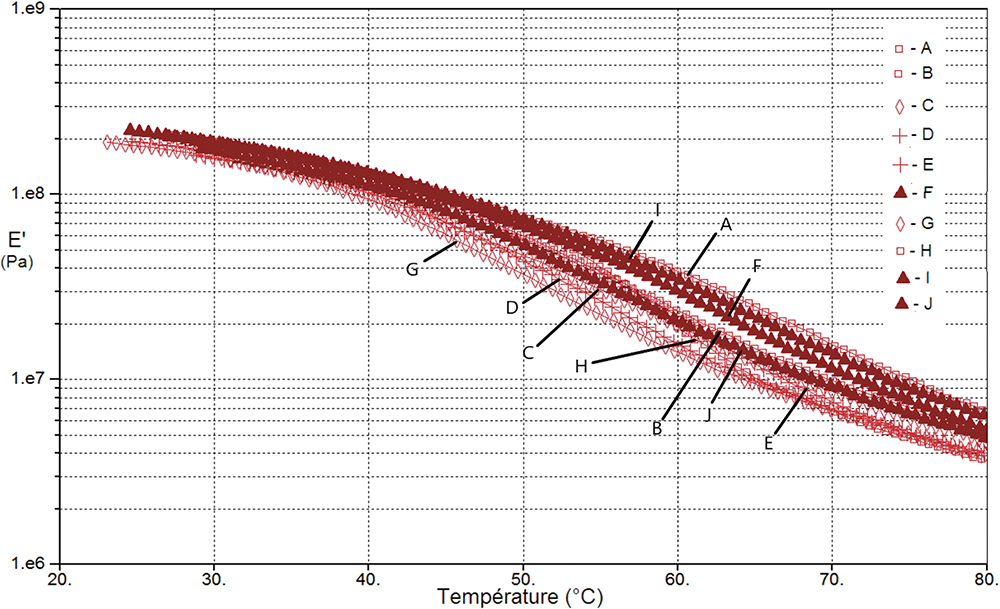
Figure 2: Representation of storage modulus (E’) as a function of temperature (°C).
Figure 3: Representation of loss modulus (E”) as a function of temperature (°C).
The analysis of the damping factor (tan δ) revealed highly comparable profiles across all conditions. A limited number of samples exhibited small peaks around 60°C, indicating somewhat more pronounced viscoelastic transitions that may be related to localised thermomechanical phenomena (Figure 4). No systematic trend related to freeze-thaw exposure was observed.
Overall, the DMA results demonstrate that repeated freeze-thaw cycles at -80°C followed by thawing do not significantly affect the elastic or viscoelastic properties of LDPE. These findings confirm the mechanical stability and robustness of the material under the storage conditions evaluated.
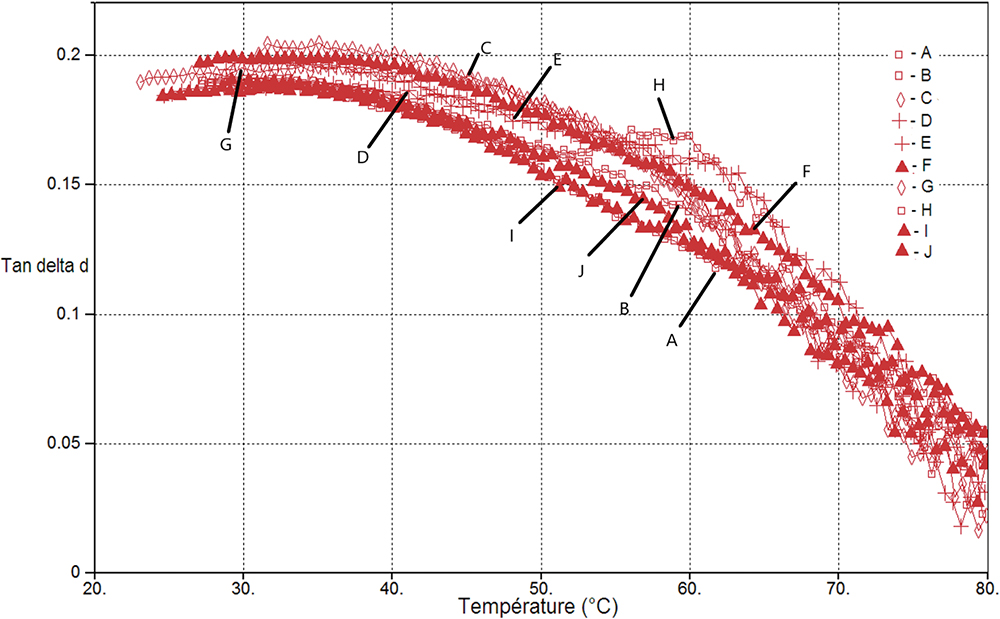
Figure 4: Representation of tangent delta (tan δ) as a function of temperature (°C).
Differential Scanning Calorimetry
Differential Scanning Calorimetry (DSC) was performed on two samples for each freeze-thaw condition to assess the impact of temperature cycling on the structure of the LDPE material used in Euroject vials. During the first heating ramp, the peak melting temperature (Tpm) remained highly consistent across all samples, ranging from 109°C to 112°C, compared with 111°C for the control sample. Similarly, the enthalpy of fusion (ΔHfusion) showed only limited variation, ranging from 114 to 121 J/g, versus 116 J/g for the control (Table 2).
| Tpm (°C) |
ΔHfusion (J/g) |
Maximum stress (N) | Deformation at maximum stress (mm) | Stress at failure (N) |
Deformation at failure (mm) | |
| Control sample | 111 ± 0 | 116 ± 4 | 64.8 ± 5.1 | 6.3 ± 1.3 | 58.0 ± 2.9 | 21 ± 5 |
| Study 1 | 112 ± 1 | 114 ± 4 | 65.4 ± 2.7 | 6.5 ± 0.4 | 60.0 ± 3.0 | 20 ± 8 |
| Study 2 | 112 ± 2 | 115 ± 2 | 63.8 ± 2.6 | 5.9 ± 1.0 | 60.1 ± 3.3 | 23 ± 4 |
| Study 3 | 112 ± 1 | 118 ± 4 | 65.1 ± 2.7 | 6.0 ± 0.5 | 62.9 ± 2.9 | 26 ± 7 |
| Study 4 | 110 ± 0 | 121 ± 2 | 68.6 ± 2.8 | 5.8 ± 0.8 | 65.0 ± 3.2 | 26 ± 8 |
| Study 5 | 110 ± 1 | 114 ± 4 | 64.9 ± 4.0 | 7.2 ± 0.4 | 59.6 ± 3.9 | 20 ± 3 |
| Study 6 | 110 ± 4 | 118 ± 0 | 71.0 ± 1.3 | 5.9 ± 0.7 | 66.0 ± 3.2 | 24 ± 2 |
| Study 7 | 112 ± 1 | 120 ± 1 | 69.3 ± 3.0 | 5.9 ± 0.5 | 64.8 ± 2.0 | 23 ± 8 |
| Study 8 | 109 ± 2 | 120 ± 2 | 67.3 ± 6.3 | 5.9 ± 0.7 | 64.8 ± 5.2 | 30 ± 12 |
| Study 9 | 110 ± 1 | 120 ± 7 | 74.7 ± 2.8 | 5.9 ± 0.5 | 66.8 ± 3.3 | 19 ± 4 |
Table 2: Main performance attributes of the Euroject injection device after freeze-thaw cycles.
As these parameters are directly related to the crystalline organisation of the polymer, their stability indicates that repeated freeze-thaw cycles at -80°C did not induce any measurable changes in the crystallinity or thermal behaviour of the LDPE material. The minor variations observed were within the expected experimental variability and do not suggest any degradation or alteration of the polymer.
“OVERALL, THE DSC RESULTS DEMONSTRATE THAT MULTIPLE FREEZE-THAW CYCLES HAVE NO IMPACT ON THE THERMAL PROPERTIES OF THE BFS-LDPE VIALS.”
Overall, the DSC results demonstrate that multiple freeze-thaw cycles have no impact on the thermal properties of the BFS-LDPE vials. These findings confirm the excellent structural and thermal stability of the material and support its ability to maintain its physical and mechanical integrity under the storage conditions evaluated.
Tensile Testing Across the Parting Line
The tensile mechanical properties of the polyethylene container were evaluated on five specimens per condition using a tensile testing machine operated under controlled environmental conditions (23 ± 2°C, 50 ± 10% relative humidity). The results showed a high degree of consistency in mechanical performance across all tested conditions, with maximum stress values ranging from 63.8 ± 2.6 N to 74.7 ± 2.8 N (Table 2).
Studies Six and Nine, which included three freeze-thaw cycles, displayed the highest measured maximum stress values, corresponding to increases of approximately 10% and 16%, respectively, compared with the control condition. Similarly, the stress at failure was at least 14% higher under both conditions. Although a slight reduction in elongation at failure was observed for Study 9, this decrease remained limited and did not indicate any loss of structural integrity.
Overall, there was no evidence of adverse effects of freeze-thaw cycling on the tensile properties of the polyethylene. The tested material maintained its mechanical performance following exposure to repeated freezing and thawing conditions, including ultra-low temperature storage. These findings suggest that neither the polyethylene material nor the integrity of the parting line area assessed during tensile testing was negatively affected by the applied thermal stresses.
“THE DEMONSTRATED STABILITY UNDER FROZEN AND ULTRALOW- TEMPERATURE CONDITIONS REINFORCES THE VALUE OF THIS BFS-BASED PLATFORM AS A RELIABLE AND VERSATILE SOLUTION FOR INJECTABLE PRODUCTS, INCLUDING VACCINES AND IOLOGICS REQUIRING STRINGENT COLD-CHAIN MANAGEMENT.”
CONCLUSION
The study demonstrates that repeated freeze-thaw cycles, including storage at -80°C followed by thawing, do not compromise the performance or material properties of the Euroject BFS-based prefilled single-dose injection system. Device integrity was maintained under all tested conditions, with no leakage observed and consistently high dose delivery efficiency (> 98%). Furthermore, DMA, DSC and tensile analyses confirmed the preservation of the thermal, mechanical and viscoelastic properties of the LDPE material following temperature cycling. Taken together, these results highlight the robustness of Euroject and its ability to withstand demanding storage conditions without loss of performance. The demonstrated stability under frozen and ultra-low-temperature conditions reinforces the value of this BFS-based platform as a reliable and versatile solution for injectable products, including vaccines and biologics requiring stringent cold-chain management.
REFERENCE
- “Small-bore connectors for liquids and gases in healthcare applications – Part 7: Connectors for intravascular or hypodermic applications”. International Organization for Standardization, 2021.
Previous article
Company Showcase: Grand River Aseptic ManufacturingNext article
CANNULA SELECTION FOR PREFILLED SYRINGE APPLICATIONS