To Issue 188
Citation: DuMond H, Desai M, Ingawale S, “The Perception Problem with SC Volume Limits and its Drug Development Cost”, ONdrugDelivery, Issue 189 (Sep 2026), pp 35–40.
Dr Haydon DuMond, Dr Mehul Desai, along with Dr Shirish Ingawale, examine survey evidence and regulatory precedent showing that the widely cited 2–3 mL limit on subcutaneous delivery reflects device history and information habits rather than tissue biology, and consider the consequences for formulation strategy, device selection and the growing pipeline of large-volume subcutaneous therapies.
Ask a cross-functional drug development team how much fluid can be delivered under the skin and a specific range tends to come back: 2–3 mL. It appears in target product profiles, frames early formulation decisions and is used to rule delivery routes in or out before a drug candidate is too far into development. This quantity is treated as a fixed property of subcutaneous (SC) tissue delivery. It is not. The SC space accommodates far larger volumes, and approved products have delivered well beyond 3 mL for years. The limit that circulates is really a property of the standard prefilled syringe and autoinjector, not of the tissue, and conflating the two has turned a device constraint into an assumed biological limit. Treating this constraint as a biological fact narrows the options that reach patients.
Recent survey work across the industry, together with a run of regulatory approvals, now make the gap between belief and evidence measurable. This article follows that gap in four stages: where the belief came from and why it persists; what it costs in formulation strategy, device selection and abandoned programmes, including claims that lack evidence for permeation enhancers; the regulatory record that increasingly argues against this ceiling; and what would actually close the distance between belief and evidence. Most respondents revised their view simply after being shown a table of products already approved to deliver large volumes, suggesting that the gap can close by putting forward the existing evidence and regulatory record in front of the people making the call.
“THE LITERATURE HAS OFTEN COMPOUNDED THE CONFUSION, STATING THAT SC DELIVERY IS LIMITED TO AROUND 2 mL WITH NO REFERENCE TO INJECTION DURATION, DELIVERY METHOD OR DEVICE, CAUSING A DEVICE CONSTRAINT TO TAKE ON THE APPEARANCE OF A BIOLOGICAL PRINCIPLE.”
A DEVICE LIMIT MISTAKEN FOR A BIOLOGICAL ONE
The 3 mL limit has a traceable origin. For most of the period in which SC biologics have become common, the dominant hardware was the prefilled syringe and the autoinjector, formats historically constrained to roughly 1–2.25 mL delivered in seconds.1,2 By contrast, current on-body injectors approved as combination products can deliver up to 25 mL from a single device over longer periods. Furthermore, syringe pumps can deliver similarly large volumes without a permeation enhancer and with only mild pain scores.3 The deliverable volume has always been set by the platform in hand rather than by the tissue capacity. The products that reached the market, such as those in 2.25 mL autoinjectors, reflected those constraints and clustered at low volumes, so over time the capability of the devices was misattributed to the tissue.
Two distinctions get lost in that misattribution. The first is between an all-at-once bolus and an infusion delivered over several minutes, which gives the tissue time to accommodate and disperse a much larger volume.4 The second is between device capability and biological capacity. The literature has often compounded the confusion, stating that SC delivery is limited to around 2 mL with no reference to injection duration, delivery method or device, causing a device constraint to take on the appearance of a biological principle.5,6
The following counterexamples are neither rare nor new. SC immunoglobulin has been self-administered for almost two decades at volumes far above 3 mL, with products delivering greater than 30 mL per site without any permeation enhancer.2 Pegcetacoplan is delivered at 20 mL via an on-body injector2 and SC isatuximab delivers 10 mL via an on-body injector, both without a permeation enhancer.7,8 A separate group of larger-volume products have reached the market with hyaluronidase, including SC daratumumab, trastuzumab, rituximab, ocrelizumab and efgartigimod.2,9 Device capability has moved well past this misperceived limit.
“BETWEEN 62% AND 68% OF RESPONDENTS IN EACH SURVEY PLACED THE MAXIMUM BOLUS VOLUME DELIVERABLE OVER A FEW SECONDS WITHOUT A PERMEATION ENHANCER AT 3 mL OR LESS.”
WHAT DECISION-MAKERS BELIEVE AND WHY
To measure the perception directly, four industry surveys conducted across 2024 and 2025 put the volume question to a total of 378 experienced professionals.10–13 The surveys sampled distinct populations: portfolio decision-making functions (R&D; new product planning/portfolio management; chemistry, manufacturing and controls; combination products), two separate groups of formulation scientists, and a cross-functional group spanning clinical development, medical affairs and commercial roles. The mean experience was around 14 years, so this was not a novice group. The belief was nonetheless replicated closely across all four samples. Between 62% and 68% of respondents in each survey placed the maximum bolus volume deliverable over a few seconds without a permeation enhancer at 3 mL or less (Table 1). When the question was reframed as an infusion over several minutes, 33% to 42% of respondents still held to 3 mL or less.
| Survey population (ref) | N | Bolus ≤3 mL | Infusion ≤3 mL |
| Drug development / R&D13 | 88 | 65% | 33% |
| Formulation, permeation-nhancer focus12 | 100 | 65% | 42% |
| Formulation, high-concentration focus11 | 100 | 62% | 40% |
| Cross-functional (clinical development, medical affairs, commercial)10 | 90 | 68% | 39% |
| Combined | 378 | 65% | 39% |
Table 1: Perceived SC volume limits across four industry surveys (combined N = 378, 2024–2025).
More telling was when respondents explained where their belief came from, and here too the four surveys corresponded. In all four groups and both framings, familiarity with marketed biologics was the leading basis. Pooled across the surveys, this reasoning accounted for 42% of responses for a bolus and 38% for an infusion, ahead of peer-reviewed literature, expert or colleague opinion and company materials or conference lectures (Figure 1).
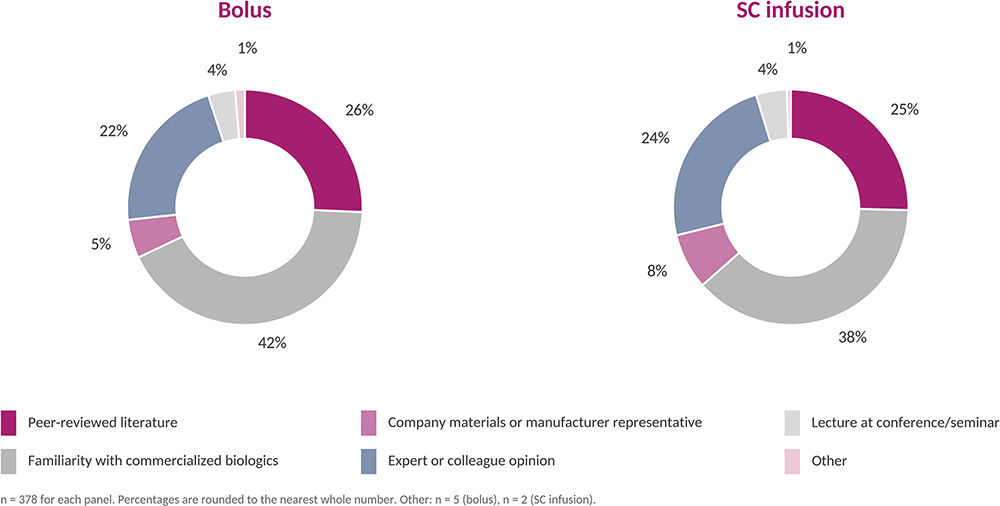
Figure 1: Stated sources of knowledge of perceived SC volume limits across four industry surveys, shown separately for a bolus and for an infusion over several minutes (compiled from references 10–13).
“AS MOST APPROVED BIOLOGICS ARE DOSED IN SMALL VOLUMES, THESE PRODUCTS SHAPE EXPECTATIONS ABOUT THE PRACTICAL UPPER LIMIT, RATHER THAN DATA ON TOLERABILITY
OR PHARMACOKINETICS.”
As most approved biologics are dosed in small volumes, these products shape expectations about the practical upper limit, rather than data on tolerability or pharmacokinetics, and the vast majority of literature rarely distinguishes a bolus over seconds from an infusion over several minutes.6 As most respondents were unaware of approved large-volume products delivered without a permeation enhancer,10 the result is a self-reinforcing loop in which familiarity with small-volume biologics feeds a peer consensus that then shapes future decisions.
THE COST LANDS ON THE PIPELINE
A perceived limit treated as a real one causes damage early on. In a survey of drug development experts, 90.9% had been directly involved in a mean of approximately four SC programmes that were either deprioritised or abandoned because they could not meet a small drug volume target.13 When a therapeutic dose will not fit under the assumed ceiling, teams reach for familiar workarounds. They raise concentration, which increases viscosity, aggregation risk and manufacturing complexity.11 They co-formulate with a permeation enhancer. Or they shelve the large-volume SC asset altogether, removing an option before anyone has tested whether the tissue would accept the volume.
The choice is often framed as high-concentration, small-volume versus low-concentration, large-volume, and the perceived volume ceiling systematically biases teams towards the former.11,14 In a survey of 100 formulation scientists asked about high-concentration development, increasing concentration to reduce injection volume and changing the primary container were both perceived as riskier, more time-consuming and more costly strategies for converting an intravenous (IV) formulation to SC administration over keeping the formulation concentration unchanged and delivering the larger volume with an on-body injector.11 A larger deliverable volume would allow some molecules to remain at a lower, more stable concentration and avoid the formulation burden entirely, but that path is closed off if the volume is wrongly assumed to be undeliverable. Therefore, the assumption does more than just remove candidates – it steers the survivors towards the more difficult formulation problem by default.
The bias is compounded by inertia in device choices. Legacy formats, meaning the needle and syringe, the autoinjector and the prefilled pen, accounted for 78% of respondents’ historical device experience, while on-body injectors accounted for under 10%.10 Asked how strongly past device use influences future selection, 81% rated it high or very high, and the leading driver of device choice was development cost and timeline.10 Familiar pathways may seem less risky, so they persist even where they may not best serve the drug or the patient, a pattern well described in the behavioural literature on status quo and anchoring bias in development decisions.15
The stakes are highest for the drug classes now moving towards SC delivery. Antibody-drug conjugates (ADCs) are a fast-growing example, still administered almost entirely by IV infusion, with SC delivery now being explored as they enter earlier treatment lines.16 Most are weight-based and lyophilised,17 and their linked hydrophobic payloads make high-concentration formulation especially difficult,16 placing them squarely in the large-volume space where the volume misconception does the most damage.
THE PERMEATION ENHANCER EVIDENCE GAP
The same survey exposed a second, related gap. Among respondents familiar with permeation enhancers, enhanced bioavailability was ranked as the single most valuable attribute, above safety, speed and patient preference.10 However, the published evidence for a bioavailability benefit with permeation enhancers is extremely thin. Across analyses of biologics co-administered with hyaluronidase, only one product, a pooled polyclonal immunoglobulin whose absorption kinetics differ from a monoclonal antibody, has shown a clear improvement in permeation.12
Nearly all of the remaining data on monoclonal antibodies supporting increased bioavailability with permeation enhancers is modelled or unpublished.12,18 When shown comparisons of bioavailability with and without permeation enhancers, 40% of respondents declined to change their view and pointed directly to insufficient or unpublished evidence.10 That scepticism is reasonable, and it defines the kind of evidence that would change expert opinion: published, controlled comparisons rather than modelled or unpublished data. Incentives are not lacking here either. When a permeation enhancer is positioned as the technology that unlocks large-volume delivery, the parties best placed to correct the misconception have little commercial reason to do so, and a belief that overstates the need for a permeation enhancer can quietly persist as a result.
“ATTRIBUTING BIOAVAILABILITY AND SAFETY ADVANTAGES TO HYALURONIDASE MAY ENCOURAGE ITS BROADER ADOPTION DESPITE EVIDENCE SUGGESTING THAT THESE BENEFITS ARE NOT NECESSARILY ATTRIBUTABLE TO THE PERMEATION ENHANCER ITSELF.”
A parallel misattribution appears on safety. When asked which factors contribute to the better tolerability of some SC products versus their IV counterparts, 65.6% of respondents selected change of route, 47.8% selected reformulation or excipient changes and 25.6% selected the permeation enhancer itself, on a question allowing multiple selections.10 The lower or delayed peak concentration and the reduced infusion-related reactions of SC delivery are largely route effects, present with or without a permeation enhancer,19 and hyaluronidase may in fact raise the rate of absorption and peak exposure.9 A Phase III study of isatuximab delivered via an on-body injector without a permeation enhancer reported an approximately 17-fold reduction in systemic infusion-related reactions versus IV administration, consistent with the benefit arising from the route and low pressure delivery rather than the additive.20 Attributing bioavailability and safety advantages to hyaluronidase may encourage its broader adoption despite evidence suggesting that these benefits are not necessarily attributable to the permeation enhancer itself.
WHAT THE APPROVALS ESTABLISH
The most direct argument against the volume limit is regulatory and increasingly global. An on-body injector, part of the enFuse® On-Body Delivery System manufactured by Enable Injections, Inc, delivering 20 mL of pegcetacoplan (EMPAVELI®, Biogen, Cambridge, MA, US) without a permeation enhancer, was approved by the US FDA in October 2023 for paroxysmal nocturnal haemoglobinuria (PNH).21 The same platform has since gained further clearance from regulators in Saudi Arabia, Brazil, South Korea and Canada, and in May 2026 received CE certification in Europe for the pegcetacoplan combination Aspaveli® (SOBI, Stockholm, Sweden) across PNH and complement-mediated kidney disease.22 In June 2026 the European Commission approved SC-delivered isatuximab (Sarclisa, Sanofi), delivered by CirCLIQ, an on-body injector built on the same enFuse platform, across its IV multiple myeloma indications (Figure 2).7 The FDA followed in July 2026 across the drug’s IV indications in the US, where the SC product is branded as Sarclisa Escena.8 The pattern of regulators clearing large-volume SC delivery without a permeation enhancer, across drugs, devices and geographies, continues.
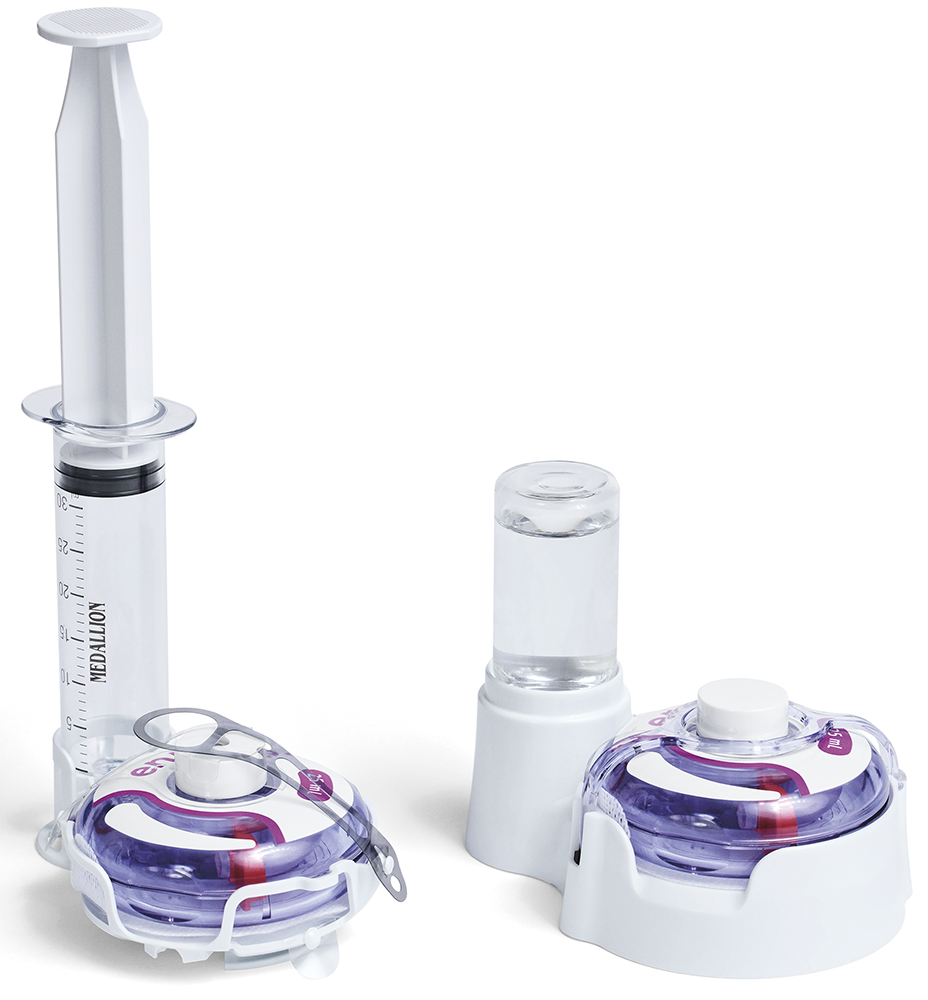
Figure 2: The enFuse On-Body Delivery System is the technology platform used for the EMPAVELI Injector and CirCLIQ Injector, both of which have received regulatory clearance in global markets.
CLOSING THE GAP
The same surveys also show that the belief can be undone. After simply reviewing a table of approved large-volume products, 55.6% of respondents revised their view of the maximum volume deliverable without an enhancer.10 What reverses this misconception is credible, published, grounded evidence, not unpublished or anecdotal claims. That points to a clear agenda for teams that communicate SC delivery information. Distinguish bolus (over seconds) tolerability from infusion (over minutes) tolerability explicitly, since conflating the two sustains much of the residual scepticism. Evaluate device platforms using current clinical evidence, not with the format a team has used before. Hold permeation-enhancer value propositions, and bioavailability claims in particular, to the same evidentiary standard applied to the molecule. And treat regulatory precedent as what it is: proof that the volume question has already been answered in practice.
The 2–3 mL range was only ever an aspect of the devices that dominated the last decade, not a limit of the SC tissue. Large-volume SC delivery was never biologically out of reach; it has simply become more routine as on-body injectors and large-volume devices have matured. The SC tissue, the delivery devices and the regulatory record now point in the same direction. Closing the distance between what has been approved and what the industry believes is now largely a matter of evidence and communication, and the data suggest it can be done.
REFERENCES
- Badkar AV et al, “Subcutaneous delivery of high-dose/volume biologics: current status and prospect for future advancements”. Drug Des Devel Ther, 2021, Vol 15, pp 159–170.
- Green P, Schneider A, Lange J, “Navigating large-volume subcutaneous injections of biopharmaceuticals: a systematic review of clinical pipelines and approved products”. MAbs, 2024, Vol 16(1), art 2402713.
- Dang X et al, “Clinical investigation of large volume subcutaneous delivery up to 25 mL for lean and non-lean subjects”. Pharm Res, 2024, Vol 41(4), pp 751–763.
- Woodley WD et al, “Clinical evaluation of large volume subcutaneous injection tissue effects, pain, and acceptability in healthy adults”. Clin Transl Sci, 2022, Vol 15(1), pp 92–104.
- Davis JD et al, “Subcutaneous administration of monoclonal antibodies: pharmacology, delivery, immunogenicity, and learnings from applications to clinical development”. Clin Pharmacol Ther, 2024, Vol 115(3), pp 422–439.
- Mathaes R et al, “Subcutaneous injection volume of biopharmaceuticals-pushing the boundaries”. J Pharm Sci, 2016, Vol 105(8), pp 2255–2259.
- “Sanofi’s Sarclisa subcutaneous approved in the EU as the first anticancer treatment administered via an on-body injector”. Press Release, Sanofi, Jun 2026.
- “Sanofi’s subcutaneous Sarclisa Escena approved in the US as first anticancer treatment administered via on-body injector”. Press Release, Sanofi, Jul 2026.
- Locke KW, Maneval DC, LaBarre MJ, “ENHANZE drug delivery technology: a novel approach to subcutaneous administration using recombinant human hyaluronidase PH20”. Drug Deliv, 2019, Vol 26(1), pp 98–106.
- Desai M et al, “Industry misunderstandings of subcutaneous biologic volume limits: implications for development strategy”. Presentation, PDA Universe, Oct 2024, Phoenix (AZ, US). [Manuscript in preparation]
- Desai M et al, “Insights from a survey of drug formulation experts: challenges and preferences in high-concentration subcutaneous biologic drug development”. AAPS J, 2025, Vol 27(6), art 142.
- Desai M et al, “Expert insights into the development of large-volume subcutaneous drugs with permeation enhancers: a survey examining challenges, alternatives, and future directions”. Int J Pharm, 2026, Vol 689, art 126515.
- Desai M et al, “Insights from drug development: surveying challenges and outcomes for large-volume subcutaneous drugs”. Presentation, AACR Annual Meeting, Apr 2025, Chicago (IL, US).
- Desai M et al, “Monoclonal antibody and protein therapeutic formulations for subcutaneous delivery: high-concentration, low-volume vs. low-concentration, high-volume”. MAbs, 2023, Vol 15(1), art 2285277.
- Weber B et al, “How debunking biases in research and development decisions could lead to more equitable healthcare?”. Clin Transl Sci, 2024, Vol 17(7), e13880.
- Yaseen AA, Rahman MA, Tumey LN, “Subcutaneous administration of antibody-drug conjugates”. Curr Pharmacol Rep, 2026, Vol 12(1), art 1.
- Desai M, Waites D, “A New Frontier: Self-Administration of Lyophilised, Large-Volume Subcutaneous Biologics”. ONdrugDelivery, Issue 151 (Sep 2023), pp 37–40.
- Nolan RP, Printz MA, “Modeling the subcutaneous pharmacokinetics of antibodies co-administered with rHuPH20”. Clin Transl Sci, 2024, Vol 17(4), art e13788.
- Mathias N et al, “Towards more tolerable subcutaneous administration: review of contributing factors for improving combination product design”. Adv Drug Deliv Rev, 2024, Vol 209, art 115301.
- Ailawadhi S et al, “Isatuximab subcutaneous by on-body injector versus isatuximab intravenous plus pomalidomide and dexamethasone in relapsed/refractory multiple myeloma: phase III IRAKLIA study”. J Clin Oncol, 2025, Vol 43(22), pp 2527–2537.
- “Apellis announces US FDA approval of the EMPAVELI Injector, a device to streamline self-administration”. Press Release, Apellis Pharmaceuticals, Oct 2023.
- “Enable Injections announces CE certification of the enFuse On-Body Delivery System for use with Aspaveli, distributed by Sobi”. Press Release, Enable Injections, May 2026.