
To Issue 192
Citation: Boltres B, Monfort J, Smith D, “The Sustainability Escape Room: How Primary Packaging Tries to Get Out of the EU Regulatory Maze”, ONdrugDelivery, Issue 192 (Oct/Nov 2026), pp 48–52.
Dr Bettine Boltres, Joe Monfort and Dana Smith break down the key EU regulatory layers affecting primary pharmaceutical packaging authorisations and explain why sustainability decisions require lifecycle thinking rather than single-attribute claims.
Sustainability in pharmaceutical packaging is often reduced to familiar ideas: less material, more recyclability and more recycled content. For prefilled syringes (PFSs), vials and cartridges, the challenge is more complex. Primary packaging is part of a regulated drug delivery system, and regulators consistently prioritise patient safety and product quality.
In the EU, this creates a sustainability “escape room”. The Green Deal sets the ambition – the Packaging & Packaging Waste Regulation (PPWR), Corporate Sustainability Reporting Directive (CSRD) and chemical, water and industrial emissions rules add operational requirements; medical device, medicinal product and good manufacturing practice (GMP) rules define what can actually be changed (Figure 1).
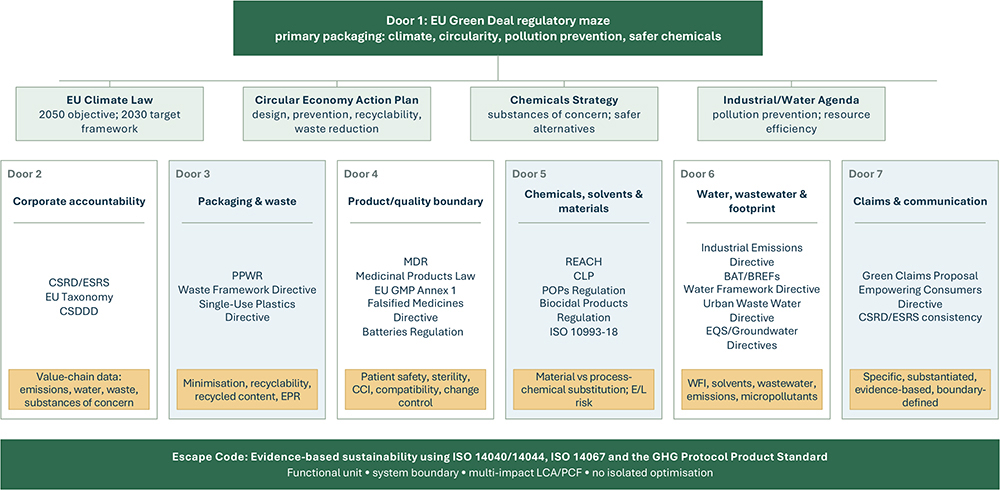
Figure 1: Overview of the sustainability escape room in Europe.
“LCA AND PRODUCT CARBON FOOTPRINT CALCULATIONS ARE BECOMING ESSENTIAL TO SUPPORT DEFENSIBLE DECISIONS, CREDIBLE CLAIMS AND MEANINGFUL COLLABORATION ACROSS THE VALUE CHAIN.”
There is rarely one simple exit. Recyclability matters, but it may not always be the most feasible or highest-impact option for sterile systems, such as when a recyclable material option increases sterilisation burden or lacks a viable clinical waste collection pathway. Lifecycle assessment (LCA) and product carbon footprint calculations are therefore becoming essential to support defensible decisions, credible claims and meaningful collaboration across the value chain.
This article considers the escape room door by door, breaking it down into a structured approach. Behind every policy pillar the current status is indicated as follows:
- I – Information
- R – Regulation (automatically binding)
- D – Directive (needs to be translated into national law)
- P – Proposed.
DOOR ONE: THE GREEN DEAL SETS THE RULES OF THE GAME
The first door is the broadest: the European Green Deal. It sets the direction for the EU economy – lower greenhouse gas emissions, circular material use, reduced pollution and safer chemicals. For primary pharmaceutical packaging, this matters because many requirements down the line flow from this policy agenda. Three related policy pillars are important for primary packaging:
- EU Climate Law (R): Turns the 2050 climate-neutrality objective and 2030 emissions-reduction target into a legal framework.
- Circular Economy Action Plan (I): Pushes product design, packaging prevention, recyclability and waste reduction higher on the agenda.
- Chemicals Strategy for Sustainability (I): Increases pressure to identify, control and, where possible, substitute substances of concern.
Taken together, these policies create the framework for more detailed rules on packaging, reporting, chemicals, water and industrial emissions.
DOOR TWO: CORPORATE ACCOUNTABILITY MOVES SUSTAINABILITY INTO THE VALUE CHAIN
The second door is corporate accountability. Under the CSRD, sustainability moves from voluntary messaging into structured reporting. Companies in scope must disclose material impacts, risks and opportunities across metrics such as climate, pollution, water, resource use and circular economy. Therefore, companies must assess and understand both their upstream and downstream risks and impacts. For primary packaging suppliers, this means that customers are increasingly requesting more detailed data on materials, energy, emissions, water, waste and substances of concern. Three related frameworks are important for primary packaging:
- CSRD (D) and European Sustainability Reporting Standards (ESRS) (R): Require structured sustainability disclosure, including value-chain information for packaging materials.
- EU Taxonomy (R): Defines the criteria for environmentally sustainable economic activities and influences investor-facing reporting.
- Corporate Sustainability Due Diligence Directive (D): Increases expectations to identify and address environmental and human rights impacts within value chains.
Taken together, these rules make gathering sustainability data part of commercial readiness. The next competitive advantage will be credible supplier-level evidence, not generic green messaging (which will be discussed in the seventh door).
DOOR THREE: PACKAGING RULES MEET PHARMACEUTICAL REALITY
The third door is packaging-specific regulation. The PPWR strengthens EU expectations on packaging waste prevention, recyclability, recycled content, labelling and extended producer responsibility. For primary pharmaceutical packaging, this is where the maze becomes more complex – syringes, vials and cartridges are not only designed to contain a product but to protect drug sterility, stability and patient safety. Three related frameworks matter for primary packaging waste:
- PPWR (R): Sets requirements on packaging minimisation, recyclability, recycled content, labelling and waste obligations, with applicability and exemptions to be assessed carefully.
- Waste Framework Directive (D): Establishes the waste hierarchy and extended producer responsibility principles.
- Single-Use Plastics Directive (D): Reinforces policy pressure to minimise avoidable single-use plastic waste (though applicability to sterile primary pharmaceutical packaging is limited or conditional, customer perception and public policy pressure can still influence sustainability expectations for single-use healthcare packaging).
Taken together, these rules make recyclability important, but not automatically the highest-impact or most feasible route. For sterile drug delivery systems, packaging choices must be assessed against safety, performance and lifecycle evidence.
DOOR FOUR: PRODUCT DESIGN CANNOT IGNORE DEVICE AND MEDICINAL PRODUCT RULES
The fourth door is the product regulatory boundary. Any sustainability-driven change to a syringe, cartridge, vial system, stopper, plunger, seal, coating or connected delivery system may affect performance, compatibility, sterility, usability or regulatory status. Consequently, material reduction, recycled content use or design-for-recyclability concepts must be evaluated against pharmaceutical and device requirements before implementation, meaning that any changes must be handled through an established change-control process like any other regulated product or validated process. Five related frameworks matter for primary packaging quality:
- Medical Device Regulation (R): Applies where the syringe or delivery system has a device function or is part of a combination product.
- EU Medicinal Products Legislation (D): Governs quality, safety, efficacy and container-closure expectations for medicines.
- EU GMP Annex 1 (Regulatory Guidance): Defines requirements for sterile manufacturing, contamination control and validated processes.
- Falsified Medicines Directive (D): Affects safety features, tamper evidence and verification for certain medicines.
- Batteries Regulation (R): Relevant only for connected injectors or smart delivery systems containing batteries.
Taken together, these rules explain why primary packaging cannot follow consumer packaging logic directly. Sustainability improvements must be compatible with patient safety, product quality and regulatory change control.
DOOR FIVE: CHEMICALS, SOLVENTS AND MATERIALS ARE UNDER THE SPOTLIGHT
The fifth door is chemical safety. Primary packaging and its manufacturing processes involve polymers, elastomers, coatings, lubricants, adhesives, inks, cleaning agents, disinfectants and solvents. Sustainability improvements therefore need consideration of not only carbon and waste but also hazardous substances, worker exposure, emissions and potential impacts on extractables and leachables. Material substitution and process chemicals substitution should be assessed separately, as each can have different implications for toxicology, supplier qualification, change control and validation. Four related frameworks are important for primary packaging:
- Registration, Evaluation, Authorisation and Restriction of Chemicals (REACH) Regulation (R): Governs registration, authorisation and restriction of chemicals, including substances of very high concern.
- Classification, Labelling and Packaging (CLP) Regulation (R): Defines classification, labelling and packaging of hazardous substances and mixtures.
- Persistent Organic Pollutants Regulation (R): Restricts persistent substances that may be relevant to material, additive or supply chain screening.
- Biocidal Products Regulation (R): Applies to disinfectants, preservatives, antimicrobial treatments and certain production-environment chemicals.
Taken together, these rules make chemical substitution an important sustainability option. However, any “safer” or lower-toxicity alternative must still meet pharmaceutical performance, compatibility and quality requirements (through an established change-control process) because, as already mentioned, alternative approaches do not automatically mean lower impact.
DOOR SIX: WATER, WASTEWATER AND MANUFACTURING FOOTPRINT
The sixth door is the production footprint. For primary packaging, sustainability is not only determined by the final syringe, vial or cartridge – it is also shaped by manufacturing operations using purified water and water for injection (WFI), component washing, sterilisation, cleanroom utilities, cooling systems, solvent use, wastewater treatment and process emissions. There are five related frameworks for primary packaging:
- Industrial Emissions Directive (D): Sets requirements for pollution prevention and control for certain industrial installations, including emissions, waste, water and solvent management where in scope.
- Best Available Techniques (BAT)/BAT Reference (BREF) documents (I): Define BATs that can guide reductions in water use, wastewater load, emissions and resource consumption.
- Water Framework Directive (D): Provides the overarching EU framework for protecting water bodies and managing water quality.
- Urban Waste Water Treatment Directive (D): Affects industrial wastewater entering municipal systems and strengthens focus on treatment and micropollutants.
- Environmental Quality Standards and Groundwater Directives (D): Set controls relevant to hazardous substances, discharges and contamination risks.
Taken together, these rules broaden the sustainability discussion beyond packaging design. Water efficiency, solvent recovery, wastewater quality and emissions control can be material contributors to the environmental profile of sterile primary packaging.
“AS EU RULES TIGHTEN, ENVIRONMENTAL CLAIMS NEED TO BE SPECIFIC, SUBSTANTIATED AND CONSISTENT WITH UNDERLYING EVIDENCE.”
DOOR SEVEN: CLAIMS, COMMUNICATION AND THE RISK OF GREENWASHING
The seventh door is communication. As EU rules tighten, environmental claims need to be specific, substantiated and consistent with underlying evidence. Terms such as “green”, “eco-friendly”, “sustainable” and “carbon neutral” can create risk if they are not supported by clear boundaries, methods, data and verification. There are three related frameworks for primary packaging:
- Green Claims Directive Proposal (P): Would require explicit environmental claims to be substantiated and communicated with defined evidence.
- Directive on Empowering Consumers for the Green Transition (D): Restricts generic or misleading environmental claims and sustainability labels.
- CSRD (D) and ESRS (R): Create consistency between public claims, corporate reporting and value-chain sustainability data.
Taken together, these rules make LCA-based decision-making more defensible than single-attribute claims. For PFSs, vials and cartridges, claims should be precise, evidence-based and limited to what the data can support.
THE ESCAPE CODE: EVIDENCE-BASED SUSTAINABILITY
To successfully step through all doors and get out of the escape room alive, device developers must always apply the escape code: the evidence base. In the pharmaceutical world, sustainability decisions should not rely on a single metric, such as weight reduction, recycled content or recyclability. Each option needs to be assessed against patient safety, product quality, regulatory feasibility and lifecycle impact. There are six assessment steps for primary packaging:
- Define the functional unit (e.g. one sterile PFS) and system boundary, including manufacturing, sterilisation, transport, use and end-of-life
- Apply LCA or product carbon footprint methods to compare options consistently
- Assess multiple impact areas, including climate, water, waste, circularity, chemical safety and resource use
- Confirm both product feasibility through stability, compatibility, extractables/leachables, performance testing and manufacturing feasibility to ensure that a product can be manufactured and run on fill-finish lines
- Evaluate regulatory change-control implications before implementation
- Substantiate any external claim with transparent assumptions, data quality and defined boundaries.
Taken together, these basics provide the “escape code” for the maze. The strongest sustainability position is not the loudest claim, but the one with the most robust evidence.
CONCLUSION
Escaping the maze requires prioritisation, not slogans. In 2023, the EU generated about 177.8 kg of packaging waste per person,1 and PPWR now pushes packaging towards recyclability, waste prevention and stronger evidence. However, pharmaceutical primary packaging sits in a different risk category from consumer packaging. Changing one component or material to reduce weight or improve recyclability triggers questions on safety, stability, extractables/leachables, sterilisation, machinability, etc.
A very practical route is to build a system-level “sustainability file”. For each syringe, vial or cartridge format, companies should quantify material mass, product carbon footprint, manufacturing energy, water use, WFI losses, solvent use, scrap rates, transport assumptions and end-of-life constraints. This is important because healthcare is estimated to contribute around 4.4% of global net greenhouse gas emissions,2 and laboratories can use several times more energy per square metre than a typical office space. In some cases, the best first option may not be recyclability, but reducing rejects, optimising secondary packaging, switching to renewable electricity, recovering solvents, reducing cleanroom utility demand or improving supplier data quality.
The final door cannot be opened by one company alone. Waste handling is the clearest example – a component is only recyclable if collection, segregation, contamination control, waste classification, logistics and recycling capacity exist, which is particularly challenging for sharps, biohazard contaminants and clinical waste, as in the case of PFSs and other injection systems. Public take-back pilots for injection pens, such as for Novo Nordisk’s (Bagsværd, Denmark) PenCycle,3 show the direction of travel, as well as underlining the system challenge.
For PFSs and other immediate packaging formats, meaningful progress will require common industry positions, collaboration with waste handlers, clearer recycling pathways, regulator engagement and shared data standards. In this maze, the real escape code is not an individual material change choice; it is co-ordinated industry infrastructure backed by defensible evidence such as shared data standards, harmonised LCA assumptions, take-back infrastructure pilots and regulator engagement on acceptable sustainability-driven changes.
REFERENCES
- “Packaging waste by waste management operations”. Web Page, Eurostat, accessed Sep 2026.
- Pichler P-P et al, “International comparison of health care carbon footprints”. Environ Res Lett, 2019, Vol 14(6), art 064004.
- “PenCycle”. Web Page, Novo Nordisk, accessed Sep 2026.