
To Issue 192
Citation: Konkart C, James S, “A Calculated Move: Putting Environmental Assessment Data to Wider Use”, ONdrugDelivery, Issue 192 (Oct/Nov 2026), pp 20–24.
Cristin Konkart and Shawn James investigate the importance of the underlying methodologies and expertise behind product carbon footprints and lifecycle assessments, drawing on Ypsomed’s accrued organisational expertise to demonstrate how these processes are evolving and providing greater value to the company and its partners.
“THE RESULTING PCF FIGURE IS ONLY AS ROBUST AND USEFUL AS THE DATA, METHODOLOGY AND EXPERTISE BEHIND IT.”
Across the medical device and pharmaceutical industries, the need for reliable environmental data is growing. Pharmaceutical companies increasingly require information from across their supply chains to fully understand the carbon footprint of their products and to support their own sustainability reporting and targets. Device manufacturers therefore need to provide robust, product-specific carbon footprint information. Product carbon footprint (PCF) assessments provide this information by quantifying the greenhouse gas emissions associated with a product. However, the resulting PCF figure is only as robust and useful as the data, methodology and expertise behind it.
Ypsomed has been conducting PCF assessments since 2020, building up practical experience, established processes and internal expertise. Its current assessments focus on CO2 emissions, while full lifecycle assessments (LCAs) consider a broader range of environmental impact categories. As standards and regulatory expectations evolve, this established competence provides an important foundation for expanding lifecycle thinking.
Combined with expertise across the organisation and Ypsomed’s active participation in industry consortia, this accumulated experience enables more rigorous assessment of environmental impacts and contributes to the development of evolving methodologies and standards. Increasingly, that competence also creates opportunities to bring environmental assessment further upstream into product development, while design choices can still be influenced.
SHOW YOUR WORKING: WHAT LIES BEHIND THE FINAL FIGURE
Six years ago, not all device components were backed by supplier-specific data. PCF calculations therefore relied more heavily on secondary datasets and assumptions based on literature searches. Today, most device components are assessed using primary data from suppliers, significantly improving the robustness and specificity of these calculations.
However, ensuring that supplier data remains current and transparent is a challenge across the industry. Supplier-specific calculations may still be based on older versions of the ecoinvent (Zürich, Switzerland) database – a widely used source that provides comprehensive environmental data for materials, energy, transport and industrial processes. When only the final PCF value is shared, without information on the underlying datasets, assumptions and calculation methodology, it can be difficult to determine when an assessment needs to be updated.
This becomes increasingly relevant as LCA databases evolve. Newer versions of the ecoinvent database provide more detailed and technologically relevant datasets, meaning calculations can better reflect the current industrial reality. Keeping supplier data and background datasets up to date therefore requires knowledge of both the data itself and the methodologies behind the calculations.
Supplier data is also becoming increasingly available within environmental impact categories beyond CO2 emissions. This is particularly relevant as emerging frameworks, such as PAS 2090, the first global set of product category rules for pharmaceutical products, move towards broader environmental assessment requirements across the pharmaceutical value chain.
Ypsomed’s approach also extends beyond supplier data. The company’s assessments draw on location-specific energy data, actual material quantities, production scrap rates, packaging and transportation data to reflect the product and its production conditions as closely as possible. As a result, the same device manufactured at different locations can have different PCFs.
Clear system boundaries and assumptions are equally important. Ypsomed provides pharmaceutical customers with cradle-to-gate PCF data for use in their own calculations, while also including an end-of-life scenario to provide a broader view of the PCF. Transparency around the scope of the assessment, the underlying assumptions and the balance between primary and secondary data is therefore an important part of the methodology.
Maintaining this level of rigour is not a one-off exercise, but an ongoing commitment. Ypsomed regularly reviews supplier data and periodically recalculates PCFs as supplier, energy, material and production data change. Ypsomed also works with an external LCA consulting partner that provides third-party review of PCFs and LCAs, adding independent scrutiny of the methodology and results (Figure 1).
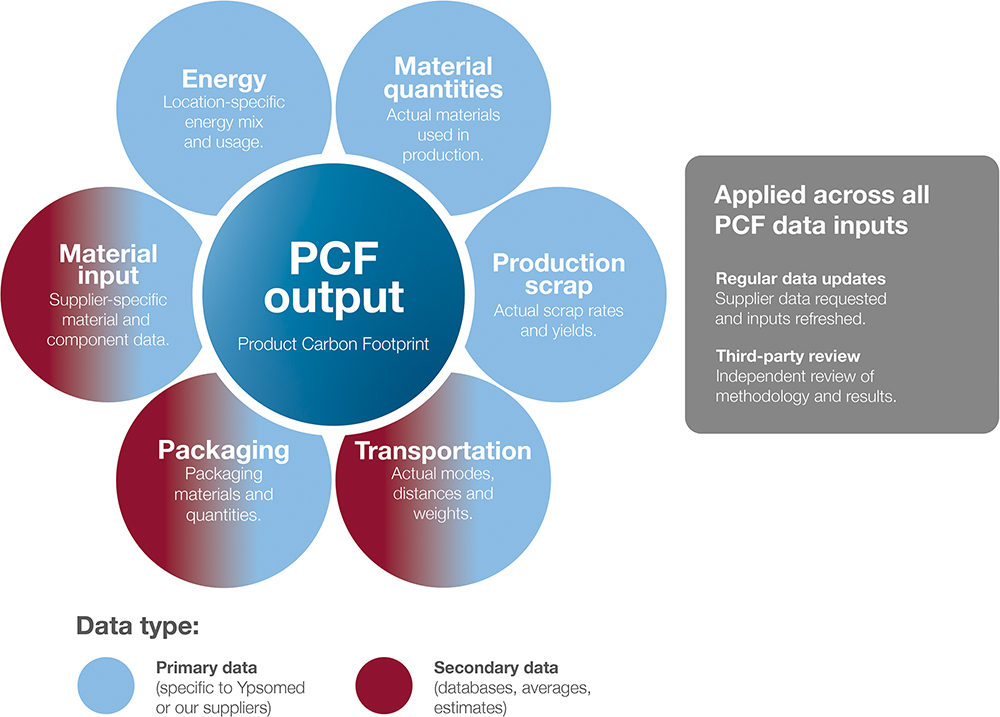
Figure 1: Multiple data inputs, regular updates and independent reviews underpin a robust PCF.
CONNECTING THE DOTS: BRINGING EXPERTISE TOGETHER
A key strength of Ypsomed’s matrix organisation is its ability to bring different perspectives together. Production, procurement, materials specialists, product managers and sustainability experts, among others, each contribute a different view of the same product. PCF assessments create a framework in which these perspectives can meet and in which environmental considerations can be discussed alongside technical, operational and commercial requirements.
When PCF activities began at Ypsomed, the results were used mainly to support sales communication and provide customers with information about the environmental footprint of the company’s products. Over time, the role of PCFs has expanded. Environmental data are increasingly brought into discussions around materials, packaging, sourcing and product development, where it can help to identify the decisions and trade-offs that have the greatest potential to influence environmental impact. In this way, PCFs become a tool for understanding where meaningful change may be possible.
One useful reference point for this evolution is the Brundtland definition of sustainable development, published in Our Common Future: “Sustainable development is development that meets the needs of the present without compromising the ability of future generations to meet their own needs.”1 Applied to product development, this raises a practical question – how can decisions made today also take the needs of tomorrow into account? PCFs and LCAs provide part of the answer by enabling different future scenarios to be explored and compared.
By modelling different scenarios, the potential impact of alternative materials, recycled content, reuse concepts, recycling systems or changes in production and energy infrastructure can be explored. These scenarios do not predict the future, but allow assumptions to be questioned, alternatives compared and potential opportunities identified.
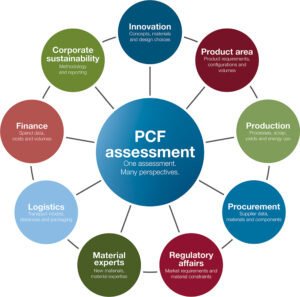
Figure 2: Robust PCF assessment combines data and expertise from across business functions.
The data and expertise needed for a robust assessment are distributed across the organisation. Production teams contribute knowledge of manufacturing processes and scrap rates, materials and polymer specialists provide expertise on sustainable alternatives, individual sites contribute energy data, procurement provides supplier-specific information, and packaging and logistics expertise supports the assessment of packaging and transportation (Figure 2).
“AS MATERIALS AND METHODOLOGIES EVOLVE, CLEAR RESPONSIBILITIES, KNOWLEDGE SHARING AND CONTINUOUS LEARNING HELP TO KEEP PCF ASSESSMENTS AND LCAs ROBUST AND USEFUL.”
This becomes particularly important when assessing newer materials and approaches. Thermoplastics, including bio-based materials and mass-balance approaches, can require specialist understanding of allocation rules, assumptions and data quality. As materials and methodologies evolve, clear responsibilities, knowledge sharing and continuous learning help to keep PCF assessments and LCAs robust and useful.
Robust assessment can also require expertise from beyond Ypsomed. Suppliers contribute increasingly specific information on materials and processes, while external LCA specialists provide methodological proficiency. Combined with expert knowledge within Ypsomed, these different perspectives can provide a more complete understanding of what sits behind the environmental data. Connecting these assessments with the people making product and design decisions also creates opportunities to put it to use.
A SPRING IN THE STEP: MOVING ENVIRONMENTAL ASSESSMENT UPSTREAM
Previous PCF analyses illustrate where some of the most significant contributions to a device’s carbon footprint can arise. An analysis of an YpsoMate 1 mL autoinjector from July 2024 showed that raw materials accounted for around 40% of CO2 emissions, with end-of-life contributing around 20%, packaging around 15%, and other contributions, such as transport and manufacturing processes, making up the remaining 25%.2 The prominence of raw materials makes understanding their origin, production and potential alternatives particularly important.
Spring steel provides a concrete example. Together with an external LCA consulting partner, Ypsomed initiated a study to better understand the supply chain of the steel used for device springs. The study set out to answer three questions:
- Where does the steel used in the springs originate?
- Which energy mixes are used by the producers?
- Where are the opportunities for optimisation?
Gathering this information required a supplier survey to better understand the processes behind the material supply. Steel is one of the remaining significant materials for which calculations still rely on generic ecoinvent data rather than primary supplier data.
An external LCA consultant can provide methodological know-how, but cannot have detailed knowledge of every production process. In this case, expertise within Ypsomed’s sustainability matrix, including previous experience in the steel industry, helped to translate the LCA findings into a more detailed understanding of the underlying production processes. Robust assessments therefore require not only methodological expertise, but also detailed knowledge of the physical, chemical and engineering aspects of the processes being assessed.
This provided a basis for exploring optimisation opportunities, including reducing the number or weight of steel components and considering recycled steel. Translating these findings into changes in the physical product and supply chain was the next step.
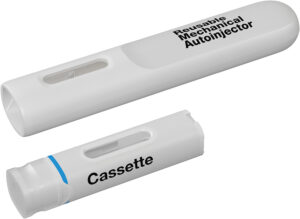
Figure 3: A PCF assessment was applied during the development of Ypsomed’s reusable mechanical autoinjector.
The same competence can also be applied earlier in the design process, while product concepts and designs are still being developed. Ypsomed’s ecodesign principles provide a framework for considering environmental aspects during innovation and development, while PCFs and LCAs can help to quantify the potential effects of different choices. The development of a reusable mechanical autoinjector (RMAI) concept provides one example (Figure 3). Here, the central question shifts from “Where does a material come from?” to “At what point does reuse actually pay off environmentally and economically?”.
Instead of disposing of the complete device after each injection, the RMAI concept retains high-value components for reuse over multiple injection cycles, while only a limited number of components require replacement or disposal. Different scenarios were modelled for the reusable device and its minimal disposable components to understand how many use cycles would be required before the concept could provide a carbon footprint and cost-of-goods advantage compared with a single-use device (e.g. YpsoMate 1 mL, based on a PCF conducted in August 2026). In the indicative PCF assessment, the reusable concept achieved a lower calculated carbon footprint after fewer than ten injections. This allowed factors such as materials, reuse cycles and end-of-life assumptions to be explored before the concept was locked in.
This example illustrates the complementary roles of ecodesign principles and environmental assessments. Ecodesign principles provide direction, while LCAs can compare scenarios and quantify the potential effects of different design choices. For the RMAI concept, this LCA work fed directly into concept-phase decisions (Figure 4).
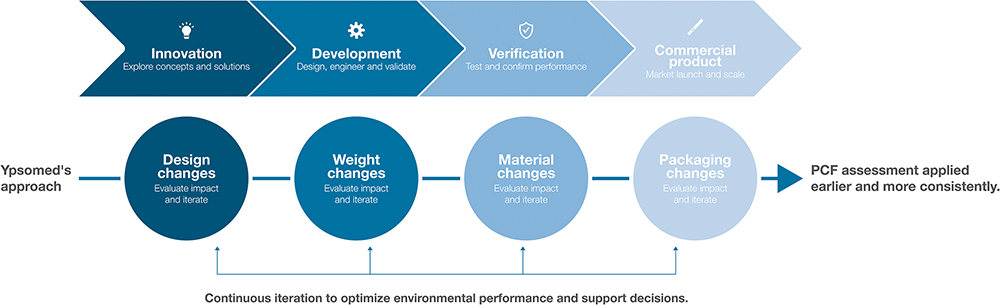
Figure 4: Applying environmental assessment earlier allows design options to be evaluated while they can still be influenced.
MAKING THE DATA COUNT: A MORE INTEGRATED APPROACH
Bringing environmental assessment earlier into product development represents a broader evolution in its role, from primarily measuring environmental impact to increasingly influencing it. The next stage is naturally to move from predominantly individual PCF and LCA studies towards a more integrated and continuously usable capability, and Ypsomed is committed to exploring this evolution.
Parameterised LCA models, supported by increasingly detailed product, supplier and manufacturing data, could allow environmental impacts to be assessed more dynamically during product development and decision making. The question then shifts from “What is the footprint?” to “How does the footprint change if another material, supplier, production location, reuse concept or end-of-life scenario is selected?”.
The challenge is not only to build better models, but also to make environmental information understandable and useful for the different teams involved in product development. Therefore, knowledge sharing and cross-functional collaboration will remain important as environmental information becomes more widely used across an organisation.
At the same time, PCF and LCA methodologies, standards and regulatory expectations will continue to evolve. Ypsomed’s established governance and cross-functional network of specialists enable continuous exchange and collaboration across relevant technical and sustainability disciplines, helping the company to keep its approach aligned with evolving developments.
Years of PCF experience have built a capability that Ypsomed can now apply earlier and more systematically across product development, giving pharmaceutical partners more robust environmental data to understand trade-offs, compare options and make informed choices while there is still scope to influence the outcome (Figure 5).
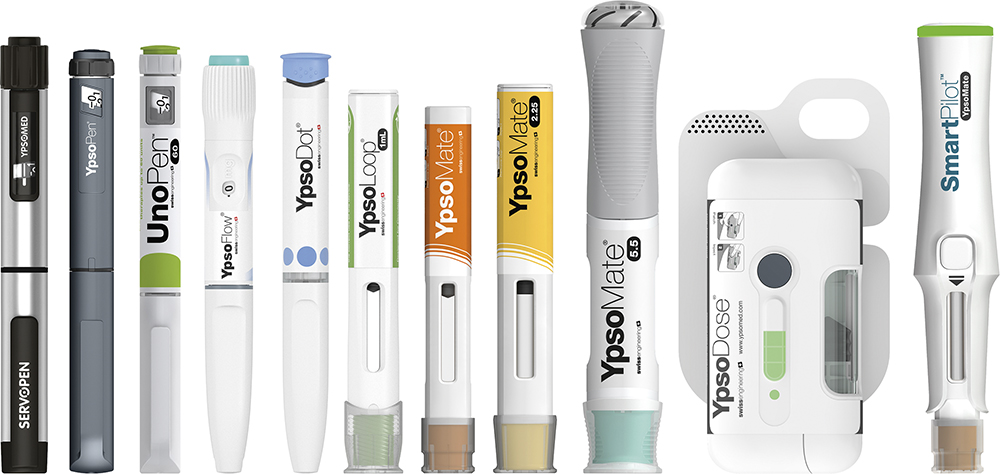
Figure 5: Ypsomed’s self-injection platforms with available PCFs.
For details on product carbon footprints, bio-based plastics, ecodesign principles and other sustainability-related information, please visit: www.ypsomed.com/sustainability-services
REFERENCES
- Brundtland GH et al, “Report of the World Commission on Environment and Development: Our Common Future”. Report, UN, 4 Aug, 1987.
- Dao T, “Closing the Loop: Designing the Future of Sustainable Drug Delivery Devices”. ONdrugDelivery, Issue 179 (Oct/Nov 2025), pp 8–12.