INJECTION
DUAL CHAMBER
FORMULATION
PFS
WEARABLES
ALL INJECTION
OCULAR
ORAL
RESPIRATORY
PULMONARY
NASAL
ALL RESPIRATORY
SKIN
SUSTAINABILITY
MORE
INTERVIEWS
EXPERT VIEWS
EARLY INSIGHTS
COMPANY LISTINGS
OUR AUTHORS
THE MAGAZINE
EVENTS
ED CALENDAR
MEDIA PACK
CONTRIBUTE
Subscribe
INJECTION
DUAL CHAMBER
FORMULATION
PFS
WEARABLES
ALL INJECTION
OCULAR
ORAL
RESPIRATORY
PULMONARY
NASAL
ALL RESPIRATORY
SKIN
SUSTAINABILITY
MORE
INTERVIEWS
EXPERT VIEWS
EARLY INSIGHTS
COMPANY LISTINGS
OUR AUTHORS
THE MAGAZINE
EVENTS
ED CALENDAR
MEDIA PACK
CONTRIBUTE
SEARCH
SEARCH
advanced search
FORMULATION
EXPERT VIEW
Dr Martin Gonzalez
RECENT TRENDS & DEVELOPMENTS IN INJECTABLE FORMULATION & DELIVERY
Martin Gonzalez details current trends in sterile injectable formulations and their delivery devices, and the challenges pharma and its contract development and manufacturing company partners face in bringing emerging breakthroughs to market.
FORMULATION
Michael Neely
Xeris Pharmaceuticals
ENABLING A NEW PARADIGM FOR PEPTIDE DRUG DEVELOPMENT
Michael Neely reviews peptide formulations and introduces Xeris's XeriSol™ technology and its potential paradigm-changing capabilities.
OCULAR
Dr Gautam Shetty
Congruence Medical Solutions
OPHTHALMIC INJECTION OF VISCOUS FORMULATIONS – WHY UNIQUE NEEDS REQUIRE A NOVEL DELIVERY APPROACH
Guatam Shetty and Richard Whelton outline the key considerations related to ophthalmic injection of viscous formulations and propose an innovative, user-validated and fully mechanical device-based solution.
EXPERT VIEW
Michael Neely
A VIEW ON THE USE OF APROTIC SOLVENTS IN PARENTERAL DRUG FORMULATIONS
Michael Neely presents a review and discussion of the status of aprotic solvents as a solubilising vehicle for parenteral drug formulations in the context of the industry’s increasing interest in biologic drugs.
INJECTION
Asmita Khanolkar
SMC Ltd
COMPUTATIONAL MODELLING OF INJECTION-RELATED TISSUE RESPONSES IN DRUG DELIVERY
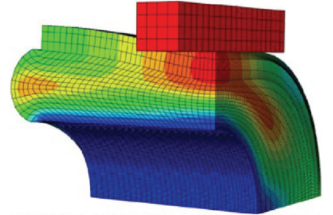
Olivia Jefferies, Elizabeth Margerison and Asmita Khanolkar introduce Oval’s work on using ultrasound scanning and finite element analysis to construct a model of how tissue compresses under use of an autoinjector across patient demographics, and how this may provide insights into improved autoinjector design for more accurate injection depths, improving patient outcomes.
SUSTAINABILITY
Julie Cotterell
Owen Mumford
FORMULATION DEVELOPMENT AND DRUG DELIVERY: JOINED AT THE DEVICE
Julie Cotterell discusses the major factors at play driving the direction of innovation in the subcutaneous drug delivery space, with a particular emphasis on the push towards patient self-administration.
INJECTION
Jennifer Quint
Pfizer CentreOne
THREE PHASES TO SUCCESS IN STERILE INJECTABLES TECHNOLOGY TRANSFER
Jennifer Quint offers insights into how to plan and execute technology transfer effectively, explaining Pfizer CentreOne’s three-phased approach that can successfully support this pivotal event in a drug product programme’s journey to commercialisation.
EARLY INSIGHT
Dr Antonio Costa
ENHANCED PROCESS CONTROL FOR LIPID-BASED NANOPARTICLES: LNPS AND LIPOSOMES
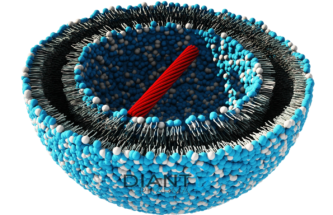
Antonio Costa discusses the use of lipid nanoparticles in the modern drug delivery industry and introduces the DIANT system for the continuous processing of nanoparticles with integrated process analytical technology, which can provide the quality required for these injectable, complex formulations.
EXPERT VIEW
Richard Gray
AUTOMATED LIPID NANOPARTICLE PRODUCTION: FROM PROTOCOL DEVELOPMENT TO GMP MANUFACTURE
Richard Gray and Julia Rashba-Step discuss the benefits of automated lipid nanoparticle production.
FORMULATION
Caroline Zakrzewski
Cambridge Design Partnership
FORMULATION & DEVICE DEVELOPMENT: A SYMBIOTIC RELATIONSHIP
Caroline Zakrzewski considers the interaction between formulation and device development and the challenges that drive innovation in the field. Her work frequently sits in the overlap between formulation and device development, navigating the interwoven steps that lead to the sweet spot, where formulation and a device work in tandem, providing safe and effective delivery of the drug.
EXPERT VIEW
Dr Andrew Donnelly
ADDRESSING THE CHALLENGES OF VISCOUS INJECTABLE ADMINISTRATION
Andrew Donnelly and Shahid Uddin look at the challenges of self-administration of injectable viscous formulations and the technology that is helping to overcome these issues.
INJECTION
Dr Matthias Bicker
SCHOTT Pharma
COMPARATIVE EXTRACTABLE STUDIES FOR INJECTABLES AND MEDICAL DEVICES ALIGNED WITH USP <1663> AND ISO 10993 GUIDELINES
Matthias Bicker, Michael Müller, Marc Mittermüller, Daniel Haines and Uwe Rothhaar discuss the regulatory requirements that need to be considered when designing an extractables and leachables study for a drug product or medical device. To illustrate the subject further, the authors provide two example studies, each following a different set of regulatory guidelines.
INTERVIEW
Benjamin Dietiker
INTERVIEW WITH BENJAMIN DIETIKER, WEIDMANN MEDICAL TECHNOLOGY
Benjamin Dietiker, Weidmann Medical Technology, talks with ONdrugDelivery about how the company has successfully implemented a growth strategy by focusing on key areas, plans for expansion, the effect of covid-19 on the business, and how the company differentiates itself from larger competitors by focusing on quality and service.
EXPERT VIEW
Darren Mansell
ROOM FOR INNOVATION?
Darren Mansell examines US FDA guidance on biosimilar interchangeability and asks whether there is room for innovation.
SUSTAINABILITY
Andrea Cusack
leon-nanodrugs
NANOTECHNOLOGY: A PATHWAY FOR SUSTAINABLE INNOVATION IN DRUG DEVELOPMENT
Andrea Cusack discusses how, by using bottom-up nanotechnology techniques, efficiencies can be found both in the development of new chemical entities and in the repurposing of existing drugs, and how these efficiencies translate into reduced energy requirements and therefore more sustainable industry practices.
INDUSTRIALISATION
Stephen Allan
Evonik
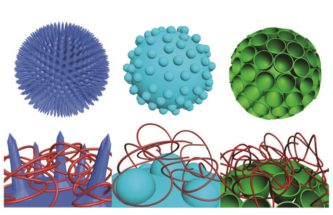
FROM FORMULATION TO MANUFACTURING: LIPID NANOPARTICLE mRNA VACCINES, GENE THERAPIES & OTHER NANOMEDICINES
Stephen Allan reviews the history and formulation advantages of lipid nanoparticles (LNPs) and addresses factors that should be considered by pharmaceutical companies during the CDMO selection process to help reduce regulatory risk, improve product performance and accelerate speed to market.
EXPERT VIEW
Nigel Theobald
SILICA RE-EMERGES AS POTENTIAL NUCLEIC ACID DELIVERY VECTOR
Nigel Theobald looks at the challenges of oligonucleotide delivery and explores approaches to overcome them.
MedinCell investigating role of long-acting antivirals to break chain of SARS-COV-2 viral transmission
With evidence indicating that the established antiparasitic ivermectin can kill coronavirus in a laboratory setting in under 48 hours, MedinCell has published data showing that long-acting formulations of ivermectin can be designed with varying doses and durations with its BEPO® technology and is investigating whether a long-acting product could be effective in breaking the chain of viral transmission.
Lexaria Bioscience Expands Pharma Division for development of Lipophilic Antivirals against COVID-19
Lexaria is to investigate how its patented DehydraTECH drug delivery technology could enhance delivery and effectiveness of certain antiviral drugs in the fight against coronavirus disease COVID-19. Lexaria intends to expand collaboration with leading laboratories as soon as possible.
INJECTION
Dr Cristianne Rijcken
COMPANY SHOWCASE: Cristal Therapeutics
Over the past year, Cristal Therapeutics has transitioned from a research-stage start-up to a fully fledged, clinical-stage business with a promising pipeline of proprietary drug candidates. This diverse pipeline together with the proprietary nanoparticle platform, CriPec
®
, presents a broad range of promising late- and early-stage partnering opportunities for companies active in the oncology space.
INJECTION
Elektrofi
ENABLING SUBCUTANEOUS DELIVERY OF BIOLOGICS
Elektrofi introduces Elektroject™, a gentle process for the production of ultra-high concentration protein formulations, that maintains a syringeable format and excellent protein stability, making the switch from intravenous to subcutaneous delivery viable for numerous biotherapeutics, including monoclonal antibodies.
Prev
1
2
3
Next
Top