To Issue 189
Citation: Russo S, “Limits Shattered: Ending the Autoinjector and Wearable Injector Divide”, ONdrugDelivery, Issue 189 (Sep 2026), pp 20–24.
Dr Scott Russo questions the distinction between wearable injectors and autoinjectors, making the case that it is not fundamental to device design, rather it is an outdated segmentation that results in unnecessary design trade-offs. He introduces MiniGo, a next-generation platform device that aims to overcome this false dichotomy.
For decades, the drug delivery industry has treated autoinjectors and wearable injectors as two distinct categories, each with its own strengths, limitations and trade-offs. Autoinjectors have traditionally offered simplicity and convenience but have been constrained by volume limitations, whereas wearable injectors have enabled larger-volume delivery but often at the cost of increased size, complexity, user burden and expense.
Ultimately, every engineering decision made during the development of a delivery device for a biologic is reflected in the patient’s treatment experience. The simpler and more intuitive that experience becomes, the greater the opportunity to empower patients to confidently self-administer their therapy. The delivery of a biologic should not be about choosing between an autoinjector or wearable injector – it should be about choosing a platform that redefines both.
A MATTER OF THINKING, NOT A DELIVERY PROBLEM
For years, drug delivery systems have been developed around the limitations of legacy architectures. Device categories emerged as engineering solutions to solve specific constraints and, over time, those categories have become accepted as fixed realities. A hidden challenge in biologic development is the classic chicken-and-egg scenario, where delivery architecture decisions are often needed while the therapy itself is still evolving.
This situation does not arise because of anything fundamentally demanded by the therapy, but rather because existing delivery technologies require these parameters to be defined before the device development process can progress confidently. The result is a landscape built around compromise. Formulation scientists work to balance dose level, concentration, viscosity and injected volume, while delivery system teams concurrently work to lock in these parameters to select a delivery architecture direction.
A volley of questions between formulation and delivery system teams therefore ensues, as the question becomes “How can a programme confidently select a delivery architecture when the final formulation profile is still evolving?” Conversely, “How can the formulation be finalised if delivery architecture selection is still evolving as well?” This unfortunate dynamic has become so familiar that it goes unquestioned. Historically, this is because delivery limitations have forced developers to work within boundaries defined by legacy systems and outdated thinking, sometimes requiring additional formulation optimisation to make the therapy compatible with the selected delivery approach.
As a result of this dynamic, the therapy often gets adjusted around the limitations of the delivery system, rather than the delivery system accommodating the formulation and dose that would provide the optimal therapeutic outcome. Furthermore, the division between autoinjectors and wearable injectors is not biologically dictated, it has become disjointed from biological or clinical need and is a consequence of historical engineering limitations and entrenched assumptions.
“THE DIVISION BETWEEN AUTOINJECTORS AND WEARABLE INJECTORS HAS BECOME DISJOINTED FROM BIOLOGICALOR CLINICAL NEED AND IS A CONSEQUENCE OF HISTORICAL ENGINEERING LIMITATIONS AND ENTRENCHED ASSUMPTIONS.”
THE FALSE TRADE-OFF
Today’s drug delivery landscape forces pharmaceutical companies to make unnecessary compromises. Autoinjectors provide simplicity in some areas but are limiting when it comes to delivering large doses, often imposing heavy constraints and demanding increasingly complex formulations or administration concessions. Although the industry has come to accept these compromises as unavoidable, they are largely the consequence of historical delivery architectures, rather than any fundamental technical or therapeutic barriers.
Unnecessary trade-offs not only hamper the patient experience but also extend development timelines, add manufacturing complexity and delay commercialisation. As biologic and other injectable therapy requirements continue to advance, such trade-offs become progressively more restrictive. Over time, the industry has largely normalised these inefficiencies. The opportunity now is not to simply optimise around those compromises but to eliminate them.
FROM DEVICE SELECTION TO PLATFORM STRATEGY
Drug delivery architecture should no longer be viewed as a project-specific device selection activity, but as a portfolio strategy. The traditional approach often requires multiple delivery systems across a pipeline, creating additional development work, regulatory complexity, manufacturing variability and supply chain inefficiency.
A true platform approach can change the equation. Rather than force development programmes to transition between different device categories as dose, concentration, viscosity or volume requirements evolve, a true platform approach can provide a continuous delivery architecture designed to support the therapy throughout development and commercialisation, creating operational consistency, reducing risk and preserving flexibility throughout the product lifecycle. Importantly, a platform approach can allow pharmaceutical companies to focus on optimising the therapy rather than yield to device constraints.
WHAT WOULD A TRUE PLATFORM LOOK LIKE?
The term “platform” is used widely throughout the drug delivery industry. However, many so-called platforms still require programme-specific adaptation or molecule-specific customisation. A true biologic delivery platform would remove the historical boundaries that have constrained formulation and delivery decisions – it would not be defined by traditional categories of low-volume or high-volume delivery, but by its ability to support a therapy as it evolves.
A true drug delivery platform would, therefore, provide formulation scientists with greater freedom by supporting a broad range of dose volumes and viscosities without requiring fundamental changes to the device architecture or molecule-specific redesigns. It would also need to integrate naturally into pharmaceutical development, established manufacturing processes and existing fill-finish infrastructure. Most importantly, it would provide a simple and intuitive experience for the patient, regardless of the final formulation strategy. In other words, it would eliminate the traditional trade-offs that have defined the market for decades.
INTRODUCING A NEW APPROACH
MiniGo by Synolus Medical was developed from a simple first principle – what would the ideal patient experience look like? Everything else, from engineering and pharmaceutical development to manufacturing and commercialisation, followed from that question. The result is not just another autoinjector or wearable injector; it is the first standardised crossover delivery platform designed to support broad formulation flexibility, including a practical delivery range from 1 to 15 mL and high-viscosity capability, without a special configuration for each new molecule or changing dose.
Enabled by its OmniDrive self-regulating flow technology, MiniGo manages changing delivery conditions by adapting to the requirements of the formulation and the patient. In drug delivery, mechanical resistance arises from both tissue and drug attributes, demanding significant changes in working pressures (both in magnitude and direction) to manage. MiniGo responds to this using self-adjusting forces and thus self-regulates delivery. This is not multiple architectures with multiple configurations; this is one power-pack – one device.
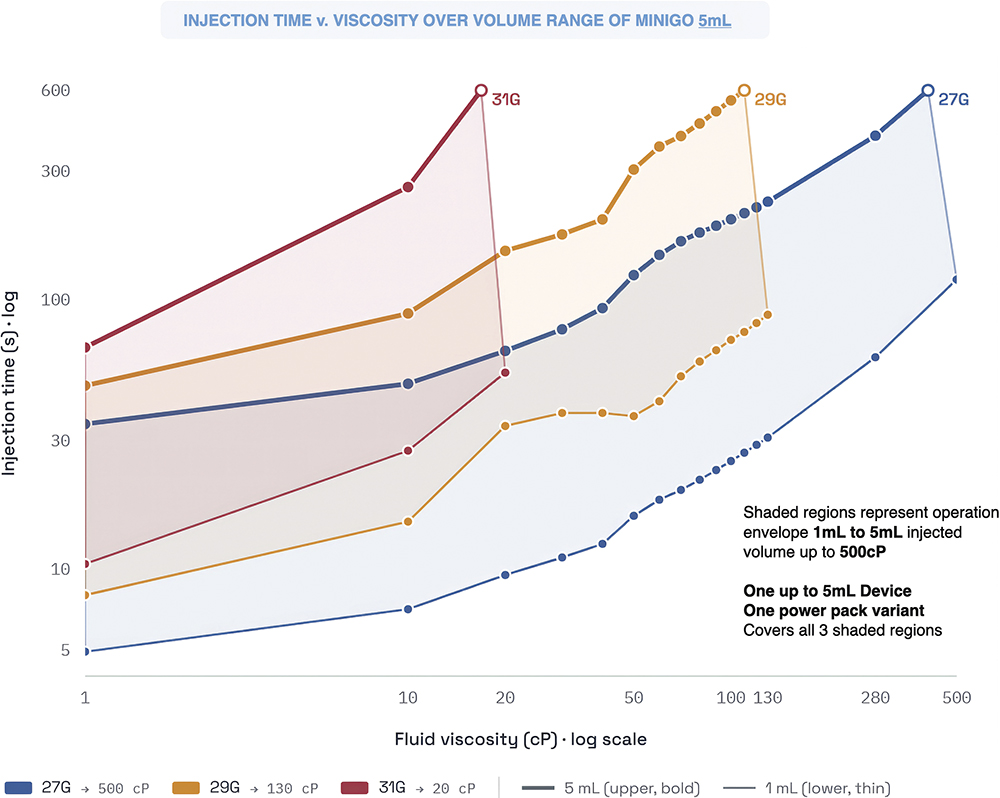
Figure 1: MiniGo 5 capabilities range. The shaded regions represent the 1–5 mL operating envelope supported by a single MiniGo 5 drive configuration.
Figures 1 and 2 focus on 1–5 mL and 1–10 mL MiniGo configurations, which encompass much of the immediate interest in the platform. MiniGo’s ultra-high-viscosity capability can enable more concentrated formulations to remain within compact dose volumes, reducing the need for dilution or migration to larger-volume delivery devices where the molecule permits. For programmes requiring larger doses, the same scalable OmniDrive self-regulating flow architecture extends across the full 1–15 mL MiniGo platform.
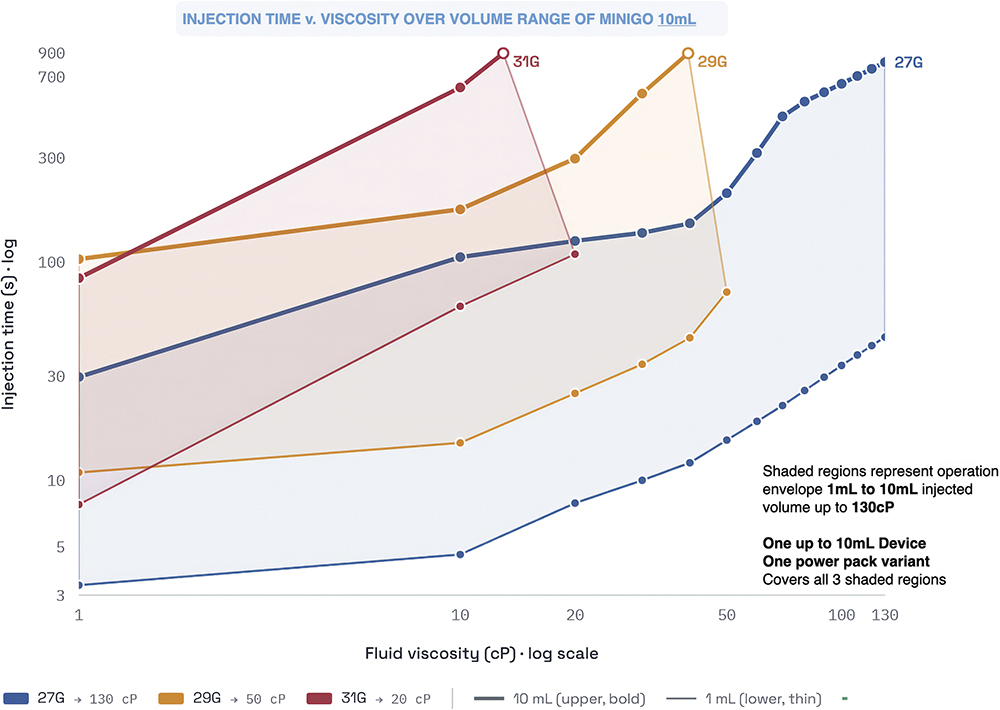
Figure 2: MiniGo 10 capabilities range, shown through 130 cP, the highest viscosity data point currently available at the full 10 mL injected volume. The shaded regions represent the 1–10 mL operating envelope supported by a single MiniGo 10 drive configuration.
“RATHER THAN DEVELOPING A NEW DELIVERY SOLUTION FOR EACH THERAPEUTIC OPPORTUNITY, MINIGO ENABLES PHARMACEUTICAL COMPANIES TO EVALUATE AND COMMERCIALISE A FULL RANGE OF THERAPIES USING THE SAME STANDARDISED PLATFORM, REPLACING THE FRAGMENTED LEGACY MODEL WITH ONE COMMON APPROACH.”
Rather than developing a new delivery solution for each therapeutic opportunity, MiniGo enables pharmaceutical companies to evaluate and commercialise a full range of therapies using the same standardised platform, replacing the fragmented legacy model with one common approach. MiniGo is the first embodiment of this platform philosophy, translating first-principles thinking into practical, industry-redefining delivery solutions.
MiniGo was engineered from the outset with manufacturability, scalability and commercial competitiveness in mind. By simplifying platform architecture and reducing unnecessary complexity, it not only delivers technical and patient advantages but also achieves unit-cost economics that compete with conventional autoinjector technologies (Figure 3).
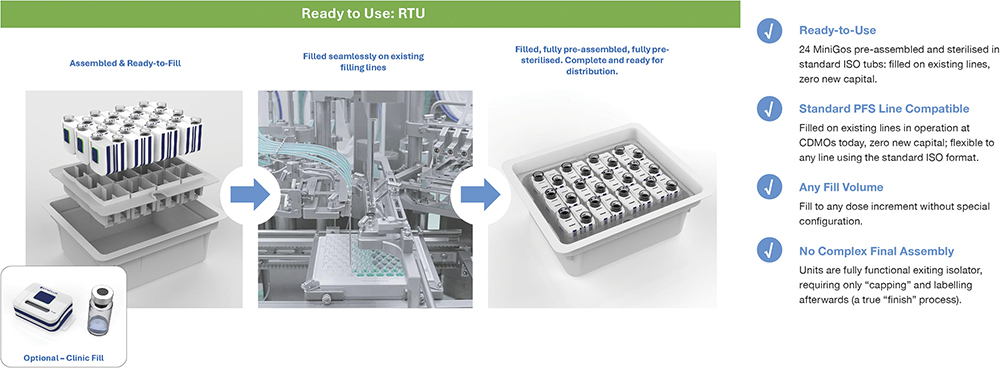
Figure 3: A revolutionary approach – MiniGo ready-to-use for seamless integration into existing prefilled syringe operations with clinic-fill optionality on the same device.
The true economics of drug delivery systems extend well beyond the cost of the delivery device itself. Manufacturing efficiency, packaging, logistics, patient preference, persistence and commercial differentiation all contribute to what might be described as “autoinjector economics”. A standardised platform has the potential to improve value across the entire product lifecycle, not simply reduce the cost of the delivery device.
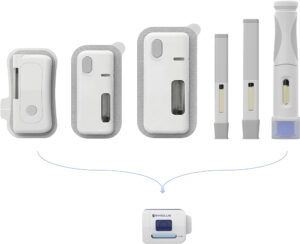
Figure 4: Multiple conventional injection-device architectures converge into one compact MiniGo platform, providing broader delivery flexibility while using standard ISO tubs and existing filling lines with no complex final assembly.
DESIGNED FOR PATIENTS, BUILT FOR PHARMA
While platform efficiency is critical, whether or not the delivery is successful is ultimately decided by patients. Complexity creates friction. Friction reduces confidence. Reduced confidence can negatively impact adherence. Conversely, simplicity builds confidence, and greater confidence has the potential to support stronger adoption, improved persistence and greater resilience throughout a product’s commercial life. MiniGo was designed to remove friction throughout the product lifecycle, from pharmaceutical development to point of care (Figure 4).
The design journey of MiniGo began with a grounding philosophy of simplifying patient experience through a prefilled, pre-assembled architecture, requiring only three simple actions – peel, stick, click. By boiling down the patient interaction to its simplest form, the MiniGo platform supports confident, intuitive and independent self-administration.
The impetus to achieve such simplicity is more than just a design objective – it is a need directly voiced by patients. A formal user preference study conducted by Bold Insight (Chicago, IL, US), involving 400 current autoinjector users, reinforced that philosophy. A total of 83% of participants stated that they would be likely to switch from their current injection therapy to MiniGo, while 94% of current autoinjector or wearable users rated MiniGo as more convenient because of its hands-free administration. While engineering makes the platform possible, it is the patient experience that ultimately determines its success. For pharmaceutical companies, that simplicity creates value far beyond the patient experience, supporting stronger adoption, greater persistence and more consistent real-world outcomes.
Furthermore, MiniGo offers patients something that is rarely considered in biologic delivery – freedom of choice. For longer administrations, the platform can be comfortably worn hands-free, removing the burden of long hold times from patients. For shorter administrations, it can simply be held comfortably in place throughout the injection. The platform adapts to both the therapy and the patient, not the other way around.
“THE NEXT ERA OF BIOLOGIC DELIVERY WILL NOT BE DEFINED BY LARGER AND MORE COMPLEX DEVICES – IT WILL BE DEFINED BY SMARTER PLATFORMS THAT REMOVE HISTORICAL CONSTRAINTS BETWEEN THE THERAPY, THE MANUFACTURER AND THE PATIENT.”
THE NEXT ERA OF BIOLOGIC DELIVERY
The next era of biologic delivery will not be defined by larger and more complex devices – it will be defined by smarter platforms that remove historical constraints between the therapy, the manufacturer and the patient. Today, the biologics market is being shaped by two powerful trends that are both moving towards the same point. Firstly, native subcutaneous therapies are advancing towards higher therapeutic doses. Secondly, traditional intravenous biologics are increasingly being reformulated for subcutaneous administration.
Both trends create similar delivery challenges, requiring greater flexibility across dose, concentration, viscosity and volume. This convergence requires a new type of delivery architecture, one capable of supporting the evolving needs of biologic therapies, without being vulnerable to forced transitions between device categories as formulations develop.
Furthermore, these trends are exposing the limitations of legacy device categories. The historical division between autoinjectors and wearable injectors was created by engineering constraints, not by the needs of the biologics themselves. The next generation of biologic delivery should not require choosing between those categories; it should eliminate the need for that distinction altogether.
CONCLUSION
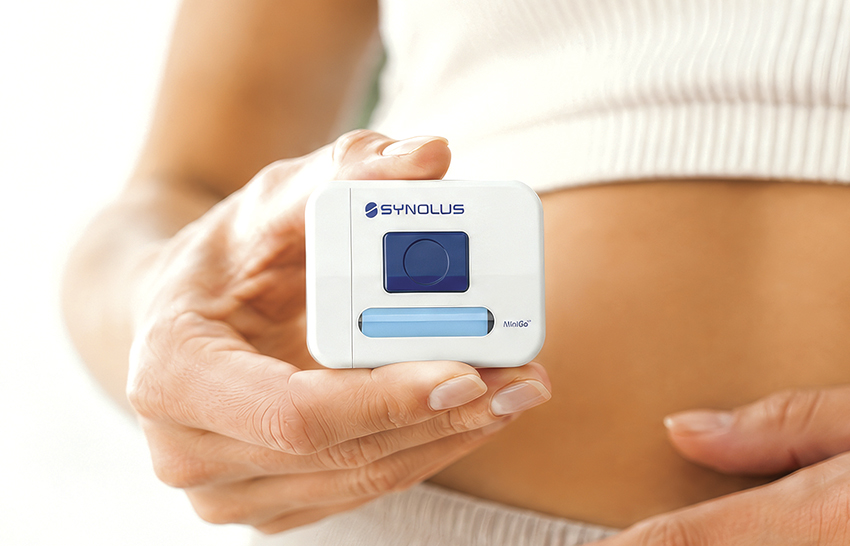
For decades, the industry has accepted a fundamental trade-off between simplicity and capability. Autoinjectors represented one side of that equation and wearable injectors represented the other. The next generation of biologic delivery demands something different – a crossover platform that removes compromise, simplifies development, improves the patient experience and supports the future of biologics (Figure 5). The end of autoinjectors and wearable injectors as we know them is not a prediction; it is the logical outcome of better design.
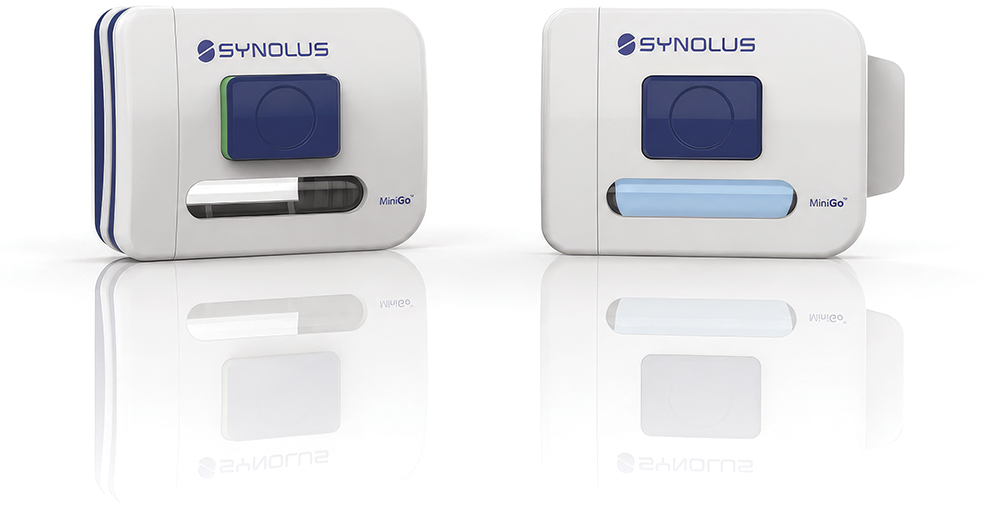
Figure 5: Synolus MiniGo device platform.
MiniGo is a platform currently under development. It has not received US FDA clearance or approval.