To Issue 192
Citation: Engel Rasmussen F, Ypsilantis M, “Reducing Commercialisation Risk in Drug Delivery Development”, ONdrugDelivery, Issue 192 (Oct/Nov 2026), pp 58–62.
Dr Frank Engel Rasmussen and Mark Ypsilantis discuss how early decisions on functional device design affect downstream production choices, highlighting the importance of integrating scale-up considerations from the outset, across all development teams.
THE GROWING COMPLEXITY OF DRUG DELIVERY DEVICES
Drug delivery requirements are continuing to evolve alongside increasingly complex therapies. Recent research points to high-concentration biologics and larger-volume injections as key factors that are shaping the development of autoinjectors,1 as on-body delivery systems and large-volume autoinjectors expand beyond the traditional 1–2 mL volume limitations of existing devices.2
For product development teams, this means balancing a growing set of requirements within a single device. Greater fill volumes and higher-viscosity formulations can introduce new technical demands, while usability, human factors and patient needs remain central to the delivery experience. Meanwhile, device platforms and delivery technologies continue to expand the options available for how and where therapies are administered.
Navigating this complexity requires more than a glance at each individual requirement. Development teams must balance product performance, patient needs, quality and speed-to-market while also considering how to ensure that individual device parts and subassemblies work together reliably when assembled with the primary packaging and as part of the final combination product.
“DECISIONS MADE THROUGHOUT PRODUCT DESIGN AND DEVELOPMENT INFLUENCE NOT ONLY HOW THE DEVICE PERFORMS FOR THE PATIENT BUT, ULTIMATELY, HOW IT CAN COME TO LIFE THROUGH TOOLING, MOULDING AND ASSEMBLY.”
BUILDING THE BRIDGE FROM DESIGN TO PRODUCTION
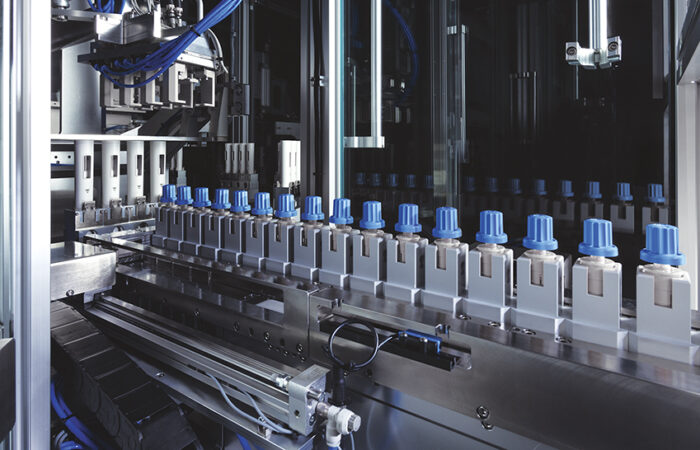
The path from a new drug delivery concept to commercial production is shaped long before a device leaves the manufacturing floor. Decisions made throughout product design and development influence not only how the device performs for the patient but, ultimately, how it can come to life through tooling, moulding and assembly (Figure 1).
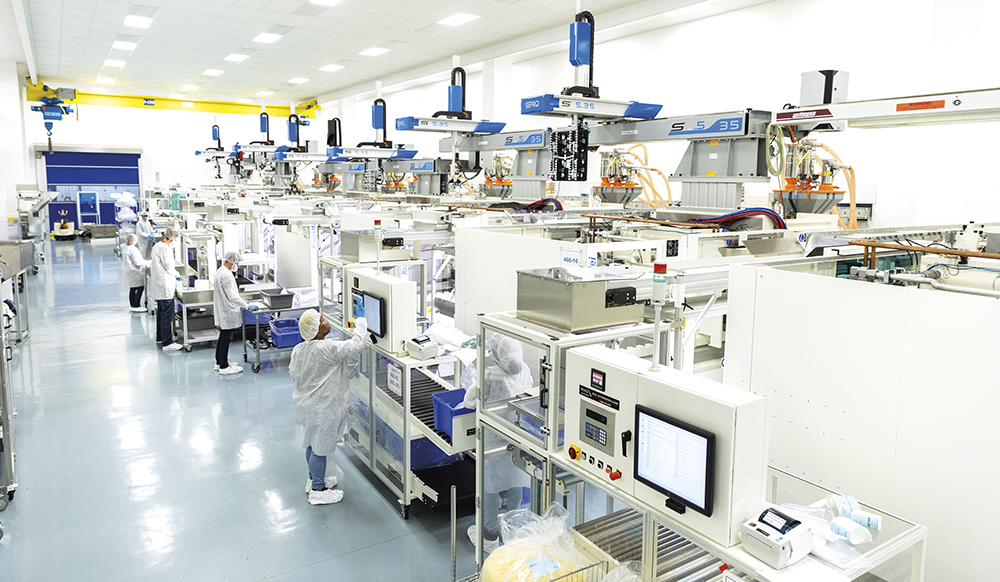
Figure 1: A commercial-scale production floor, where injection moulding and automated assembly bring device designs from development to high-volume manufacturing.
That connection is particularly important for combination products, where product performance, usability, material selection, component architecture and manufacturing requirements are closely interconnected. Decisions made to address one requirement will most likely have implications elsewhere, making it important to balance both device performance and production requirements as designs evolve.
As therapies become more sophisticated and combination products more complex, bringing downstream considerations into development earlier can help teams to identify potential challenges before design decisions become more difficult and costly to change. Decisions on product architecture, tolerancing, materials, tooling, automation and manufacturing strategy can subsequently be made with a clearer understanding of what will be required for commercial production.
That flexibility narrows as development progresses. By the time validation is complete or production tooling has been commissioned, even relatively small design changes can have significant cost, scheduling and regulatory implications. The question, then, is not simply, “Can this device be manufactured?”, it is “Are the decisions being made today creating a clearer path to commercial production?”.
DESIGN DECISIONS SHAPE WHAT COMES NEXT
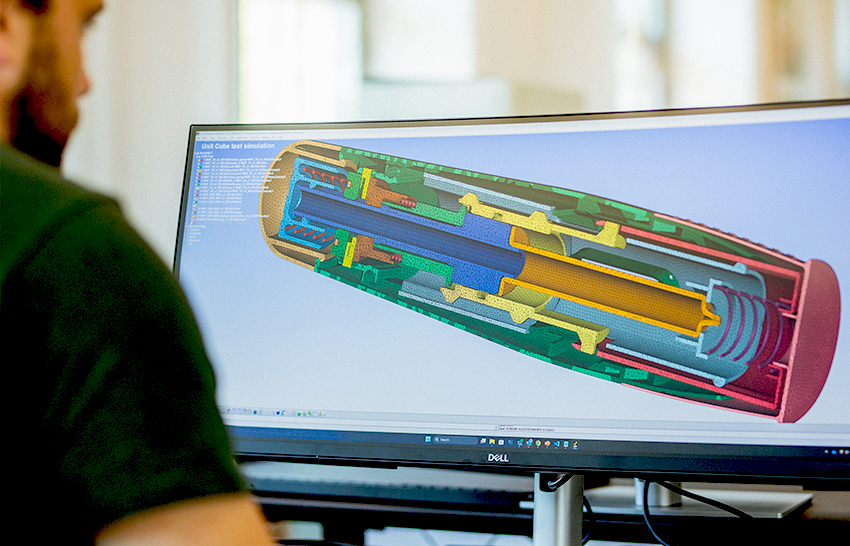
Figure 2: A design engineer reviews a 3D computer-aided design model of a device component, evaluating geometry, tolerances and material behaviour to assess usability, manufacturability and performance.
The foundation of successful combination product design and development is simple: every drug delivery device must perform safely and reliably. However, preparing a device for commercialisation requires development teams to consider much more than just functional performance in the hands of the end user.
In a multicomponent drug delivery device such as an autoinjector, seemingly small decisions made regarding materials, tolerances, part geometry and component architecture during the product design and development stages can have implications well beyond the performance of individual components (Figure 2). Material selection influences moulding behaviour, process capability and long-term supply chain flexibility. Part geometry affects tooling complexity, cooling performance and production cycle times. Component architecture shapes assembly strategies and automation potential. Tolerance decisions determine how consistently products can be manufactured at commercial volumes and how much process control will ultimately be required.
“THE SAME DECISIONS THAT SHAPE DEVICE PERFORMANCE ALSO INFLUENCE WHETHER THAT DEVICE CAN BE MANUFACTURED CONSISTENTLY AND EFFICIENTLY AT THE COST AND VOLUMES REQUIRED FOR COMMERCIALISATION.”
Viewed independently, these appear to be routine product design decisions. Viewed collectively, they establish the foundation for successful commercialisation. A design that meets its functional requirements is not necessarily ready for commercial-scale production. The same decisions that shape device performance also influence whether that device can be manufactured consistently and efficiently at the cost and volumes required for commercialisation.
The implications become clearer when individual design decisions are considered in the context of commercial production. A tolerance that appears reasonable on paper may require process controls that increase production costs or reduce manufacturing flexibility. Materials selected to optimise performance may introduce sourcing challenges, extend production lead times or respond differently to the thermal and processing demands of injection moulding. Ultimately, these challenges add up to project delays, inflated costs and missed opportunities due to costly rework and resource investments.
Assessing manufacturability is not about limiting innovation or forcing engineering compromises. Device decisions must support performance, usability and sustainability requirements while also accounting for high-volume production and assembly. Balancing those requirements throughout development can help to reduce the risk of extended validation timelines, delayed technology transfer, unplanned tooling revisions, lower manufacturing efficiency and higher total programme costs.
CONNECTING DEVELOPMENT AND TOOLING
Tooling provides a clear example of how early collaboration can positively impact both product design and development, and the path to production.
For injection-moulded drug delivery components, collaboration between designers and tooling engineers can inform decisions around part geometry, material behaviour, gate location, cooling, tolerances and other factors that influence both component performance and mould design. Evaluating these factors while the product design and tooling strategies are still taking shape gives teams further opportunities to adjust designs and improve manufacturability before investing in full-scale production tooling.
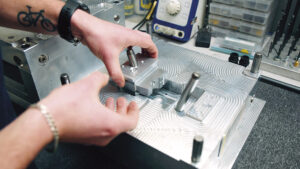
Figure 3: Hybrid tooling in action, combining aluminium and steel components to validate part performance with real injection-moulded parts produced under production-relevant conditions.
The tooling strategy can also evolve alongside the programme, creating opportunities to generate manufacturing insights as device and component design take shape – hybrid tooling is one example. By combining lower-cost aluminium and high-quality steel components, hybrid tools provide injection-moulded parts under real production conditions on the path to high-volume production tooling (Figure 3). For autoinjectors and other combination products, this interim step can allow teams to evaluate usability, function and manufacturability, applying what they learn before key product and tooling specifications are finalised.
The insights gained through approaches such as hybrid tooling have value beyond immediate product design and development conversations. When design and development, tooling and automation teams work together early on, the knowledge gained during these stages can carry forwards into mould design and ultimately into manufacturing. This connection helps to reduce unnecessary hand-offs and rework while supporting a smoother path to commercial-scale production.
MANUFACTURING EXPERTISE HAS THE GREATEST VALUE BEFORE PROBLEMS EXIST
As device design moves forwards, the connection between development, tooling, automation and production becomes increasingly important. Manufacturing and automation teams bring additional perspectives on how components will be produced, handled, assembled and inspected at full-scale production volumes. Integrating that expertise into development can help teams to account for production requirements before they translate into manufacturing challenges or design revisions.
This insight can be applied through design for manufacturability (DFM) and design for assembly (DFA) reviews, which bring manufacturing and assembly considerations directly into the design and development process. DFM reviews evaluate mouldability, material behaviour, draft angles, wall thickness and tolerance strategies. DFA reviews examine how drug delivery device components will be oriented, handled, inspected and assembled under fully automated commercial manufacturing conditions rather than the more controlled conditions of development builds.
These activities are often viewed as manufacturing practices. In reality, they are product development practices because they influence design transfer, process validation, manufacturing efficiency and long-term scalability.
Automation brings another perspective to these early decisions. Manual assembly may support early builds and lower-volume programmes but, as drug delivery devices move towards higher production volumes, factors such as automated handling, inspection and assembly can become increasingly important for consistency, throughput and quality (Figure 4). The real value in considering automation early on is not in teaching teams what automation can do. It is understanding how early design decisions determine whether automation is feasible, efficient or unnecessarily complex. In turn, this can have significant impacts on commercial readiness.
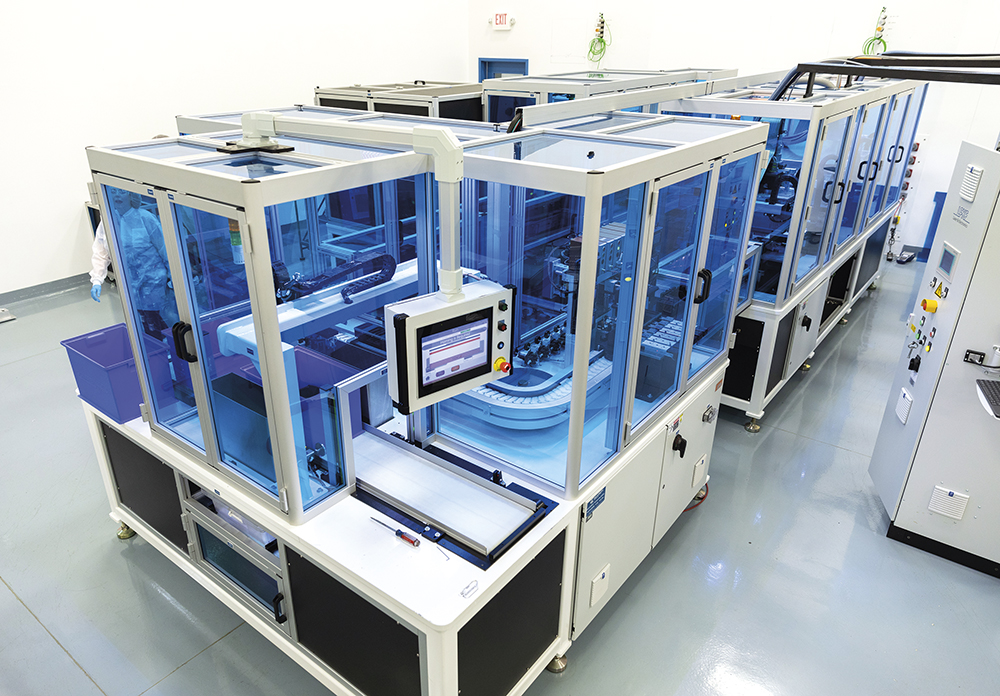
Figure 4: Automated assembly cells inspect and assemble device components with the precision, consistency and throughput required for commercial-scale manufacturing.
Together, these perspectives give development teams a more complete view of how a design will translate at the manufacturing stage. Bringing this expertise together while designs are still evolving creates more opportunities to address manufacturability, assembly and scale-up considerations before changes become too complex to implement.
INTEGRATING SUSTAINABILITY INTO DEVELOPMENT
For many single-use drug delivery devices, sustainability considerations begin with the same decisions that shape the product and its manufacturing strategy. Material selection, component architecture, manufacturing methods and packaging strategies all influence environmental impact while also affecting manufacturability, assembly and long-term production efficiency.
Each of these decisions presents opportunities to improve environmental performance while also strengthening manufacturability. Optimising material use can reduce environmental impact while supporting efficient manufacturing. Consolidating components, where technically appropriate, can streamline assembly, reduce tooling requirements and minimise opportunities for variation. Optimised mould design and cooling strategies can reduce energy consumption while lowering scrap rates and improving cycle times. Packaging decisions can influence transportation efficiency, warehousing requirements and overall patient adherence just as much as they affect environmental impact.
“EVALUATING THESE OPPORTUNITIES DURING DEVELOPMENT REQUIRES TEAMS TO CONSIDER SUSTAINABILITY ALONGSIDE PERFORMANCE, USABILITY AND MANUFACTURABILITY RATHER THAN AS A SEPARATE REQUIREMENT TO BE ADDRESSED AFTER DESIGN FREEZE.”
Evaluating these opportunities during development requires teams to consider sustainability alongside performance, usability and manufacturability rather than as a separate requirement to be addressed after design freeze. It also reinforces the value of bringing different perspectives into development as decisions are made to improve quality and accelerate time-to-market.
CREATING CONTINUITY FROM DEVELOPMENT TO PRODUCTION
Transferring a drug delivery device from development to high-volume production requires more than siloed expertise. It requires continuity across all aspects of development. Decisions made at design and development stages directly impact tooling design. Tooling decisions affect automation and manufacturing. Quality, regulatory, human factors, sustainability and supply chain considerations also add requirements that need to be understood holistically.
The value of cross-functional collaboration is not simply having each discipline represented. The value lies in the creation of opportunities when those perspectives inform one another as decisions are finalised. When teams share knowledge throughout product development, insights gained in one area can support decisions made in another. This creates a more complete understanding of how to efficiently and effectively move products towards commercial readiness – without rework.
For a combination product, the impact of that connection is particularly important. Product design engineers optimise product features for usability. Quality and regulatory teams evaluate compliance requirements; human factors specialists focus on usability; tooling specialists consider mould complexity and production efficiency; automation engineers assess assembly, inspection and packaging feasibility; manufacturing engineers evaluate process capability; and supply chain teams identify sourcing risks and long-term scalability. Individually, each competency provides a critical insight into the path to production. Together, their impact extends across the entire programme – accelerating time-to-market, protecting product quality and driving efficiency from start to finish.
A turnkey CDMO model can create this continuity within one integrated team. Rather than transferring knowledge, designs and tools between disparate partners, teams can carry insights and decisions forwards as the product progresses to production.
BUILDING FOR THE FUTURE
As drug delivery devices and combination products become more complex, development teams must balance evolving patient, product, regulatory and manufacturing requirements without compromising quality or speed.
No single decision or discipline determines whether a product will successfully reach commercial production. What matters is how those decisions and areas of expertise allow teams to work together throughout the programme. Connecting teams across design and development, tooling, automation and manufacturing with quality, regulatory, human factors and sustainability expertise enables knowledge to expand as device designs evolve.
This continuity can help teams to maintain product quality, accelerate time-to-market and move towards scale with greater confidence. For drug delivery innovators, the path to commercial production is not a series of isolated stages but a connected journey from design through manufacturing.
REFERENCES
- Guo J et al, “FDA approved PFS-based autoinjectors: evolution, market trends, and development challenges”. Expert Opin Drug Deliv, 2026, Vol 23(3), pp 481–494.
- Budhavaram NK et al, “High-dose biologics and bioconjugates delivery: Integrating molecular optimization with device design and routes of administration”. Adv Drug Deliv Rev, 2026, Vol 235, art 115893.