To Issue 191
Citation: “Interview with Vince Masciopinto: When More Matters – Advancing Large-Volume Drug Delivery with SHL’s Magnitude”, ONdrugDelivery, Issue 191 (Oct 2026), pp 18–21.
Q Can you introduce SHL Medical’s new offering, Magnitude?
A Well, it isn’t really new. Magnitude is an evolution of the Maggie Platform to reflect what we have learned over the past few years. We have a couple of new capabilities that we are really excited about, and we are changing the name of the platform from Maggie to Magnitude.
Q What exactly have you learned and what are these new capabilities?
A There are two big enhancements – one that improves usability and one that expands the platform’s performance window. Both changes are exclusive to the front sub-assembly. The rear sub-assembly, which contains the injection spring, continuous click feature, activation mechanism and vast majority of the components, remains completely unchanged.
The cap has been redesigned to make the device more intuitive and easier to use, and the cannula has been modified to provide a nearly 50% improvement in injection time. These enhancements have been informed by our experiences with customers and users.
Q Why change the name to Magnitude?
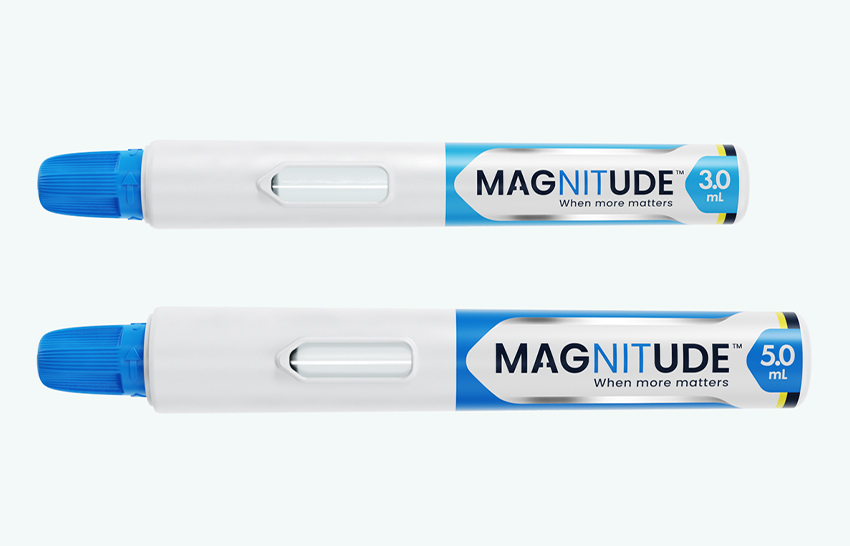
A SHL has transitioned to a new naming convention that is more descriptive of the product itself, rather than using the names of people. You will have seen that reflected in our recent product launches of Quanta and Reunite in the last year or so. Following the successful introduction of Reunite, we’re now rebranding Maggie to Magnitude, as an expansion of our portfolio of cartridge-based autoinjectors featuring our Needle Isolation Technology, NIT for short (Figure 1).
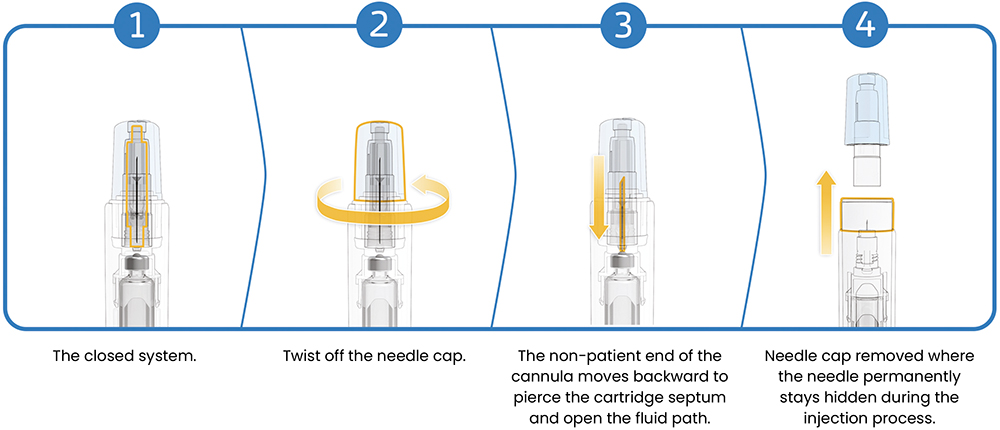
Figure 1: An overview of SHL Medical’s NIT.
“THE NAME MAGNITUDE IS MEANT TO EVOKE THE IDEA OF SOMETHING BIG OR LARGE, WHICH IS APPROPRIATE FOR OUR LARGE-VOLUME AUTOINJECTOR.”
You’ll notice that both devices include “NIT” within their names because we want the connection to this user-centric technology to be immediately clear. Additionally, the name Magnitude is meant to evoke the idea of something big or large, which is appropriate for our large-volume autoinjector. This is further emphasised in the tagline “When more matters”.
Q Can you go into more detail on Magnitude’s enhanced performance?
A When we started development of a large-volume autoinjector, we knew it had to use a traditional compression spring as the “engine” of the device. Throughout the years, we have evaluated and implemented many different spring technologies in other delivery systems. While there are useful applications for those other spring types, a compression spring offers significant advantages: small overall size, excellent manufacturing scale, unit economics, sustainability and, most importantly, reliability. The downside is the force profile, which resulted in an autoinjector that was slightly underpowered.
The most obvious answer here would be to change to a stronger spring, but that would negate all the advantages of a compression spring; instead, we decided to think a little differently. In a cartridge-based autoinjector, the needle isn’t staked to the container like a syringe, which allows us to do some things with needle geometry that aren’t possible with a syringe. With NIT, we have been able to replace a single needle with two needles. This split-cannula approach allows us to independently optimise each needle and improve flow where it matters for throughput, without changing the needle geometry that enters the injection site. The result is a roughly 50% improvement in injection time for a 27G patient-end needle without making any other changes to the device itself (Figure 2).
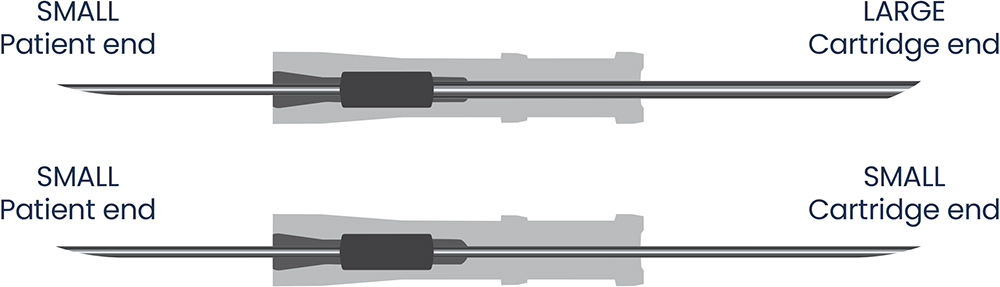
Figure 2: Image inset visualising SHL Medical’s split-cannula approach.
“EVERY TIME A USER INTERACTS WITH ONE OF OUR PRODUCTS, IT IS AN OPPORTUNITY TO LEARN SOMETHING NEW.”
Q Can you elaborate on the changes made to improve usability?
A The process of usability engineering is not a one-time event. We begin analysing risks early on in development and then continuously evaluate and improve our products throughout their lifecycle. Every time a user interacts with one of our products, it is an opportunity to learn something new. Magnitude is not the only product that includes the NIT technology. NIT was first commercialised back in 2018 and, since then, tens of millions of units have reached the hands of patients with great success. Still, we are constantly looking at opportunities for improvement, and we are in the process of rolling out one of those changes.
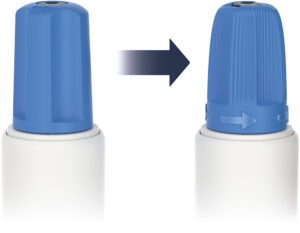
Figure 3: Cap design improvements for Magnitude.
Specifically, the cap has been modified to make the intended twist-off motion clearer and to further enhance the intuitiveness of the overall user experience (Figure 3). Additionally, there are minor changes to help improve our manufacturing efficiencies as we look to bring in our European manufacturing site in Zug (Switzerland) to complement our North Charleston (SC, US) and Taoyuan (Taiwan) sites. Just like the change we discussed earlier, this change is also isolated to the front sub-assembly.
Q Other than these new changes, how else is Magnitude different from other device products targeting large-volume injections?
A First of all, let’s define “large volume” to make sure we’re talking about the same thing. To me, large-volume injections are above 2 mL and below 5 mL. At this point, injections of 2 mL and below are widely accepted, and there are several examples of autoinjectors at and below 2 mL made by many different manufacturers and device suppliers. Above 5 mL, delivery is less of an injection and more of an infusion. Within this space, there are essentially three options: split the dose across multiple smaller autoinjectors, use an on-body injector (OBI) or use a single large autoinjector.
The strategy of using multiple smaller injections to achieve a practical dose of larger volume has been successfully implemented in several cases. This also provides some flexibility to patients by offering the option of performing a single injection more frequently or multiple injections back-to-back less frequently. This strategy can also be used to support dose titration.
While smaller autoinjectors don’t have the capacity to deliver above 2 mL, OBIs have the capability to deliver very large (10–50 mL) volumes and, in many instances, can perform infusions that are suited for very large volumes. They contain an adhesive patch that fixes the delivery system to the injection site, are often relatively large and contain complicated componentry. The additional capabilities often make OBIs cumbersome for the 2–5 mL volume range in the absence of an additional need, such as time-delayed delivery, controlled infusion or software control, and are much better suited for applications that require long or controlled infusions.
In-between smaller autoinjectors and OBIs are large autoinjectors that are purpose-built for 2–5 mL injections. Among them, Magnitude is unique because of the NIT technology. Being in a cartridge instead of a syringe has many benefits, including overall size; container performance in the form of improved drug stability, reduced silicone and better break loose and glide forces over shelf-life; and, because the fluid path is separate from the container, the fluid path can be optimised without impacting the container.
Q When you say “optimise” the fluid path, what exactly do you mean?
A There are a few ways to do it, depending on your goals. First and most obviously, is needle gauge. A larger needle can lower the injection time, which may be advantageous for usability and the overall patient experience. However, larger needle gauges may increase the risk of back leakage and insertion-related pain, whether perceived or physiological. Striking the right balance of these is often drug- or patient population-specific and is usually a decision that could benefit from real-world data.
“WITH NIT, THESE CHANGES CAN BE MADE INDEPENDENT OF THE CONTAINER AND DO NOT IMPACT ANY ONGOING STABILITY TESTING.”
With syringes, as the needle is staked to the container, so any changes to the needle gauge would necessitate a change to the container, which usually requires some additional stability work. With NIT, these changes can be made independent of the container and do not impact any ongoing stability testing.
Another characteristic with the potential for optimisation is the injection depth. Generally, most small volume (2 mL and below) autoinjectors have very similar injection depths, and the primary goal is to simply guarantee that the drug depot is in the subcutaneous layer across a variety of injection sites – typically the abdomen, thigh and back of arm. For larger injections, it is possible that deeper injections could offer some benefits, even if it would reduce the number of potential injection sites. As the depot grows larger, having it deeper in the subcutaneous layer could have positive impacts on pain, bleb size, formation and dissipation, back leakage and the injection experience for the user.
Q You mentioned that the device can deliver up to 5 mL – is an injection that large really possible?
A Yes, we’ve had customers approach us for a range of delivery volumes anywhere between 2 and 5 mL, all of which are achievable with the Magnitude platform. Each customer has their own needs, balancing delivery time, viscosity, needle gauge, dose frequency, etc. Recent internal SHL Medical studies have shown that different skin models can receive up to 5 mL with rates typical of an autoinjector. Many customers are working with us on a variety of dose volumes between 3 and 5 mL. We work with all of our customers to establish if Magnitude is the right solution for them.
Q Size seems to be a key theme for Magnitude – why is it so important?
A Keeping the device as small as possible has many advantages for our customers and patients. Users may already have anxiety about receiving an injection, and the size and weight of the device could exacerbate this and lead to usability errors. Thanks to the cartridge and compression spring, we have been able to keep Magnitude’s size very similar to standard 2.25 mL autoinjectors while being able to deliver over twice the volume.
“BEYOND HELPING TO REDUCE USER ANXIETY AROUND A VERY LARGE AND HEAVY DEVICE, MAGNITUDE’S COMPACT FOOTPRINT ALSO OFFERS ECONOMIC AND SUSTAINABILITY ADVANTAGES.”
Beyond helping to reduce user anxiety around a very large and heavy device, Magnitude’s compact footprint also offers economic and sustainability advantages. Using less raw material is only one part of the story; improved dunnage efficiency, especially in cold storage, can support better economics and a smaller environmental footprint across the supply chain – from warehousing to logistics and, ultimately, the patient’s refrigerator.
Q Beyond device design, what does it take to make a large-volume autoinjector ready for customers to implement?
A Before a device ever gets into a user’s hands, it also must be manufactured and supplied. The drug delivery landscape includes many promising devices that fail to gain traction because they either cannot be manufactured or require new infrastructure that isn’t feasible. When we set out to produce an autoinjector for large-volume subcutaneous injections, we knew that it would take more than just SHL Medical to make it happen and that it needed to be put in place before the first customer was ready. Through our Alliance Network, we have ensured that Magnitude is ready to implement today without significant investment from a partner. This includes options for the primary container, fill-finish processing, and final assembly, labelling and packaging tooling and processes.
Q Where will people be able to meet you during the upcoming conference season?
A I will be at the PDA Universe event in Palm Springs (CA, US) on October 6 and 7 presenting a Tech Talk on the subject, so feel free to stop by the talk or our booth and say hello or demo a sample. Otherwise, you can also find out more on our website.