To Issue 191
Citation: Nilsson NC, Pace-Bedetti H, Hoare J, Hill M, “Quantifying the Physical Capabilities of Female Autoinjector Users”, ONdrugDelivery, Issue 191 (Oct 2026), pp 130–135.
Dr Niels Christian Nilsson, Dr Horacio Pace-Bedetti, James Hoare and Matt Hill, summarise a recent empirical study characterising the physical strength of female autoinjector users, which can be used as a basis for design specifications and help to ensure more accessible shield-activated autoinjectors.1
Shield-activated autoinjectors, including two-step autoinjectors such as YpsoMate® (Ypsomed) and Molly® (SHL Medical), are widely used for the subcutaneous self-administration of medications across a range of acute and chronic indications. Users activate injections by pushing the device against the skin, thereby depressing the needle shield, which hides and shields the needle before and after injections.
Despite this apparent simplicity, successful use of shield-activated autoinjectors depends on the user’s ability to apply sufficient force to activate the injection and to keep the shield depressed until the full dose is delivered. That is, users must apply sufficient activation and hold force. Force-related design outputs are therefore critical to safe and effective use. Regulatory guidance stipulates that force specifications, including activation force, must be defined, justified and validated using appropriate evidence.2 Specifically, it is recommended that most medical devices – at minimum – should accommodate fifth percentile females in regard to physical strength.3
ANSI/AAMI HE75 and other human factors standards present a wealth of data characterising human physical capabilities.3 However, these estimates are often derived from samples of healthy adult males performing generic strength tasks involving postures and movements that are similar, but not identical, to how autoinjectors are operated. As such, a gap remains between available normative strength data and the device-specific evidence expected by regulators.
“RECENT EMPIRICAL WORK HAS BEGUN TO ADDRESS THIS GAP BY QUANTIFYING THE FORCES THAT USERS EXERT WHEN SIMULATING INJECTIONS USING SHIELD-ACTIVATED AUTOINJECTORS OR SURROGATE DEVICES WITH SIMILAR FORM FACTORS.”
Recent empirical work has begun to address this gap by quantifying the forces that users exert when simulating injections using shield-activated autoinjectors or surrogate devices with similar form factors.4,5 The study summarised here contributes to this emerging body of evidence by estimating how much force young adolescent, adult and elderly female users can exert when activating shield-activated autoinjectors and when holding the device against the skin during the injection across different injection sites and grip types.1
PARTICIPANTS AND METHODS
To provide a more detailed understanding of female force capabilities during autoinjector use, Novo Nordisk designed an anthropometric study and engaged Crux Product Design, who developed the surrogate devices and data‑capture software, conducted the study and extracted summary statistics.
A total of 123 female participants were recruited and stratified into three age groups: young adolescents (10–12 years), adults (18–64 years) and elderly (65 years or older) users, with the latter group including participants with age-related physical impairments representative of the general population. This stratification was intended to capture the range of physical capabilities expected among intended users, with particular emphasis on less physically capable cohorts.
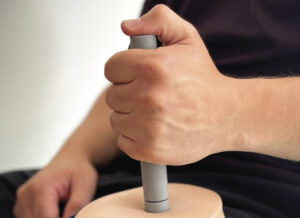
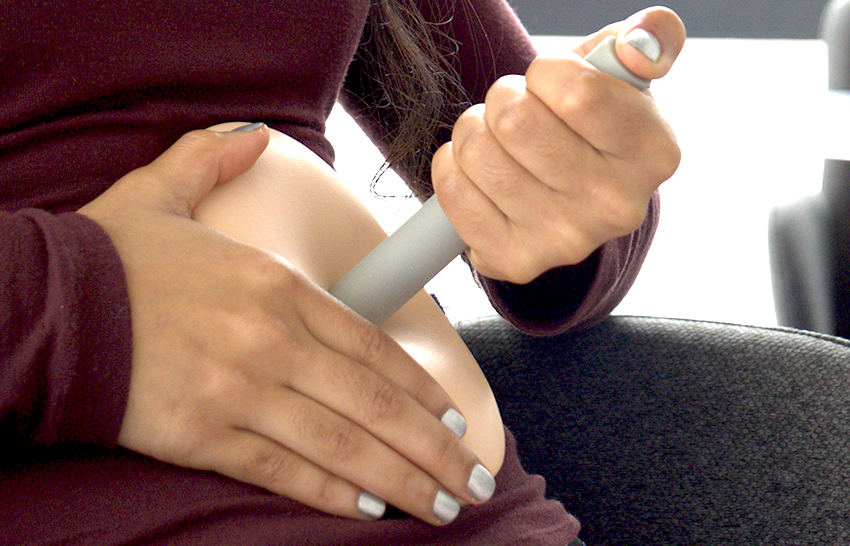
Figure 1: User interacting with the surrogate device.
Participants performed simulated injections while seated, using a needle-free surrogate device with a form factor resembling common shield-activated autoinjectors (Figure 1). The surrogate device was fitted with sensors that captured force data while participants simulated injections by applying force to an injection pad. Two grip types were evaluated:
- Power grip, in which the user grasps the device firmly with the thumb placed on the end
- Precision grip, involving a three-finger pinch.
These grip types were selected because they represent foreseeable handling strategies that afford different force-generating potential.3 The simulated injections were performed at three injection sites: abdomen, thigh and upper arm. While the abdomen and thigh are the most common self-injection sites, the upper arm was included because it appears in some instructions for use and requires a more constrained posture. For each grip type and injection site combination, participants were instructed to apply as much force as possible without hurting themselves for 25 seconds. Figure 2 illustrates the two grip types and the three injection sites.
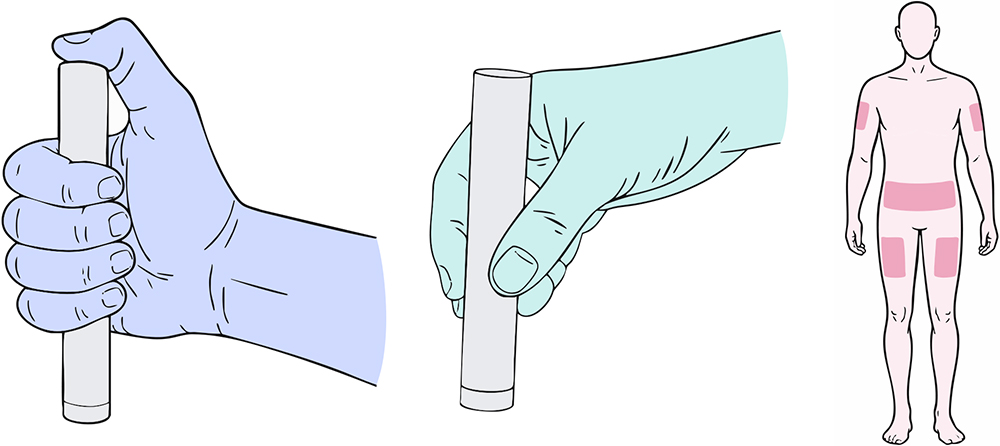
Figure 2: Illustration of power grip (left), precision grip (middle) and the three injection sites (right).
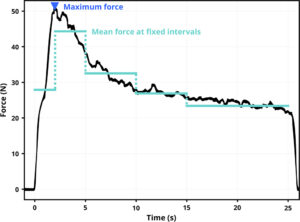
Figure 3: Simplified illustration of a force-time curve from a single trial and the two metrics extracted from the data (maximum force and mean force at fixed intervals).
Force-time data were recorded continuously, and two primary metrics were extracted from the force-time data for each trial (Figure 3):
- Maximum force represents the peak force achieved during each trial and serves as a proxy for activation force capability
- Mean force at fixed intervals represents the force that users can sustain over time and serves as a proxy for hold force capability.
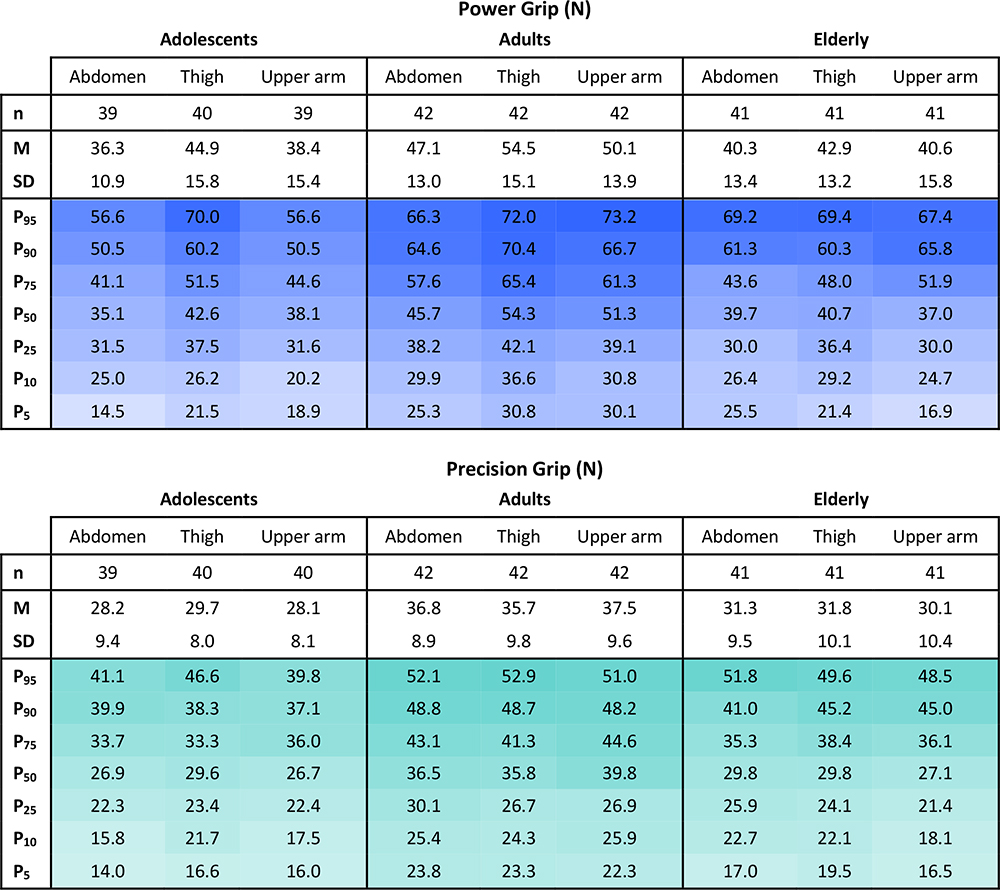
Table 1: Descriptive statistics associated with maximum force in Newtons for power grip and precision grip by age group and injection site (n = sample size; M = mean; SD = standard deviation; Px = Xth percentile).
KEY FINDINGS
The study generated data describing both activation and hold force capabilities across age groups, grip types and injection sites. Summary statistics for maximum force are presented in Table 1, and percentiles related to mean force at fixed intervals are shown in Figure 4. For additional descriptive and inferential statistics, please refer to the original paper.1 These data support an inclusive approach to defining force-related specifications by grounding upper-limit requirements in lower‑percentile capabilities observed under representative handling conditions, rather than relying on anthropometric strength estimates from less representative participants and tasks.
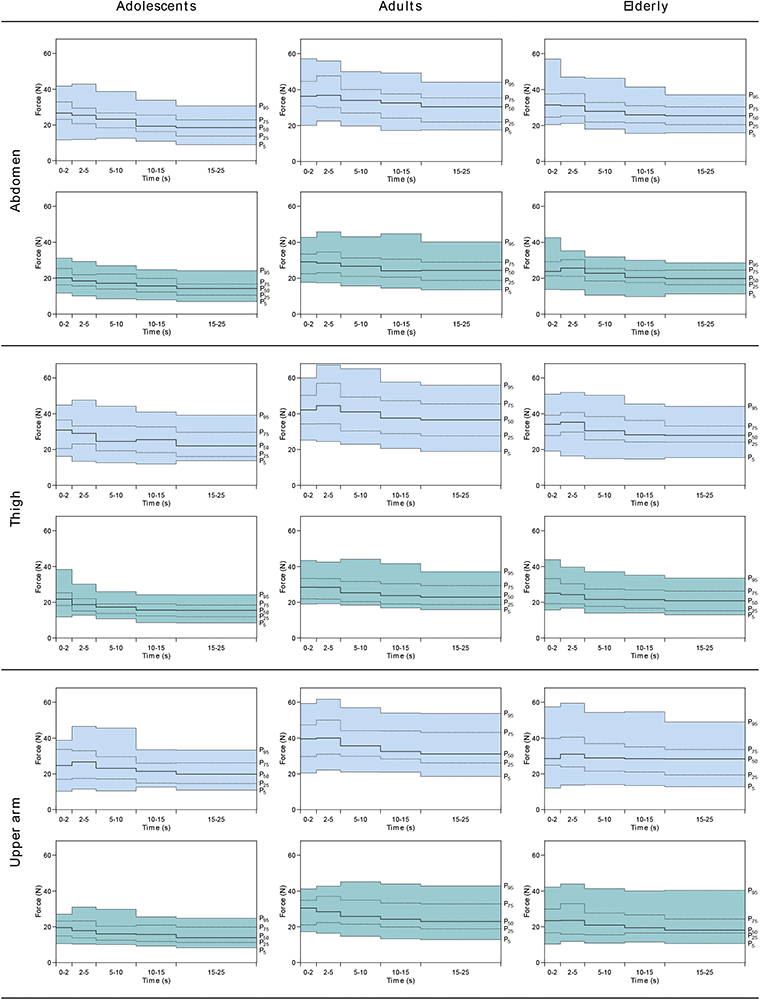
Figure 4: Percentile curves related to mean force at fixed intervals for power grip (blue) and precision grip (green) across age groups and injection site.
“AT THE LOWER END OF THE FORCE DISTRIBUTION, ADOLESCENTS OFTEN PRODUCED THE LOWEST FIFTH PERCENTILE MAXIMUM FORCES, ALTHOUGH DIFFERENCES BETWEEN ADOLESCENT AND ELDERLY PARTICIPANTS WERE SMALL AND INCONSISTENT OVERALL.”
The Effect of Age Group
Across grip types and injection sites, adult participants generally exerted higher maximum forces than both adolescents and elderly participants, as reflected in the higher mean and median values observed across conditions. At the lower end of the force distribution, adolescents often produced the lowest fifth percentile maximum forces, although differences between adolescent and elderly participants were small and inconsistent overall. A similar pattern was observed for mean force at fixed intervals, with adults sustaining higher forces over time, while adolescent and elderly participants showed comparable, but more variable, force profiles.
These findings suggest that both young adolescent and elderly females represent relevant lower‑bound user populations when defining activation and hold force requirements. However, the lack of a consistent difference between these groups, particularly at the lower percentiles and across sustained force application, indicates that neither group can be assumed to be uniformly less capable. From a design perspective, this supports a cautious approach in which force specifications are informed by the most conservative values observed across both populations, particularly when aiming to accommodate users operating near the lower limits of physical capability during both device activation and dose delivery.
The Effect of Grip Type
Grip type had a strong and consistent effect on force capability across age groups and injection sites. Participants exerted higher maximum forces when using a power grip compared with a precision grip – a pattern reflected across the full distribution of values. A similar effect was observed for mean force at fixed intervals, with the power grip enabling higher sustained forces throughout the injection duration. While the magnitude of this difference varied, the pattern remained evident for adolescents, adults and elderly participants alike.
These findings indicate that grip type is a key determinant of both activation and hold force capability. The consistent advantage associated with the power grip suggests that reasonably foreseeable variations in how users handle the device may meaningfully influence their ability to initiate and maintain an injection. From a design perspective, these findings indicate that instructions for use and training materials may benefit from explicitly illustrating or recommending grip types that support higher force generation, such as a power grip, particularly for users who may otherwise struggle to activate or maintain the injection.
The Effect of Injection Site
The injection site influenced force capability primarily through its interaction with the grip type. When using a power grip, participants generally exerted higher maximum forces at the thigh compared with the abdomen and upper arm, whereas differences between injection sites were less pronounced when using a precision grip. A similar pattern was observed for mean force at fixed intervals, with thigh injections enabling higher sustained forces over time, particularly in combination with a power grip, while upper‑arm injections showed lower and more stable force profiles.
These findings indicate that the injection site alone is not a primary determinant of force capability but rather contributes to performance in combination with the grip type. The observed advantage of thigh injections with a power grip suggests that certain use conditions may facilitate higher activation and hold forces, whereas more constrained positions, such as upper‑arm injections, may limit force generation.
From a design perspective, this highlights the importance of considering how real‑world use contexts – including injection site and handling technique – jointly influence user capability. From a labelling perspective, the interaction between injection site and grip strategy suggests that instructions for use should be mindful of how recommended injection sites may influence users’ ability to apply force. Where clinically appropriate, guidance could highlight injection sites and handling approaches that facilitate more effective force application or provide additional instructions for maintaining adequate pressure when using more constrained injection sites, such as the upper arm.
CONCLUSION
This study quantified activation force and hold force capabilities for young adolescent, adult and elderly females operating shield‑activated autoinjectors under different grip types and injection sites. With descriptive statistics across multiple percentiles, the study provides device‑specific reference data that can inform the definition and validation of force‑related specifications during autoinjector design and development.
The findings indicate that young adolescent and elderly females represent similarly relevant lower‑bound user populations, that grip type is a key factor influencing both maximum and sustained force, and that the injection site affects force capability primarily in combination with grip type and posture. Taken together, these results highlight that force capability during autoinjector use is context‑dependent rather than determined by a single user or device factor.
From a design perspective, this supports a cautious, evidence‑based approach to defining activation and hold force requirements, grounded in representative use conditions and accounting for variability in how users interact with the device. Incorporating such context‑specific data may help ensure that force specifications more accurately reflect real‑world use, particularly for users operating near the limits of physical capability. In this context, a conservative approach to specification setting may involve basing upper‑limit force requirements on lower‑percentile capabilities observed in the least physically capable user groups under handling conditions that allow for higher force generation, provided that device performance and functionality are not compromised.
At the same time, it is important to recognise that such an approach may involve trade‑offs between inclusivity and technical performance, and that it may not be appropriate for all device concepts or therapeutic contexts. Furthermore, where user populations are expected to include individuals with conditions that significantly impair strength or manual dexterity, additional data or population‑specific adjustments may be warranted to ensure that specifications remain representative.
In parallel, the findings highlight that device labelling and instructions for use represent an important complementary lever for supporting successful use. By aligning recommended grip strategies, injection sites and handling instructions with conditions that enable users to exert sufficient force, manufacturers may help reduce use-related challenges and improve the likelihood of successful dose delivery across a diverse user population. Finally, while the presented data provide insight into both peak and sustained force capability, it should be noted that real‑world force application may be influenced by factors such as comfort, effort and user preference, and that parameters such as injection time should therefore be defined based on a combination of physical capability and overall user experience considerations.
REFERENCES
- Nilsson NC et al, “Strength data for female shield-activated autoinjector users”. Expert Opin Drug Deliv, 2026, Vol 23(7), pp 1329–1344.
- “Draft Guidance for Industry: Essential Drug Delivery Outputs for Devices Intended to Deliver Drugs and Biological Products”. US FDA, Jun 2024.
- “ANSI/AAMI HE75:2025; Human factors engineering – Design of medical devices”. AAMI, Jan 2025.
- Barbir A et al, “Effects of Epinephrine Auto-Injector Shape and Size on Human Factors Influencing Drug Delivery”. Hum Factors, Vol 58(7), pp 1020–1030.
- Schneider A et al, “Hold the device against the skin: the impact of injection duration on user’s force for handheld autoinjectors”. Expert Opin Drug Deliv, 2020, Vol 17(2), pp 225-236.